

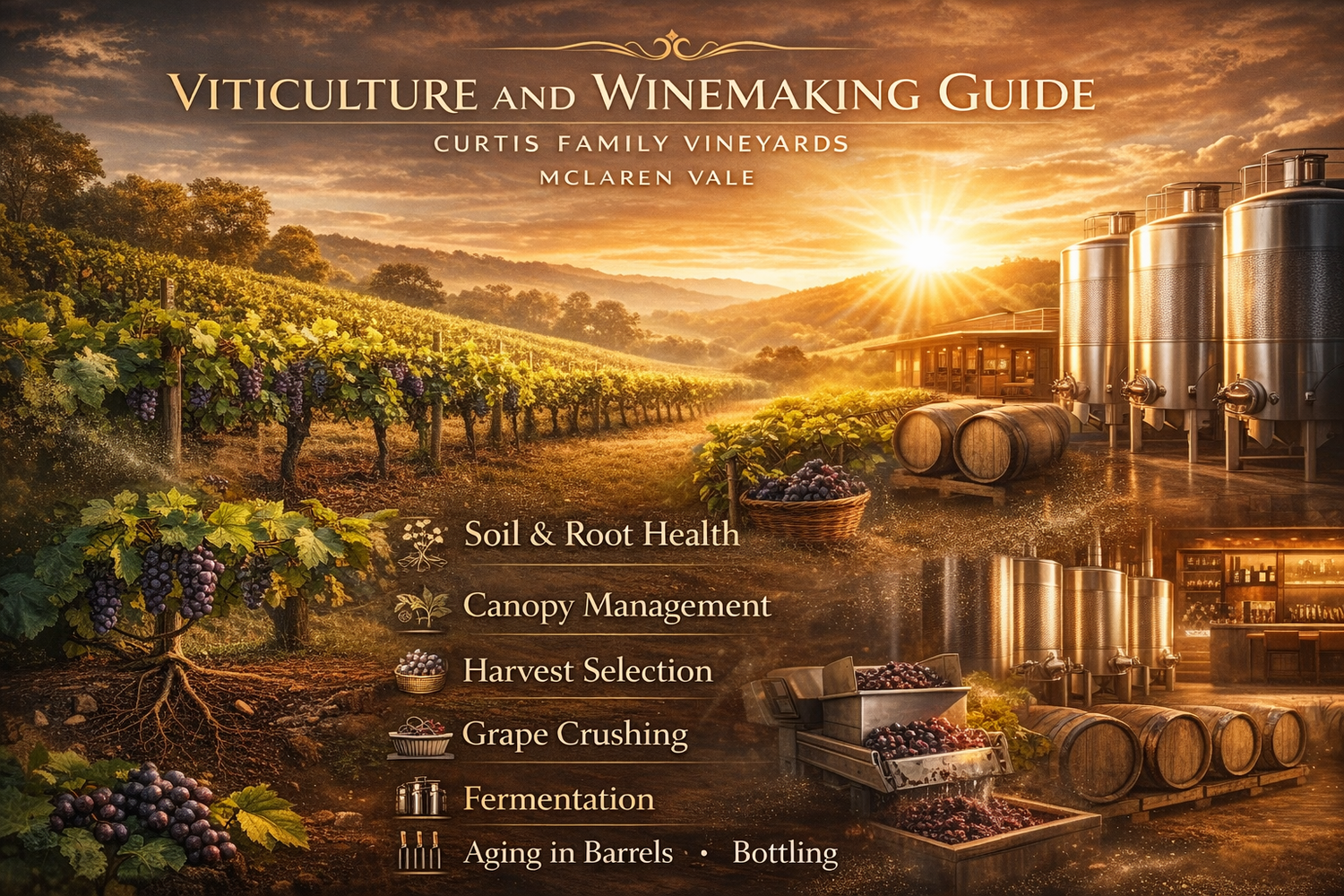
The impact of climate change on viticulture and winemaking is also redefining traditional wine regions, pushing growers to adjust harvest dates, canopy management, and irrigation strategies. Warmer climates can accelerate sugar development while reducing natural acidity, requiring greater precision in both the vineyard and the winery.
Through research, technology, and a renewed focus on sustainability, the wine industry is evolving to meet these challenges and ensure long term resilience without compromising the character and quality of the wines produced.
In recent years, climate change has become a central concern for numerous industries, and viticulture is no exception. The production of wine, deeply tied to the rhythm of nature, is being challenged by changing weather patterns, extreme temperatures, and unpredictable rainfall. At Curtis Family Vineyards, we are keenly aware of these impacts and are committed to adapting our practices to maintain the exceptional quality of our wines.

When the Vineyard Feels Climate Stress on Vines
Rising temperatures vineyards are often the first place climate pressure shows itself—and careful wine lovers can learn a lot by watching how vines respond. Long before a wine reaches the glass, heatwaves, warmer nights, and shifting rainfall quietly change how grapes grow, ripen, and taste. This is where quality clues begin.
Grapevines are sensitive by nature. A few extra hot days can speed up sugar build-up, reduce natural acidity, and stress the vine, affecting flavour balance. In regions like McLaren Vale, experienced growers read these early signals closely, adjusting canopy cover, irrigation, and harvest timing to protect fruit quality. For anyone learning how to spot quality wines, understanding this vineyard story builds real insight.
Key climate stress signals in the vineyard
- Hotter days accelerate ripening but can flatten flavour if unmanaged
- Warmer nights reduce freshness and natural acidity
- Irregular rainfall impacts berry size and concentration
- Heat-stressed vines produce simpler, less expressive fruit
How Climate Stress Shows Up in the Glass
| Vineyard Condition | Impact on Grapes | What You Taste in Wine |
|---|---|---|
| Balanced warmth | Even ripening | Fresh fruit, harmony |
| Excessive heat | High sugar, low acid | Heavy alcohol, flat taste |
| Sudden rainfall | Diluted berries | Thin flavours |
| Managed vine stress | Concentrated fruit | Depth and structure |
For future winemakers, this is the quiet lesson: quality wines are shaped by how well vineyards respond to climate pressure, not by labels or price tags. Wines from thoughtful producers reflect resilience, balance, and care—proof that the best bottles begin with understanding the vine, not fixing problems later in the winery.
Climate Change and Vine Health
Vine health is intricately linked to climate, with specific varietals thriving under particular conditions. As temperatures rise, some regions may become too warm for certain grapes, pushing vineyards to higher altitudes or cooler climates. However, at our vineyards in McLaren Vale, we're fortunate to cultivate varietals like the Ancestor Shiraz, which gains complex flavours from the region's warm climate.
Adapting to such changes requires innovative vineyard management techniques, including selecting vine stocks more resilient to heat stress or amending traditional pruning and irrigation methods. Our Limited Series Shiraz showcases the adaptability and robustness needed in this evolving climate.
Harvest Timing and Quality
Climate change also influences the timing of grape maturation and harvest. Earlier budburst and shorter growing seasons demand precise timing to ensure optimal grape quality. At Curtis Family Vineyards, our experienced team constantly monitors vine and grape development to achieve perfect balance in our wines. Our Cavaliere Grenache Shiraz Mourvedre exemplifies how careful timing alongside experienced winemaking can produce a wine of exceptional calibre, even amid climatic variability.

How Grape Profiles Are Changing
Grape ripening climate change is quietly rewriting the rules of wine quality—and it shows up long before the first crush. Warmer seasons mean grapes reach sugar maturity faster, often before flavour and acidity are fully developed. For winemakers, this creates a delicate decision: pick early for freshness, or wait for flavour and risk higher alcohol.
In regions like McLaren Vale, experienced producers now track ripeness more closely than ever, tasting berries daily rather than relying on sugar numbers alone. Research from Australian wine bodies has shown that rising average temperatures can lift potential alcohol by over 1 percent if harvest timing is not adjusted—changing the entire balance of the wine.
How climate-driven ripening affects grape quality
- Faster sugar build-up leads to higher alcohol
- Natural acidity drops earlier, reducing freshness
- Flavour development can lag behind sugar levels
- Harvest timing becomes a quality decision, not a calendar date
Changing Grape Profiles at Harvest

| Ripening Factor | Traditional Seasons | Warmer Climate Impact |
|---|---|---|
| Sugar levels | Gradual increase | Rapid spike |
| Acidity | Retained longer | Falls earlier |
| Alcohol potential | Moderate | Higher |
| Flavour balance | Naturally aligned | Requires precision picking |
For anyone learning how to identify quality wines, this shift explains why balance now matters more than power. Well-made wines today reflect smart harvest choices—where freshness, texture, and drinkability are protected despite a warming climate. Quality is no longer about ripeness alone, but about timing it just right.
Adapting Winemaking Practices
To sustain wine quality, winemakers must also alter their vinification practices to accommodate changes in grape chemistry caused by fluctuating environmental conditions. This involves meticulously managing fermentation temperatures and employing innovative techniques to maintain the wine's balance, structure, and aromatic profile. Our team has embraced these challenges, ensuring that our wines, such as the Heritage Sparkling Blanc de Blanc, or Tiberius Shiraz, Octavian Shiraz reflect both tradition and innovation despite a changing environment.
Addressing the challenges posed by climate change requires a collaborative effort from viticulturists, winemakers, and scientists. At Curtis Family Vineyards, we are dedicated to proactive adaptation, investing in research, and employing sustainable practices. Our commitment is not only to produce world-class wines but to ensure the longevity of our cherished vines and the environment. Explore our range of wines and learn more about our philosophy at Curtis Family Vineyards.
Modern Winemaking Meets Climate Reality

Alcohol management in wine, modern fermentation control, and precision winemaking techniques now sit at the heart of quality winemaking, especially as warmer vintages become the new normal. Inside today’s winery, consistency is no longer left to chance—it’s carefully engineered through smart tools and thoughtful decisions that protect elegance over excess.
In regions like McLaren Vale, leading producers use temperature-controlled fermentation to slow things down when grapes arrive riper than expected. This preserves aroma, limits harsh alcohol heat, and keeps the wine feeling balanced on the palate. Gentle extraction methods—such as shorter skin contact and softer pump-overs—help avoid over-powerful tannins that can easily dominate in warm years.
How modern wineries protect quality in warmer seasons
- Precision fermentation temperatures to retain freshness
- Alcohol management through yeast selection and timing
- Gentle extraction to keep tannins fine, not aggressive
- Real-time monitoring for consistency batch after batch
Traditional vs Modern Winemaking Responses to Heat
| Winemaking Focus | Traditional Approach | Modern Precision Approach |
|---|---|---|
| Fermentation | Natural temperature swings | Controlled, steady cooling |
| Alcohol levels | Accepted as “vintage variation” | Actively managed |
| Extraction | Longer, heavier contact | Gentle and targeted |
| Wine style | Bigger, riper | Balanced and elegant |
For anyone learning how to identify quality wines like Small Batch Riesling or Pasha Shiraz before making their own, this is a powerful insight: great wines are not about fighting the climate, but adapting intelligently. The best bottles reveal calm control, clarity of flavour, and a sense of restraint—clear signs of skilled hands guiding modern winemaking through a changing world.
Climate-Ready Wines for the Future

Future of Australian wine is being written right now in regions that are willing to adapt, not just react. In McLaren Vale, growers and winemakers are quietly leading this shift—building climate-ready wines through sustainable viticulture and smarter, more thoughtful winemaking. This isn’t theory; it’s happening in the vineyard and the cellar every season.
Forward-thinking producers focus on soil health, water efficiency, and vine resilience to protect grape quality under changing conditions. Practices like cover cropping, organic matter retention, and precise irrigation help vines cope with heat while still producing balanced fruit. Inside the winery, restraint is key—less intervention, more observation, and decisions guided by the vineyard rather than trends.
What climate-ready winegrowing looks like in practice
- Heat-tolerant grape selection and site matching
- Sustainable water use to protect vine health
- Harvest timing based on flavour, not sugar alone
- Winemaking that highlights freshness and balance
Reactive vs Climate-Ready Winemaking

| Focus Area | Reactive Approach | Climate-Ready Approach |
|---|---|---|
| Vineyard care | Short-term fixes | Long-term soil health |
| Harvest decisions | Sugar-driven | Flavour and balance-led |
| Winemaking style | Heavier, higher alcohol | Fresh, refined, age-worthy |
| Quality outcome | Inconsistent | Reliable and expressive |
For anyone learning how to identify quality wines before making their own, this matters deeply. Wines shaped with foresight feel calm, confident, and true to place. McLaren Vale stands as a benchmark—showing that the next generation of Australian wines will be defined not by climate pressure, but by intelligent choices and enduring craftsmanship.
Join us in the conversation on preserving the future of winemaking while enjoying a delightful glass of wine. Cheers to resilience!
