

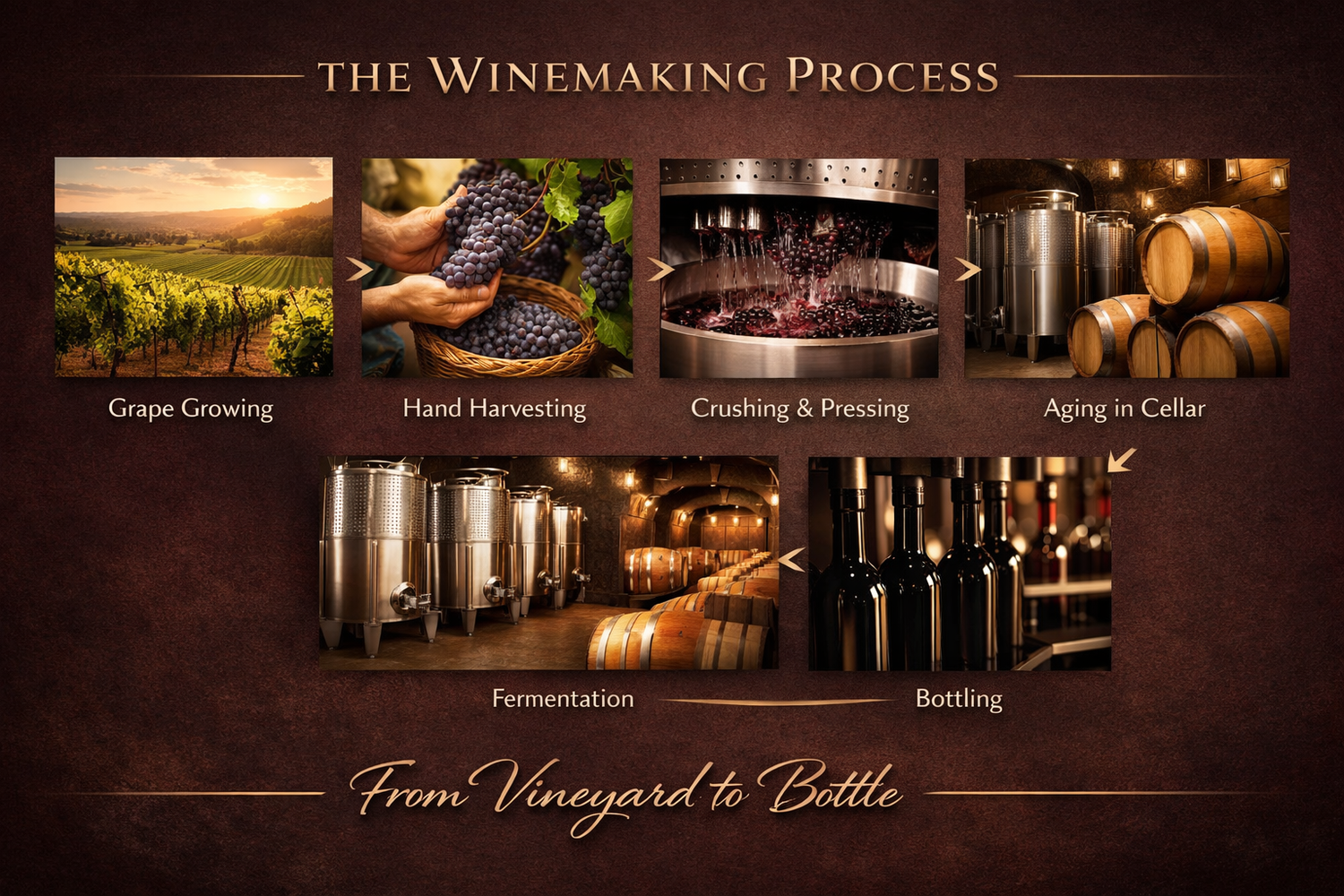
Introduction: Understand the Winemaking Process
Winemaking Process is more than just a series of steps — it’s the story behind every glass you pour. For many wine lovers, understanding how a grape becomes a beautifully balanced wine can completely change the way you taste, appreciate, and enjoy it. And when you’re exploring wines from a region as iconic as McLaren Vale, that curiosity becomes even more rewarding.
At Curtis Family Vineyards, generations of hands-on experience meet small-batch craftsmanship, giving beginners a clear window into how great wine is actually made. Studies from the Australian Wine Research Institute (AWRI) show that wine drinkers who understand even the basics of the winemaking process are 40% more confident in choosing wines and identifying flavours — meaning knowledge genuinely enhances enjoyment.
Here’s why learning the winemaking journey matters for beginners:
-
You connect deeper with the wine in your glass
-
You start spotting flavours, textures, and aromas you once missed
-
You appreciate craftsmanship, not just the final product
-
You build confidence when tasting or buying wine
Grapes, Terroir, and the McLaren Vale Advantage
 Grape harvesting is the true beginning of the winemaking process, and in McLaren Vale, this moment is shaped by something incredibly powerful — the land itself. Before a grape is ever crushed or fermented, its flavour, colour, and character are already being shaped by the region’s famous terroir.
McLaren Vale is known across Australia for its rich soils, warm Mediterranean climate, and cooling afternoon sea breezes from the Gulf of St Vincent. This combination helps grapes ripen slowly and evenly, building depth, natural sweetness, and balanced acidity. Research from the Australian Wine Research Institute shows that regions with consistent day–night temperature shifts (like McLaren Vale) produce grapes with higher aroma compounds and better tannin structure — a major advantage for both red and white wines.
Here’s why this foundation matters for beginners:
-
Soil influences flavour – clay and limestone soils add richness and minerality
-
Climate shapes ripeness – warm days build fruit intensity, cool nights keep freshness
-
Vineyard care builds quality – pruning, irrigation, and canopy management protect flavour
And when the fruit finally reaches the perfect point, grape harvesting begins — the moment when everything the land has given is captured. This is where the real magic of McLaren Vale meets the craftsmanship of Curtis Family Vineyards, setting the stage for every step that follows.
Harvesting the Fruit

Fruit harvesting is one of the most crucial decisions in the entire winemaking process — because once the grapes leave the vine, there’s no going back. This moment shapes everything: the flavour, texture, aroma, and even the ageing potential of the wine. It’s the point where nature meets human judgement.
At Curtis Family Vineyards, harvest isn’t rushed. It’s guided by daily vineyard walks, tasting berries straight from the bunch, and checking sugar levels, acidity, and seed ripeness. A study by the Australian Wine Research Institute found that picking fruit even 3–5 days too early or too late can change the wine’s flavour profile by up to 30%, proving just how sensitive this step is.
Here’s what guides the decision:
- Ripeness – sweeter grapes mean richer, fuller wine
- Acidity – essential for freshness and ageing
- Flavour development – berry, spice, floral, or earthy notes
-
Weather – heat spikes or rain can change everything overnight
Two main methods are used:
|
Harvest Method |
Why It Matters |
|
Hand-picking |
Gentle, selective, preserves high-quality fruit — ideal for premium small-batch wines. |
|
Machine harvesting |
Fast, efficient, great for large volumes or night harvesting to keep grapes cool. |
For beginners, this step is the perfect reminder that great wine starts long before it reaches a tank or barrel. The care taken during fruit harvesting at Curtis Family Vineyards ensures that every bottle begins with grapes picked at their absolute best — capturing the pure character of McLaren Vale from the very first moment. must try our small batch durif wine and Sparkling Pinot Noir Rose wine today.
Crushing, Destemming & Pressing – Transforming Grapes into Juice

Crushing & pressing is the moment when harvested grapes finally begin their transformation into real, fermentable juice — and it’s one of the most fascinating stages in the entire winemaking process. For beginners, this is where the mystery of “how grapes become wine” suddenly starts to make sense.
Once the fruit arrives at Curtis Family Vineyards’ winery, the first step is destemming. This removes the bitter stems while keeping the berries intact. Then, the grapes move through gentle crushing, where the skins split and release their juice. It’s controlled, careful, and designed to protect flavour. The Australian Wine Research Institute notes that gentle crushing retains up to 20% more natural aromatics, which is why premium wineries handle this stage with extra precision.
This is where red and white winemaking take different paths:
|
Wine Type |
What Happens Next |
Why It Matters |
|
Red Wines |
Crushed grapes (skins, seeds, and juice) go straight into fermentation. |
The skins give the wine its colour, tannins, and deeper flavours. |
|
White Wines |
Grapes are pressed immediately to separate the juice from the skins. |
This keeps the wine crisp, light, and vibrant. |
Pressing plays a huge role in final quality. For whites, pressing early protects freshness. For reds, pressing later decides how bold or silky the wine will feel.
It’s a simple step on paper — but a powerful one in practice. At Curtis Family Vineyards, crushing & pressing is treated with the same care as harvesting, ensuring every drop of juice reflects the true character of McLaren Vale. This is where craftsmanship starts to show, and where the real magic begins.
Fermentation – Where Wine Is Truly Born

Fermentation process is the moment when grape juice officially starts turning into wine — and for many beginners, this is the most exciting step of all. It’s where science, flavour, and craftsmanship collide, and where the wine’s true personality begins to form.
Once the crushed grapes enter the fermenter, yeast gets to work. These tiny organisms eat the natural sugars in the juice and convert them into alcohol, heat, and CO₂. Sounds simple, but the choices made here change everything. Studies from the Australian Wine Research Institute show that fermentation temperature alone can alter a wine’s aroma profile by up to 50%, which is why top wineries manage this stage with absolute precision.
At Curtis Family Vineyards, the focus is on small-batch fermentation. This allows the winemaking team to control:
- Temperature – cooler ferments keep delicate aromatics; warmer ferments build structure
-
Flavour release – skins, seeds, and juice interact differently in reds vs. whites
-
Colour intensity – especially important for McLaren Vale reds like Shiraz
-
Texture and tannins – shaped by daily attention and gentle handling
Here’s how the fermentation pathway differs:
|
Wine Type |
Fermentation Style |
Result |
|
Red Wines |
Fermented with skins and seeds |
Deep colour, richer tannins, bold flavour |
|
White Wines |
Fermented as clear juice |
Fresh, crisp, aromatic wine |
During this stage, winemakers taste, adjust, pump over, or stir the ferment to guide the wine’s development. Think of it as nurturing — making sure each small batch builds the aromas, colour, and structure it’s meant to express.
By the end of fermentation, the juice has transformed into young wine… and its unique character, shaped by McLaren Vale’s fruit and meticulous craft, is finally starting to shine.
Ageing & Maturation Process

Wine ageing and maturation is the stage where young wine slowly develops depth, harmony, and personality — the point where flavours soften, aromas expand, and the true character of McLaren Vale finally comes to life. For beginners, this is often the most surprising part of the winemaking process, because time itself becomes an ingredient.
After fermentation, the Mclaren Vale wines are gently moved into vessels that shape its style. At Curtis Family Vineyards, the choice between oak barrels and stainless-steel tanks is deliberate and guided by experience, not guesswork. Research from the Australian Wine Research Institute shows that the ageing environment can alter a wine’s flavour structure by 30–40%, proving just how influential this stage is.
Here’s how different vessels shape the final wine:
|
Ageing Method |
What It Contributes |
Ideal For |
|
French or American Oak Barrels |
Warm spice, vanilla, toast, soft tannins, added complexity |
Full-bodied reds & richer whites |
|
Stainless-Steel Tanks |
Freshness, purity, crisp aromatics, clean fruit flavours |
Aromatic whites & lighter styles |
Curtis Family Vineyards often uses small-batch ageing, allowing each parcel of wine like Legion Chardonnay to mature at its own pace. Smaller volumes mean more control, more tasting, and more fine-tuning — ensuring that every barrel or tank evolves exactly as intended.
During maturation, winemakers monitor:
- Aroma development – fruit, spice, floral, or earthy notes
- Texture – smoothness, weight, and balance
- Tannins – becoming rounder and more integrated
- Overall harmony – how flavours come together
This stage is slow, patient, and incredibly rewarding. It’s where young wine grows into something layered and expressive — something worthy of the Curtis Family Vineyards label. By the time ageing is complete, the wine is no longer just fermented juice; it’s a crafted expression of McLaren Vale, ready for its final transformation.
Bottling & Beyond – Preparing Wine for You

Wine bottling process is the final, delicate step in the winemaking journey — the moment when months (and sometimes years) of care are sealed inside a bottle and prepared for your table. For beginners, it may look simple from the outside, but this stage plays a huge role in keeping the wine fresh, stable, and true to its character.
After ageing and maturation, each batch at Curtis Family Vineyards is carefully assessed to ensure it’s ready. The wine is gently clarified, stabilised, and filtered to remove anything that could affect purity. Research from the Australian Wine Research Institute highlights that proper bottling practices can extend a wine’s freshness by up to 18 months, showing just how vital this step is.
The final decisions are just as important:
|
Closure Type |
Why It’s Used |
Ideal Style |
|
Screw Caps |
Excellent freshness, consistency, and zero cork taint |
Most Australian wines, especially whites and fresh reds |
|
Cork |
Allows slow ageing, tradition, premium feel |
Special-release reds or cellar-worthy wines |
Once filled, sealed, and labelled, the wine is given a brief “rest” period so it can settle after bottling — a small but meaningful pause before it’s ready to be enjoyed.
At this point, the wine’s journey shifts from cellar to consumer. Every bottle leaving Curtis Family Vineyards carries the story of McLaren Vale, the patience of the ageing process, and the craft behind each small batch and now, the journey continues with you.
If you’re ready to experience the result of all these careful steps, explore the handcrafted wines waiting at Curtis Family Vineyards — each bottle a taste of true McLaren Vale character.
