

Winemaking is both an art and a science, a delicate balance that transforms grapes into the wines we adore. At Curtis Family Vineyards, we are passionate about every aspect of winemaking, and below, we address some of the most frequently asked questions regarding this fascinating process.
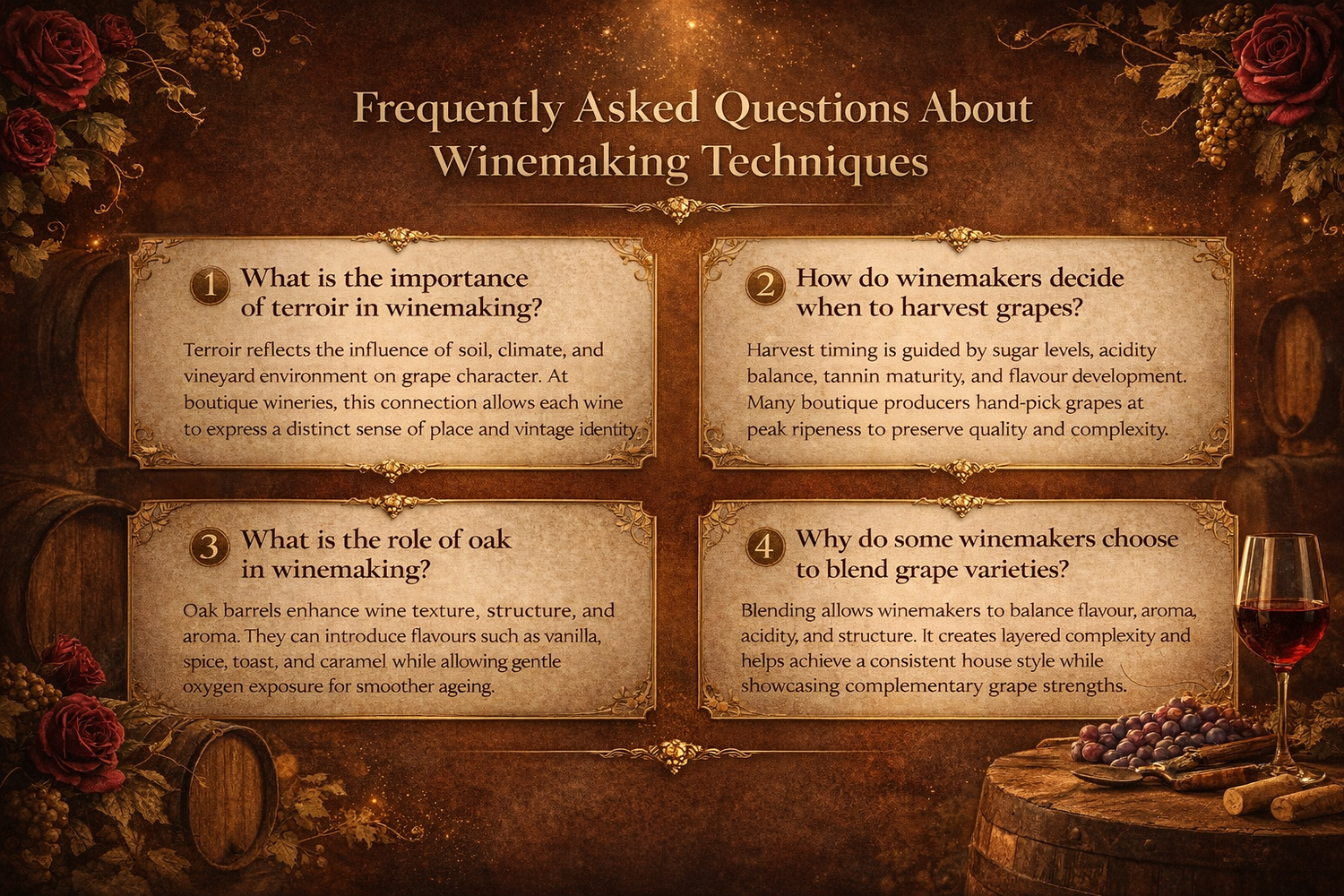
What is the importance of terroir in winemaking?

Terroir refers to the specific set of geographical and climatic conditions in which the grapes are grown. This includes factors like soil type, climate, and even the slope of the vineyard. Each of these can significantly influence the flavour profile and characteristics of the wine. For example, our Terra Rossa Shiraz is grown in the distinctive red soils of McLaren Vale, which are ideal for producing rich, full-bodied Shiraz with vibrant flavours.
How do winemakers decide when to harvest grapes?
The timing of the grape harvest is crucial and is determined by a combination of science and intuition. Winemakers will closely monitor the grapes' sugar levels, acidity, and tannin development to decide the optimal time for harvest. This ensures that each variety is picked at the height of its flavour potential. Our Cavaliere Shiraz showcases the beauty of picking grapes at just the right moment, resulting in a wine with depth and complexity.
What is the role of oak in winemaking?

Oak barrels are often used in winemaking to impart additional flavours and aid in the wine's aging process. The type of oak and the duration a wine spends in the barrel can influence the wine's taste, adding notes of vanilla, spice, or toast, and enhancing its texture. Our Limited Series Grenache benefits from precise oak maturation, allowing its lively red fruit flavours to be complemented by subtle oak nuances.
Why do some winemakers choose to blend grape varieties?

Blending is a technique used to enhance the balance and complexity of a wine. By combining different grape varieties, winemakers can create a wine that highlights the strengths of each variety while achieving overall harmony. Our Heritage Grenache and Heritage Shiraz or Cavaliere Shiraz showcase the art of blending, delivering wines that are well-rounded and intricate in flavour.
What is the difference between natural and commercial fermentation?

Natural fermentation relies on the native yeast present on the grape skins and in the winery environment, while commercial fermentation uses cultivated yeast strains. Natural fermentation can produce more complex and unique wines due to the diverse range of yeast species contributing to the fermentation. However, it can be less predictable than commercial fermentation, which allows for more control over the winemaking process.
At Curtis Family Vineyards, we are committed to crafting wines that express the distinctive qualities of our vineyards and the McLaren Vale region. We invite you to explore Mclaren vale wines and learn more about our passion for winemaking by visiting Curtis Family Vineyards. Whether you're a seasoned wine lover or just starting your journey, we are here to enrich your understanding and appreciation of our wines.
