

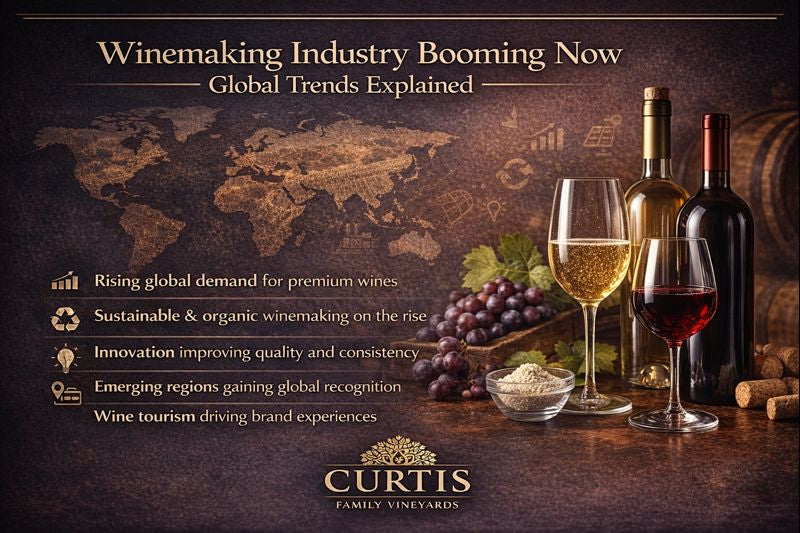
Introduction- Why Winemaking industry Booming
Winemaking industry booming isn’t just a headline — it’s a shift you can taste in the glass. Across Australia and beyond, wine industry growth is being driven by a mix of changing consumer habits, renewed appreciation for craftsmanship, and deeper connections between wineries and wine lovers.
Today’s drinkers are choosing better wine, not just more wine. There’s growing demand for premium, small-batch bottles with a clear story behind them — where the grapes are grown, how the wine is made, and who is behind it. Family-owned and boutique wineries are thriving because they offer authenticity, consistency, and character rather than mass production.
At the same time, sustainability and innovation are reshaping modern winemaking. Climate-smart viticulture, organic practices, and precision techniques are improving quality while protecting future harvests. This balance of tradition and science is why today’s wines are more expressive, reliable, and exciting than ever.
Why Premium Regions Like McLaren Vale Are Leading the Growth

Global wine market trends are clearly pointing towards premium regions, and Australian wine trends show McLaren Vale leading that charge with confidence and character. What sets this region apart isn’t hype — it’s consistency, credibility, and a deep connection between land and wine.
McLaren Vale’s Mediterranean climate delivers reliable ripening year after year, allowing winemakers to craft bold, expressive wines with natural balance. This climate stability reduces vintage risk, which is a major reason global buyers trust wines from this region. Add to that some of the oldest soils in the world, and you get wines that speak clearly of place — rich, layered, and unmistakably McLaren Vale.
International research into premium wine regions shows that terroir-driven wines command higher loyalty and stronger export demand. McLaren Vale fits this perfectly, with its reputation for powerful Shiraz, refined Grenache, and innovative blends that appeal to both traditional collectors and modern drinkers.
What truly fuels growth here is the region’s people. Family-owned vineyards combine generations of knowledge with modern techniques, protecting quality while embracing innovation. This balance keeps McLaren Vale wines relevant in a fast-moving global market.
From Quantity to Quality: How Consumer Tastes Are Reshaping Wine
Australian wine trends are clearly showing a powerful shift, and the modern winemaking industry is responding fast. Today’s wine lovers are drinking less, but choosing better — and that change is reshaping the entire wine landscape.
Consumers are moving away from mass-produced bottles and towards premium, small-batch wines that feel personal and authentic. They want to know who made the wine, where the grapes were grown, and why the wine tastes the way it does. This curiosity has pushed family-owned and boutique wineries into the spotlight, where real stories and genuine craftsmanship matter more than volume.
Recent industry insights reveal that wines with a clear origin story and hands-on production often build stronger trust and repeat buyers. Small-batch winemaking allows producers to focus on detail — from selective harvesting to gentle fermentation — creating wines with personality, not sameness.
What’s driving this shift?
- A growing demand for premium quality over quantity
- A desire for authentic vineyard stories and heritage
- Greater appreciation for sustainable and ethical practices
In a crowded global market, wines with soul stand out. This move from quantity to quality isn’t a passing trend — it’s a mindset change. And it’s exactly why boutique, family-owned wineries are thriving in today’s wine world
Sustainability & Innovation of Modern Winemaking

Celebrating Local Tastes
Another trend driving the winemaking boom is the increasing interest in locally-sourced products. Wine lovers are keen to explore the distinct profiles offered by specific regions. In response, Curtis Family Vineyards offers a captivating range that highlights the essence of South Australia's terroir. The Limited Series Grenache or Cavaliere Cabernet Sauvignon is a prime example, offering a unique taste that reflects its rich heritage and local soil characteristics.
The Rise of Rosé
Rosé has shed its stereotype as a seasonal beverage and emerged as a staple for wine enthusiasts year-round. Its versatility and refreshing profile make it an appealing choice for casual and formal gatherings alike. Our Queen of Hearts Rosè or Pinot Noir Rose perfectly captures this ever-growing trend. With its delicate balance and vibrant notes, it's an excellent companion for any occasion.
Time-Honoured Traditions
While innovation is crucial, there is also a burgeoning appreciation for winemaking techniques that have been honed over centuries. Wines like our Ancestor Shiraz or Martins Vineyard Shiraz are testimony to this. This exquisite shiraz pays homage to time-honoured craftsmanship and the deep-rooted history of the McLaren Vale region.
What the Future Holds for the Booming Winemaking Industry

Winery innovation and technology are shaping a confident, exciting future for Australian wine, with direct-to-consumer wine sales leading the next wave of growth. The winemaking industry is moving fast — and regions like McLaren Vale are perfectly placed to lead what comes next.
Globally, wine drinkers are exploring more diverse styles, from vibrant Mediterranean varietals to refined small-batch reds, while export markets continue to value premium Australian wines for their quality and consistency. At the same time, smart vineyard tools, precision fermentation, and data-driven decisions are helping wineries make better wine with less waste — a win for quality and sustainability.
Curtis Family Vineyards reflects this forward-thinking mindset by blending tradition with modern thinking. Strong cellar door wines experiences, digital storytelling, and direct customer relationships allow wineries to respond faster to changing tastes while keeping their identity intact.
What the future looks like for winemaking:
- Smarter technology improving quality and sustainability
- Growing export demand for premium McLaren Vale wines
- Direct relationships replacing traditional middle-men
The future of wine belongs to wineries that stay curious, connected, and committed to excellence — and McLaren Vale is just getting started
