

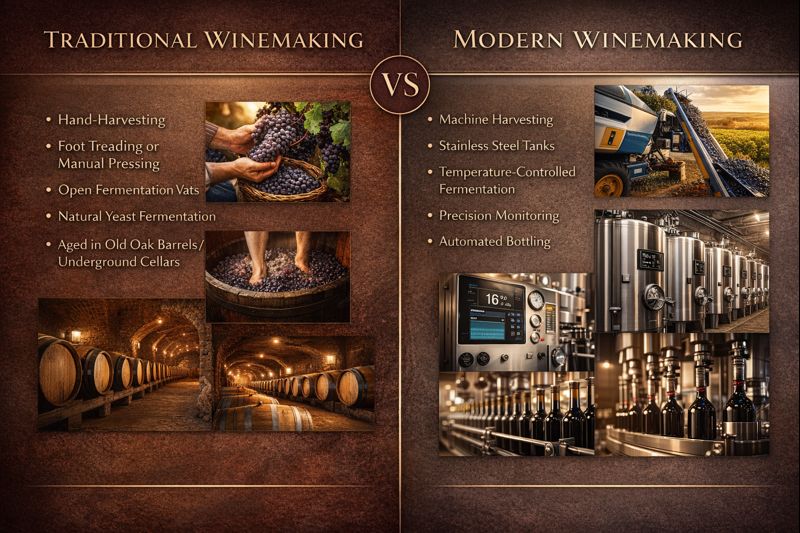
Traditional vs modern winemaking techniques comparison highlights how centuries-old practices and contemporary innovations shape the wines we enjoy today. Traditional winemaking focuses on hands-on craftsmanship, natural fermentation, and minimal intervention to express terroir and heritage, while modern winemaking embraces technology, precision, and controlled processes to improve consistency and efficiency.
Together, these approaches show how winemakers balance authenticity and innovation, blending history with science to create wines that reflect both their origins and the evolving expectations of today’s wine lovers.
Winemaking is a timeless craft that has been refined over centuries. As with many ancient practices, winemaking has evolved significantly, blending traditional techniques with modern innovations. At Curtis Family Vineyards, we honour both methods, producing exceptional wines that reflect our commitment to quality and heritage.
Why Winemaking Has Evolved
Traditional vs modern winemaking tells the story of how wine has grown from instinct and tradition into a careful blend of craft and science—and why that evolution matters if you want to recognise quality before making your own.
For centuries, winemakers relied on foot treading, open fermenters, wild yeast, and intuition. These methods created soulful wines, but results could change dramatically from year to year. One batch might shine; the next might fall short. Today, modern tools don’t replace tradition—they protect it. Precision tanks, temperature control, and clean fermentation help winemakers express the vineyard clearly, without faults hiding the fruit.
In regions like McLaren Vale, this shift has been vital. As seasons grow warmer and less predictable, innovation allows winemakers to preserve balance, freshness, and regional character—key markers of quality wine.
Why Evolution Improves Wine Quality
| Traditional Winemaking | Modern Winemaking |
|---|---|
| Foot treading and open vats | Precision tanks with temperature control |
| Wild, unpredictable fermentation | Controlled fermentation for clean flavour |
| High vintage variation | Greater consistency year to year |
| Rustic, expressive style | Refined, balanced, vineyard-led wines |
What this means for future winemakers:
- Quality wines today are less about luck and more about informed decisions
- Modern methods reduce faults without stripping personality
- Consistency helps you truly taste the vineyard, not the mistakes
The real insight? Great wine isn’t about choosing old or new—it’s about understanding why winemaking evolved and how that evolution reveals quality in every glass.
How Traditional Winemaking Builds Character
Traditional winemaking is an art form, deeply rooted in the practices handed down through generations. This approach prioritises the natural expression of the grape and the land, often relying on time-honoured methods that encourage the development of complex flavours.

Practices in Traditional Winemaking
- Hand Harvesting: A meticulous process where only the ripest grapes are selected, preserving the integrity of the fruit.
- Natural Fermentation: Utilising wild yeasts native to the vineyard, offering a unique expression of terroir.
- Ageing in Oak Barrels: Traditional oak barrels mature the wine slowly, imparting rich, nuanced flavours.
Our Ancestor Shiraz epitomises the elegance of traditional methods, delivering a lush and complex profile that speaks to our vineyard's heritage.
hand harvesting vs machine harvesting sits at the heart of traditional winemaking, where patience, touch, and human judgement shape a wine’s true character long before it reaches the cellar.
In classic wine regions, grapes are often picked by hand so only the healthiest bunches make the cut. This careful selection reduces bitterness, avoids damaged fruit, and keeps flavours pure. It’s slower and more labour-intensive—but the payoff is depth and authenticity in the glass. Traditional winemakers then lean on natural fermentation, letting wild yeast express place and season, followed by oak ageing that slowly builds texture, spice, and complexity over time.
Many iconic wine styles were born this way—not rushed, not engineered, but guided. Even today, boutique producers in regions like McLaren Vale use these methods to craft wines that feel layered, honest, and unmistakably human.
Why Traditional Methods Still Matter
| Traditional Approach | What It Adds to Wine Quality |
|---|---|
| Hand harvesting | Cleaner fruit and better flavour control |
| Natural fermentation | Unique aromas and sense of place |
| Oak ageing | Structure, softness, and complexity |
| Small-batch handling | Greater attention to detail |
What future winemakers can learn:
- Quality begins with respect for the fruit
- Slower methods often reveal deeper character
- Craft and patience create wines with soul, not shortcuts
Understanding these hands-on traditions helps you spot quality wines—because true character is built, not forced.
Modern Winemaking Techniques
Modern techniques revolutionise winemaking with innovative technology and scientific insights. These advances ensure consistency, efficiency, and precision in every bottle, paving the way for new taste experiences.
Practices in Modern Winemaking
- Mechanical Harvesting: This expedited process allows for larger quantities of grapes to be picked at optimal ripeness.
- Controlled Fermentation: Temperature-controlled vats facilitate the management of fermentation, enhancing flavour and aroma.
- Stainless Steel Ageing: Preserves fresh and fruity characteristics, often used for wines that shine with youthful vibrancy.
Our Limited Series Shiraz showcases the brilliance of modern techniques, offering a bold, refined taste crafted with advanced precision.
modern winemaking methods show how science now works hand-in-hand with tradition to protect flavour, lift quality, and deliver confidence in every bottle. Rather than replacing craftsmanship, today’s tools give winemakers greater control over the moments that matter most.
Temperature-controlled stainless steel tanks allow fermentation to move at the right pace, locking in fresh aromatics and preventing heat stress that can dull flavour. Precision fermentation—guided by data, tasting, and experience—helps winemakers shape balance while still letting the vineyard speak. Research from Australian wine institutes consistently shows that controlled fermentation reduces faults and improves flavour clarity, especially in warmer regions like McLaren Vale.
Where Science Makes the Difference
| Technique | Traditional Approach | Modern Advantage |
|---|---|---|
| Fermentation control | Ambient temperatures | Stable flavour and aroma |
| Fermentation vessels | Open vats, wood | Clean, neutral stainless steel |
| Monitoring | Visual and taste cues | Data + sensory judgement |
| Consistency | Vintage-dependent | Reliable quality year to year |
Why this matters when spotting quality wines:
- Clean, precise aromas signal good fermentation control
- Balanced flavour often reflects careful temperature management
- Consistency across vintages shows disciplined winemaking
For anyone learning how to identify quality wines, understanding these modern methods reveals why great wines taste pure, polished, and true to their origin—without ever feeling over-engineered.

Low Intervention or High Control? Finding the Balance in Today’s Wineries
Old world vs new world winemaking is no longer a tug-of-war—it’s a quiet conversation happening inside today’s best McLaren Vale wineries. On one side is restraint: minimal handling, native yeast, and trust in the vineyard. On the other is precision: smart monitoring, gentle control, and sustainability-driven decisions. The magic lies in knowing when to step in—and when to step back.
Modern McLaren Vale producers often follow a low-intervention philosophy, but keep high-control tools ready to protect quality. Studies across Australian wine regions show that careful temperature control and hygiene reduce faults without masking terroir—meaning wines stay expressive, not engineered.
Finding the Sweet Spot
| Approach | Old World Influence | New World Advantage |
|---|---|---|
| Fermentation | Natural yeast | Temperature control for stability |
| Handling | Minimal movement | Gentle pumps to protect texture |
| Decision-making | Seasonal instinct | Data-informed timing |
| Outcome | Authentic character | Clean, reliable quality |
What this means when identifying quality wines:
- Purity of flavour, not heaviness
- Texture that feels natural, not forced
- Consistency without losing personality
For aspiring winemakers, this balance is the real lesson: great wines aren’t made by doing more or less, but by doing what the wine needs—a philosophy McLaren Vale continues to perfect.
Embracing Both Worlds for Winemaking Styles
At Curtis Family Vineyards, we blend the wisdom of tradition with the ingenuity of modern techniques to create wines that capture the essence of our land and innovation. Whether indulging in the deeply traditional Ancestor Shiraz or the innovative Limited Series Shiraz, each sip offers a journey through history and progress.
Discover more about our winemaking philosophy and explore our collection of exquisite wines by visiting Curtis Family Vineyards.
Let your palate explore the enchanting dance between the past and the present, as embodied by our exemplary selections. Welcome to a world where winemaking is a celebration of tradition and modernity, uniquely crafted for the discerning connoisseur.
McLaren Vale winemaking is more than a regional style—it’s a living classroom where future winemakers can see, taste, and feel how quality is built. Few places show the balance between tradition and innovation as clearly as McLaren Vale, where old vines grow alongside cutting-edge cellar practices. For anyone learning how to identify quality wines, this region offers real-world lessons you can’t get from books alone.
Curtis Family Vineyards sits at this intersection. Here, hands-on vineyard care meets modern fermentation control, allowing the natural character of the site to shine while keeping quality consistent. Research from Australian wine bodies consistently shows that regions combining climate knowledge with precise winemaking deliver clearer flavour and better balance—hallmarks of premium wine.
Why McLaren Vale Teaches Wine Quality So Well
| What You Observe | Traditional Influence | Modern Insight |
|---|---|---|
| Vine age & care | Respect for heritage vines | Sustainable vineyard management |
| Fermentation style | Patience and intuition | Temperature and yeast control |
| Wine character | Depth and texture | Purity and consistency |
What future winemakers learn here:
- How terroir shapes flavour before the winery does
- Why control should support, not overpower, the grape
- How quality shows up in balance, not complexity alone
In McLaren Vale, quality wine isn’t explained—it’s experienced. That’s why the region, and producers like Curtis Family Vineyards, remain a trusted benchmark for anyone serious about learning the craft.
