

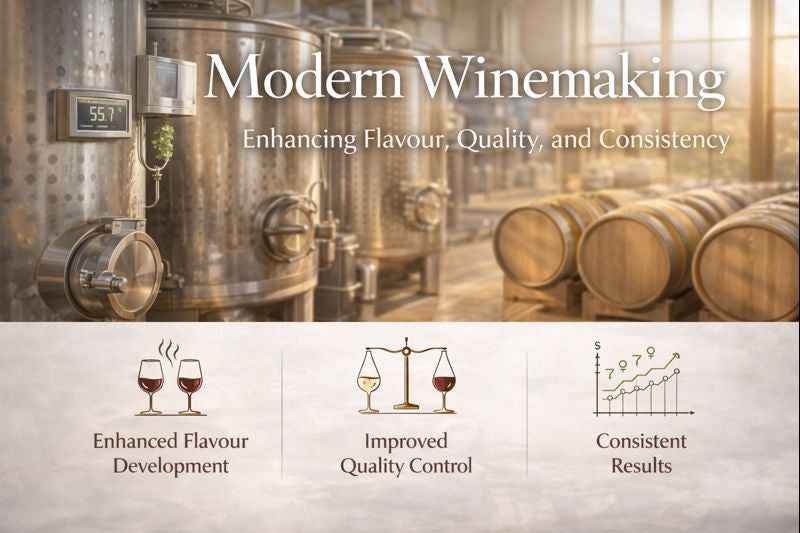
Modern winemaking brings together innovation, science, and time-honoured tradition to craft wines with greater precision, consistency, and expression. By using advanced fermentation control, refined ageing techniques, and detailed vineyard management, modern winemaking allows the true character of each grape variety to shine while maintaining exceptional quality in every bottle.
Modern winemaking at Curtis Family Vineyards reflects a balance between cutting-edge technology and hands-on craftsmanship. Through careful monitoring at every stage — from vineyard to cellar — the winery produces premium South Australian wines that capture regional terroir, enhance natural flavours, and deliver an authentic, memorable wine experience.
Winemaking has long been an art that balances both tradition and innovation. As the world moves toward more sustainable practices across all industries, the wine industry is no exception. At Curtis Family Vineyards, we embrace sustainable viticulture and winemaking processes to ensure our wines are of the highest quality while minimising our environmental impact.

Modern Winemaking: Where Precision Meets Passion
modern winemaking techniques sit at the intersection of precision and passion, where science quietly supports creativity rather than replacing it. Today’s best wineries use data, technology, and experience to protect flavour, not manufacture it—allowing each wine to express its place, season, and intent with clarity.
What makes modern winemaking powerful is control without control-freakery. Temperature-managed fermentation preserves delicate aromas. Careful yeast selection enhances texture. Gentle extraction avoids harsh tannins. Yet the final decisions still rely on trained palates, intuition, and years of hands-on knowledge. Research from leading wine institutes consistently shows that precision tools reduce faults and improve consistency, while the winemaker’s judgement defines style and soul.
How modern winemaking elevates wine—without losing character:
- Protects natural fruit flavours through temperature control
- Reduces oxidation and spoilage risks
- Allows finer balance between structure and softness
- Delivers consistent quality across vintages
Traditional vs Modern Winemaking at a Glance
| Aspect | Traditional Approach | Modern Winemaking Approach |
|---|---|---|
| Fermentation | Natural, variable | Temperature-controlled |
| Quality Control | Experience-led only | Science + intuition |
| Flavour Precision | Inconsistent | Clean, expressive |
| Consistency | Vintage-dependent | Reliable, refined |
The result is wine that feels pure, confident, and honest—crafted with care, guided by knowledge, and finished with heart. Modern winemaking doesn’t erase tradition; it gives it a sharper voice.
Flavour by Design: How Technology Protects What Nature Creates
Sustainable Viticulture
Viticulture, the cultivation of grapevines, is a critical aspect of winemaking. At Curtis Family Vineyards, we employ several sustainable practices to nurture our vineyards.
We start by promoting biodiversity in our fields. By encouraging a variety of plant and animal life, we create a balanced ecosystem that reduces the need for harmful pesticides and artificial fertilisers. This natural approach not only protects the environment but also enhances the health of the vines, producing grapes with unique and distinguished flavours.
Water Management
Water is a precious resource, particularly in regions where it is scarce. Our vineyards apply efficient irrigation systems such as drip irrigation to minimise water waste. This method provides consistent moisture directly to the roots, which results in healthy vines and quality grapes without excess water consumption.

Energy Efficiency
Winemaking can be energy-intensive, but through mindful practices, we aim to reduce our carbon footprint significantly. We utilise solar energy to power much of our operations, ensuring that our wines are produced with the lightest possible environmental impact.
Innovation with Integrity: Sustainable Winemaking for the Future
sustainable modern winemaking and low intervention winemaking are no longer trends—they’re quiet promises premium wineries make to the land, the vine, and future generations. The most progressive producers now use innovation not to push harder, but to tread lighter, protecting flavour today while safeguarding vineyards for tomorrow.
Modern tools help wineries reduce water and energy use, cut waste, and make smarter decisions in the vineyard. Australian wine research consistently shows that healthier soils and balanced vines produce better fruit, meaning less correction is needed in the winery. That’s where low-intervention thinking comes in—working with nature, not against it.
How modern sustainability improves wine quality:
- Precision irrigation reduces water waste and vine stress
- Energy-efficient equipment lowers carbon footprint
- Natural fermentations thrive on cleaner, healthier fruit
- Fewer additives mean purer regional expression
Sustainable Progress: Old vs Modern
| Focus Area | Traditional Methods | Sustainable Modern Winemaking |
|---|---|---|
| Water Use | High and reactive | Measured and efficient |
| Vineyard Health | Short-term yield | Long-term balance |
| Winery Inputs | More intervention | Minimal and thoughtful |
| Future Quality | Uncertain | Protected and consistent |
The real reward is in the glass. Wines feel more alive, more honest, and more connected to place—proof that when innovation is guided by integrity, sustainability doesn’t limit quality, it elevates it.
Choosing Sustainable Wines
When selecting a wine, opting for those from sustainable vineyards contributes to the larger goal of environmental consciousness. At Curtis Family Vineyards, we offer a range of exquisite wines produced with sustainability in mind. The Limited Series Shiraz is a testament to our commitment to quality and environmental stewardship. Its rich flavour profile is a direct result of the careful, sustainable practices we employ in our vineyard.
For those who appreciate sparkling wines, our Heritage Sparkling Blanc de Blanc is crafted using sustainable methods and offers a delightful experience that aligns with eco-friendly principles.
A Future of Sustainable Winemaking
As we look to the future, Curtis Family Vineyards is committed to evolving our practices in line with the latest sustainable technologies and techniques. Our dedication to the environment ensures that we produce wines that not only taste exceptional but are also kind to the planet.
Discover the full range of our sustainably produced wines and learn more about our practices by visiting Curtis Family Vineyards.
