

The Great Wine Divide: What Truly Sets Red vs White Wine Apart
Red vs white wine is one of the most common comparisons among wine drinkers. At first glance, the difference seems obvious—colour. But the real story begins long before the wine reaches your glass. The journey starts in the vineyard and continues through the winemaking process, where small decisions shape the personality of each wine. Understanding these differences can completely change how you choose and enjoy wine.
Difference Between Red and White Wine
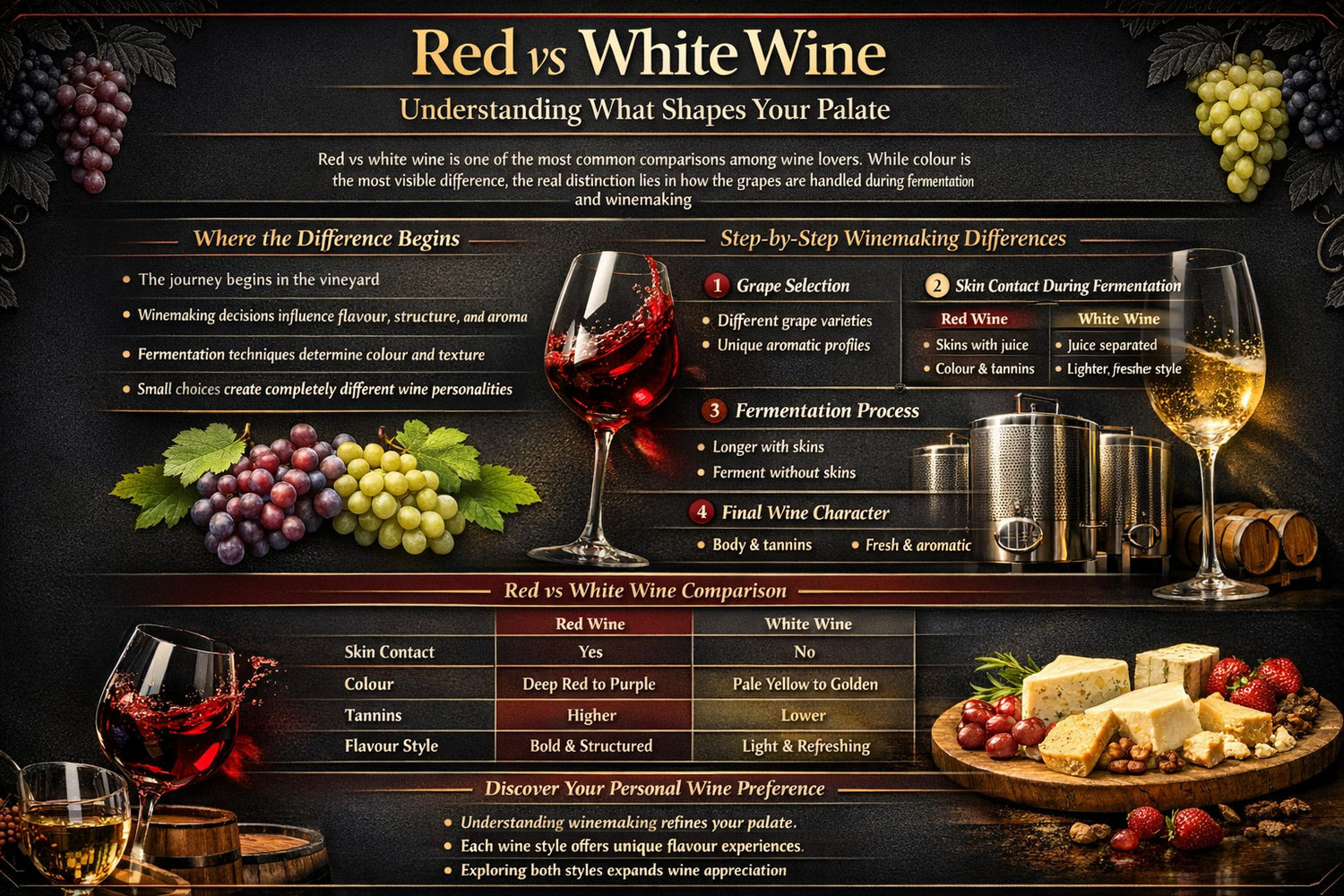
The difference between red and white wine mainly comes from how the grapes are handled during fermentation.
In red wine production, grape skins stay with the juice while it ferments. This is where colour, tannins, and deeper flavours develop. For white wines, the juice is usually separated from the skins early, which keeps the wine lighter and brighter.
Key differences at a glance:

| Feature | Red Wine | White Wine |
|---|---|---|
| Fermentation | With grape skins | Without skins |
| Colour | Deep red to purple | Pale yellow to golden |
| Texture | Fuller, more structured | Lighter, crisper |
| Key element | Tannins | Acidity |
These simple steps in winemaking create two completely different drinking experiences.
Red Wine vs White Wine Taste
When exploring red wine vs white wine taste, the difference is immediately noticeable.
Red wines tend to feel richer and more layered, while white wines often feel refreshing and vibrant. This is because red wines carry tannins from grape skins, while white wines highlight acidity and fruit freshness.
Typical flavour directions:
- Red wines: dark berries, plum, spice, chocolate, earthy notes
- White wines: citrus, apple, pear, tropical fruit, floral aromas
For example, McLaren Vale Shiraz is known for bold fruit and spice, while many Australian white wines lean toward crisp citrus and stone-fruit flavours.
Red Wine vs White Wine Characteristics

Looking at red wine vs white wine characteristics helps explain why people develop strong preferences.
Some drinkers enjoy the structure and depth of reds, while others prefer the light, refreshing nature of whites.
Red wine characteristics
- Higher tannins
- Fuller body
- Often aged longer
- Complex, layered flavours
White wine characteristics
- Higher acidity
- Lighter body
- Usually enjoyed young and fresh
- Crisp and aromatic
These elements influence how the wine feels on the palate as much as how it tastes.
Red vs White Wine Flavour Profile
The red vs white wine flavour profile is shaped by climate, grape variety, and winemaking style.
Research from global wine studies shows that tannins and acidity strongly influence how drinkers perceive balance and enjoyment in wine. Tannins add grip and depth in reds, while acidity brings brightness and freshness in whites.
Think of it this way:
- Red wines often feel bold, warm, and powerful
- White wines feel lively, crisp, and refreshing
Both offer unique sensory experiences depending on the moment, the meal, and your taste preferences.
Which Is Better Red or White Wine?

A question many people ask is which is better red or white wine. The truth is, neither is better—it simply depends on your palate.
Your preference might change depending on:
- The season
- The food you’re enjoying
- The mood or occasion
A bold red may feel perfect on a cool evening, while a chilled white can be incredibly refreshing on a warm afternoon.
The beauty of wine lies in this diversity. Exploring both styles helps you understand your palate—and makes every glass a little more interesting.
From Vineyard to Glass: How Winemaking Shapes Red and White Wine
Wine body and texture explained often begins with what happens right after grapes are harvested. The choices a winemaker makes—from crushing to fermentation—quietly shape the final personality of the wine. These decisions influence how the wine feels in your mouth, how bold it tastes, and even how long the flavours linger on your palate.
In simple terms, winemaking transforms grapes into a sensory experience.
The Impact of Skin Contact in Red Wine Production
One of the most fascinating stages in red wine production is skin contact. When red grapes are crushed, the juice ferments together with the grape skins, seeds, and sometimes stems.
This process extracts:
- Colour – giving red wines their deep ruby or purple shades
- Tannins – creating structure and that gentle drying sensation on the palate
- Flavour compounds – contributing notes of berries, spice, and earth
The longer the skins remain in contact with the juice, the more intense the wine becomes.
Why it matters:
- Longer contact → fuller body and stronger tannins
- Shorter contact → softer, fruit-driven red wines
In regions such as McLaren Vale, where grapes ripen beautifully in warm conditions, careful skin contact helps create bold, expressive reds like Shiraz.
White Wine Fermentation Techniques
While red wines embrace skin contact, white wines usually take the opposite approach.
After crushing, the juice is quickly separated from the skins, which keeps the wine light and fresh. The fermentation process then focuses on preserving delicate aromas.
Common techniques include:
- Cool fermentation to maintain citrus and floral aromas
- Stainless steel fermentation for clean, vibrant flavours
- Oak fermentation or ageing to add texture and creamy notes
These methods allow winemakers to highlight the natural freshness and elegance of white grapes.
How Production Methods Influence Flavour, Aroma, and Body
Understanding wine flavours becomes much easier when you see how production choices shape the final result. Small technical decisions can dramatically influence how a wine tastes and feels.
| Winemaking Choice | Impact on the Wine |
|---|---|
| Skin contact time | Affects colour, tannins, and depth |
| Fermentation temperature | Influences aroma intensity |
| Oak ageing | Adds spice, vanilla, and texture |
| Yeast selection | Shapes flavour complexity |
Studies in modern oenology show that fermentation temperature and yeast strains can significantly influence aroma compounds in wine. This is why two wines made from the same grape variety can taste surprisingly different.
Ultimately, the journey from vineyard to glass is a careful balance of science and artistry. Every decision a winemaker makes gently guides the wine toward its final style—whether bold and powerful or crisp and refreshing.
Why Some People Prefer Red and Others White

How to choose wine for your taste becomes much easier once you understand your own palate. Everyone experiences flavours differently. Some people naturally enjoy bold, structured wines, while others prefer fresh, vibrant styles. This is why one person might love a rich red Shiraz, while another reaches for a crisp Chardonnay.
Wine experts often say your palate is like a fingerprint—completely unique.
Identifying Your Personal Taste Preferences
Your wine preference is often influenced by the flavours and textures you enjoy in everyday foods and drinks.
Ask yourself a few simple questions:
- Do you prefer rich, bold flavours or light, refreshing ones?
- Do you enjoy drinks with a dry finish or a touch of sweetness?
- Do you like smooth textures or wines with a little grip?
Quick guide to common preferences:
| If You Enjoy… | You May Prefer… |
|---|---|
| Bold flavours like dark chocolate or grilled meats | Fuller-bodied red wines |
| Fresh foods like salads, seafood, citrus | Crisp white wines |
| Smooth, mellow drinks | Soft, fruit-driven reds |
| Zesty, refreshing drinks | Light, aromatic whites |
These small clues can help guide your wine choices.
How Tannins, Acidity, and Sweetness Affect Perception

Three key elements shape how wine feels and tastes on your palate.
Tannins (mostly in red wine)
- Create a dry sensation in the mouth
- Add structure and ageing potential
Acidity (common in white wine)
- Gives wine its crisp, refreshing character
- Makes flavours feel bright and lively
Sweetness
- Softens acidity and tannins
- Often makes wine easier for beginners to enjoy
Research in sensory wine studies shows that drinkers who are more sensitive to bitterness often prefer wines with lower tannins, which explains why many people gravitate toward white wines early in their wine journey.
Recognising Flavour Styles That Suit Different Drinkers
Once you begin paying attention to flavour styles, wine becomes much easier—and more exciting—to explore.
Some drinkers are naturally drawn to:
- Bold, powerful wines with dark fruit and spice
- Elegant, fruit-forward styles with soft texture
- Crisp, refreshing wines with citrus and floral notes
The best approach is simple: stay curious and keep tasting. Each glass reveals a little more about what your palate truly enjoys.
Over time, you’ll begin to recognise the styles that feel just right for you—and that’s when choosing wine becomes both confident and enjoyable.
The Language of Wine Flavours: Decoding Aromas, Body, and Texture
How to choose wine for your taste often becomes easier once you understand the “language” of wine. Terms like aroma, body, and texture may sound technical, but they simply describe how a wine smells, tastes, and feels in your mouth. When you learn to recognise these elements, every glass becomes more interesting—and your confidence in choosing wine grows naturally.
Fruit Profiles Commonly Found in Red vs White Wines
Wine flavours often reflect the natural fruit characteristics of the grapes. Climate, soil, and ripeness can influence these flavours, which is why wines from different regions taste unique.
Common fruit profiles:
Red wines
- Blackberry
- Plum
- Cherry
- Blackcurrant
- Spice or chocolate notes
White wines
- Citrus (lemon, lime)
- Green apple
- Pear
- Peach
- Tropical fruits like pineapple
In warmer regions such as McLaren Vale, red wines often develop richer, darker fruit flavours due to the climate helping grapes ripen fully.
Light-Bodied vs Full-Bodied Wine Styles

“Body” refers to the weight or richness of a wine on your palate.
Light-bodied wines
- Feel fresh and delicate
- Usually have lower alcohol and softer structure
- Often enjoyed chilled and perfect for warm days
Full-bodied wines
- Feel richer and more intense
- Often contain higher alcohol and stronger flavours
- Common in bold red wines like Shiraz
A simple way to imagine it: light wines feel like skim milk, while fuller wines feel closer to cream in texture.
Texture, Finish, and Balance Explained
Beyond flavour, experienced wine drinkers often notice how wine feels and finishes.
Key elements include:
- Texture: smooth, silky, crisp, or firm
- Finish: how long the flavours stay after swallowing
- Balance: harmony between fruit, acidity, tannins, and alcohol
Wine research in sensory science suggests that balanced wines are perceived as more enjoyable, because no single element overwhelms the others.
When these elements come together, the wine feels complete—leaving a pleasant, memorable impression long after the first sip.
Perfect Pairings: Matching Red and White Wines with Food

Red wine food pairing often shines when rich, flavourful dishes are on the table. The deeper structure and tannins in red wines work beautifully with hearty foods because they balance fats and proteins. This is why classic combinations—like a bold Shiraz with grilled steak—feel so satisfying.
Popular red wine pairings include:
- Shiraz or Cabernet Sauvignon with grilled meats or barbecue
- Grenache blends with slow-cooked lamb
- Medium-bodied reds with pasta dishes and roasted vegetables
Tannins in red wine act almost like a palate cleanser, cutting through richness and making each bite feel fresh again.
White Wine Food Pairing
White wine food pairing tends to focus on freshness and delicacy. White wines are often lighter and more vibrant, which allows them to complement rather than overpower subtle flavours.
Great matches for white wines:
- Chardonnay with seafood, creamy pasta, or roasted chicken
- Crisp white wines with salads and light appetisers
- Citrus-driven whites with grilled fish or shellfish
The natural acidity in white wines enhances lighter dishes and highlights their flavours rather than masking them.
Wine Pairing for Dinner: Simple Guidelines
Choosing the right wine pairing for dinner does not have to be complicated. A few simple principles can guide you:
- Match weight with weight – light dishes with lighter wines, rich meals with fuller wines
- Consider sauces and seasonings – often more important than the main ingredient
- Balance flavours – acidity, sweetness, and tannins all affect how food tastes with wine
Quick pairing guide
| Dish Style | Wine Style |
|---|---|
| Grilled steak or lamb | Full-bodied red wine |
| Roast chicken or creamy pasta | Medium-bodied white |
| Fresh seafood or salads | Light, crisp white |
| Spicy dishes | Fruit-forward or slightly off-dry wine |
When to Drink Red vs White Wine

Many wine lovers also wonder when to drink red vs white wine. While personal taste always matters most, certain moments naturally suit different styles.
- Red wines often feel comforting with hearty dinners or cooler evenings
- White wines feel refreshing with lighter meals or warm weather
Wine for Summer vs Winter
Wine for summer vs winter is another way people choose their bottle. Seasonal choices can enhance the entire dining experience.
- Summer: chilled whites with seafood, salads, and outdoor dining
- Winter: bold reds with roasted meats and slow-cooked meals
Food and wine pairing is not about strict rules—it is about discovering combinations that make both the dish and the wine taste even better. When the pairing works, the result can feel almost magical.
Choosing the Right Wine for the Moment
When to drink red vs white wine is a question many wine lovers ask, especially when planning a meal or special occasion. The truth is, the best choice often depends on the mood, the setting, and even the weather. Wine is not just about taste—it’s about the experience it creates. A well-chosen bottle can elevate a quiet dinner, celebrate a milestone, or simply make a relaxed evening feel more special.
Seasonal Wine Choices: Summer Whites vs Winter Reds

Wine for summer vs winter often follows a natural rhythm influenced by temperature and food choices.
During warmer months, lighter wines feel refreshing and easy to enjoy. In cooler seasons, richer wines tend to feel more comforting and satisfying.
Seasonal wine guide
| Season | Ideal Wine Style | Why It Works |
|---|---|---|
| Summer | Crisp white wines | Refreshing acidity and lighter body |
| Spring | Aromatic whites or light reds | Fresh and vibrant flavours |
| Autumn | Medium-bodied reds | Smooth texture with warming fruit notes |
| Winter | Bold, full-bodied reds | Rich structure pairs well with hearty meals |
This seasonal approach is widely recommended by sommeliers because temperature and food habits naturally influence how wine tastes.
Occasion-Based Wine Selection
The occasion often guides the perfect wine choice. Whether it’s a casual gathering or a formal dinner, different wines can set the tone.
Simple occasion-based ideas:
- Relaxed outdoor lunch: light, chilled white wines
- Dinner with friends: medium-bodied reds or versatile whites
- Celebrations: sparkling wines or elegant whites
- Cosy evening meals: bold reds with depth and warmth
Wine professionals often suggest choosing wines that match the energy of the moment, not just the menu.
When to Reach for Bold Reds or Crisp Whites
Sometimes the decision simply comes down to what your palate is craving.
Choose bold red wines when:
- You want deeper flavours and structure
- The meal includes grilled or slow-cooked dishes
- The evening feels relaxed and indulgent
Reach for crisp white wines when:
- You want something refreshing and lively
- The food is lighter, such as seafood or salads
- The weather is warm or the setting is outdoors
In the end, wine enjoyment is about balance between the moment, the food, and your personal taste. The more you explore different styles, the easier it becomes to choose the perfect bottle for any occasion. 🍷
Discover the Signature Red and White Wines of Curtis Family Vineyards

Red Wine
Red wine enthusiasts are often drawn to bold, full-bodied flavours. The rich complexity and depth found in red wines can be incredibly satisfying and are typically enjoyed alongside robust foods like steaks or hearty stews.
- Grenache Lovers: If you find yourself reaching for a rich Grenache, like our Limited Series Grenache, it's likely you have a taste for wines that offer both intensity and a touch of elegance. With its notes of red berries and subtle spices, this wine is made for the discerning palate.
- Cabernet Sauvignon Fans: Those who prefer a classic choice might lean towards our Heritage Cabernet Sauvignon. This wine is perfect for those who appreciate structured tannins and layers of dark fruit notes, creating a truly memorable tasting experience.
- Shiraz Enthusiasts: For wine lovers who enjoy a blend of fruity and spicy characteristics, the Terra Rossa Shiraz is often a favourite. It offers an intense flavour profile with hints of dark cherries and black pepper, making it an adventurous choice for those with a bolder palate.
- Complex Blends: If complexity is what you seek, then the Cavaliere Grenache Shiraz Mourvedre may be your match. This blend is ideal for those who enjoy exploring the subtle interplay of different varietals, offering a wine that is as intricate as it is enjoyable.
White Wine

On the other hand, white wine lovers often appreciate lighter, more refreshing profiles. These wines are often enjoyed in warm weather or alongside lighter meals, like crisp salads or delicate fish dishes.
White wines typically showcase fresh and vibrant characteristics. Though not explicitly covered today, understanding your love for red wines offers insight into whether white might also suit your tastes. Usually, fans of white wine enjoy a spectrum ranging from the zestiness of a Sauvignon Blanc to the creaminess of a Legion Chardonnay.
At Curtis Family Vineyards, our diverse range of wines like queen of hearts rose is crafted to delight and excite. Whether red or white is your choice, each bottle tells a story about your palate preferences and offers a new experience to savour. Explore our collection and discover the perfect wine to match your unique taste at Curtis Family Vineyards.
