

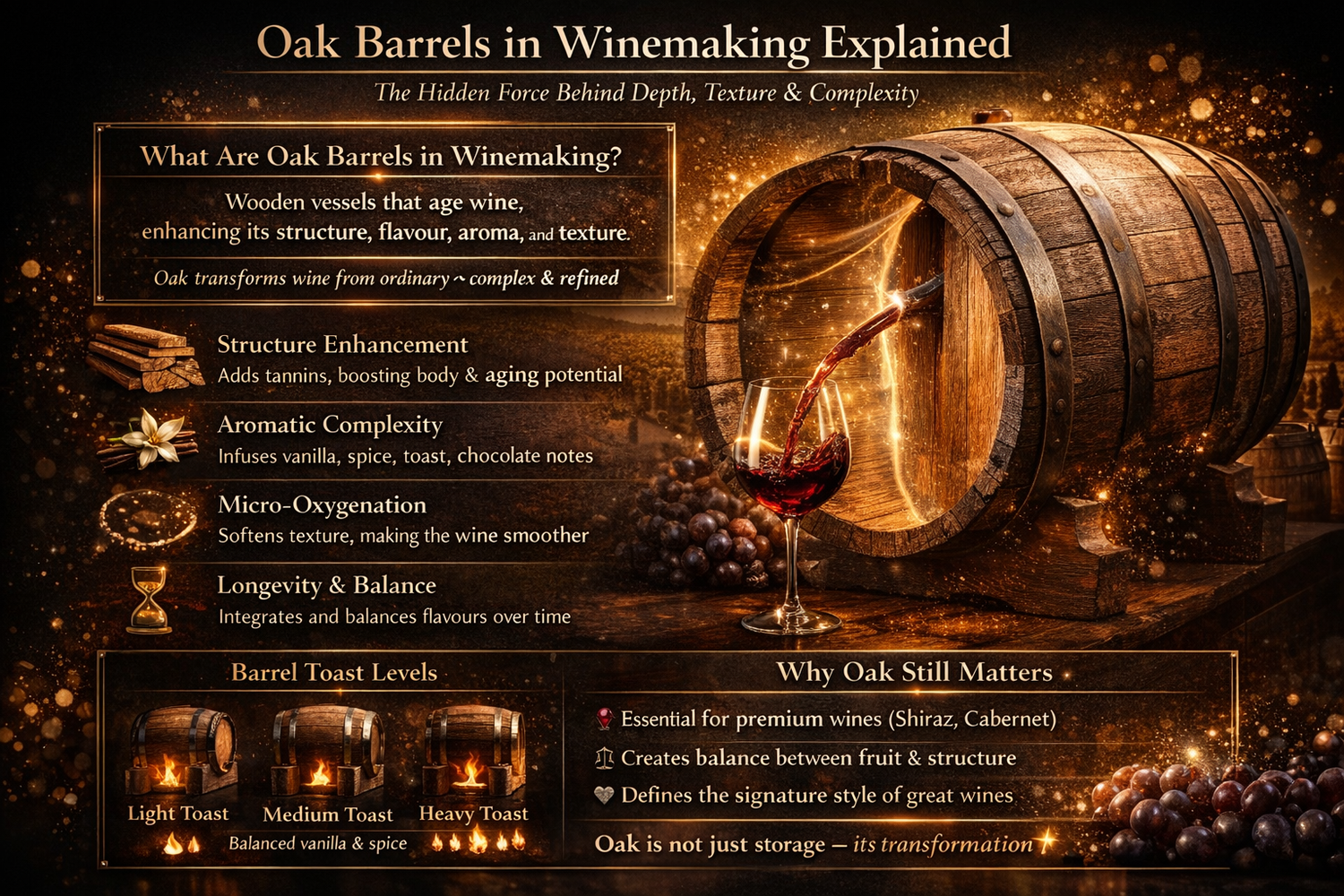
Oak barrels are an essential part of the winemaking process, lending a unique character and depth to the wines aged in them. The choice of oak can significantly impact the flavour, aroma, and texture of the wine. In this blog post, we'll explore the different types of oak barrels and how they influence wines, particularly focusing on the acclaimed Shiraz varieties from Curtis Family Vineyards.
Why Oak Still Reigns Supreme in Modern Winemaking

Various Oak Barrel Types continue to define the soul of fine wine, blending centuries-old tradition with modern winemaking science. It’s not just about storage, it’s about transformation. When wine meets oak, something subtle yet powerful happens, turning simple grape juice into a layered, age-worthy experience.
Across premium regions like McLaren Vale in South Australia, winemakers rely on oak to shape wines that feel richer, smoother, and more complex. This is why oak remains a non-negotiable tool in crafting high-quality Shiraz and Cabernet.
What Makes Oak So Powerful
Oak barrels and wine flavour are deeply connected through both physical and chemical changes that occur during ageing:
-
Structure Enhancement
Oak introduces gentle tannins, giving wine a firmer backbone and better ageing potential -
Aromatic Complexity
Natural compounds like vanillin and spice elements create notes of vanilla, clove, toast, and even chocolate -
Micro Oxygenation
Tiny amounts of oxygen pass through the barrel, softening harsh edges and refining texture over time -
Longevity & Balance
Oak helps stabilise the wine, allowing flavours to integrate and evolve gracefully

Tradition Meets Precision in McLaren Vale
In regions like McLaren Vale, oak is not used randomly, it’s chosen with intent. Winemakers carefully select from Various Oak Barrel Types depending on the grape, vintage, and desired style.
A practical example:
- A bold Shiraz may see American oak to enhance richness and sweetness
- A refined Cabernet might be aged in French oak for elegance and subtle spice
This thoughtful pairing is what separates everyday wines from truly memorable ones.
The Subtle Transformation You Don’t See
What’s fascinating is that oak doesn’t overpower, it elevates. Research in wine chemistry shows that controlled oak ageing improves mouthfeel and aromatic integration, making wines feel smoother and more complete.
The result?
A wine that tells a deeper story, one shaped not just by the vineyard, but by the barrel itself.
Breaking Down Various Oak Barrel Types Used by Winemakers
Types of oak barrels for wine play a far bigger role than most wine lovers realise. Each barrel tells a different story, shaping aroma, texture, and depth in ways that can completely change how a wine feels in your glass. The difference is not just wood, it’s origin, grain, and craftsmanship.
French Oak vs American Oak vs Hungarian Oak

French oak vs American oak vs Hungarian oak is one of the most important decisions a winemaker makes. Each brings a distinct personality:
| Oak Type | Key Traits | Flavour Profile | Best Suited For |
|---|---|---|---|
| French Oak | Tight grain, slow oxygen release | Subtle spice, elegance, fine tannins | Premium reds, Chardonnay |
| American Oak | Wider grain, more intense extraction | Vanilla, coconut, sweet spice | Bold Shiraz, full-bodied reds |
| Hungarian Oak | Medium grain, balanced structure | Gentle spice, soft toast, slightly earthy | Balanced reds and blends |
Studies in wine maturation show that tighter grain (like French oak) leads to slower flavour integration, creating more refined wines over time.
Types of Oak Barrels
French Oak
French oak is prized for its ability to enhance a wine's complexity without overpowering its inherent flavours. It imparts subtle notes of spice, vanilla, and toast, making it a popular choice for premium wines. For example, the Cavaliere Shiraz from Curtis Family Vineyards benefits from the elegant tannin structure imparted by French oak, resulting in a smooth and refined finish.
American Oak
American oak is known for its broader grain, which allows more oxygen into the wine. This interaction results in more robust flavours, with prominent notes of coconut, vanilla, and dill. Wines such as the Limited Series Shiraz showcase the boldness and richness that American oak can bring, complementing the natural intensity of Shiraz grapes.
Hungarian Oak
Hungarian oak shares similarities with French oak due to its tight grain but offers a distinct profile with a hint of spicy pepperiness. It's often chosen for wines that require a balance between new and old-world styles. The Terra Rossa Shiraz exemplifies this balance, with soft tannins and a complex flavour profile enhanced by the spicy notes of Hungarian oak.
The Hidden Factors That Change Everything
Oak barrels and wine flavour depend heavily on details that are often overlooked:
-
Grain Tightness
Tighter grain = subtle, complex flavours
Wider grain = stronger, faster flavour impact -
Origin of Oak Forests
Climate and soil affect the wood’s chemical makeup -
Cooperage Craftsmanship
Barrel-making techniques influence how flavours are released
Why Winemakers Match Oak to Grape Variety
This is where real expertise shows. Winemakers don’t just pick a barrel, they design a flavour journey.
- Bold grapes like Shiraz handle stronger oak influence without losing fruit character
- Delicate varieties need restrained oak to avoid overpowering natural flavours
- Blending different barrels is often used to create balance and complexity
In premium regions like McLaren Vale, this careful selection is what gives wines their signature richness and structure.
A Choice That Defines the Final Wine
The truth is simple but powerful, the barrel is not just a container, it’s a silent partner in winemaking. Choosing the right oak can mean the difference between a good wine and an unforgettable one.
Beyond Wood The Science of How Oak Transforms Wine
How different oak barrel types influence wine flavour is where winemaking shifts from craft to science. What seems like a simple ageing process is actually a slow, controlled transformation happening at a microscopic level, and it’s this hidden process that gives premium wines their depth and character.

What Happens Inside the Barrel
Oak barrels and wine flavour are shaped by a series of natural extractions that occur over time:
-
Tannins from Oak
Add structure and a firmer mouthfeel, helping the wine age gracefully -
Vanillin Compounds
Create familiar notes of vanilla and soft sweetness -
Spice & Toast Elements
Deliver hints of clove, nutmeg, smoke, and roasted flavours
Research in wine chemistry shows that these compounds evolve slowly, meaning the longer the ageing, the more integrated and refined the wine becomes.
The Power of Micro Oxygenation
One of the most fascinating processes is something you can’t see.
- Oak barrels allow tiny amounts of oxygen to enter over time
- This softens harsh tannins and smooths the wine’s texture
- It helps stabilise colour, especially in red wines
The result is a wine that feels rounder, silkier, and more balanced on the palate.
Chemical Evolution During Ageing
Wine ageing in oak barrels explained goes beyond flavour, it’s about transformation:
- Harsh acids gradually soften
- Aromas become more layered and complex
- Fruit, oak, and natural elements begin to integrate seamlessly
This is why young wines can taste sharp, while oak-aged wines feel complete and harmonious.
Where Oak Meets Terroir
In premium regions like McLaren Vale, oak is used to enhance, not mask, the vineyard’s natural identity.
- Fruit from warm climates gains balance through oak structure
- Oak highlights regional characteristics rather than overpowering them
- The goal is harmony, where fruit, soil, climate, and barrel work as one
The Real Magic
Oak doesn’t just add flavour, it refines, softens, and elevates. What starts as grape juice becomes a layered, expressive wine, shaped quietly over time inside the barrel.
New Oak vs Neutral Barrels The Subtle Art of Balance
Difference between new oak and neutral oak barrels is one of the most important, yet often overlooked, decisions in winemaking. It’s not just about flavour, it’s about control. Too much oak can overpower a wine, too little can leave it feeling flat. The real skill lies in finding balance.

New Oak vs Neutral Oak Explained
-
New Oak Barrels
Fresh barrels that actively release tannins, vanillin, and spice
→ Deliver bold flavours like vanilla, toast, and coconut -
Neutral Oak Barrels
Used barrels (typically 3–5 years old) with minimal flavour impact
→ Focus on texture, softness, and gentle ageing without strong oak notes
Winemakers often describe neutral oak as a “silent partner”, shaping the wine without stealing the spotlight.
Flavour Intensity vs Elegance
Oak barrels and wine flavour can shift dramatically depending on barrel age:
| Barrel Type | Impact on Wine | Style Outcome |
|---|---|---|
| New Oak | High flavour extraction | Rich, bold, structured |
| Neutral Oak | Low flavour impact | Elegant, balanced, fruit-driven |
Research shows that overuse of new oak can mask varietal character, while neutral oak helps preserve the purity of the grape.
Blending Strategies Used by Premium Wineries
Top wineries rarely rely on just one barrel type. Instead, they layer complexity through blending:
- Combine new oak for depth and structure
- Use neutral oak to maintain freshness and fruit clarity
- Adjust ratios depending on vintage and grape variety
In regions like McLaren Vale, this approach is key to crafting wines that feel both powerful and refined.
When Less Oak Creates More Complexity
Here’s the surprising truth: more oak doesn’t always mean better wine.
- Subtle oak allows terroir and fruit to shine
- Balanced use creates a smoother, more drinkable wine
- Complexity often comes from restraint, not intensity
The best wines are not dominated by oak, they are elevated by it.
Toasting Levels and Barrel Craftsmanship A Hidden Layer of Influence
Impact of oak barrel toasting levels on wine is one of the most fascinating yet underrated aspects of winemaking. It’s not just the oak itself, but how it’s treated with fire that unlocks a completely new layer of flavour. This is where science meets artisan skill.
Light, Medium, and Heavy Toast Explained

During barrel making, oak is gently heated over flame, changing its chemical structure and flavour potential:
| Toast Level | What Happens to the Wood | Flavour Impact |
|---|---|---|
| Light Toast | Minimal breakdown of compounds | Fresh oak, subtle spice, more tannin |
| Medium Toast | Balanced caramelisation | Vanilla, toasted nuts, gentle sweetness |
| Heavy Toast | Deep charring of wood layers | Smoke, chocolate, coffee, bold richness |
Studies in cooperage science show that heat transforms lignin and hemicellulose in oak, releasing aroma compounds that directly influence the wine.
How Toasting Shapes Aroma and Character
Oak barrels and wine flavour are strongly affected by toasting choices:
- Caramel & Vanilla Notes from medium toast
- Smoky & Roasted Flavours from heavy toast
- Spice & Fresh Wood Tones from light toast
This is why two wines aged in the same oak type can taste completely different.
The Art of Cooperage Craftsmanship
Behind every barrel is a skilled cooper, and their decisions matter:
- Selection of oak wood based on grain and origin
- Precise control of heat and timing during toasting
- Traditional bending techniques without nails or glue
Each barrel is essentially handcrafted, meaning no two barrels influence wine in exactly the same way.
Matching Toast Levels with Wine Styles
Winemakers carefully align toast levels with the wine’s personality:
- Bold reds like Octavian Shiraz benefit from medium to heavy toast for depth and richness
- Elegant wines prefer lighter toast to preserve fruit purity
- Blends may use multiple toast levels to build complexity
In regions like McLaren Vale, this level of precision helps create wines that are both expressive and beautifully balanced.
The Hidden Advantage
Toasting is not just a technical step, it’s a creative decision. A slight change in heat can shift a wine from subtle and refined to bold and intense, making it one of the most powerful tools in a winemaker’s hands.
Matching Various Oak Barrel Types with Wine Styles

Which oak barrel is best for red wine is not a one-size-fits-all answer. It’s a strategic choice that can elevate a wine from good to exceptional. The secret lies in matching the intensity of the oak with the character of the grape.
Bold Reds and Confident Oak Pairings
Various Oak Barrel Types are especially important for structured reds like Shiraz and Cabernet:
-
Shiraz
Often paired with American or medium-to-heavy toasted oak
→ Enhances richness, dark fruit, and spice -
Cabernet Sauvignon
Commonly matched with French oak
→ Adds elegance, fine tannins, and subtle complexity
Premium producers like Curtis Family Vineyards often blend wines like GSM aged in different oak types to balance power with finesse.
White Wines and the Art of Restraint
Oak barrels and wine flavour play a more delicate role in white wines like Battle of Battonage Chardonnay:
- Light to medium toast oak is preferred
- Focus remains on texture rather than strong flavours
- Subtle notes of creaminess, nuts, and soft vanilla are introduced
The goal is enhancement, not domination, allowing natural acidity and fruit to shine.
Regional Insight from McLaren Vale
In McLaren Vale, oak selection is deeply influenced by climate and grape profile:
- Warm climate fruit can handle more expressive oak
- Winemakers often experiment with French and American oak combinations
- Barrel choice is adjusted each vintage based on fruit intensity
The Strategy Behind Premium Wine Expression
Great winemaking is about precision and intention:
- Matching oak type to grape strength and style
- Using different barrels to build layers of flavour
- Balancing oak influence to maintain regional identity
The outcome is a wine that feels complete, where oak, fruit, and terroir work together seamlessly, creating a lasting impression with every sip.
From Barrel to Bottle Crafting Complexity and Character

Wine ageing in oak barrels explained goes far beyond time spent in storage. It’s a carefully managed journey where every decision, from months in barrel to the type of oak used, shapes the final wine you experience in the glass.
How Ageing Duration Shapes the Final Profile
Time is one of the most powerful tools in winemaking:
-
Short ageing (6–12 months)
→ Preserves fresh fruit, adds light oak influence -
Extended ageing (12–24+ months)
→ Builds depth, smoother texture, and layered complexity
Research shows that longer ageing allows better integration of tannins and aromas, creating a more harmonious wine like Small Batch Shiraz and Gladiator Shiraz .
Cost vs Quality The Real Investment
Cost of oak barrels winemaking is a major factor, especially for premium producers:
| Factor | Impact on Wine |
|---|---|
| New Oak Barrels | Higher cost, stronger flavour influence |
| Neutral Barrels | Lower cost over time, subtle refinement |
| Barrel Origin | Premium oak (French) often costs more but delivers finesse |
Top wineries invest strategically, not necessarily more, but smarter, to achieve balance and quality.
Sustainability and Barrel Lifecycle
Modern winemaking is evolving, with a stronger focus on sustainability:
- Barrels are reused over multiple vintages
- Older barrels are repurposed for neutral ageing
- Responsible sourcing of oak forests is becoming standard practice
In regions like McLaren Vale, sustainable practices are increasingly shaping how wineries approach barrel use.
The Final Influence on Experience and Value
Various Oak Barrel Types ultimately define how a wine feels, tastes, and is valued:
- Better integration = smoother, more enjoyable wine
- Balanced oak = higher perceived quality
- Thoughtful ageing = stronger ageing potential and collectability
The final bottle is not just a product, it’s the result of countless small decisions, with oak playing a quiet but powerful role in crafting a truly memorable wine.
