

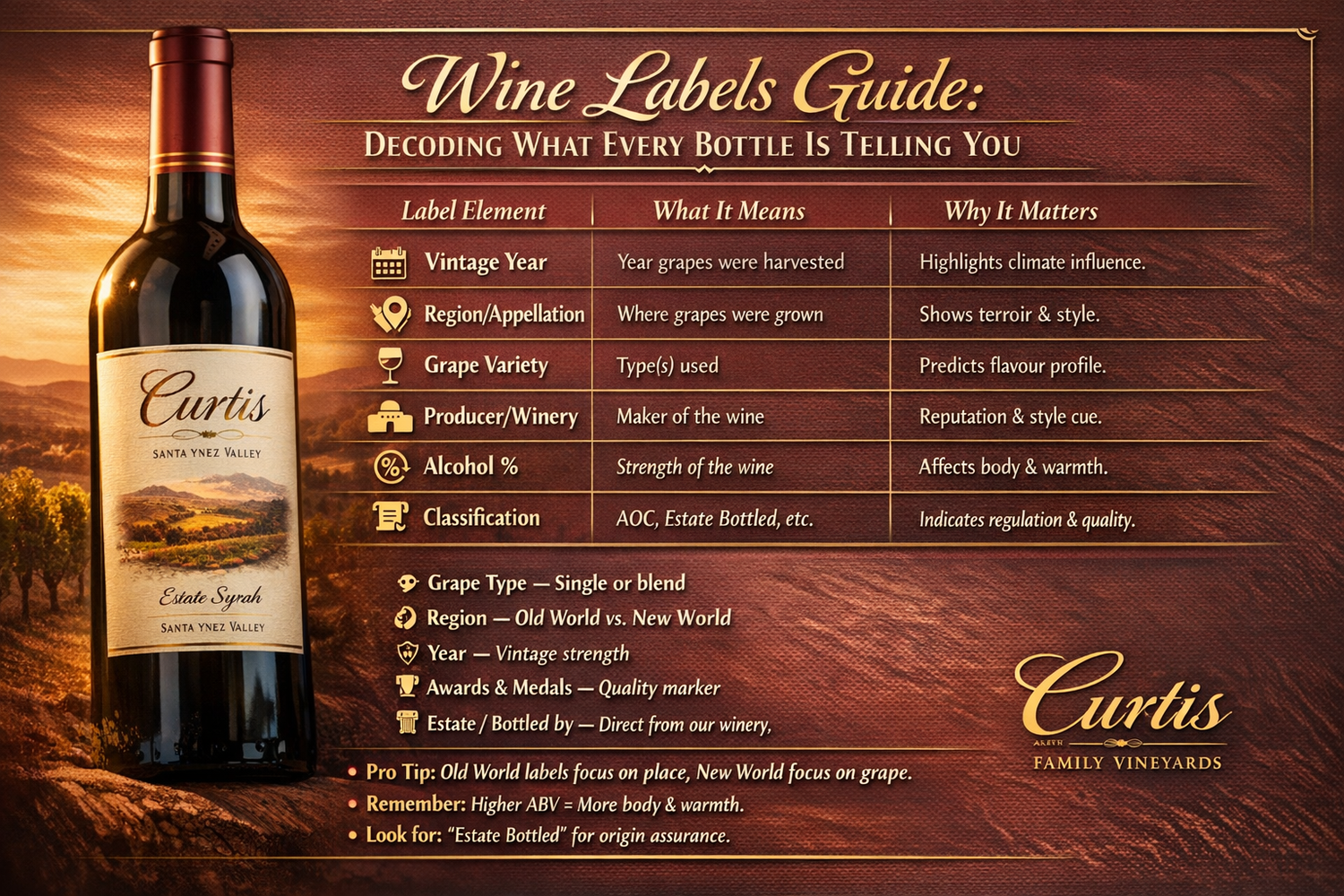
The Hidden Language of Wine Labels: Why Every Detail Matters
Wine labels guide articles often focus on design and branding, but in reality, a wine label is much more than a beautiful sticker on a bottle. It’s a carefully structured information system that tells you where the wine comes from, how it was made, and what you can expect when you pour the first glass.
For wine lovers and curious buyers alike, learning to read labels is like unlocking a secret language. Once you understand it, choosing a great bottle becomes far easier and far more enjoyable.

Wine Labels Are More Than Just Branding
At first glance, a label might look like marketing art. But wineries include a mix of mandatory information, heritage details, and quality signals that help buyers make informed choices.
Most wine labels typically reveal:
- Producer or winery name – who made the wine
- Region of origin – where the grapes were grown
- Vintage year – when the grapes were harvested
- Grape variety or blend – the wine’s main flavour driver
- Alcohol by volume (ABV) – the wine’s strength
These details are not random. In Australia, wine labels must follow strict labelling regulations, ensuring the information is accurate and transparent for consumers.
Wine Label Meaning: The Story Behind the Bottle

Understanding wine label meaning helps you connect the bottle to its origin. Every element on the label reflects decisions made in the vineyard and winery.
For example:
- A wine labelled “McLaren Vale Grenache” immediately tells you the grape variety and the region known for rich, fruit-driven Grenache wines.
- A single-vineyard label suggests the grapes come from one specific site, often highlighting unique terroir characteristics.
- Terms like Estate Grown indicate the winery controlled the process from vineyard to bottle.
These details reveal craftsmanship, authenticity, and regional identity — things experienced wine drinkers look for when selecting a bottle.
What Wine Labels Tell You About Taste and Style
When you understand what wine labels tell you, you start predicting the wine’s personality before opening it.
For example:
| Label Detail | What It Suggests About the Wine |
|---|---|
| Warm-climate region | Riper fruit flavours and fuller body |
| Cooler-climate region | Fresh acidity and lighter style |
| Older vintage | Potentially more complex, developed flavours |
| Specific grape variety | Key flavour notes (e.g., citrus, berries, spice) |
Wine educators often describe this as “reading the bottle before tasting the wine.” According to industry research from wine education bodies like the Wine & Spirit Education Trust (WSET), experienced buyers frequently rely on label information to anticipate quality and flavour profile.
Marketing Design vs. Real Information
Modern labels are designed to capture attention on crowded shelves. However, behind the artwork lies factual information that truly matters.
Design elements may include:
- Eye-catching illustrations
- Creative brand stories
- Artistic typography
But the real clues about the wine itself usually sit in smaller text — the grape variety, vintage, region, and production notes.
Smart wine buyers learn to enjoy the design while focusing on the details that reveal the wine’s true identity.
Once you start paying attention to these subtle cues, wine labels become more than decoration. They become a guide to flavour, origin, and craftsmanship, helping you choose bottles with confidence and curiosity.
The Essential Elements on Every Wine Label (And What They Actually Mean)
Grape variety on wine labels is often the first clue about what the wine will taste like. Whether it says Shiraz, Grenache, Chardonnay, or a blend, the grape largely defines the wine’s flavour profile, body, and aroma.
For example:
- Shiraz – bold, rich, dark fruit and spice
- Chardonnay – can range from crisp citrus to creamy oak styles
- Grenache – juicy red berries with smooth texture
Many Australian wines highlight the grape clearly because it helps drinkers instantly recognise the wine’s style.
Vintage: Why the Year Matters

Vintage meaning on a wine label refers to the year the grapes were harvested. This small number can reveal a lot about the wine’s character.
Weather plays a big role in vintage variation. A warm, dry season often produces riper fruit and fuller wines, while cooler years may deliver fresher acidity and lighter styles.
Wine professionals often look at the vintage to understand:
- Climate conditions during the growing season
- Potential ageing ability
- Differences in flavour intensity
Even within the same vineyard, the vintage can shape the personality of the wine.
Understanding Where the Wine Comes From
Wine region meaning on a label helps explain why wines taste the way they do. Regions influence climate, soil, and grape ripening conditions — all of which affect flavour.
For example:
| Wine Region Type | Typical Influence on Wine |
|---|---|
| Warm climate regions | Rich fruit flavours, fuller body |
| Cooler climate regions | Higher acidity, lighter and fresher style |
| Coastal regions | Balanced fruit with subtle freshness |
Regions like McLaren Vale in South Australia are known for producing expressive, fruit-driven wines thanks to their Mediterranean-style climate.
Wine Classification: Signals of Style and Quality

Wine classification on labels helps consumers understand the structure or production style of the wine. Some labels may include terms that indicate the wine’s category or quality level.
Common examples include:
- Reserve – often a winery’s premium selection
- Single Vineyard – grapes sourced from one specific site
- Limited Release – smaller production batches
While meanings can vary by winery, these words usually highlight wines made with extra care or from special vineyard parcels.
Alcohol Percentage: What It Reveals

Wine alcohol percentage on wine labels (ABV) indicates the strength of the wine, but it also hints at its body and ripeness.
Typical ranges include:
- 11–12.5% ABV – lighter style wines
- 13–14% ABV – balanced, medium-bodied wines
- 14%+ ABV – fuller, richer wines
Higher alcohol levels often come from grapes grown in warmer climates where sugars develop more fully before fermentation.
Estate Bottled: A Mark of Origin and Craft
Estate bottled meaning is important for those who value authenticity. This term generally indicates that the wine was produced and bottled by the winery using grapes grown in vineyards they control.
For wine drinkers, this can signal:
- Greater vineyard oversight
- Stronger connection between land and wine
- Consistent winery craftsmanship
Boutique wineries often use estate bottling to showcase their true regional identity and vineyard character.
Other Important Label Details
Wine labels also include practical information required by law:
- Producer or winery name
- Bottle size (usually 750 ml)
- Government health warnings
- Country of origin
Together, these elements form a complete picture of the wine inside the bottle. Once you know what to look for, reading a wine label becomes a powerful tool for predicting flavour, quality, and style before the cork is even pulled.
Decoding Wine Regions: How Geography Shapes What’s Inside the Bottle
Wine region on labels explained simply means understanding where the grapes were grown and how that location shapes the wine’s character. In the wine world, geography is not just a detail — it’s one of the most powerful clues about flavour, aroma, and quality.
When you see a region printed on a bottle, it tells you that the wine reflects the climate, soil, and growing conditions of that place. Experienced wine buyers often look at the region first because it gives them a strong hint about what the wine will taste like.
Why Wine Regions Appear on Labels
Wine regions appear on labels to provide traceability and authenticity. They help consumers understand the origin of the grapes and ensure transparency.
In many countries, this is governed through systems known as Geographical Indications (GI).
Geographic indication wine refers to wines that must come from a defined region. In Australia, for example, if a label says McLaren Vale, at least 85% of the grapes must come from that region under Australian wine regulations.
This protects both the reputation of the region and the confidence of wine buyers.
How Terroir Influences Taste
The French concept of terroir explains how natural factors influence wine style.
Terroir includes:
- Climate – temperature, sunshine, and rainfall
- Soil type – sand, clay, limestone, or gravel
- Topography – elevation and slope
- Proximity to the ocean
These elements shape how grapes ripen and ultimately affect flavour.
| Terroir Factor | Influence on Wine |
|---|---|
| Warm climate | Riper fruit flavours, fuller body |
| Cooler climate | Higher acidity, fresher style |
| Coastal influence | Balanced ripening and natural freshness |
Because of terroir, the same grape variety can taste completely different depending on where it is grown.
Old World vs New World Label Styles

Old World vs New World wine labels reflect two different traditions of wine labelling.
| Style | What Labels Focus On | Example |
|---|---|---|
| Old World (Europe) | Region and appellation | Bordeaux, Burgundy |
| New World (Australia, USA) | Grape variety and region | Shiraz, Chardonnay |
In Old World regions, the place often tells you the grape variety. In New World regions like Australia, labels are designed to be clearer and easier for consumers, often highlighting the grape first.
Why Regions Like McLaren Vale Matter
Some wine regions have built global reputations because of their unique terroir. McLaren Vale in South Australia is one such example.
The region is known for:
- A Mediterranean-style climate with warm days and cooling sea breezes
- Diverse soils that support expressive red varieties
- Exceptional wines made from Shiraz, Grenache, and Cabernet Sauvignon
Because of these natural advantages, wines from McLaren Vale often show rich fruit flavours, balanced structure, and remarkable depth.
For wine lovers, seeing a respected region on the label isn’t just information — it’s a promise of place, character, and craftsmanship inside the bottle. At Curtis Family Vineyards, located in the renowned McLaren Vale, the unique terroir influences the flavour profiles of their wines. For example, the Terra Rossa Shiraz is notable for the vibrant red earth it originates from, lending a unique depth and complexity to its taste.
Vintage, Varieties & Style: The Clues That Reveal a Wine’s Personality
Vintage meaning on a wine label refers to the year the grapes were harvested, and it can quietly reveal a lot about what you are about to taste. Wine is an agricultural product, so each year’s weather conditions shape the grapes differently.
A warm growing season often produces riper fruit, deeper colour, and fuller-bodied wines, while cooler seasons can deliver brighter acidity and lighter, fresher styles. This is why wine lovers sometimes compare vintages from the same region.
Wine experts and educators often highlight vintage because it provides insight into:
- Growing conditions during the season
- Ripeness and flavour intensity of the grapes
- Potential ageing ability of the wine
Even wines from the same vineyard can show subtle personality changes from one vintage to another.
Single Varietal vs Blended Wines

Grape variety on wine labels tells you which grape dominates the wine’s flavour profile. In Australia, if a wine is labelled with a single grape variety, at least 85% of the wine must come from that grape.
There are two common styles you’ll see on labels:
Single Varietal Wines
These highlight one main grape and showcase its natural character.
Examples:
- Shiraz – bold dark fruit, spice, and richness
- Chardonnay – citrus, stone fruit, and creamy textures
- Grenache – juicy red berries with soft tannins
Blended Wines
Blends combine multiple grape varieties to create balance and complexity.
Winemakers often blend to:
- Add structure and depth
- Balance acidity, fruit, and tannins
- Enhance the wine’s ageing potential
Many world-famous wines, including classic Bordeaux styles, are blends.
How Climate Shapes Vintage Differences
Climate plays a powerful role in shaping each vintage.
Key influences include:
- Temperature – affects grape ripeness and sugar levels
- Rainfall – impacts vine health and fruit concentration
- Sunlight hours – influences flavour development
| Climate Condition | Likely Wine Style |
|---|---|
| Warmer seasons | Richer fruit flavours, fuller body |
| Cooler seasons | Higher acidity, fresher structure |
| Balanced seasons | Harmony between fruit, acidity and tannin |
Regions with Mediterranean climates, like parts of South Australia, often produce consistent vintages with expressive fruit flavours.
How Grape Varieties Shape Flavour

Each grape variety carries its own signature characteristics. This is why simply reading the grape name on a label can give strong clues about the wine’s taste.
Common flavour indicators include:
- Shiraz – blackberry, plum, peppery spice
- Grenache – raspberry, strawberry, soft spice
- Cabernet Sauvignon – blackcurrant, structure, firm tannins
- Chardonnay – citrus, peach, sometimes creamy oak
For wine lovers, understanding these clues turns every bottle into a small discovery. By combining vintage, grape variety, and climate, a wine label quietly reveals the personality of the wine long before the cork is opened.
While some wines are labelled with a single grape variety, others may be a blend. The Heritage Shiraz offers a traditional take on this classic variety, showcasing the boldness typical of Shiraz grapes. Meanwhile, the Heritage Cabernet Sauvignon introduces you to the rich, opulent flavours of a grape often praised for its flexibility and depth.
The Quality Signals: Words on Labels That Indicate Craftsmanship
Reserve wine meaning often sparks curiosity for wine buyers scanning the shelves. While the exact definition can vary between wineries, the term usually signals a special selection made with extra care. These wines may come from the best vineyard parcels, older vines, or particularly strong vintages.
Many wineries use “Reserve” to highlight wines that receive more attention in the vineyard and longer ageing in the cellar, resulting in deeper flavour and complexity.
Premium Terms That Hint at Quality
Premium wine label terms can quietly indicate craftsmanship and winemaking philosophy. Although some terms are not legally regulated, experienced wine drinkers often look for them as quality clues.
Common terms include:
- Reserve – a winery’s selected premium wine
- Old Vine – grapes from mature vines, often producing concentrated fruit
- Limited Release – produced in small quantities
- Handpicked – grapes harvested manually for quality control
These details tell a story about how much care went into producing the wine.
Single Vineyard Wines: A Taste of One Place
Single vineyard meaning refers to wines made from grapes grown in one specific vineyard rather than multiple locations.
This approach highlights the unique terroir of that site — its soil, climate, and micro-environment.
Wine lovers value single vineyard wines because they often show:
- Distinct regional character
- Greater flavour purity
- Unique vintage expression
It’s similar to tasting a snapshot of one particular piece of land in a given year.
Estate-Grown Wines and Authenticity
Estate-grown wine meaning usually indicates that the winery controls the entire process — from vineyard to bottle. The grapes are grown on land owned or managed by the winery itself.
For consumers, this often suggests:
- Greater oversight of grape quality
- Strong connection between vineyard and winemaker
- Consistency in style and craftsmanship
Many boutique wineries proudly highlight estate-grown wines to showcase authentic regional expression.
The Influence of Oak and Barrel Ageing
Barrel aged meaning refers to wines matured in oak barrels before bottling. This ageing process can transform the texture and aroma of the wine.
Oak ageing may add subtle flavours such as:
- Vanilla
- Toast
- Spice
- Caramel or roasted notes
Barrels also allow gentle oxygen contact, which helps soften tannins and build complexity.
| Ageing Method | Influence on the Wine |
|---|---|
| Stainless steel | Fresh fruit and crisp acidity |
| Oak barrels | Added texture, spice, and complexity |
Limited Releases and Small-Batch Craftsmanship
Boutique wineries often produce limited release or small-batch wines to highlight exceptional vineyard blocks or standout vintages.
These wines are typically:
- Produced in smaller quantities
- Crafted with close attention to detail
- Designed to express unique vineyard characteristics
For wine lovers, spotting these subtle label cues can feel like discovering a hidden gem. Once you understand these quality signals, wine labels become a powerful guide to craftsmanship, authenticity, and the story behind every bottle.
Wine Label Regulations: What Wineries Are Required to Tell You

Wine label regulations Australia are designed to protect both wine producers and consumers. Behind every bottle on the shelf is a strict framework that ensures labels are truthful, accurate, and transparent.
In Australia, wine labelling is overseen by organisations such as Wine Australia and must follow national standards. These rules make sure the information on the bottle genuinely reflects what’s inside — from the origin of the grapes to the alcohol level.
For wine lovers, this means you can trust the key details printed on Australian wine labels.
Mandatory Information on Wine Labels
Mandatory wine label information helps buyers clearly understand what they are purchasing. Without these details, a wine cannot legally be sold.
Australian wine labels must typically include:
- Producer or winery name
- Geographical origin (if stated on the label)
- Vintage year (if declared)
- Alcohol by volume (ABV)
- Bottle volume (commonly 750 ml)
- Country of origin
- Standard drink information and health warnings
These details provide essential transparency and allow consumers to compare wines more confidently.
Wine Labelling Laws Explained
Wine labelling laws explained in simple terms focus on accuracy and authenticity. For example, Australian regulations follow the “85% rule.”
This means:
- If a wine label lists a grape variety, at least 85% must come from that grape
- If a vintage year is stated, at least 85% of the wine must be from that harvest
- If a region is named, at least 85% of the grapes must come from that area
These rules help ensure labels genuinely represent the wine.
| Label Claim | Regulation Requirement |
|---|---|
| Grape variety | Minimum 85% from that grape |
| Vintage year | Minimum 85% from that year |
| Region stated | Minimum 85% from that region |
Why Transparency Matters for Wine Lovers
Clear labelling isn’t just a legal requirement — it builds trust. When buyers understand where the grapes were grown, when they were harvested, and who made the wine, they can make more informed decisions.
Transparent labels help consumers:
- Compare wines across regions and styles
- Identify trusted wineries
- Discover wines that match their taste preferences
Protecting the Authenticity of Wine
Wine regulations also help protect the reputation of well-known wine regions. Without strict labelling laws, producers could falsely claim prestigious regions or grape varieties.
By enforcing clear standards, the Australian wine industry ensures that the story on the label truly reflects the wine in the bottle.
For wine enthusiasts, this means every carefully printed detail on the label is more than information — it’s a promise of authenticity, origin, and craftsmanship. 🍷
The vintage year indicated on a wine label tells you the year the grapes were harvested. This might influence your choice if you have a preference for specific vintage characteristics. Wines like the Ancestor Shiraz or Heritage Grenache can have distinct variations across vintages, offering unique glimpses into changing growing conditions and viticultural techniques.
Choosing Wine with Confidence: Using Labels to Find the Perfect Bottle
How to choose wine by label becomes much easier once you know what details to focus on. Wine professionals often scan a label for just a few seconds before making a decision. Those small pieces of information can reveal the wine’s style, flavour intensity, and even its potential quality.
If you are standing in a wine shop and feeling overwhelmed by choices, start by checking a few key elements:
- Grape variety – gives clues about flavour and body
- Wine region – hints at climate and style
- Vintage year – suggests the growing conditions
- Alcohol percentage (ABV) – often indicates richness or lightness
These details work together like a quick guide to what the wine may taste like.
Reading Labels Before Buying

Reading wine labels before buying helps you avoid guesswork. Experienced wine drinkers often treat the label as a preview of the wine’s personality.
A simple 10-second label check can reveal:
- Whether the wine is light, medium, or full-bodied
- If it is likely to taste fresh and crisp or rich and bold
- The origin and reputation of the region
Many wine educators say the label is the first step in understanding the wine before the cork is even pulled.
Identifying Flavour Style from Label Clues
The label often provides subtle hints about the flavour style you can expect.
| Label Detail | Possible Flavour Style |
|---|---|
| Cool climate region | Fresh, vibrant acidity |
| Warm climate region | Rich fruit and fuller body |
| Higher alcohol (14%+) | Bold, powerful wine |
| Oak or barrel aged | Vanilla, spice, creamy texture |
These clues help wine buyers narrow down options quickly and confidently.
What Makes a Good Wine Label
What makes a good wine label isn’t only about beautiful design. While eye-catching artwork attracts attention, the most helpful labels clearly communicate important information.
Strong labels typically include:
- Clear grape variety or blend
- Recognised wine region
- Vintage year
- Helpful production notes (such as oak ageing or single vineyard)
When labels balance creative design with useful information, they make the wine easier to understand for both beginners and experienced drinkers.
Spotting Quality Signals on Labels
Clues to wine quality on labels can guide buyers towards bottles made with extra care. While not every term is strictly regulated, many still offer helpful hints about craftsmanship.
Look for terms such as:
- Estate grown – wine made from grapes grown by the winery
- Single vineyard – grapes sourced from one specific site
- Limited release – smaller production with greater attention to detail
- Reserve – often a winery’s premium selection
For knowledgeable wine drinkers, these subtle signals help turn a simple purchase into a confident choice. Once you learn to read the label, finding a wine you love becomes less about luck and more about understanding the story behind the bottle.
Beyond the basics of grape variety and region, labels also offer clues about the wine's style. This can include mentions of oak aging, which can add layers of flavour and texture, and whether the wine is designed to be sparkling, still, dry, or sweet. For those who enjoy a bit of effervescence, the Heritage Sparkling Blanc de Blanc is an elegant choice with its light, bubbly nature.
