

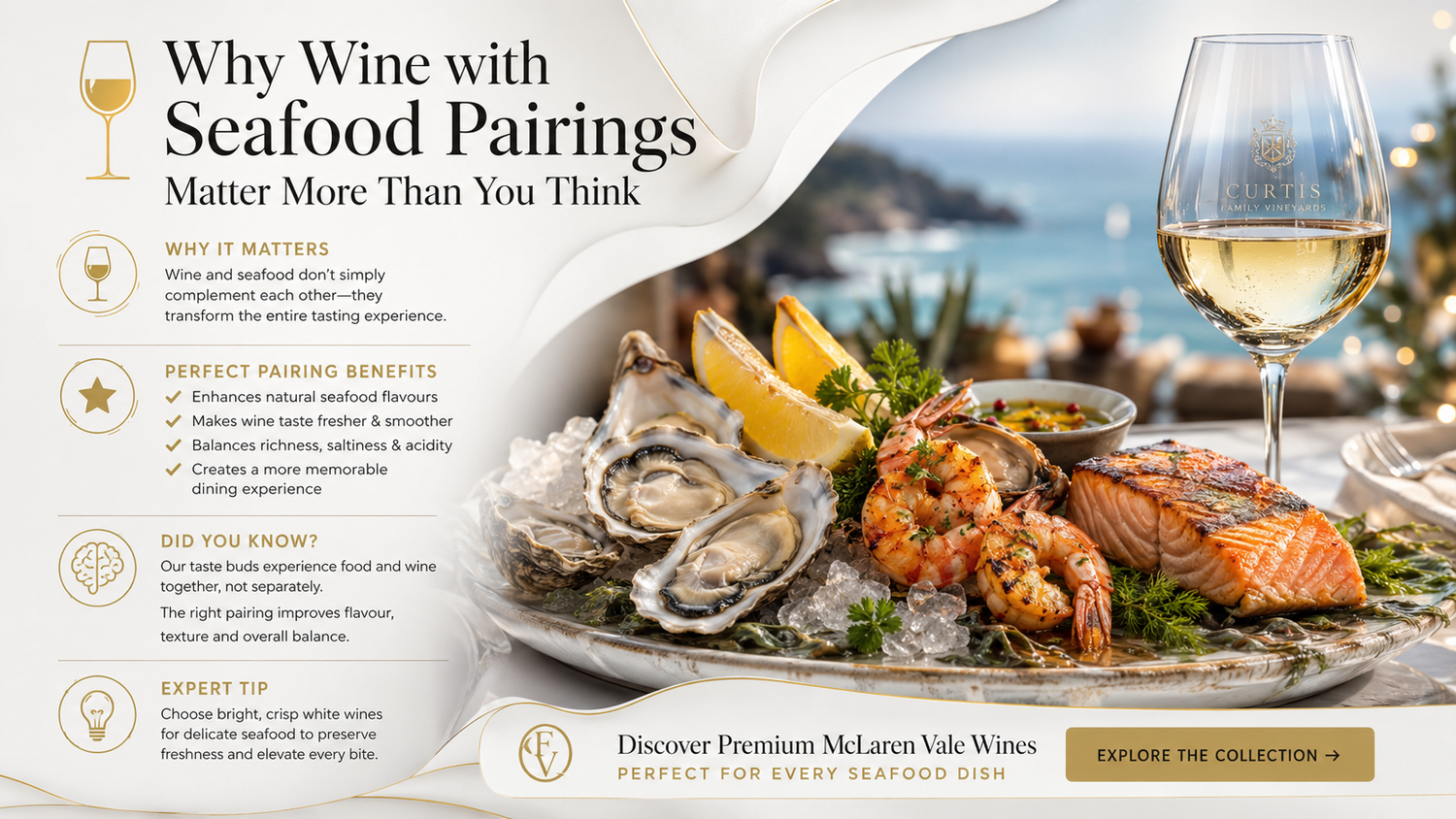
Why Wine with Seafood Pairings Matter More Than You Think
Wine with Seafood Pairings is about much more than following tradition. The right combination can make both the wine and the seafood taste fresher, richer and more balanced. Get it wrong, however, and even a premium wine or beautifully prepared seafood dish can lose its appeal. Understanding a few simple pairing principles will help you enjoy every glass and every bite with confidence.
Why Pairing Changes Flavour Perception
Our taste buds don't experience food and wine separately—they interact with each other. Research in sensory science has shown that acidity, sweetness, saltiness and texture all influence how we perceive flavour. This is why a crisp white wine can make fresh oysters taste even more vibrant, while a heavy, tannic red may overwhelm delicate seafood.
A well-matched pairing can:
- Enhance natural seafood flavours without overpowering them.
- Make wine taste smoother, brighter and more refreshing.
- Balance richness, saltiness and freshness in every mouthful.
- Create a dining experience that feels more complete and memorable.
Seafood and Wine Pairing Guide: The Three Elements That Matter Most

Choosing the right wine doesn't have to be complicated. Focus on these three factors:
| Pairing Element | Why It Matters |
|---|---|
| Acidity | Crisp wines refresh the palate and complement fresh seafood beautifully. |
| Freshness | Light, vibrant wines preserve the delicate flavours of fish and shellfish. |
| Texture | Match lighter wines with delicate seafood and fuller-bodied wines with richer dishes like lobster or creamy seafood pasta. |
Wine Pairing Basics: Common Myths Beginners Often Believe
Many people avoid experimenting because they've heard outdated advice. Let's clear up a few common misconceptions:
-
Myth: Only white wine works with seafood.
Reality: Light-bodied reds, rosé and sparkling wines can also pair wonderfully with certain seafood dishes. -
Myth: Expensive wine always creates the best pairing.
Reality: Balance matters far more than price. -
Myth: Pair wine with the fish only.
Reality: Sauces, herbs, spices and cooking methods often have a bigger influence on the ideal wine choice.
Why Some Wines Overpower Seafood
Delicate seafood has subtle flavours that can easily disappear behind wines with high tannins, heavy oak or high alcohol. Instead of complementing the meal, these wines can leave a bitter or metallic aftertaste, especially with oysters, prawns and white fish.
As a simple guide:
- Delicate seafood → Light, crisp wines.
- Rich seafood → Fuller-bodied whites or elegant rosé.
- Grilled or meaty seafood → Carefully selected lighter reds can work well.
The Simple Rule Every Beginner Should Know
If you're ever unsure, remember this easy rule:
The lighter the seafood, the lighter and fresher the wine. The richer the dish, the more body your wine can have.
Starting with this principle makes choosing the perfect match much easier. As you explore different styles from McLaren Vale, you'll quickly discover how the right pairing can transform an ordinary seafood meal into a memorable dining experience.
How to Choose the Best Wine with Seafood Using Four Simple Pairing Principles

How to pair wine with seafood becomes surprisingly simple once you understand a few key principles. Professional sommeliers don't rely on complicated rules—they focus on balance. By matching the weight, acidity and flavours of both the wine and the dish, you can create pairings that taste fresh, harmonious and memorable.
1. Match Wine Body with Seafood Weight
The first rule is to match the intensity of the wine with the richness of the seafood. A light wine can be overwhelmed by a rich seafood dish, while a full-bodied wine may overpower delicate fish.
| Seafood Style | Recommended Wine Style |
|---|---|
| Oysters, prawns, scallops | Sparkling Wine, Sauvignon Blanc, Riesling |
| Snapper, whiting, barramundi | Chardonnay (unoaked), Pinot Grigio |
| Salmon, tuna | Pinot Noir, fuller Chardonnay |
| Lobster, crab, creamy seafood | Oak-aged Chardonnay |
A balanced pairing allows both the seafood and the wine to shine without competing for attention.
2. Balance Acidity and Richness
Best wine with seafood is often a wine with bright, refreshing acidity. Acidity acts like a squeeze of fresh lemon—it lifts flavours, cuts through richness and keeps every bite tasting clean.
For example:
- Crisp Riesling complements fresh oysters and grilled prawns.
- Chardonnay balances buttery lobster and creamy seafood pasta.
- Sparkling wine refreshes the palate after fried seafood.
This simple balance is one reason crisp white wines remain favourites with seafood lovers.
3. Think About How the Seafood Is Cooked
Cooking changes the flavour more than many people realise. Instead of pairing only with the type of seafood, consider the cooking method first.
- Raw or lightly cooked seafood: Fresh, mineral-driven wines.
- Grilled seafood: Medium-bodied whites or elegant rosé.
- Fried seafood: High-acidity sparkling wines or Sauvignon Blanc.
- Smoked seafood: Wines with more texture, such as Chardonnay.
A grilled barramundi and a battered barramundi can call for completely different wines.
4. Sauce and Seasoning Often Make the Biggest Difference

Wine pairing for seafood should always consider what is on the plate—not just the seafood itself. Rich sauces, herbs and spices can dramatically change the ideal wine match.
- Cream or butter sauces → Chardonnay
- Lemon and herbs → Sauvignon Blanc
- Garlic and olive oil → Pinot Grigio
- Mild chilli or Asian flavours → Riesling
- Tomato-based seafood dishes → Rosé or light Pinot Noir
Many wine experts agree that the sauce is often the deciding factor when selecting the perfect bottle.
Don't Forget Serving Temperature
Even an excellent pairing can disappoint if the wine is served incorrectly.
- Sparkling Wine: 6–8°C
- Sauvignon Blanc & Riesling: 8–10°C
- Chardonnay: 10–13°C
- Light Pinot Noir: 12–14°C
Serving wine at the right temperature highlights its aromas, freshness and texture, helping you enjoy the full character of both the wine and your seafood meal. Master these four simple principles, and you'll confidently create restaurant-quality wine and seafood pairings at home.
Best Wine with Seafood Pairings for Every Popular Seafood Dish

Best wine with seafood comes down to one simple idea: match the wine's intensity with the flavour and texture of the dish. While personal preference always matters, these classic pairings are trusted by winemakers, sommeliers and chefs because they consistently bring out the best in both the wine and the seafood.
A Quick Guide to Popular Seafood and Wine Matches
| Seafood Dish | Recommended Wine | Why It Works |
|---|---|---|
| Oysters | Sparkling Wine | Crisp acidity and fine bubbles enhance the oysters' fresh, briny flavour. |
| Prawns | Sauvignon Blanc | Bright citrus notes complement sweet, delicate prawns. |
| Crab | Chardonnay | A balanced Chardonnay matches the crab's naturally sweet, rich meat. |
| Lobster | Oak-aged Chardonnay | Creamy texture and subtle oak pair beautifully with buttery lobster. |
| Grilled Fish | Rosé | Fresh fruit flavours and lively acidity suit smoky, grilled seafood. |
| Salmon | Pinot Noir | Light tannins and bright red fruit complement the richer texture of salmon. |
| Tuna | Light-bodied Red | Elegant reds such as Pinot Noir work well with meaty tuna steaks. |
| Barramundi | Riesling | Crisp acidity and citrus flavours highlight this Australian favourite. |
| Creamy Seafood Pasta | Chardonnay | The wine's body balances rich cream-based sauces. |
| Fried Seafood | Sparkling Wine or Sauvignon Blanc | Refreshing acidity cuts through the crispy coating. |
| Seafood BBQ | Rosé or Light Shiraz | Fruity, vibrant wines complement chargrilled seafood without dominating it. |
Wine with Oysters: Keep It Fresh and Crisp
Wine with oysters is one of the world's most celebrated pairings. Fresh sparkling wine lifts the oysters' natural salinity, while its lively bubbles cleanse the palate after every bite. This creates a clean, refreshing finish that keeps you reaching for another oyster.
Wine with Prawns: Bright Flavours Win Every Time
Sweet prawns pair beautifully with Sauvignon Blanc because its citrus, tropical fruit and herbaceous notes add freshness without masking the seafood's delicate flavour. Whether the prawns are grilled, steamed or served chilled, this pairing is consistently reliable.
Wine with Salmon and Richer Seafood
Wine with salmon is an excellent example of why richer seafood deserves a different approach. Salmon's higher oil content allows it to pair with a light-bodied Pinot Noir, creating a balanced combination where the wine's soft tannins and vibrant fruit complement the fish rather than overpower it.
Wine with Lobster: A Luxurious Match
Wine with lobster is best enjoyed with an oak-aged Chardonnay. The wine's creamy texture, subtle vanilla notes and balanced acidity enhance buttery lobster dishes, creating a pairing often found in fine dining restaurants around the world.
Don't Forget the Cooking Style
The way seafood is prepared can change the ideal wine choice.
- Raw seafood: Sparkling Wine or Riesling
- Grilled seafood: Rosé or Chardonnay
- Creamy dishes: Oak-aged Chardonnay
- Fried seafood: Sauvignon Blanc or Sparkling Wine
- Barbecued seafood: Rosé or a light, fruit-driven red
Choosing the right wine isn't about following strict rules—it's about creating balance. By matching the wine to both the seafood and the cooking style, you'll enjoy flavours that feel fresher, more vibrant and perfectly suited to every meal.
White, Rosé, Sparkling or Red? Choosing the Right Wine Style for Seafood

Best white wine for seafood is often the first recommendation because its bright acidity, fresh fruit flavours and lighter body naturally complement delicate fish and shellfish. However, white wine isn't the only great choice. Sparkling, rosé and even selected red wines can create outstanding pairings when matched with the right seafood and cooking style.
Why White Wine Remains the Classic Choice
White wine like Heritage Sparkling blanc de blanc has earned its reputation because it enhances seafood without overpowering it. Crisp acidity refreshes the palate, while citrus and mineral notes highlight the natural sweetness of seafood.
White wines are ideal for:
- Fresh oysters and scallops
- Grilled prawns
- Barramundi and snapper
- Light seafood pasta
- Steamed or baked white fish
Sparkling Wine with Seafood: A Match That Never Disappoints
Sparkling wine with seafood is one of the most versatile combinations you can choose. Fine bubbles and lively acidity cleanse the palate, making each bite taste as fresh as the first.
Sparkling wine pairs particularly well with:
- Oysters
- Fried calamari
- Tempura prawns
- Seafood platters
- Sushi and sashimi
It's also an excellent choice when serving a variety of seafood, as it complements multiple flavours in one meal.
Where Rosé Truly Shines
Rosé with seafood offers the best of both worlds—refreshing acidity with slightly more fruit character and body than many white wines. This makes it a fantastic option for seafood with bold flavours.
Try rosé with:
- Grilled salmon
- Prawn skewers
- Mediterranean seafood dishes
- Seafood BBQ
- Tuna salads
Its versatility makes rosé an easy crowd-pleaser for relaxed lunches and outdoor entertaining.
Best Red Wine with Seafood: Yes, It Can Work
Best red wine with seafood doesn't mean choosing the biggest, boldest red. Instead, look for lighter styles with soft tannins and bright fruit.
Good red wine pairings include:
- Pinot Noir with salmon
- Pinot Noir with grilled tuna
- Light Grenache with chargrilled seafood
- Gamay with mushroom-based seafood dishes
Avoid heavily oaked or high-tannin reds, as they can overwhelm delicate seafood and create an unpleasant metallic finish.
Quick Comparison Guide

| Wine Style | Best With | Why It Works |
|---|---|---|
| White Wine | White fish, prawns, oysters | Fresh acidity enhances delicate flavours. |
| Sparkling Wine | Oysters, fried seafood, seafood platters | Bubbles refresh the palate and balance richness. |
| Rosé | Grilled seafood, salmon, BBQ | Fruit and freshness complement smoky flavours. |
| Light Red Wine | Salmon, tuna, chargrilled seafood | Soft tannins suit richer, meatier seafood. |
When It's Worth Breaking the Rules
The old saying, "white wine with fish" is a helpful starting point—not a strict rule. Today's food and wine experts focus on flavour, texture and cooking method rather than colour alone. A grilled salmon with Pinot Noir or a seafood barbecue with a chilled rosé can be just as satisfying as a classic Chardonnay with fresh prawns.
The secret is simple: pair the wine with the overall dish, not just the seafood. Once you understand this principle, you'll discover a wider range of delicious combinations and enjoy every meal with greater confidence.
Common Wine with Seafood Pairing Mistakes That Can Ruin the Experience

Seafood pairing mistakes are more common than you might think, and even a premium bottle of wine can't rescue the wrong match. The good news? Most pairing errors are easy to avoid once you understand a few simple principles. Paying attention to flavour, texture and preparation will help you enjoy a more balanced and memorable dining experience.
1. Choosing Overly Tannic Red Wines
Big, bold red wines with high tannins often overpower delicate seafood. They can also create a bitter or metallic taste, especially with oysters, prawns and white fish.
A better choice:
- Pinot Noir for salmon or tuna
- Chardonnay for lobster or crab
- Riesling for barramundi
- Sparkling wine for oysters
2. Matching Sweet Wines with Delicate Seafood
Wine flavour profiles play a crucial role in pairing success. While sweet wines have their place, they can easily mask the fresh, subtle flavours of seafood unless the dish itself has a touch of sweetness or spice.
Instead, choose wines with:
- Bright acidity
- Crisp citrus notes
- Clean, refreshing finishes
These styles let the seafood remain the star of the meal.
3. Ignoring Sauces and Seasonings
One of the biggest mistakes is pairing wine with the seafood alone. In reality, the sauce often has the strongest influence on the ideal wine.
| Sauce or Flavour | Better Wine Choice |
|---|---|
| Butter or cream | Chardonnay |
| Lemon and herbs | Sauvignon Blanc |
| Garlic and olive oil | Pinot Grigio |
| Mild chilli | Riesling |
| Tomato-based sauce | Rosé |
A simple change in sauce can completely transform the best wine choice.
4. Serving Wine at the Wrong Temperature
Serving temperature has a significant impact on aroma and flavour.
- White and sparkling wines served too warm lose their freshness.
- Red wines served too cold can taste muted and lack complexity.
For the best experience:
- Sparkling Wine: 6–8°C
- White Wine: 8–12°C
- Light Red Wine: 12–14°C
5. Pairing by Colour Instead of Flavour

Understanding wine pairing means looking beyond the old rule of "white wine with fish." Modern food and wine experts focus on the overall flavour profile, cooking method and texture of the dish.
For example:
- Grilled salmon pairs beautifully with Pinot Noir.
- Fried seafood shines with sparkling wine.
- Seafood barbecue is often excellent with a fresh rosé.
You don't need to be a sommelier to make better pairing decisions. Keep these practical tips in mind:
- Match light seafood with lighter wines.
- Consider the sauce before choosing the wine.
- Choose high-acidity wines for rich or fried seafood.
- Serve wine at the correct temperature.
-
Trust balance over tradition—the best pairing is the one where both the wine and the seafood enhance each other, rather than compete.
Discover McLaren Vale Wines That Elevate Every Seafood Meal
McLaren Vale wine with seafood pairings offer far more variety than many people expect. While the region is internationally recognised for exceptional Shiraz especially our Gladiator Shiraz or Ancestor Shiraz , it also produces elegant Chardonnay like our Legion Chardonnay or Battle of Battonage Chardonnay, refreshing sparkling wines like Queen of hearts rose or Small batch Pinot noir and expressive rosé that pair beautifully with Australia's fresh seafood. The secret lies in choosing wines that complement the dish rather than overpower it.
Why McLaren Vale Is More Than Just Bold Reds
The Mediterranean climate, coastal influence and diverse vineyards allow McLaren Vale winemakers to craft wines with freshness, balance and complexity. These qualities make the region an excellent choice for pairing with seafood—from freshly shucked oysters to grilled King George whiting.
McLaren Vale White Wines That Complement Seafood
McLaren Vale white wines like Small batch Riesling are known for their bright fruit flavours, balanced acidity and food-friendly style, making them an excellent partner for a wide range of seafood dishes.
Here are some classic matches:
| Wine Style | Ideal Seafood Pairing | Why It Works |
|---|---|---|
| Chardonnay | Lobster, crab, creamy seafood pasta | Rich texture complements buttery dishes. |
| Riesling | Oysters, prawns, scallops, barramundi | Crisp acidity enhances delicate seafood flavours. |
| Sparkling Wine | Seafood platters, calamari, oysters | Refreshes the palate and balances richness. |
| Rosé | Grilled prawns, salmon, seafood BBQ | Bright fruit and freshness suit smoky flavours. |
Curtis Family Vineyards Wines for Memorable Pairings
Premium wines McLaren Vale are crafted with both quality and versatility in mind. At Curtis Family Vineyards, you'll find wines that pair naturally with everything from light shellfish to richer seafood dishes.
Some popular pairing ideas include:
- Chardonnay with creamy garlic prawns or lobster.
- Riesling with freshly shucked oysters or grilled barramundi.
- Sparkling wine for seafood platters and celebratory meals.
- Rosé alongside grilled salmon or summer seafood barbecues.
These combinations allow both the wine and the seafood to showcase their unique character.
Enjoy the Best of South Australian Seafood
South Australia is home to some of Australia's finest seafood, including Coffin Bay oysters, Spencer Gulf prawns, blue swimmer crab and King George whiting. Pairing these local favourites with wines from McLaren Vale creates an authentic regional dining experience that celebrates the best of local produce.
Discover McLaren Vale Wines That Elevate Every Seafood Meal
McLaren Vale wine with seafood pairings prove that this world-famous wine region is about far more than bold Shiraz. Thanks to its Mediterranean climate, cooling coastal breezes and diverse vineyards, McLaren Vale produces elegant white wines, vibrant sparkling wines and refreshing rosés that perfectly complement South Australia's outstanding seafood. Whether you're planning a casual lunch or a special celebration, choosing a local wine creates an authentic regional dining experience.
Why McLaren Vale Wines Work So Well with Seafood
Great seafood pairings are all about balance. Wines with lively acidity, fresh fruit flavours and refined texture allow delicate seafood to shine without overpowering it.
Some of the region's best pairings include:
| Wine Style | Perfect Seafood Match | Why It Works |
|---|---|---|
| Chardonnay | Lobster, crab, creamy seafood pasta | Rich texture complements buttery dishes. |
| Riesling | Oysters, prawns, scallops, barramundi | Bright acidity enhances fresh, delicate flavours. |
| Sparkling Wine | Seafood platters, oysters, calamari | Fine bubbles refresh the palate between bites. |
| Rosé | Grilled salmon, prawns, seafood BBQ | Fresh fruit flavours suit smoky seafood beautifully. |
McLaren Vale White Wines Worth Discovering
McLaren Vale white wines offer exceptional versatility for seafood lovers. Chardonnay provides richness for creamy seafood dishes, while Riesling delivers crisp citrus and mineral notes that pair beautifully with fresh shellfish and grilled white fish. These styles are equally enjoyable for entertaining guests or relaxing with a meal at home.
Celebrate with Curtis Family Vineyards
Premium wines McLaren Vale are crafted to express the character of the region while pairing naturally with quality food. At Curtis Family Vineyards, you'll discover wines suited to every seafood occasion, from fresh Coffin Bay oysters and Spencer Gulf prawns to grilled King George Whiting and seafood platters.
Popular pairing ideas include:
- Chardonnay with creamy garlic prawns or lobster.
- Riesling with oysters, scallops and barramundi.
- Sparkling Wine for celebrations and shared seafood platters.
- Rosé with grilled salmon and summer seafood barbecues.
- Experience Local Food and Wine Together
One of the best ways to discover your favourite pairing is by visiting the Curtis Family Vineyards cellar door. Tasting different wines alongside expert recommendations gives you the confidence to choose the perfect bottle for any seafood dish. It's also an opportunity to experience the craftsmanship behind every wine and see why McLaren Vale remains one of Australia's most celebrated wine regions.
Whether you're buying a bottle for tonight's seafood dinner or building a collection for future occasions, exploring McLaren Vale wines is a delicious way to elevate every meal.
