

What Are Single Vineyard Wines? A Simple Guide for Beginners

Single Vineyard Wines are exactly what they sound like—wines made from grapes grown in one specific vineyard, rather than being blended from multiple locations. Think of it like this: instead of mixing ingredients from different farms, everything comes from one place, capturing a pure expression of that vineyard’s character.
Why This Term Matters on a Wine Label
When you see “Single Vineyard” on a label, it’s not just marketing—it’s a signal of intent and precision. Winemakers are essentially saying:
- “This wine tells the story of one place.”
- “We’re confident enough not to blend it away.”
In many premium wine regions, including South Australia, this term often reflects stricter vineyard selection and careful production methods.
How It Signals Quality and Uniqueness
Single Vineyard Wine meaning goes beyond geography—it’s about identity. Because all the grapes come from one site, the wine reflects:
- Distinct flavour profile – influenced by soil, climate, and micro-conditions
- Vintage variation – each year tastes slightly different, adding authenticity
- Limited production – smaller batches often mean greater attention to detail
A study published in wine industry research journals highlights that wines tied to a single vineyard are often perceived as more authentic and premium by consumers, especially among enthusiasts and collectors.
A Quick Beginner-Friendly Example
Imagine two cups of coffee:
- One is a blend from beans sourced worldwide
- The other is a single-origin coffee from one farm
The second cup will have a more distinct, memorable taste—that’s exactly how Single Vineyard Wines work.
Why Beginners Are Drawn to Them
If you’re just starting your wine journey, these wines offer something powerful:
- A clearer understanding of how place influences taste
- A more personal and memorable drinking experience
- A step closer to exploring premium wines with confidence
In simple terms, a single vineyard wine isn’t just a drink—it’s a snapshot of a place, a season, and a winemaker’s craft, all in one bottle.
The concept of single vineyard wines has deep roots in European winemaking traditions, particularly in France, Italy, and Spain. However, this practice has become increasingly popular worldwide, with winemakers from California to Australia, from New Zealand to South Africa, embracing the philosophy of highlighting individual vineyard characteristics.
Single Vineyard Wines vs Blended Wines – What Truly Sets Them Apart

Single Vineyard vs blended wine is one of the most common questions beginners ask—and the answer can completely change how you experience wine.
At the simplest level:
- Single vineyard wines come from one specific site
- Blended wines combine grapes from multiple vineyards or regions
But the real difference? It’s all about character vs consistency.
Consistency vs Individual Character
Blended wines are crafted for reliability. Winemakers carefully mix grapes to achieve a balanced, consistent flavour year after year—perfect if you like knowing exactly what you’ll get in every bottle.
Single vineyard wines, on the other hand, are more like a signature. They reveal the personality of one place, which means:
- Flavours can shift slightly each vintage
- Texture and aroma feel more distinctive
- The wine tells a more authentic story
Think of it as the difference between a studio-produced song and a live performance—both great, but one carries more raw individuality.
Why Wine Lovers Value Single Vineyard Expression
Are Single Vineyard Wines better? Not always—but they are often more expressive. That’s what excites wine lovers.
Here’s why they stand out:
- Purity of flavour – nothing is blended to “smooth things out”
- Sense of place (terroir) – you can actually taste where it’s grown
- Rarity – limited production adds exclusivity
Industry insights show that experienced wine drinkers often gravitate towards single vineyard bottles because they offer a deeper, more memorable tasting experience.
Key Differences at a Glance
| Feature | Single Vineyard Wines | Blended Wines |
|---|---|---|
| Source | One vineyard | Multiple vineyards |
| Flavour Profile | Unique, expressive | Balanced, consistent |
| Vintage Variation | Noticeable | Minimal |
| Production Volume | Limited | Larger scale |
| Drinking Experience | Explorative & premium | Reliable & approachable |
How Vintage Variation Impacts Flavour

With single vineyard wines, no two years are exactly the same. Weather, rainfall, and temperature subtly influence the grapes—creating natural variation that wine enthusiasts love.
Blended wines, however, are designed to minimise these differences, ensuring a familiar taste every time.
When to Choose Single Vineyard vs Blends
Choose Single Vineyard Wines if you want:
- A more premium, story-driven experience
- To explore unique flavours and vineyard character
- Something special for gifting or occasions
Choose blended wines if you prefer:
- Consistency and easy drinking
- Everyday value and reliability
- A safe, familiar taste profile
In the end, it’s not about which is “better”—it’s about what kind of experience you’re looking for. One offers precision and personality, the other delivers balance and dependability.
There's also a philosophical difference between these two approaches. Blended wines represent the winemaker's art and skill in combining different elements to create a harmonious whole. Single vineyard wines represent the terroir and the vineyard's inherent character, with the winemaker's role being more about facilitating the expression of that terroir rather than masking or altering it.
Understanding Terroir in Single Vineyard Wines

Terroir in Single Vineyard Wines is the hidden force that makes each bottle taste unique. It’s a French term, but the idea is simple—it means everything about the place where the grapes are grown influences the wine in your glass.
Soil, Climate & Micro-Conditions Explained
Terroir is a combination of natural elements working together. In a single vineyard, these factors are consistent, which is why the wine develops a clear identity.
Here’s what shapes it:
- Soil – Clay can add richness, while sandy or rocky soils often create lighter, more aromatic wines
- Climate – Warm regions produce ripe, bold flavours; cooler areas bring freshness and acidity
- Micro-conditions – Even small differences like slope, sunlight exposure, or coastal breezes can change how grapes ripen
Research in viticulture shows that even vineyards just a few kilometres apart can produce noticeably different wines due to these subtle environmental shifts.
How Terroir Shapes Flavour, Aroma & Texture
Why vineyard location matters becomes obvious the moment you taste wines from different sites. Terroir influences:
- Flavour – from bright fruit to deep, earthy notes
- Aroma – floral, spicy, herbal, or mineral tones
- Texture – silky, bold, structured, or crisp
This is why wines from a single vineyard often feel more layered and expressive—nothing is blended to mask those natural characteristics.
Why Wines from One Vineyard Taste Distinctive

When grapes come from just one vineyard, the wine captures a pure snapshot of that place. It’s not adjusted or averaged out. Instead, it reflects:
- A specific growing season
- A unique patch of land
- The winemaker’s interpretation of that site
That’s what makes each bottle feel a little different—and far more memorable.
The Emotional Side: “Tasting a Place”
One of the most exciting parts of single vineyard wines is the story they tell. You’re not just drinking wine—you’re experiencing:
- The warmth of the sun that ripened the grapes
- The soil that nourished the vines
- The season that shaped the vintage
Wine lovers often describe this as “tasting a place”—a connection that turns a simple drink into something personal.
A Note on Premium Wine Regions
Globally respected wine regions are known for their strong terroir expression. In Australia, areas like McLaren Vale are celebrated for producing wines with depth, structure, and regional character—making them ideal for single vineyard styles.
In short, terroir is what transforms Single Vineyard Wines from just another bottle into a distinct experience shaped by nature itself.
The Production Process of Single Vineyard Wines

Creating a single vineyard wine involves a meticulous process that begins long before the grapes are harvested. At Curtis Family Vineyards, like many quality-focused producers, the journey starts with careful vineyard management.
Vineyard management practices directly influence the quality of grapes produced. This includes decisions about pruning, canopy management, irrigation, and pest control. Some vineyards practice organic or biodynamic farming, which eschews synthetic pesticides and fertilizers in favor of natural methods. These practices can significantly influence the final wine's character.
Harvest timing is critical for single vineyard wines. The winemaker must decide when the grapes have reached optimal ripeness. This decision affects the wine's alcohol content, acidity, and flavor profile. Some winemakers prefer to harvest earlier for higher acidity and more delicate flavors, while others wait longer for riper, more concentrated fruit.
Once harvested, the grapes undergo processing, which might include destemming and crushing. The juice then ferments, a process where yeast converts sugars into alcohol. For single vineyard wines, winemakers often use native yeasts present on the grape skins rather than commercial yeast cultures, as this can enhance the expression of terroir.
After fermentation, the wine might undergo malolactic fermentation, a secondary fermentation that converts malic acid to lactic acid, softening the wine's acidity and adding complexity. The wine then ages, either in stainless steel tanks, concrete vessels, or oak barrels, depending on the winemaker's vision and the wine's style.
Throughout this process, the winemaker makes numerous decisions that influence the final product. However, the fundamental constraint remains: all the grapes come from one vineyard, limiting the winemaker's ability to blend away undesirable characteristics or create a predetermined flavor profile.
Characteristics of Single Vineyard Wines

Single vineyard wines possess distinct characteristics that set them apart from other wines. Understanding these characteristics can help you appreciate and select single vineyard wines more effectively.
First, single vineyard wines typically display a strong sense of place. When you taste a well-made single vineyard wine, you should be able to identify characteristics that reflect its origin. These might include specific mineral notes, fruit flavors, or structural elements that are consistent with the vineyard's terroir.
Second, single vineyard wines often show greater complexity than simpler, mass-produced wines. This complexity arises from the interaction of various environmental factors and the winemaker's careful handling of the grapes and juice. You might notice multiple layers of flavor that evolve as the wine opens up in your glass.
Third, single vineyard wines frequently demonstrate aging potential. Because they often have good structure, with balanced acidity and tannins, many single vineyard wines can improve with bottle age. This is particularly true for wines from prestigious vineyards and exceptional vintages.
Fourth, single vineyard wines tend to show vintage variation. As mentioned earlier, the same vineyard might produce quite different wines in different years. This variation is not a defect but rather a reflection of nature's influence on the final product.
Finally, single vineyard wines often command higher prices than blended or non-vintage wines. This premium reflects the perceived quality, the vineyard's reputation, and the winemaker's skill in expressing the vineyard's terroir.
The Role of the Winemaker in Single Vineyard Production

While single vineyard wines are fundamentally about expressing terroir, the winemaker's role remains crucial. A skilled winemaker understands how to work with the grapes from a specific vineyard to bring out their best qualities while minimizing any potential flaws.
The winemaker's decisions begin in the vineyard. They might recommend specific pruning techniques, canopy management strategies, or irrigation schedules to optimize grape quality. During harvest, they decide when to pick and how to handle the grapes to preserve their characteristics.
In the winery, the winemaker makes critical decisions about fermentation temperature, yeast selection, maceration time, and aging vessels. For single vineyard wines, these decisions are often more conservative than for blended wines, as the goal is to showcase the vineyard's character rather than mask it.
The winemaker also decides when the wine is ready for release. Some single vineyard wines are released young to preserve their fresh, fruity characteristics, while others are aged for years before release to allow the wine to develop complexity and integrate its components.
Single Vineyard Wines Around the World

Single vineyard wines are produced in virtually every wine-producing region globally, though the tradition and emphasis on this category vary significantly.
In France, particularly in Burgundy, single vineyard wines have a long history. The concept of "climat," which refers to a specific vineyard site with distinct characteristics, is central to Burgundian wine classification. Many of the world's most prestigious and expensive wines are single vineyard Burgundies.
In Bordeaux, while blended wines are more traditional, many estates now produce single vineyard wines or vineyard-specific selections. These wines often showcase the characteristics of specific parcels within larger estates.
In Italy, single vineyard wines are increasingly common, particularly in regions like Tuscany and Piedmont. Italian winemakers have embraced the concept of expressing terroir through single vineyard bottlings, often using traditional grape varieties.
In Spain, regions like Rioja and Priorat have strong traditions of single vineyard wines. Spanish winemakers often focus on how specific vineyard sites influence the expression of varieties like Tempranillo and Garnacha.
In the New World, regions like Napa Valley, Sonoma, and other California wine regions have built their reputations partly on single vineyard wines. Winemakers in these regions often emphasize the unique characteristics of specific vineyard sites, sometimes producing multiple single vineyard wines from different parcels within their estates.
Australia, New Zealand, South Africa, and Argentina have also embraced single vineyard wine production, with winemakers in these regions producing excellent examples that showcase their unique terroirs.
Reading and Understanding Single Vineyard Wine Labels

When you pick up a bottle of single vineyard wine, the label provides important information about what's inside. Understanding how to read these labels can enhance your appreciation of the wine and help you make informed purchasing decisions.
The vineyard name is typically prominently displayed on the label. This might be the name of the entire estate or a specific parcel within a larger property. Some vineyards have historical names that have been used for centuries, while others have more recent designations.
The vintage year indicates when the grapes were harvested. This is important information because it tells you about the growing conditions that year and can help you understand the wine's characteristics. Vintage charts, which rate the quality of different years in specific regions, can be helpful references.
The grape variety or varieties used in the wine are often listed on the Wine label guide. For single vineyard wines, this information can be particularly interesting because it tells you what varieties are grown in that specific vineyard.
The alcohol content is listed on all wine labels and can provide clues about the wine's body and ripeness level. Higher alcohol wines typically come from riper grapes or warmer climates.
Some labels include additional information such as the winemaker's name, production notes, or tasting descriptions. This information can provide context for understanding the wine.
The appellation or region of origin is also important. This tells you where the vineyard is located and can help you understand the wine's terroir and style.
The Economics of Single Vineyard Wines
Single vineyard wines typically cost more than blended or non-vintage wines. Understanding the economics behind these price differences can help you appreciate why single vineyard wines command premium prices.
First, single vineyard wines are often produced in smaller quantities than blended wines like GSM Wine. A winemaker producing a blended wine might combine grapes from multiple vineyards to achieve a target production volume. A single vineyard wine is limited by the size and yield of that specific vineyard.
Second, the reputation of the vineyard influences pricing. Vineyards with long histories of producing excellent wines can command higher prices for their fruit and for wines produced from that fruit.
Third, single vineyard wines often require more careful handling and attention throughout the production process. The winemaker cannot rely on blending to correct any issues, so every decision must be made carefully.
Fourth, the marketing and distribution of single vineyard wines often emphasizes the vineyard's story and terroir, which can justify premium pricing to consumers who value these aspects.
Finally, single vineyard wines often have better aging potential than simpler wines, which can justify higher initial prices for consumers who plan to cellar the wine.
How to Choose the Right Single Vineyard Wine

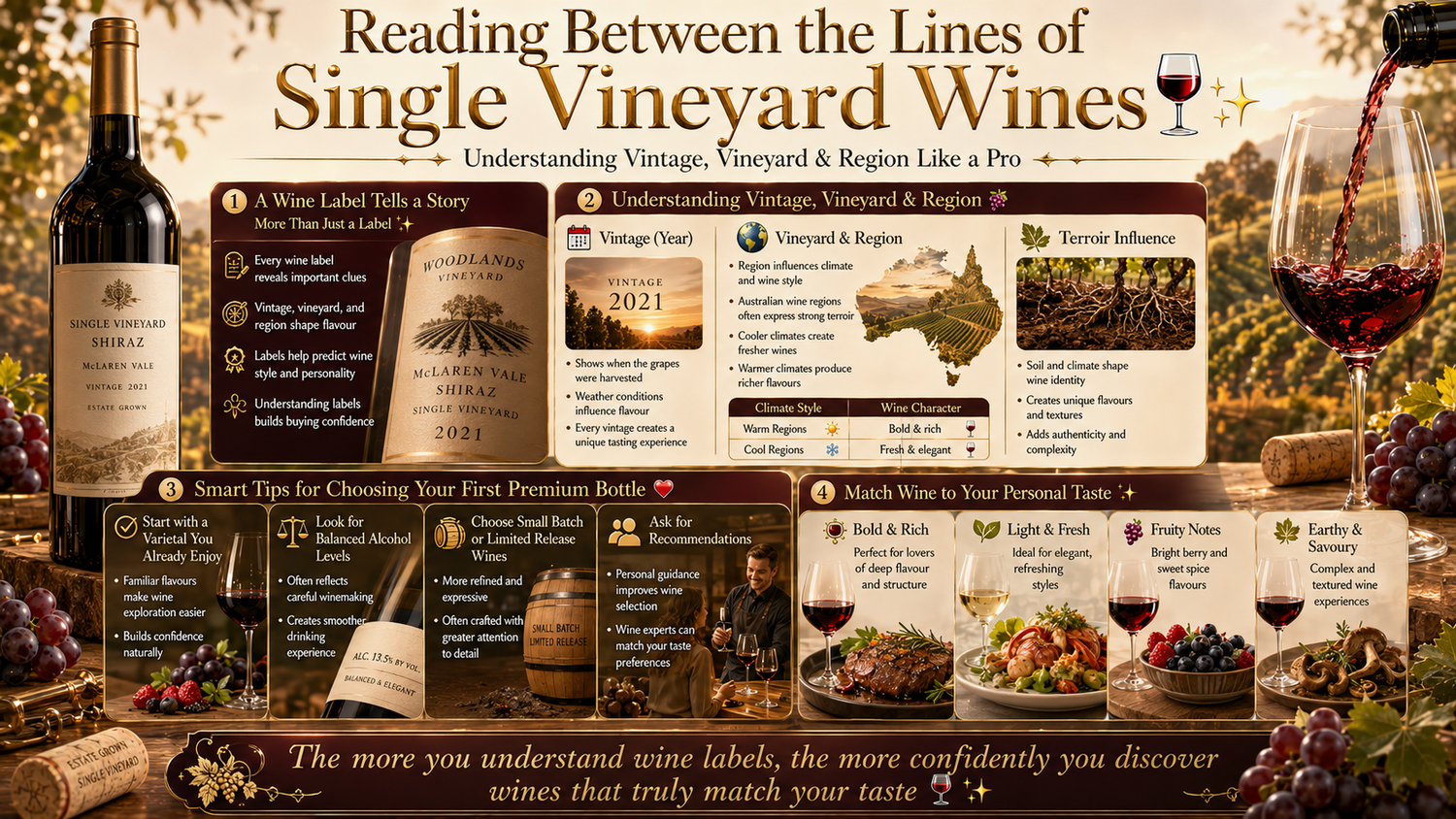
How to choose Single Vineyard Wines can feel overwhelming at first—but once you know what to look for, it becomes an exciting (and rewarding) experience. The key is to focus on a few simple cues that signal quality and style.
What to Look for on the Label
Understanding wine labels is your first step to buying with confidence. Here’s what really matters:
- Vineyard Name – Confirms it’s sourced from one specific site
- Vintage (Year) – Tells you when the grapes were harvested (each year can taste slightly different)
- Region – Offers clues about flavour style (warmer regions = richer wines, cooler = fresher)
- Varietal – The grape type (e.g. Shiraz, Cabernet Sauvignon) shapes the core taste
Industry insights show that wines with clearly stated vineyard and vintage details are often positioned as more premium and transparent.
Reading Between the Lines (Vintage, Vineyard, Region)

A label is more than just information—it’s a story. When you read it closely, you start to understand:
- Why the wine tastes the way it does
- How the growing season influenced the grapes
- What kind of experience to expect in the glass
For example, wines from well-known Australian regions often reflect strong terroir, making them ideal for exploring single vineyard styles without confusion.
Smart Tips to Pick Your First Premium Bottle
Beginner guide to Single Vineyard Wines isn’t about choosing the most expensive bottle—it’s about choosing the right one for you:
- Start with a varietal you already enjoy
- Look for balanced alcohol levels (often a sign of careful winemaking)
- Choose smaller batch or limited-release wines for a more refined experience
- Don’t hesitate to ask for recommendations when buying
Many first-time buyers report a better experience when they choose Cavaliere Shiraz wines or Small Batch Durif Wines aligned with their personal taste rather than chasing price or trends.
Matching Wine to Your Personal Taste
This is where it gets personal—and fun. Ask yourself:
- Do you prefer bold and rich or light and fresh?
- Do you enjoy fruity flavours or more earthy, savoury notes?
Your answers will guide you towards the right bottle much faster than any rulebook.
A Gentle Note on Quality & Craftsmanship
Premium wine regions, including parts of South Australia, are known for producing expressive single vineyard wines with depth and character. Premium Wineries like Curtis Family Vineyards that focus on small-batch Wine production and careful vineyard selection often deliver wines that feel more thoughtful and complete—something you’ll notice from the first sip.
How to Taste Single Vineyard Wines Like a Pro

Taste Single Vineyard Wines doesn’t have to feel complicated or intimidating. In fact, once you know a few simple steps, you’ll start noticing flavours and textures you may have missed before—and that’s where the real enjoyment begins.
Simple Tasting Techniques Anyone Can Follow
You don’t need to be an expert—just follow this easy 4-step approach:
- Look – Notice the colour and clarity. Deeper colour can hint at richness, while lighter tones often suggest freshness
- Swirl – Gently swirl the glass to release aromas
- Smell – Take a slow sniff. Try to pick out fruit, spice, or earthy notes
- Taste – Take a small sip and let it sit on your palate
Wine education studies show that slowing down and focusing on these steps significantly improves how people perceive flavour and aroma—even for beginners.
How to Identify Notes and Structure (Without Overthinking It)
Wine tasting notes for beginners don’t need fancy language. Keep it simple and personal:
- Flavour – Does it remind you of berries, chocolate, herbs, or something else?
- Acidity – Does it feel fresh and lively?
- Tannins – Is there a slight dryness on your gums (common in reds)?
- Body – Light, medium, or full?
There’s no “right” answer—what matters is what you experience.
Food Pairing Tips to Elevate the Experience

Great food can completely transform how a wine tastes. Try these easy pairings:
- Bold red single vineyard wines → grilled meats, slow-cooked dishes
- Elegant, lighter styles → roasted vegetables, chicken, or seafood
- Rich, structured wines → aged cheeses
A good rule: match the weight of the wine with the weight of the food.
Making Wine Tasting Approachable & Enjoyable
The secret? Don’t overcomplicate it. Wine tasting should feel relaxed, not technical.
- Trust your senses—there’s no need to memorise terms
- Compare two wines side by side to notice differences
- Enjoy the story behind the wine, not just the flavour
Premium wine regions like Mclaren Vale Vineyards around the world, including parts of South Australia, are known for producing expressive single vineyard wines that make this exploration even more rewarding.
In the end, tasting Single Vineyard Wines is about curiosity. The more you explore Mclaren Vale Wines, the more confident—and connected—you’ll feel with every glass.
Storing and Serving Single Vineyard Wines

Proper storage and serving of single vineyard wines ensures that you get the most enjoyment from your investment.
For Wine storage ideas , keep single vineyard wines in a cool, dark place with a consistent temperature. Ideally, wines should be stored at around 45 to 65 degrees Fahrenheit. Fluctuating temperatures can damage the wine and cause premature aging.
Store bottles horizontally if they have cork closures. This keeps the cork moist and prevents it from drying out, which could allow air to enter the bottle and oxidize the wine.
Protect wines from light exposure, particularly ultraviolet light, which can degrade the wine and cause premature aging. Dark glass bottles provide some protection, but storing wines in a dark location is ideal.
For serving, remove the wine from storage about 15 to 30 minutes before serving to allow it to reach the appropriate temperature. Most red wines are best served at around 60 to 65 degrees Fahrenheit, while white wines are typically served at 45 to 55 degrees Fahrenheit.
Use appropriate glassware for serving. Wine glasses with larger bowls allow the wine to open up and release its aromas. The shape of the glass can also influence how the wine's flavors are perceived.
Decant older single vineyard wines to separate them from any sediment that may have formed during aging. Decanting also allows the wine to aerate, which can enhance its flavors and aromas.
The Future of Single Vineyard Wines
The future of single vineyard wines looks bright as consumers increasingly seek authentic, terroir-driven wines. Several trends are shaping
