

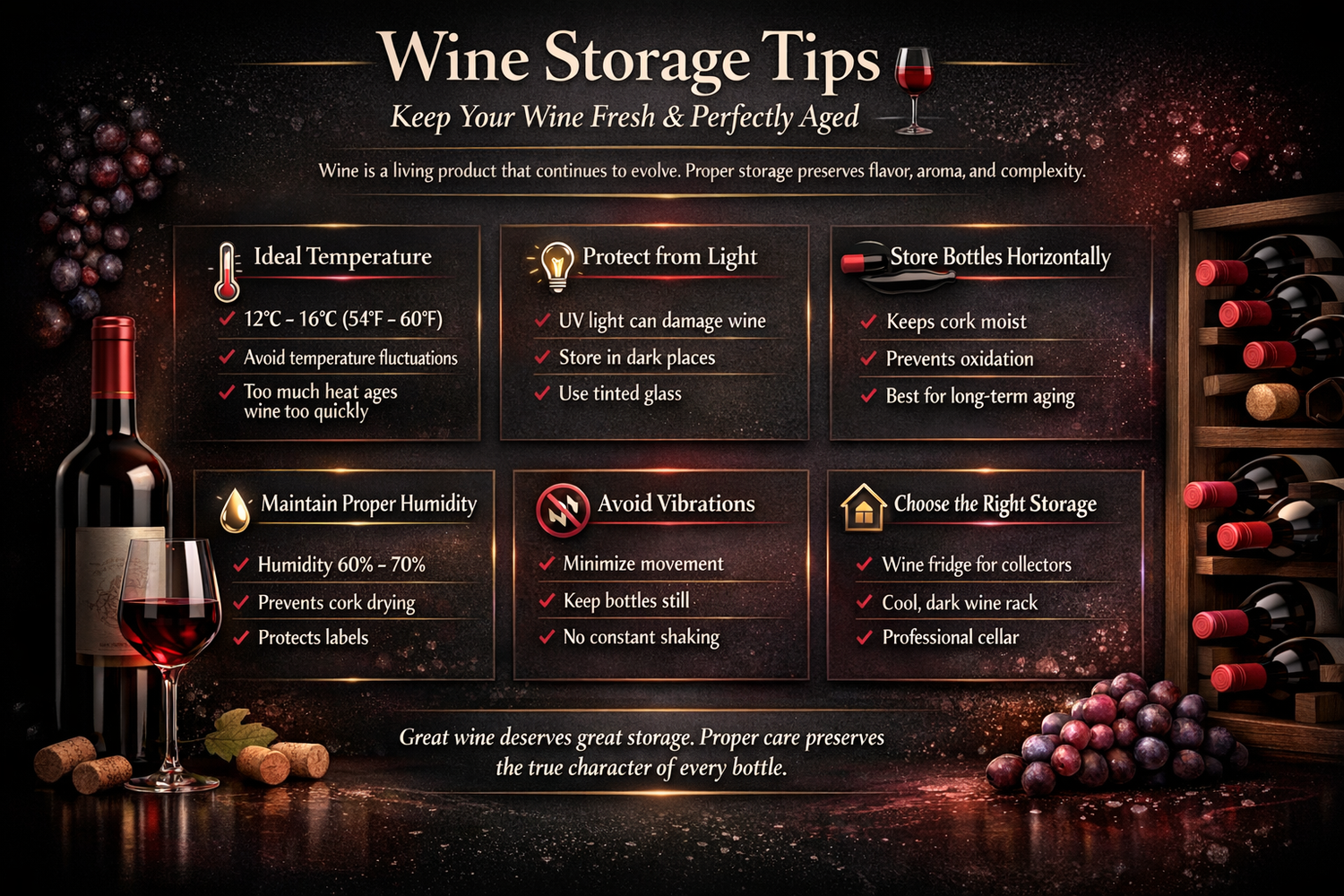
Why Proper Wine Storage Matters More Than Most People Realise
Wine storage tips often focus on racks, fridges, or cellar designs—but the real reason storage matters goes much deeper. Wine is a living product. Even after bottling, it continues to evolve through slow chemical reactions that shape its flavour, aroma, and texture over time. When stored correctly, a bottle can develop remarkable complexity. When stored poorly, that same bottle can lose its character surprisingly fast.
How Wine Continues to Evolve in the Bottle

Inside every bottle, tiny natural processes are still at work. Oxygen slowly interacts with the wine through the cork, softening tannins and allowing new aromas to emerge. This is why a well-stored wine can taste dramatically better after a few years.
For example, studies in wine chemistry have shown that controlled ageing helps develop desirable aromas such as dried fruit, spice, and earthy notes—especially in structured red wines like Shiraz.
Over time, you may notice:
- Smoother texture as tannins soften
- More complex aromas developing beyond fresh fruit
- Balanced flavours as acidity and alcohol integrate
This slow transformation is what makes cellaring wine so rewarding.
What Happens When Wine Is Stored Incorrectly
Proper wine storage becomes critical because wine is extremely sensitive to its environment. Even small changes in temperature or light can affect its quality.
If wine is stored poorly, several problems can occur:
- Heat damage – wine can age too quickly and taste “cooked”
- Dry corks – allowing air to enter and spoil the wine
- Light exposure – UV rays can break down delicate compounds
- Temperature swings – causing premature ageing or flavour loss
These issues are more common than many people realise—especially when bottles are stored in kitchens, garages, or near windows.
The Science Behind Flavour Preservation and Ageing

Wine preservation is strongly influenced by three key environmental factors. Even small improvements in these areas can dramatically extend a wine’s life.
| Storage Factor | Why It Matters | Ideal Condition |
|---|---|---|
| Temperature | Controls the speed of ageing reactions | Around 12–15°C |
| Light | UV rays degrade delicate aromas | Dark storage |
| Humidity | Keeps corks from drying out | About 60–70% |
When these conditions are stable, wine ages slowly and naturally—preserving the flavours the winemaker intended.
Why Premium Wines Deserve Proper Care
Fine wines are crafted with balance, structure, and ageing potential in mind. Winemakers design them to evolve over years, sometimes decades.
That’s why proper storage isn’t just a technical detail—it’s a way of protecting the craftsmanship inside the bottle. With the right care, a wine can reward patience with deeper flavours, richer aromas, and a far more memorable drinking experience.
For wine lovers and collectors alike, good storage simply ensures that when the bottle is finally opened, it shows its very best.
The Ideal Wine Storage Temperature: The Golden Rule Every Collector Should Know

Wine storage temperature is one of the most important factors in keeping a bottle fresh and allowing it to age gracefully. Even the finest wine can lose its character if stored too warm or exposed to constant temperature swings. Wine experts often describe temperature as the silent controller of how wine matures over time.
Research in wine preservation consistently shows that stable, cool environments slow down chemical reactions inside the bottle. This allows aromas, structure, and balance to develop naturally rather than breaking down too quickly.
Recommended Wine Storage Temperature Range
For most wines, consistency matters more than perfection. The key is keeping bottles in a stable, cool environment.
| Wine Type | Ideal Storage Temperature |
|---|---|
| Red Wine | 12–15°C |
| White Wine | 10–12°C |
| Sparkling Wine | 8–10°C |
A slightly cooler temperature slows ageing and helps preserve the wine’s natural freshness. Temperatures above 20°C can cause wine to age too fast and lose its delicate aromas.
Differences Between Red, White and Sparkling Wine Storage

Not all wines respond to temperature in the same way. Each style has its own ideal conditions.
- Red wines benefit from moderate cool temperatures that help tannins soften gradually.
- White wines are more sensitive to heat and should be stored slightly cooler to preserve acidity and fresh fruit notes.
- Sparkling wines require the coolest storage to maintain their crispness and carbonation.
Understanding these differences helps ensure each bottle expresses its intended style.
Why Temperature Fluctuations Can Damage Wine
Wine cellar temperature should remain as stable as possible. Frequent temperature swings can quietly ruin a wine long before the cork is pulled.
Common problems caused by unstable temperatures include:
- Expansion and contraction of the wine, pushing air into the bottle
- Premature ageing, which dulls aromas and flavours
- Cork movement, which can allow oxygen to enter
This is why serious collectors often treat temperature control as the golden rule of wine storage.
Wine Fridge vs Natural Cellar Environments

Both storage options can work well if conditions are consistent.
Natural wine cellars
- Traditionally built underground
- Naturally cool and dark
- Ideal for long-term ageing if humidity and temperature remain stable
Wine fridges
- Designed to maintain precise temperatures
- Perfect for homes without a cellar
- Available with dual zones for storing different wine styles
For many modern wine lovers, a quality wine fridge offers a practical way to replicate the conditions of a traditional cellar—helping protect every bottle until the perfect moment to open it.
Positioning Matters
Position your wine bottles on their side to keep the cork in contact with the wine, ensuring it doesn’t dry out. A dry cork can allow air into the bottle, leading to oxidation. This storage method is vital for wines intended to be aged. Imagine how perfectly a Curtis Limited Series Grenache would mature under these ideal conditions, transforming into a rich and complex masterpiece over time.
Light, Heat & Vibration: The Silent Enemies of Great Wine

Protect wine from light if you want it to age beautifully. Sunlight and strong artificial light contain ultraviolet (UV) rays that can quietly damage wine inside the bottle. In fact, winemakers often refer to this as “light strike”—a chemical reaction that breaks down delicate aroma compounds.
Research in wine science has shown that prolonged UV exposure can cause wines to develop unpleasant aromas similar to cooked cabbage or wet cardboard. That’s why many quality wines from Curtis Family Vineyards are bottled in dark glass, helping shield them from harmful light.
Simple protection tips:
- Store wine in dark cupboards, cellars, or wine fridges
- Avoid placing bottles near windows or bright kitchen lights
- Keep wine in its original case or box for extra protection
How Heat Accelerates Ageing and Spoils Flavour
Heat is one of the fastest ways to ruin a bottle. When wine is stored in warm conditions, chemical reactions speed up dramatically. This can cause wine to age too quickly, losing its balance and freshness.
Signs of heat-damaged wine may include:
- Flat or dull fruit flavours
- Jammy or “cooked” aromas
- Corks pushing slightly out of the bottle
Even short exposure to high temperatures—such as leaving wine in a hot car—can affect quality.
The Surprising Impact of Vibration on Wine
A stable wine storage environment also means keeping bottles away from constant movement. While it may seem minor, vibration can disturb the slow ageing process inside the bottle.
Over time, frequent vibration may:
- Disrupt sediment development in ageing wines
- Prevent natural chemical reactions from settling properly
- Affect the wine’s texture and clarity
This is one reason serious collectors store wine away from appliances like washing machines or refrigerators that produce regular vibration.
Creating a Stable Wine Storage Environment at Home
You don’t need a professional cellar to store wine well. What matters most is creating a calm, controlled environment.
A good home storage space should be:
- Cool – ideally around 12–15°C
- Dark – protected from sunlight and strong lighting
- Still – free from vibration and movement
- Consistent – with minimal temperature changes
By protecting your bottles from light, heat, and vibration, you allow wine to age slowly and naturally—exactly the way winemakers intended.
Keep your wine collection away from direct sunlight and artificial lighting, as UV rays can degrade and prematurely age your wine. Equally, vibrations from nearby appliances or foot traffic can disturb the sediment in your wine, negatively affecting its maturation. A quiet, dark space is the best environment for your collection, from sparkling selections like the Curtis Heritage Sparkling Blanc de Blanc or Pinot Noir Rose to robust reds.
Bottle Position Matters: Why Wine Should Be Stored Horizontally
Store wine horizontally whenever possible, especially if the bottle is sealed with a natural cork. This simple habit plays a surprisingly important role in preserving the wine over time. When a bottle lies on its side, the wine stays in contact with the cork, keeping it slightly moist and expanded.
This helps maintain a tight seal and prevents air from slowly leaking into the bottle—something that can spoil wine long before you open it.
Many wineries and professional cellars follow this same principle because proper bottle positioning helps protect the wine’s natural ageing process.
The Role of Cork Moisture in Preserving Wine
Cork care wine storage is essential because cork is a natural material. If it dries out, it can shrink and allow oxygen to enter the bottle. Even small amounts of unwanted air can change the wine’s flavour and aroma.
Keeping the cork moist helps:
- Maintain a tight seal between cork and glass
- Prevent oxidation, which dulls flavours
- Protect the wine during long-term ageing
This is why most cellar racks are designed to hold bottles on their side.
Horizontal vs Vertical Storage Explained

Both positions can work depending on how long the wine will be stored.
| Storage Position | Best Used For | Why It Works |
|---|---|---|
| Horizontal | Long-term storage | Keeps cork moist and airtight |
| Vertical | Short-term storage | Suitable if wine will be opened soon |
For collectors or anyone planning to age wine, horizontal storage remains the safest option.
When Vertical Storage Is Acceptable
There are a few situations where vertical storage is perfectly fine:
- Screw-cap wines that do not rely on cork seals
- Short-term storage before drinking
- Bottles that are already being prepared for serving
Modern closures have made storage slightly more flexible, but cork-sealed bottles still benefit most from horizontal positioning.
Best Rack Designs for Long-Term Bottle Care
A well-designed wine rack helps maintain both bottle stability and proper positioning. Look for racks that:
- Keep bottles securely horizontal
- Allow air circulation around bottles
- Reduce vibration and movement
- Fit easily into a cool, dark storage space
Whether in a cellar, wine fridge, or dedicated storage cabinet, the right rack ensures bottles rest safely while they mature.
In the world of wine, small details often make the biggest difference—and bottle position is one of the simplest ways to protect the quality of every bottle you store.
Consider outfitting your space with wine racks that accommodate gradual spacing, allowing you to easily view and access each bottle. For those with larger collections, a wine cabinet may offer stylish and practical storage options. A wine fridge is also an excellent investment for those who wish to keep wines at serving temperature. Each bottle, from a graceful Curtis Cavaliere Shiraz to a fresh Curtis Queen of Hearts Rosè or Claudius Cabernet sauvignon wine deserves the right environment to truly shine.
How Long Can Wine Age? Understanding Storage Time and Wine Potential

Aging wine at home can be one of the most rewarding experiences for wine lovers. A well-stored bottle slowly evolves, developing richer aromas, smoother texture, and deeper complexity. However, not every wine is designed to age for years. In fact, many wines are crafted to be enjoyed while they are still fresh and vibrant.
Understanding which wines improve with time—and which should be opened sooner—helps ensure every bottle is enjoyed at its best.
Wines Meant to Be Drunk Young vs Wines That Age Beautifully
Most everyday wines are made for immediate enjoyment. But certain wines with strong structure, balanced acidity, and firm tannins have the ability to develop over many years.
| Wine Style | Typical Drinking Window | Why |
|---|---|---|
| Fresh whites & rosé | 1–3 years | Best enjoyed for their bright fruit and freshness |
| Light-bodied reds | 2–5 years | Moderate structure with limited ageing potential |
| Structured reds (e.g. Shiraz, Cabernet) | 8–20+ years | Strong tannins and acidity support long ageing |
Wines from regions known for powerful reds, such as McLaren Vale, often have excellent ageing potential when stored correctly.
How Ageing Transforms Aroma, Structure and Complexity
As wine matures, slow chemical reactions create new flavour layers. This is why older wines can taste dramatically different from when they were first bottled.
During the ageing process you may notice:
- Tannins soften, giving the wine a smoother mouthfeel
- Fruit flavours evolve into notes of spice, leather, dried fruit, or earth
- Aromas become more complex, revealing hidden layers over time
This gradual transformation is why collectors often describe cellaring wine as a journey rather than a waiting game.
Signs a Wine Is at Its Peak
A perfectly aged wine often shows balance between fruit, structure, and complexity. Some common signs include:
- Smooth, integrated tannins
- Aromas that are rich and layered rather than sharp
- A long, balanced finish on the palate
Opening a bottle at its peak can reveal flavours that simply weren’t present when the wine was young.
Common Mistakes When Ageing Wine at Home
Even with the best intentions, small mistakes can affect ageing results. Following simple wine aging tips can help avoid disappointment.
Common pitfalls include:
- Ageing wines that aren’t designed to age
- Storing bottles in warm or fluctuating temperatures
- Waiting too long and missing the wine’s ideal drinking window
- Not keeping track of vintage dates
The key is balance: choose wines with good structure, store them properly, and enjoy them when they reach their most expressive stage.
Smart Home Wine Storage Solutions for Every Wine Lover

Wine fridge vs wine cellar is a common question for wine lovers who want to protect their bottles properly. The good news is that you don’t need a large underground cellar to store wine well. With the right setup, even a small space at home can create the stable conditions that wine needs to age gracefully.
Both options work well, but the best choice depends on your space, collection size, and how long you plan to store your wines.
Wine Fridge vs Traditional Cellar
Each storage option offers unique benefits for keeping wine in ideal conditions.
| Storage Option | Best For | Key Advantages |
|---|---|---|
| Wine Fridge | Homes or apartments | Precise temperature control and compact design |
| Traditional Cellar | Large collections | Naturally cool, dark, and stable environment |
Wine fridges have become increasingly popular because they replicate cellar conditions without requiring dedicated construction. Many models even allow dual temperature zones, ideal for storing both red and white wines.
Compact Storage Ideas for Apartments
Home wine storage ideas don’t always require large spaces. Even a small area can work if the environment remains cool, dark, and stable.
Practical solutions include:
- Installing wall-mounted wine racks in shaded areas
- Using under-counter wine fridges in kitchens or dining spaces
- Storing bottles in closets or cupboards away from sunlight
- Keeping wine in original wooden cases for added protection
These small adjustments can significantly improve wine storage conditions.
Choosing the Right Wine Rack
A good rack does more than just display bottles—it helps protect them. When selecting a rack, look for designs that:
- Keep bottles stored horizontally
- Provide stable support to avoid vibration
- Allow air circulation around bottles
- Fit comfortably within your available storage space
Wooden racks are often preferred because they absorb minor vibrations and help maintain stability.
Monitoring Temperature and Humidity at Home

One of the smartest ways to protect your collection is simply monitoring the storage environment.
Helpful tools include:
- Digital thermometers to track temperature stability
- Humidity meters to prevent corks from drying out
- Smart wine fridges with built-in climate monitoring
Keeping wine in a stable environment—ideally around 12–15°C with moderate humidity—helps preserve flavour, aroma, and ageing potential.
With the right setup, even a modest home space can become a reliable storage environment that keeps your wines fresh and ready to enjoy whenever the perfect moment arrives.
