

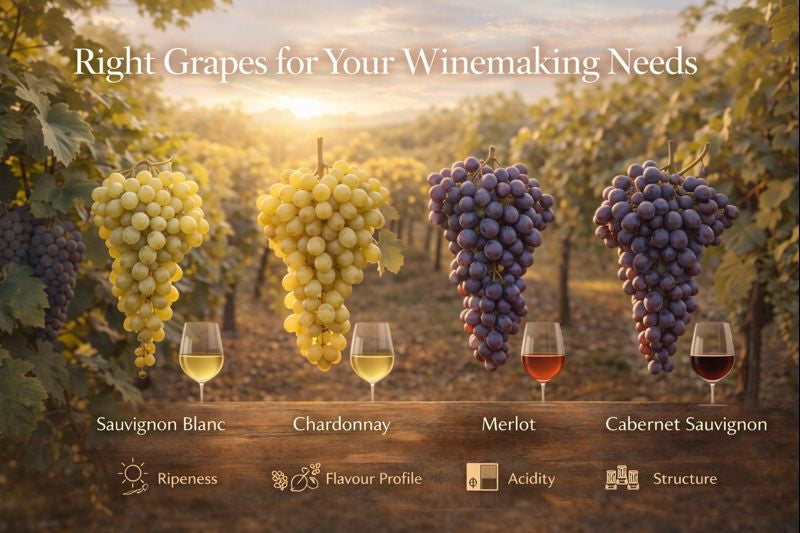
Introduction - Choosing the right grape for Winemaking
Choosing the right grape for winemaking isn’t just about picking a variety you like—it directly shapes the wine’s flavour, aroma, structure, and ageing potential. From bright, crisp whites to bold, tannic reds, each grape tells its own story.
For beginners and seasoned winemakers alike, understanding grapes for wine production is the key to consistency and quality. In premium regions like McLaren Vale, estate-grown grapes thrive in unique soil and climate conditions, giving wines their signature character. Even subtle differences in ripeness, sugar levels, or acidity can transform a batch from ordinary to extraordinary.
Why it matters:
- Flavour & Aroma: Different grapes produce distinct tasting notes—from peppery Shiraz to citrusy Chardonnay.
- Ageing Potential: Some varieties, like Cabernet Sauvignon, develop complexity over years; others are best enjoyed young.
- Wine Style Alignment: Picking the right grape ensures your wine aligns with your vision—whether it’s fresh and lively or rich and structured.
By starting with the right grape, you’re not just making wine—you’re crafting an experience in every bottle. And in regions like McLaren Vale, this foundation is what turns great grapes into world-loved wines.

Wine Grapes Selection: Match the Grape to Your Wine Style, Not Just the Trend
Choosing a grape for winemaking isn’t about following trends—it’s about matching the grape to the style you want to create. Whether you dream of bold reds, crisp whites, easy-drinking wines, or bottles meant for long-term cellaring, the right grape makes all the difference.
- Red Wine Grapes: Varieties like Shiraz grapes or Cabernet Sauvignon grapes deliver structure, depth, and age-worthy complexity, ideal for full-bodied reds with rich tannins.
- White Wine Grapes: Grapes like Chardonnay or Riesling thrive when you aim for freshness, bright acidity, and aromatic clarity—perfect for vibrant, easy-to-enjoy whites.
- Versatility & Pairing: Some grapes, like Shiraz, can produce both approachable young wines or complex cellar-worthy expressions depending on how you handle them.
By understanding how each grape aligns with your wine goals, you can craft wines with confidence—not guesswork. In regions like McLaren Vale, this approach is why small-batch, estate-grown wines consistently shine on the global stage.
Why McLaren Vale Grapes Perform So Well
When it comes to selecting the perfect grape for winemaking, understanding terroir is key. McLaren Vale wine grapes owe their exceptional balance and flavour to a unique combination of climate, soil, and coastal influence.
- Climate: Warm, sun-filled days with cool breezes from the Gulf of St Vincent help grapes develop rich sugars while retaining natural acidity.
- Soil Diversity: From sandy loam to terra rossa, the varied soils create subtle differences in structure and flavour across grape varieties South Australia produces.
- Coastal Influence: Gentle ocean breezes moderate temperatures, protect grapes from extreme heat, and encourage even ripening.
This synergy of elements is why McLaren Vale consistently produces grapes that are expressive, balanced, and world-renowned. Choosing grapes grown here means tapping into a heritage of quality that translates directly into remarkable wines, whether you’re crafting bold reds or crisp whites.
Sugar, Acid & Ripeness: The Science Behind Great Wine Grapes

Understanding sugar and acidity in wine grapes is essential for crafting wines with perfect balance. The levels of natural sugars determine the potential alcohol, while acidity influences freshness, structure, and mouthfeel.
- Sugar Levels: Riper grapes carry higher sugar, which ferments into more alcohol. Too little sugar can result in thin, underwhelming wine; too much can create overly heavy or flabby styles.
- Acidity: Grapes with the right acid balance bring vibrancy and longevity. Acidity also shapes how fruit flavours are perceived, making wines crisp or soft on the palate.
- Harvest Timing for Winemaking: Picking at the optimal moment—when sugar, acid, and flavour are in harmony—ensures the wine develops the intended style, from bold, structured reds to lively, aromatic whites.
By paying attention to these simple yet crucial factors, winemakers—whether at Curtis Family Vineyards or at home—can unlock grapes’ full potential and create wines that truly express their variety and terroir.
Home vs Commercial Winemaking

Selecting the right grapes for home winemaking vs commercial winemaking can make or break your batch. The choice depends on factors like batch size, available equipment, storage capacity, and your winemaking experience. Making the wrong pick could lead to frustration, wasted grapes, or wines that don’t meet your expectations.
Here’s a practical comparison to guide your choice:
| Factor | Home Winemaking | Commercial Winemaking |
|---|---|---|
| Batch Size | Small (1–10 L) | Large (100–1000+ L) |
| Grape Types | Versatile, forgiving varieties (Merlot, Shiraz, Chardonnay) | Premium or region-specific varieties for consistency and market appeal |
| Equipment Needs | Basic fermenters, airlocks, bottles | Industrial fermenters, temperature control, advanced bottling |
| Storage | Simple shelves or small wine fridge | Large-scale cellars or climate-controlled tanks |
| Experience Level | Beginner to intermediate | Requires skilled winemaker or trained staff |
| Risk Tolerance | Can experiment and adjust | Mistakes can be costly; precision is key |
Choosing grapes suited to your setup ensures smoother fermentation, better flavour, and a wine that matches your goals—whether it’s a personal batch to enjoy or a commercial release representing your winery.
Understanding Your Wine Preferences
Before selecting your grapes, it's crucial to discern what type of wine you enjoy or wish to produce, whether it's a full-bodied red, a crisp white, or something in-between. Here are a few options from Curtis Family Vineyards that might pique your interest:
Shiraz: Bold and Spicy
For those who relish a bold, spicy profile with a tinge of fruity undertones, Shiraz grapes might just be your ideal pick. The depth of flavour and the rich aroma associated with Shiraz makes it a staple for many vintners. Consider trying the Heritage Shiraz or the prestigious Martins Vineyard Shiraz from Curtis Family Vineyards. Each offers unique notes that can accommodate various winemaking styles.
Grenache: Versatile and Fruit-forward
For versatility coupled with a fruit-forward essence, Grenache grapes are an excellent choice. Their adaptability makes them suitable for both blends and stand-alone wines. The Heritage Grenache showcases a beautiful blend of berry notes, perfect for those who prefer a slightly lighter option.
Cabernet Sauvignon: Classic and Rich
If you are drawn to a classic, rich flavour, Cabernet Sauvignon will not disappoint. Known for their deep colours and robust structure, these grapes are traditional favourites among red wine enthusiasts. Explore the Heritage Cabernet Sauvignon or the refined Cavaliere Cabernet Sauvignon for a taste of rich tradition.
How Curtis Family Vineyards Selects Grapes
When it comes to crafting exceptional wines, it all starts in the vineyard. Estate-grown grapes at Curtis Family Vineyards are carefully chosen to suit both grapes for fresh drinking wines and long-term cellar-worthy bottles. Generations of winemaking expertise guide every decision—from harvest timing for winemaking to selecting the ideal variety for McLaren Vale’s unique terroir.
Here’s a snapshot of how our vineyard approach compares different grape goals:
| Focus | Grapes for Fresh Drinking Wines | Grapes for Cellaring & Premium Wines |
|---|---|---|
| Harvest Timing | Picked slightly earlier for vibrant acidity and fruity notes | Picked at full ripeness for complexity and tannin structure |
| Sugar & Acidity | Balanced for immediate enjoyment | Optimized for ageing and mouthfeel |
| Variety Selection | Versatile, approachable reds and whites | Premium Shiraz, Cabernet Sauvignon, and Chardonnay |
| Handling | Gentle pressing to preserve delicate aromas | Careful sorting and controlled fermentation for depth |
| Winemaking Insight | Quick turnover, minimal intervention | Small-batch attention, precise techniques for expression |
By blending estate-grown grapes, meticulous variety selection, and decades of family knowledge, Curtis Family Vineyards ensures every bottle captures McLaren Vale’s character, whether it’s enjoyed tomorrow or decades later.
