

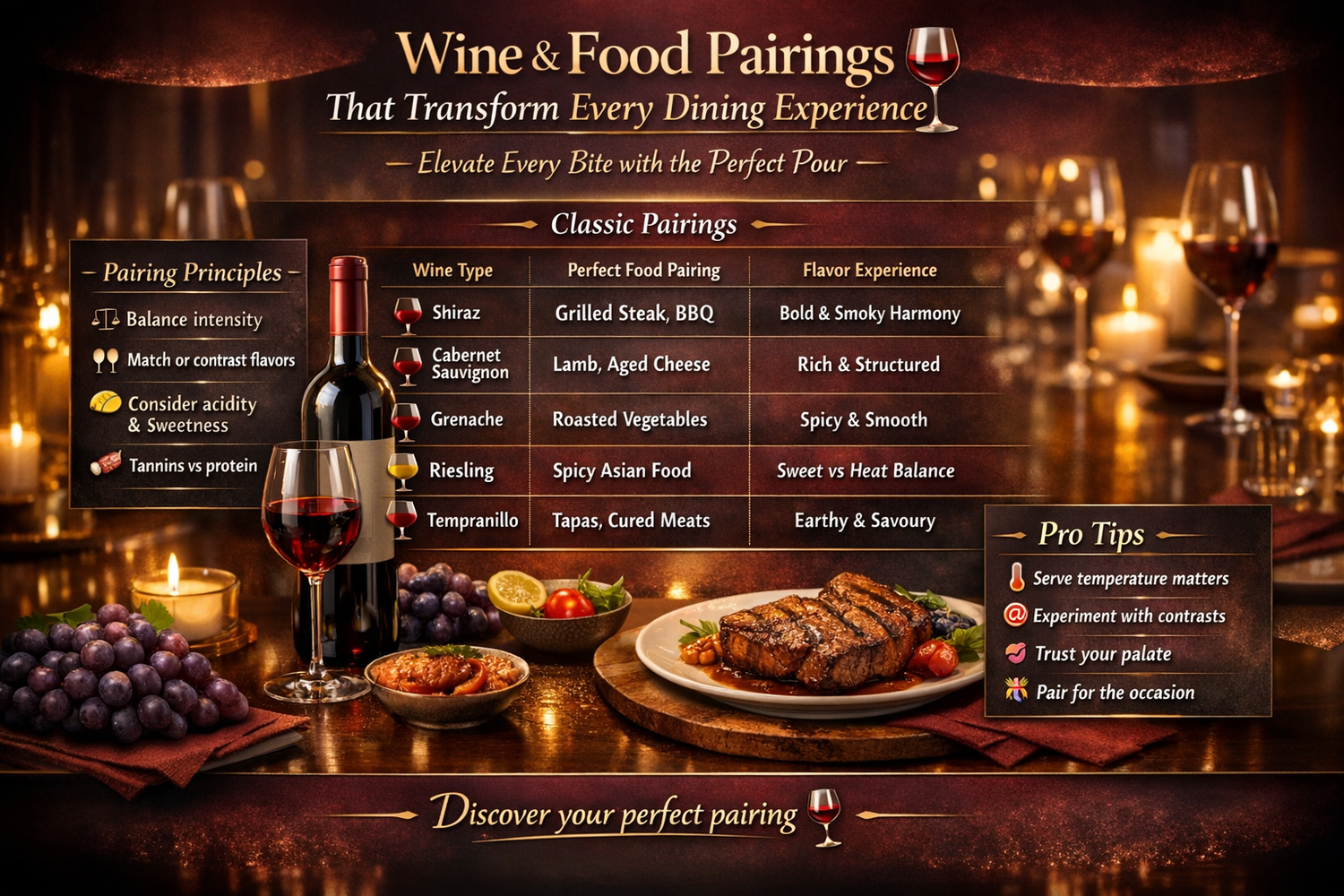
Wine and food pairings are more than tradition—they’re a sensory experience shaped by science, culture, and human perception. When done right, a simple meal transforms into something memorable. Research in sensory science shows that our brain doesn’t taste food and wine separately; it blends them into one experience. That’s why the right pairing can soften bitterness, enhance sweetness, or unlock hidden aromas in a wine.
Best wine and food pairings often come down to balance. Winemakers in regions like McLaren Vale craft wines with structure—acidity, tannin, and fruit intensity—knowing they’ll eventually meet food on the table.

What Actually Happens on Your Palate?
- Acidity refreshes: High-acid wines (like Riesling) cut through rich or oily dishes
- Tannins bind with protein: That’s why bold reds feel smoother with steak
- Sweetness soothes spice: A slightly sweet wine can calm heat in spicy food
- Salt enhances fruit: Salty dishes can make wines taste more vibrant
Classic wine pairing guide principles often follow a simple rule: match intensity and balance contrast. A delicate dish pairs best with a lighter wine, while bold flavours demand structure and depth.
A Practical Insight from Winemakers
In tasting rooms across South Australia, winemakers often test wines with food during production. A structured Shiraz, for example, may feel intense on its own—but paired with grilled lamb, it becomes round, smooth, and layered. This is not accidental; it’s intentional craftsmanship.
Pairing wine with food isn’t about rigid rules—it’s about creating harmony. When flavours align, both the wine and the dish tell a richer, more complete story. That’s the real art—and the reason it matters more than most people think.
As enigmatic as the world of winemaking can be, the art of pairing wine with food elevates the experience to another level. Whether you're a seasoned connoisseur or just starting your journey, selecting the perfect wine to complement your meal can make all the difference. Today, we're exploring essential pairings that combine the extraordinary offerings from Curtis Family Vineyards with culinary creations worth savouring.
Red wine food pairings are where flavour truly comes alive—this is the space where bold wines meet rich, satisfying dishes and create something unforgettable. When a full-bodied red hits the right plate, it doesn’t just complement the meal—it transforms it.
Why Bold Red Wines Love Rich Plates

The secret lies in structure. Wines like Shiraz and Cabernet Sauvignon are packed with tannins, body, and deep fruit notes. These elements need equally powerful foods to balance them.
-
Shiraz + Grilled Meats
The smoky, charred edges of grilled lamb or beef mirror the bold, spicy notes of Shiraz. This pairing enhances the wine’s fruit while softening its intensity—creating a smoother, richer taste. -
Cabernet Sauvignon + Steak & Aged Cheese
Cabernet’s firm tannins bind with protein and fat, which reduces bitterness and brings out a velvety texture. Aged cheeses add salt and depth, amplifying the wine’s complexity.
The Science Behind It (Simplified)
-
Tannins + Protein = Balance
Protein softens the drying effect of tannins -
Fat reduces sharpness
Rich dishes mellow strong wines -
Flavour intensity must match
Bold wine needs bold food—otherwise, it overwhelms
Winemaker Insight
In premium wine regions, producers often test reds alongside dishes like grilled meats during blending. Why? Because a wine that feels too powerful on its own can become perfectly balanced when paired correctly.
The takeaway: Bold reds aren’t meant to stand alone—they’re designed to shine with the right plate.
White wine pairing ideas often surprise people—they’re lighter in style, yet incredibly powerful when it comes to enhancing fresh, vibrant dishes. The real magic lies in their acidity and finesse, which can lift flavours rather than overpower them.
Why Crisp White Wines Work So Well

White wines are naturally refreshing, making them ideal for foods that are delicate, zesty, or slightly spicy. In many Australian cellar doors, winemakers intentionally craft whites to complement food—not compete with it.
-
Riesling + Seafood & Spicy Dishes
Riesling’s bright acidity and subtle sweetness make it a perfect match for fresh seafood or spicy Asian-inspired dishes. It cools heat while sharpening citrus and herbal notes. -
Chardonnay + Creamy Textures
A well-balanced Chardonnay pairs beautifully with creamy pastas, roast chicken, or buttery sauces. Its round texture mirrors the richness of the dish, creating a seamless mouthfeel.
The Balance Principle (Simple but Powerful)
- High acidity = freshness → cuts through oils and fats
- Light body = harmony → doesn’t overwhelm delicate foods
- Subtle fruit = enhancement → lifts natural flavours
During tastings, many winemakers notice that a crisp white can completely change a dish—making seafood taste sweeter or spices feel more balanced. It’s not just pairing; it’s refining the entire dining experience.
The key: Crisp whites don’t dominate—they elevate, refresh, and bring every flavour into focus.
Sparkling wine food pairing is often underestimated—but here’s the surprising truth: bubbles are one of the most food-friendly styles of wine. Thanks to their high acidity and natural effervescence, sparkling wines cleanse the palate, cut through richness, and make every bite feel lighter and more enjoyable.
Why Sparkling Works with So Many Foods

- Cuts through fat → perfect with fried or crispy dishes
- Enhances saltiness → makes flavours pop
- Cleanses the palate → keeps each bite fresh
Perfect Matches to Try:
- Fried seafood or tempura → lifted by crisp bubbles
- Salty snacks (chips, olives) → enhanced fruitiness
- Celebration dishes → naturally elevated by sparkle
A Winemaker’s Perspective
In tastings, sparkling wines are often paired with unexpected foods like fried chicken—because the contrast creates a clean, refreshing finish. It’s a technique widely used but rarely talked about.
Rosé wine pairing suggestions open up a world of relaxed, lifestyle-driven dining. Rosé sits beautifully between red and white, offering both freshness and subtle fruit depth—making it incredibly versatile.
Why Rosé Wine Feels Effortless

- Balanced acidity + fruit → suits a wide range of dishes
- Light structure → ideal for shared, casual meals
- Versatility → pairs across cuisines
Go-To Pairings:
- Mediterranean dishes (grilled vegetables, seafood)
- Light salads and charcuterie boards
- Summer-style dining with fresh herbs and olive oil
The real secret: Sparkling and rosé aren’t just “occasion wines”—they’re everyday pairing champions that bring ease, balance, and a touch of excitement to any table.
How to pair wine and food becomes truly interesting when you step beyond the obvious and start working with bold, complex flavours. This is where many people get it wrong—but also where the most exciting discoveries happen.
Tackling Challenging Flavours (Without Guesswork)
Some foods are naturally harder to pair because they dominate the palate. But with the right approach, they can create unexpectedly brilliant matches.
- Spicy foods → go for wines with a touch of sweetness (like Riesling) to cool the heat
- Sweet dishes → always match with equal or sweeter wines to avoid bitterness
- Umami-rich foods (mushrooms, soy, aged dishes) → pair with softer, lower-tannin wines to prevent harshness
Common Pairing Mistakes to Avoid
Even experienced wine lovers can slip up here:
- Pairing high tannin reds with spicy food → can taste overly bitter
- Choosing light wines for heavy dishes → flavours get lost
- Ignoring sauce and seasoning → often more important than the main ingredient
Think Like a Winemaker: Experiment with Purpose
Winemakers don’t rely on guesswork—they test, taste, and refine. You can do the same at home:
- Start with contrast vs complement (fresh vs rich, sweet vs spicy)
- Taste the wine before and after a bite—notice the change
- Keep it simple: one dish, two wines, compare the difference
The insight: Challenging flavours aren’t a problem—they’re an opportunity. When you understand the balance, you unlock pairings most people never even think to try.
McLaren Vale wine experiences are shaped by something deeper than taste alone—they’re driven by terroir, the unique combination of soil, climate, and coastal influence that defines every bottle. This is where wine pairing begins, long before the wine reaches your glass.
How Terroir Shapes Pairing Choices
In McLaren Vale, warm days and cooling sea breezes create wines with ripe fruit, balanced acidity, and depth. This natural profile makes them incredibly food-friendly.
- Shiraz from the region → pairs beautifully with grilled meats due to its bold yet balanced structure
- Grenache → works with roasted vegetables and herb-driven dishes
- Riesling → complements fresh seafood thanks to its crisp acidity
Local Produce, Seasonal Pairings
One of the most powerful (and often overlooked) pairing secrets is this: what grows together, goes together.
- Fresh seafood + coastal white wines
- Olive oil-based dishes + medium-bodied reds
- Seasonal vegetables + lighter, fruit-driven wines
Crafted with Food in Mind
Winemakers don’t just make wine—they anticipate the table. During blending and tasting, wines are often assessed alongside real dishes to ensure harmony.
- Balance between acidity and richness is carefully refined
- Texture and mouthfeel are adjusted for food compatibility
- Flavour profiles are shaped to complement regional cuisine
The takeaway: In McLaren Vale, wine and food pairing isn’t an afterthought—it’s built into the wine itself, creating a seamless journey from vineyard to table.
Start with a Sparkle
For those who enjoy a touch of elegance in their aperitifs, the Heritage Sparkling Blanc de Blanc is a fantastic choice. Its crisp and lively character is perfect when paired with light starters such as fresh oysters or a delicate goat cheese salad. The effervescence of the sparkling wine enhances the briny taste of the oysters or the tanginess of the cheese, creating a refreshing start to your meal.
The Power of Shiraz
When it comes to red wines, Shiraz undoubtedly stands out for its bold flavours and versatility. Curtis Family Vineyards offers several outstanding Shiraz options like Cavaliere Shiraz or Octavian Shiraz, each with unique profiles that cater to different palates and dishes.
Terra Rossa Shiraz
If you're enjoying a hearty dish like grilled lamb chops or a classic steak, the Terra Rossa Shiraz is your go-to wine. Its rich, full-bodied nature with notes of ripe berry and spicy undertones will beautifully complement the robust flavours of red meat.
Ancestor Shiraz
For a more sophisticated gathering, consider the Ancestor Shiraz. This wine boasts a deep complexity, marked by dark fruit and earthy notes that pair wonderfully with truffle-infused dishes or a wild mushroom risotto. The lush texture and intricate layers of this Shiraz make it a delightful companion for rich, flavourful meals.
A Toast to Heritage
Every meal is a celebration of taste, and the Heritage Shiraz is the ideal wine to mark such occasions. With its velvety tannins and a harmonious blend of dark fruit and spice, this Shiraz pairs excellently with roast duck or a slow-cooked beef stew. Its lingering finish leaves a lasting impression, perfect for toasting to good company and great food.
In the end, the joy of wine pairing lies in personal exploration and discovering combinations that delight your senses. We invite you to savour these exceptional wines from Curtis Family Vineyards alongside your favourite dishes, enhancing every meal with the perfect wine pairing.
