

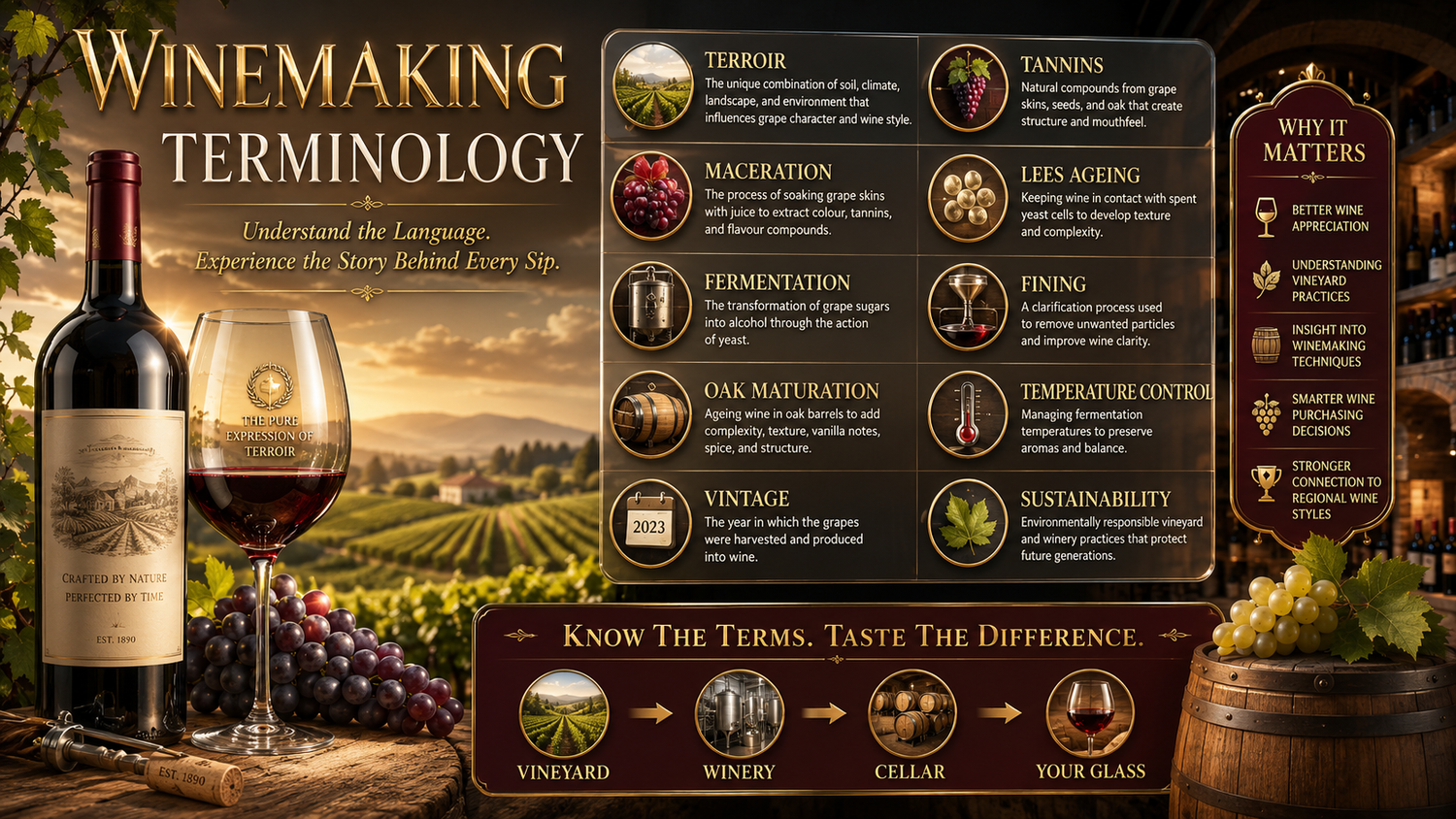
What Is Winemaking Terminology and Why Every Wine Lover Should Understand It
Winemaking Terminology is the language that brings every bottle of wine to life. From the vineyard to the cellar, these terms explain how grapes are grown, how wine is made, and why every vintage tastes different. Understanding these words helps wine lovers move beyond simply drinking wine to truly experiencing it.
Many people feel intimidated when they hear words such as terroir, maceration, or oak maturation. However, these terms are not reserved for winemakers alone. They reveal the story behind the wine and help consumers make more informed choices.
Wine Industry Terms have become increasingly important as modern wineries focus on transparency, sustainability, and regional expression. At cellar doors across McLaren Vale, visitors regularly encounter terms that describe grape growing methods, fermentation techniques, and ageing processes. Knowing these expressions creates a stronger connection between the drinker and the wine in the glass.
A recent trend across premium Australian wineries shows that consumers who understand basic wine language are more confident when purchasing wine and are more willing to explore different varieties and regions.
Why wine terminology matters

- Helps you understand wine labels more easily.
- Improves confidence during cellar door tastings.
- Makes food and wine pairing decisions simpler.
- Allows you to appreciate the work behind every bottle.
- Creates a deeper connection with regional wines such as those from McLaren Vale.
Wine Production Terminology also reveals the hidden decisions made by winemakers. Terms such as fermentation, lees ageing, small batch and single vineyard explain how flavour, aroma, texture, and complexity develop throughout the winemaking journey.
| Common Term | What It Means | Why It Matters |
|---|---|---|
| Vintage | The year grapes were harvested | Influences wine style and quality |
| Terroir | Climate, soil and location | Shapes regional character |
| Tannins | Natural compounds from skins and oak | Adds structure and ageing potential |
| Lees | Yeast sediment after fermentation | Creates texture and richness |
| Oak Maturation | Ageing wine in barrels | Adds complexity and flavour |
The more you understand the language of wine, the more rewarding every bottle becomes. Behind every term lies a story of the vineyard, the season, and the craftsmanship that transforms grapes into exceptional wines.
Understanding the world of winemaking can seem daunting, but it's easier once you get to grips with essential terminology. For enthusiasts eager to delve deeper into winemaking and wine-tasting, Curtis Family Vineyards is a wonderful place to begin. Visit Curtis Family Vineyards here to explore their exquisite range of wines.
From Vineyard to Harvest Winemaking Terminology That Begins in the Vineyards

Vineyard and Winery Terms often begin long before grapes reach the winery. The journey starts in the vineyard, where every decision influences the final wine in the bottle. Understanding these terms helps wine lovers appreciate why one vintage can taste remarkably different from another.
One of the most important words in wine is terroir. This French term refers to the combination of soil, climate, topography, and vineyard location. In McLaren Vale, warm days, cooling sea breezes, and diverse soils create distinctive fruit character that cannot be replicated elsewhere.
Harvest Terminology in Wine becomes especially important as grapes approach maturity. Winemakers closely monitor ripeness and Brix, which measures the sugar levels in grapes. Even a few extra days on the vine can dramatically influence flavour, acidity, and alcohol levels.
Canopy management is another essential practice. By controlling leaf growth and sunlight exposure, vineyard teams help grapes develop balanced flavours while improving airflow and reducing disease pressure.
Key vineyard terms every wine lover should know
- Vintage – The year the grapes were harvested.
- Terroir – The natural environment that shapes wine character.
- Brix – A measurement of grape sugar levels.
- Ripeness – The stage when grapes achieve flavour balance.
- Yield – The amount of fruit produced by each vine.
- Canopy Management – Managing leaves and shoots for vine health.
Wine Production Terms often begin with these vineyard decisions rather than inside the winery. Research across premium wine regions has shown that carefully managed yields can improve fruit concentration and wine quality. Lower yields often produce grapes with greater intensity, colour, and flavour.
| Vineyard Term | Meaning | Why It Matters |
|---|---|---|
| Vintage | Year of harvest | Reflects seasonal conditions |
| Terroir | Soil climate and location | Defines regional identity |
| Brix | Sugar measurement | Determines harvest timing |
| Yield | Quantity of grapes produced | Influences concentration |
| Ripeness | Fruit maturity | Affects flavour balance |
In McLaren Vale vineyards, harvest decisions are rarely based on sugar levels alone. Winemakers also assess flavour development, tannin maturity, and acidity before picking fruit. These small decisions often become the hidden reason why one wine displays exceptional balance, complexity, and regional character.
Understanding these vineyard terms allows wine lovers to see that great wine is not simply made in the winery. It begins in the vineyard, where nature and human expertise work together to create every vintage.
Crushing Pressing and Fermentation Terms That Shape Every Wine

Fermentation Terms in Winemaking reveal where grapes begin their remarkable transformation into wine. This stage is often described as the heart of the winemaking process because small decisions made here can dramatically influence flavour, aroma, texture, and quality.
The journey starts with crushing and destemming. Crushing gently breaks the grape skins to release juice, while destemming removes the stalks to avoid unwanted bitterness. The mixture of juice, skins, seeds, and pulp is known as must, a term frequently used by winemakers during the early stages of production.
Winemaking Process Terms such as yeast, maceration, and fermentation explain how a wine develops its unique character. Yeast naturally converts grape sugars into alcohol, producing aromas and flavours that define the finished wine. During maceration, the grape skins remain in contact with the juice, extracting colour, tannins, and flavour compounds.
Many winemakers describe fermentation as a carefully controlled balancing act. Even a small change in temperature can influence the final wine style.
Essential fermentation terms to understand
- Must – The mixture of juice, skins, seeds, and pulp.
- Yeast – Converts sugar into alcohol during fermentation.
- Primary Fermentation – The first stage where alcohol develops.
- Maceration – Skin contact that adds colour and structure.
- Temperature Control – Maintains consistent fermentation conditions.
- Malolactic Fermentation – Converts sharp acids into softer, creamier textures.
Modern Winemaking Terminology often includes temperature management because it plays a crucial role in preserving fruit character. Cooler fermentation temperatures can highlight fresh fruit aromas, while warmer conditions may create deeper flavours and structure.

| Winemaking Term | Meaning | Influence on Wine |
|---|---|---|
| Crushing | Breaking grape skins | Releases juice and flavour |
| Destemming | Removing stems | Reduces bitterness |
| Must | Juice and grape solids | Starting point of fermentation |
| Maceration | Skin contact | Adds colour and tannins |
| Malolactic Fermentation | Acid conversion process | Creates a softer texture |
One of the most fascinating stages is malolactic fermentation, often called the hidden transformation. This secondary process softens natural acidity and contributes creamy, rounded textures, particularly in some red and white wines.
Understanding these fermentation terms allows wine lovers to appreciate that exceptional wines are not created by chance. They are shaped by careful decisions, precise timing, and the expertise of modern winemakers who guide every stage from grape to glass.
Oak Aging Lees and Maturation Terms That Influence Wine Character

Wine Aging Terminology helps explain one of the most fascinating stages of winemaking. After fermentation is complete, wines often spend months or even years maturing to develop greater depth, texture, and complexity. This ageing period can transform a young wine into something far more expressive and memorable.
One of the biggest influences on wine character is oak maturation. During this process, wine is aged in barrels that slowly introduce oxygen and flavour compounds. This gentle interaction can add notes of vanilla, spice, toast, chocolate, or cedar, depending on the type of oak used.
Barrel Aging Terms often refer to the difference between French and American oak. French oak generally contributes subtle spice, elegance, and fine tannins, while American oak may deliver richer vanilla, coconut, and sweet oak characters. Winemakers carefully select the barrel style that best complements the fruit.
Another important process is lees ageing, where wine remains in contact with spent yeast cells after fermentation. This technique can increase texture, richness, and mouthfeel, particularly in premium wines.
Key maturation terms every wine lover should know
- Oak Maturation – Ageing wine in oak barrels.
- Lees Ageing – Keeping wine on yeast sediments for added texture.
- Tannins – Natural compounds that create structure.
- Body – The weight or richness of a wine.
- Balance – Harmony between fruit, acidity, alcohol, and tannins.
- Complexity – Multiple layers of aromas and flavours.
Wine Production Terminology such as tannins, structure, and balance helps explain why some wines feel smooth and elegant while others appear bold and powerful. Tannins provide the backbone of many red wines, while balance ensures that no single element dominates the palate.
| Maturation Term | Meaning | Influence on Wine |
|---|---|---|
| Oak Maturation | Ageing in barrels | Adds flavour and complexity |
| French Oak | Fine grained oak | Provides elegance and spice |
| American Oak | Wider grained oak | Delivers vanilla and sweetness |
| Lees Ageing | Contact with yeast sediment | Enhances texture and richness |
| Tannins | Natural grape compounds | Adds structure and ageing potential |
Many premium McLaren Vale wines achieve their character through careful maturation decisions. A winemaker may spend months tasting and monitoring barrels to determine the ideal balance between fruit, oak, and texture.
Understanding these ageing terms reveals a hidden stage of winemaking where patience becomes one of the most valuable ingredients. It is often during maturation that a good wine develops the balance, complexity, and personality that make it truly memorable.
Modern Winery Terminology Used by Winemakers in McLaren Vale

Modern Winery Language reflects how today's winemakers combine tradition with innovation. In premium wine regions such as McLaren Vale, many of the terms found on wine labels and cellar door conversations reveal a deeper story about vineyard practices, sustainability, and craftsmanship.
One term that has gained significant attention is small batch winemaking. Rather than producing large volumes, winemakers create limited quantities to focus on quality, detail, and individual vineyard character. This approach allows greater experimentation and careful attention throughout the winemaking process.
Professional Winemaking Terminology often includes phrases such as minimal intervention, estate grown, and single vineyard. These terms help consumers understand how and where the wine was produced.
- Minimal Intervention means allowing the fruit to express itself naturally with limited handling.
- Estate Grown indicates that the grapes are grown and produced by the same winery.
- Single Vineyard wines come from one specific site, highlighting unique soil and climate conditions.
Today, many McLaren Vale wineries also embrace precision winemaking, using detailed vineyard monitoring, careful harvest timing, and modern technology to achieve consistency and quality. This approach helps preserve fruit purity while maintaining regional identity.
Why these modern terms matter
- They provide greater transparency for consumers.
- They highlight the origin of the grapes.
- They reflect sustainable vineyard practices.
- They showcase craftsmanship and regional character.
- They help wine lovers make more informed choices.
Commercial Winery Terms increasingly focus on sustainability and regional expression. Sustainable vineyard practices, water management, and responsible farming are becoming essential parts of modern winemaking across South Australia.
| Modern Term | Meaning | Benefit to Wine |
|---|---|---|
| Small Batch | Limited production wines | Greater attention to quality |
| Minimal Intervention | Less winemaking manipulation | Preserves natural character |
| Estate Grown | Grown and made by the winery | Full control of quality |
| Single Vineyard | Fruit from one site | Strong regional identity |
| Precision Winemaking | Data-driven decisions | Improved consistency |
| Regional Expression | Reflecting local conditions | Unique sense of place |
One of the most exciting developments in modern winemaking is the growing focus on regional expression. Winemakers aim to capture the true character of McLaren Vale through careful vineyard management and thoughtful winemaking decisions.
Understanding these modern winery terms allows wine lovers to look beyond the label and discover the philosophy, place, and craftsmanship that shape every bottle.
Wine Tasting and Cellar Door Terminology That Helps You Choose Wine With Confidence

Winery Terms and Meanings become especially important when visiting a cellar door or attending a wine tasting. Words used by winemakers and tasting staff can sometimes sound complex, yet they often hold the key to understanding why a wine tastes the way it does. Learning these terms allows wine lovers to move beyond personal preference and confidently explore different styles.
One of the biggest surprises for many visitors is that wine tasting involves far more than flavour alone. Aroma, texture, balance, and finish all contribute to the overall experience.
Wine Vocabulary such as aroma and bouquet helps describe what you smell in the glass. Aroma refers to the fresh fruit and grape characteristics, while bouquet develops during ageing and often reveals notes of spice, oak, or earth.
Other important tasting terms include:
- Acidity – The freshness and liveliness of the wine.
- Body – The weight or richness felt on the palate.
- Structure – The balance between tannins, acidity, alcohol, and fruit.
- Mouthfeel – The texture and sensation of the wine.
- Finish – The flavours that remain after swallowing.
- Balance – The harmony of all elements in the wine.
Understanding Wine Terminology can significantly improve the cellar door experience. Research within the wine tourism industry has shown that visitors who understand basic tasting language often feel more confident when selecting wines and discussing their preferences.
| Tasting Term | Meaning | Why It Matters |
|---|---|---|
| Aroma | Primary fruit scents | Indicates grape character |
| Bouquet | Age-related aromas | Shows wine development |
| Acidity | Freshness and brightness | Adds balance and longevity |
| Body | Weight of the wine | Influences drinking style |
| Mouthfeel | Texture on the palate | Enhances enjoyment |
| Finish | Lasting flavours | Reflects wine quality |
Another fascinating concept is vintage variation. Seasonal conditions such as rainfall, sunshine, and temperature can influence each harvest, meaning the same wine may express slightly different characteristics from one year to another. This natural variation is often what makes wine so intriguing.
The next time you visit a McLaren Vale cellar door, these terms can transform the experience from simply tasting wine to truly understanding it. Behind every aroma, texture, and finish lies a story of the vineyard, the season, and the winemaker's craft.
How Understanding Winemaking Terminology Deepens Your Connection to McLaren Vale Wines
Australian Winemaking Terminology does more than explain how wine is made. It helps wine lovers understand the story behind every bottle, from the vineyard and climate to the decisions made in the winery. Terms such as terroir, single vineyard, oak maturation, and minimal intervention reveal the craftsmanship that shapes modern Australian wines.
When consumers understand these expressions, they often become more confident in their wine choices and more curious about different wine styles and regions.
Winemaking Terminology in McLaren Vale is particularly important because the region has developed a strong reputation for producing expressive and site-driven wines. Warm growing conditions, coastal influences, and diverse soils contribute to wines that reflect their origin. Understanding these terms allows visitors to connect what they taste in the glass with the environment where the grapes were grown.
Many cellar door visitors discover that the same grape variety can show different characteristics depending on vineyard location, vintage conditions, and winemaking decisions. This deeper understanding often transforms a tasting into a memorable experience.
Why wine terminology matters to wine lovers
- Builds confidence when selecting wines.
- Helps explain regional differences.
- Improves cellar door experiences.
- Encourages informed purchasing decisions.
- Creates a stronger connection to the winemaker's craft.
South Australian Wine Terminology also highlights the importance of regional identity. Words such as estate grown, regional expression, and small batch help consumers understand how premium wineries preserve the unique character of their vineyards.
At Curtis Family Vineyards, concepts such as careful vineyard management, small batch production, and respect for McLaren Vale terroir contribute to wines that express both place and craftsmanship. These winemaking principles allow the fruit, climate, and season to play a leading role in every vintage.
| Wine Term | What It Reveals | Why It Matters |
|---|---|---|
| Terroir | Soil climate and location | Shows regional identity |
| Small Batch | Limited production | Focuses on quality |
| Estate Grown | Vineyard and winery connection | Ensures consistency |
| Regional Expression | Sense of place | Reflects McLaren Vale character |
| Vintage | Seasonal conditions | Influences wine style |
The real reward of learning winemaking terminology is not simply understanding wine language. It is discovering the hidden story behind every bottle. Once these terms become familiar, every tasting becomes more meaningful, every vintage tells a new story, and every glass offers a deeper connection to the wines of McLaren Vale.
Key Winemaking Terms
Terroir
Terroir is perhaps one of the most enchanting terms in winemaking. It refers to the unique environment in which the grapes are grown. Elements such as soil, climate, and topography all contribute to the distinctive characteristics of the wine. The elegant Martins Vineyard Shiraz is a prime example, expressing the unique terroir of the McLaren Vale region.
Varietal
Varietal is a term used to describe wines made predominantly from a single grape variety. For instance, wines like the Heritage Shiraz highlight the full-bodied and spicy qualities of the Shiraz grape, showcasing its versatility.
Tannin
Tannins are naturally occurring compounds found in grape skins, seeds, and stems. They contribute to the structure and ageing potential of a wine. A wine with a strong tannin presence, like the Cavaliere Cabernet Sauvignon, often provides a rich and robust tasting experience.
Vintage
The term vintage refers to the year in which the grapes were harvested. Vintage can greatly affect the taste and quality of wine, influenced by the particular weather conditions during that year. Wines such as the Limited Series Shiraz are celebrated for capturing the essence of a specific harvest.
Fermentation
Fermentation is the process through which sugars in the grape juice are converted into alcohol and carbon dioxide by yeast. This crucial step impacts the flavour and aroma of the wine. Each product in the Curtis Family Vineyards range undergoes meticulous fermentation, ensuring quality and distinction.
By understanding these fundamental terms, your appreciation for the craft of winemaking will undoubtedly deepen. To explore the wines mentioned and more, visit the Curtis Family Vineyards.
