

Introduction- The Ancient Roots of Winemaking
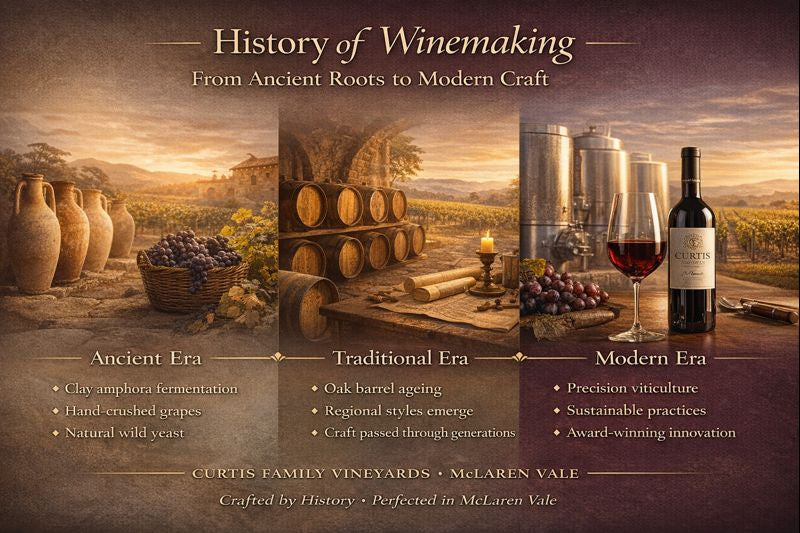
Early winemaking history from ancient to modern times tells a fascinating story of human curiosity, patience, and discovery. Long before wine labels and cellar doors existed, early civilisations learned that crushed grapes left alone would quietly transform into something powerful and social.
Archaeological finds in Georgia and the Middle East show winemaking happening over 8,000 years ago, using clay vessels buried in the earth to control temperature naturally. These early methods weren’t planned science—they were learned through observation, season after season.
As centuries passed, winemaking evolved from instinct to intention. The Romans refined vineyard management and storage, monasteries preserved techniques through the Middle Ages, and oak barrels replaced clay, adding flavour and longevity. Fast forward to today, and modern winemaking blends tradition with precision—using temperature control, selected yeasts, and hygiene standards to protect flavour and consistency without losing character.
How Winemaking Has Evolved Over Time
| Ancient Winemaking | Modern Winemaking |
|---|---|
| Natural fermentation in clay vessels | Controlled fermentation in stainless steel tanks |
| Seasonal guesswork | Data-driven decisions |
| Earth temperature regulation | Precise temperature control |
| Minimal intervention by necessity | Minimal intervention by choice |
What makes this journey compelling is that modern premium wineries haven’t abandoned the past—they’ve learned from it. Today’s best wines still rely on the same essentials: healthy grapes, patience, and respect for the process. The tools have changed, but the heart of winemaking remains deeply human.

From Amphora to Oak: How Tradition Shaped Wine’s First Golden Age
Ancient wine civilisation marked the moment when wine stopped being accidental and became intentional. As the Roman Empire expanded, so did wine knowledge. Romans replaced fragile clay amphora with oak barrels—stronger, reusable, and quietly transformative. What began as a storage upgrade soon revealed an unexpected gift: oak softened tannins, added spice, and helped wine travel without losing quality. This was wine’s first golden age, where craft met curiosity.
After Rome, monasteries became the quiet guardians of wine. Monks didn’t chase volume—they chased consistency. They mapped vineyards, recorded harvest dates, and patiently aged wines in cool cellars. Over generations, this discipline shaped regional identity, turning places like Burgundy and the Rhône into names that still signal quality today. Their work laid the foundation for what we now call terroir—the idea that place leaves a fingerprint on wine.
How Tradition Refined Early Winemaking
| Early Practices | Craft Innovations |
|---|---|
| Clay amphora storage | Oak barrels for ageing and transport |
| Wine made for survival | Wine made for quality and trade |
| Little record keeping | Detailed vineyard and cellar notes |
| Generic styles | Distinct regional character |
What makes this era so powerful is how much of it still matters. Modern winemakers may use advanced tools, but the core lessons—patience, observation, and respect for place—were mastered centuries ago. Wine didn’t just improve during this time; it found its soul.
The Role of Greece and Rome

The Greeks introduced viticulture to many parts of Europe, celebrating wine with god Dionysus. As the Roman Empire expanded, so too did the reach of winemaking. Roman innovations, such as barrel aging and vine grafting, laid the groundwork for modern practices. Moreover, the Romans' emphasis on terroir—a term that is still crucial today in vineyards like those of Curtis Family Vineyards—acknowledged the impact of geography and climate on taste and quality.
Science Changes Everything: The Quiet Revolution Inside the Winery

Medieval wine production relied on instinct, tradition, and a fair bit of luck. Winemakers trusted experience passed down through generations, but spoilage, wild fermentation, and inconsistency were common risks. What changed everything was not a loud breakthrough—but a quiet scientific revolution inside the winery.
As modern science uncovered how yeast behaves, how oxygen affects flavour, and why temperature matters, wine quality leapt forward. Controlled fermentation reduced faults, improved hygiene protected aroma and shelf life, and careful temperature management preserved freshness and balance. Importantly, these advances didn’t erase tradition—they refined it.
Today’s best wineries blend old-world wisdom with modern precision, keeping the soul of wine intact while delivering reliability and elegance in every bottle.
Then vs Now: Inside the Winery
| Winemaking Era | Key Practices | Impact on Wine |
|---|---|---|
| Medieval era | Natural yeast, minimal sanitation | Unpredictable flavours, high spoilage |
| Modern era | Selected yeast, strict hygiene, temperature control | Consistent quality, purity, and ageing potential |
This balance of science and tradition is what allows modern Australian wines to honour their past—while tasting better than ever.
How Australia Rewrote the Rules
Modern winemaking techniques in Australia marked a bold shift from tradition to innovation. Regions like McLaren Vale didn’t just follow old-world rules—they studied climate, experimented with varietals, and embraced science to express the vineyard’s true character. From precise irrigation to temperature-controlled fermentation, every step was designed to balance richness, freshness, and authenticity.
Australian winemakers combined respect for the grape with curiosity and creativity. Shiraz became a global benchmark, Grenache showed surprising versatility, and innovative blends captured both local terroir and international appeal. The result? Wines that are instantly recognisable, yet full of personality.
Old World vs New World Approach
| Feature | Old World (Europe) | New World (Australia) |
|---|---|---|
| Climate focus | Adaptation to established regions | Detailed microclimate management |
| Varietal style | Traditional grapes, restrained expression | Bold varietals, expressive profiles |
Medieval Monasteries and Renaissance Revelations
With the fall of the Roman Empire, the art of winemaking was preserved by monasteries throughout Europe. Monks maintained vineyards and refined winemaking methods, keeping the tradition alive during turbulent times. The Renaissance era later witnessed a resurgence in appreciation for wine's artistic qualities and its role in social and economic spheres, setting the stage for future developments.
The Birth of Modern Winemaking

The 19th and 20th centuries marked significant advancements in winemaking techniques, spurred on by scientific understanding and technological innovations. Controlled fermentation, temperature management, and quality control became standard practice. Today, winemakers like Curtis Family Vineyards utilise these advancements to create exceptional wines.
Modern Winemaking with Ancient Values
Sustainable winemaking practices sit at the heart of where history meets modern craft. While today’s wineries have access to advanced tools and data, the best producers know that great wine is still shaped by patience, restraint, and respect for the land—values that trace back thousands of years.
Modern premium wineries use technology not to rush wine, but to protect it. Soil monitoring helps vines thrive naturally. Gentle fermentation control preserves flavour rather than forcing it. Minimal intervention allows each season’s character to show honestly in the glass. It’s a quiet confidence that echoes ancient winemaking—trusting nature, then stepping back.
Ancient Values, Modern Tools
| Ancient Winemaking Values | Modern Application Today |
|---|---|
| Respect for seasons | Harvest timing based on flavour, not speed |
| Natural balance | Low-intervention fermentation and ageing |
| Connection to land | Sustainable viticulture and soil care |
This blend of old wisdom and modern care creates wines with clarity, depth, and authenticity—proof that progress doesn’t mean forgetting the past.
A Contemporary Taste of Tradition
For those seeking the artistry of traditional winemaking melded with modern refinement, the Terra Rossa Shiraz offers a journey through time, capturing the essence of the rich McLaren Vale soils. Similarly, the Heritage Shiraz provides a deep, resonant taste that honours the profound heritage of its origins.
For those with a penchant for innovation, the Limited Series Shiraz takes the timeless Shiraz to new heights, showcasing the meticulous craftsmanship that contemporary winemaking can achieve.
In conclusion, the history of winemaking is a testament to human ingenuity and passion. From its ancient roots to its modern sophistication, wine continues to be a bridge connecting us to our past, allowing us to savour the journeys of generations. Whether enjoying a classic or modern blend, Curtis Family Vineyards offers a unique narrative in every bottle, inviting wine enthusiasts to explore its rich and diverse history.
