

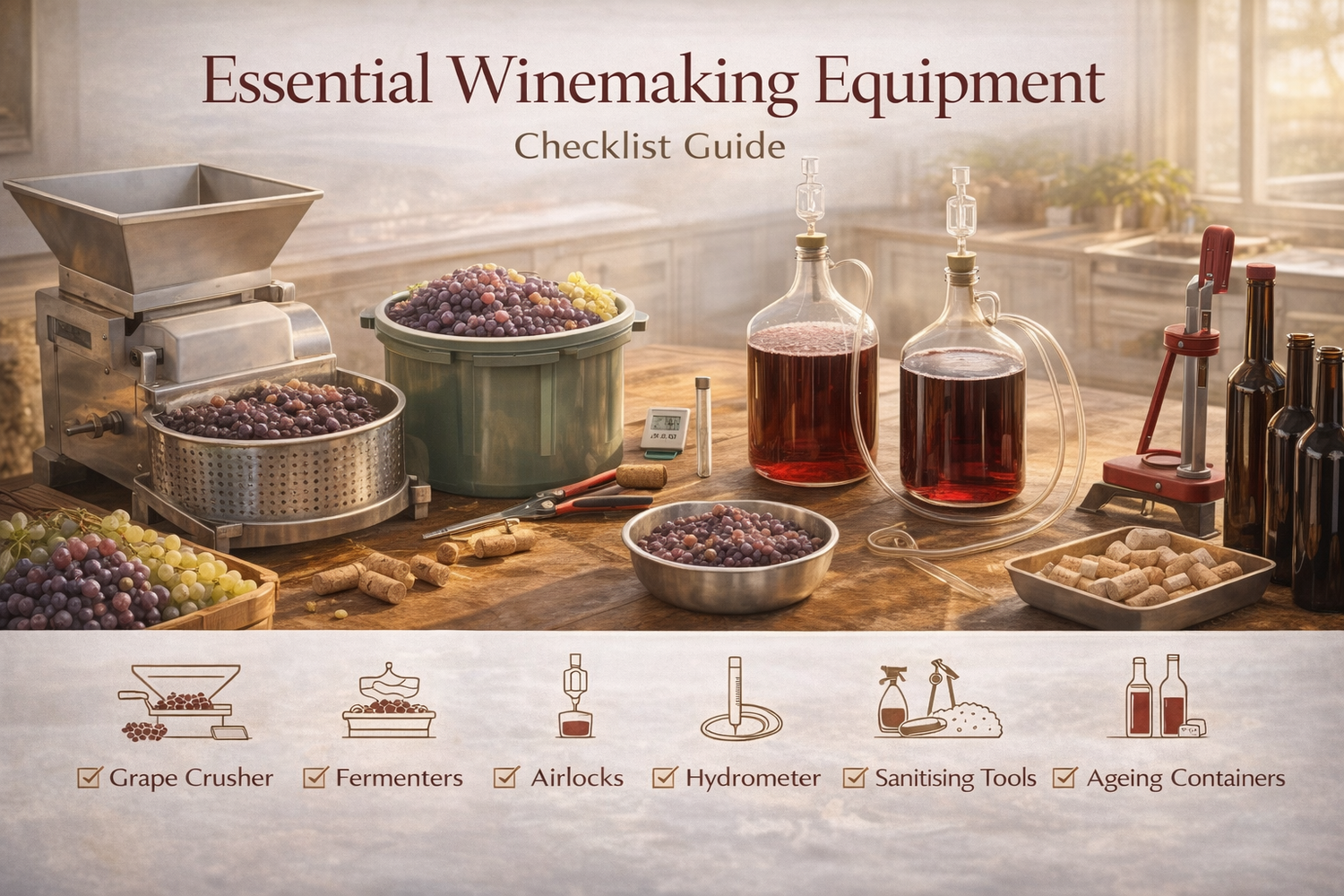
Introduction: Why the Right Winemaking Equipment Matters
Winemaking Equipment is more than just tools—it’s the foundation of every great bottle you craft at home. In McLaren Vale, where wine culture runs deep, even beginner winemakers can achieve impressive results with the right gear.
Using proper equipment ensures your wine is consistent, safe, and full of flavour. From a simple fermenter to an accurate hydrometer, each tool plays a role in controlling fermentation, avoiding contamination, and capturing the true essence of your grapes.
Think of it this way: the right equipment transforms your kitchen or garage into a mini McLaren Vale winery, where science and art meet. Even small investments—like a quality airlock or sanitiser—can make the difference between an average batch and a wine you’ll be proud to share.
Starter Essentials: Must-Have Tools for Beginner

Home winemaking equipment doesn’t need to be complicated—just the right essentials to help you craft clean, flavourful wine from day one. These essential winemaking tools form the backbone of every beginner’s setup, proving you can create quality wine at home without expensive gear.
Here’s a quick, expert-approved starter kit:
- Fermenter: A food-grade plastic or glass vessel that keeps your juice safe during fermentation. Affordable, reusable, and the single most important item to start with.
- Airlock: A tiny but powerful tool that lets gases escape while keeping oxygen and bacteria out—your first line of protection for clean, fault-free wine.
- Hydrometer: The beginner’s “secret weapon.” It measures sugar levels so you can track fermentation progress and control alcohol percentage like a pro.
- Siphon Tube: Helps you transfer wine smoothly between vessels without disturbing sediment or risking contamination.
- Bottles + Caps/Corks: Reusable, budget-friendly, and essential for ageing and storing your finished wine.
Industry tip: A study from several Australian homebrew associations shows that beginners who invest in just these five tools see fewer fermentation faults and better flavour consistency in their first three batches.
Even on a budget, these tools give you the confidence and control to start winemaking the right way—simple gear, big results.
Fermentation & Monitoring Gear

Winemaking gear for beginners plays a crucial role in helping home winemakers understand and control the science happening inside every batch. Fermentation may look simple on the surface, but behind the bubbles is a world of temperature shifts, sugar conversions, and yeast activity that directly shape flavour, aroma, and balance.
To make this process foolproof, here are the key tools every beginner needs to master fermentation like a McLaren Vale winemaker:
- Thermometer: Temperature affects everything—from aroma creation to colour intensity. A basic digital thermometer helps you avoid the two biggest risks: overheated ferments and stuck fermentations.
- Hydrometer & Test Jar: Tracks sugar levels before, during, and after fermentation. This is how you predict alcohol content and ensure fermentation is progressing steadily.
- pH Strips or Meter: Even simple pH tools help you understand acidity, stability, and microbial safety—three factors that premium regions like McLaren Vale monitor closely.
- Yeast Nutrient: A budget-friendly booster that supports yeast health and prevents sluggish or incomplete fermentations.
- Temperature Control Aids: Ice packs, brew belts, or a cool cupboard—cheap yet powerful ways to stabilise your fermentation environment.
Expert insight: Many McLaren Vale wineries, including Curtis Family Vineyards, rely on consistent monitoring to preserve fruit purity. Home winemakers who use even basic measurement tools often report smoother ferments, cleaner flavours, and fewer faults—all without spending much.
Bottling & Storage Equipment

Bottling tools for wine are the final pieces of equipment that turn your hard work into a polished, ready-to-share bottle. This stage may look simple, but the right tools protect your wine from oxidation, spoilage, and flavour loss—making a huge difference in how your homemade wine ages over time.
Here’s what every home winemaker needs for safe, long-lasting storage:
- Hand Corker or Capper: Even a beginner-friendly hand corker gives you a tight, oxygen-safe seal. Cappers are perfect for those using crown caps as a budget-friendly option.
- Quality Corks or Caps: Natural corks are ideal for ageing, while screw caps and crown caps work well for early-drinking wines.
- Bottling Wand & Siphon: Helps transfer wine smoothly without splashing—reducing exposure to air and preserving freshness.
- Wine Racks or Shelving: Simple wooden or metal racks keep bottles at the correct angle and prevent drying corks.
- DIY Storage Setups: A dark cupboard, an unused wardrobe, or an insulated storage box can mimic cellar conditions on a budget.
- Wine Fridge (Optional): A reliable choice if you want precise temperature control for long-term ageing.
Pro insight: Wineries like Curtis Family Vineyards store Mclaren Vale wines like Small Batch Durif or Octavian Shiraz in carefully controlled spaces to protect flavour and structure. Home winemakers can recreate this by focusing on the four essentials: cool temperature, darkness, stability, and humidity control.
Optional Tools That Upgrade Your Home Winemaking

Corkers and closures may finish the job, but optional tools can elevate your entire home winemaking experience—helping you produce wines with clearer texture, better structure, and richer flavour. These aren’t must-haves, but they’re the exact tools many passionate home winemakers rely on when they want their batches to taste more “professional” without spending a fortune.
Here are a few upgrades that make an immediate difference:
- Small Wine Press: Extracts more juice and deeper flavour from grapes, mimicking the gentle pressure used in boutique wineries.
- Aeration Devices: Help open up young wines, softening tannins and boosting aroma—especially useful for bold reds.
- pH Meter & Acid Test Kits: Let you fine-tune acidity, balance, and stability. A small tweak can transform a wine’s freshness.
- Tasting Tools (Glasses, Aroma Wheels): Guide you to judge colour, aroma, and mouthfeel like a trained winemaker, improving every future batch.
- Filtering or Clarifying Tools: Create brighter, cleaner wine with fewer sediments—ideal if you want a polished, bottle-ready finish.
Pro insight: Many McLaren Vale winemakers, including Curtis Family Vineyards, use advanced tools only when they enhance the natural character of the fruit. Home winemakers can follow the same principle: upgrade slowly and intentionally.
With just a few optional tools, your home winemaking setup becomes smarter, smoother, and far more satisfying.
Maintaining & Organising Your Equipment

Hydrometer and sugar testing tools, Temperature control tools for fermentation, wine presses, and pH and acidity testing tools all play a crucial role in winemaking—but they only perform at their best when they’re clean, organised, and properly stored. Maintaining your gear isn’t just “good practice”; it’s the difference between a vibrant, fault-free wine and a batch you’d rather forget.
Clean, well-kept equipment protects flavour purity, fermentation health, and long-term tool durability. Here’s the simple, proven approach used by both home winemakers and McLaren Vale professionals:
Essential Care Habits for Long-Lasting Winemaking Gear

-
Clean Immediately After Use
Residual sugars and grape solids can cause off-flavours or contamination. Rinsing straight away prevents stubborn buildup. -
Sanitise Before Every Batch
A food-grade sanitiser keeps fermenters, siphons, hydrometers, and presses safe.
Case insight: Even tiny bacteria levels can dramatically affect yeast performance and wine clarity. -
Protect Your Temperature Control Tools
Keep thermostats, cooling wraps, and digital readers dry and stored in stable temperatures to ensure accuracy. -
Store pH Meters Properly
Most units need storage solution to prevent sensor drying—essential for accurate acidity readings. -
Lubricate & Check Wine Presses
Manual presses last years longer with occasional lubrication and correct off-season storage. -
Organise Tools by Stage
Many winemakers group equipment into fermentation, monitoring, and bottling zones to stay efficient and avoid cross-contamination.
Why Equipment Hygiene = Better Wine
Clean equipment means clean science. Your readings become more accurate, your fermentations more predictable, and your final flavours far more expressive—reflecting the same care and precision practised in McLaren Vale’s boutique wineries.
A well-maintained setup isn’t just efficient; it’s sustainable, safe, and elevates every bottle you craft.
Conclusion
By equipping yourself with these essential tools, you set the foundation for successful winemaking. At Curtis Family Vineyards, we celebrate the art and tradition of winemaking with exceptional wines such as the Limited Series Shiraz or Terra Rossa Shiraz which epitomises the dedication and passion we hold dear.
We invite you to explore the range and depth of our offerings by visiting us at Curtis Family Vineyards. Cheers to a fruitful winemaking adventure!
