

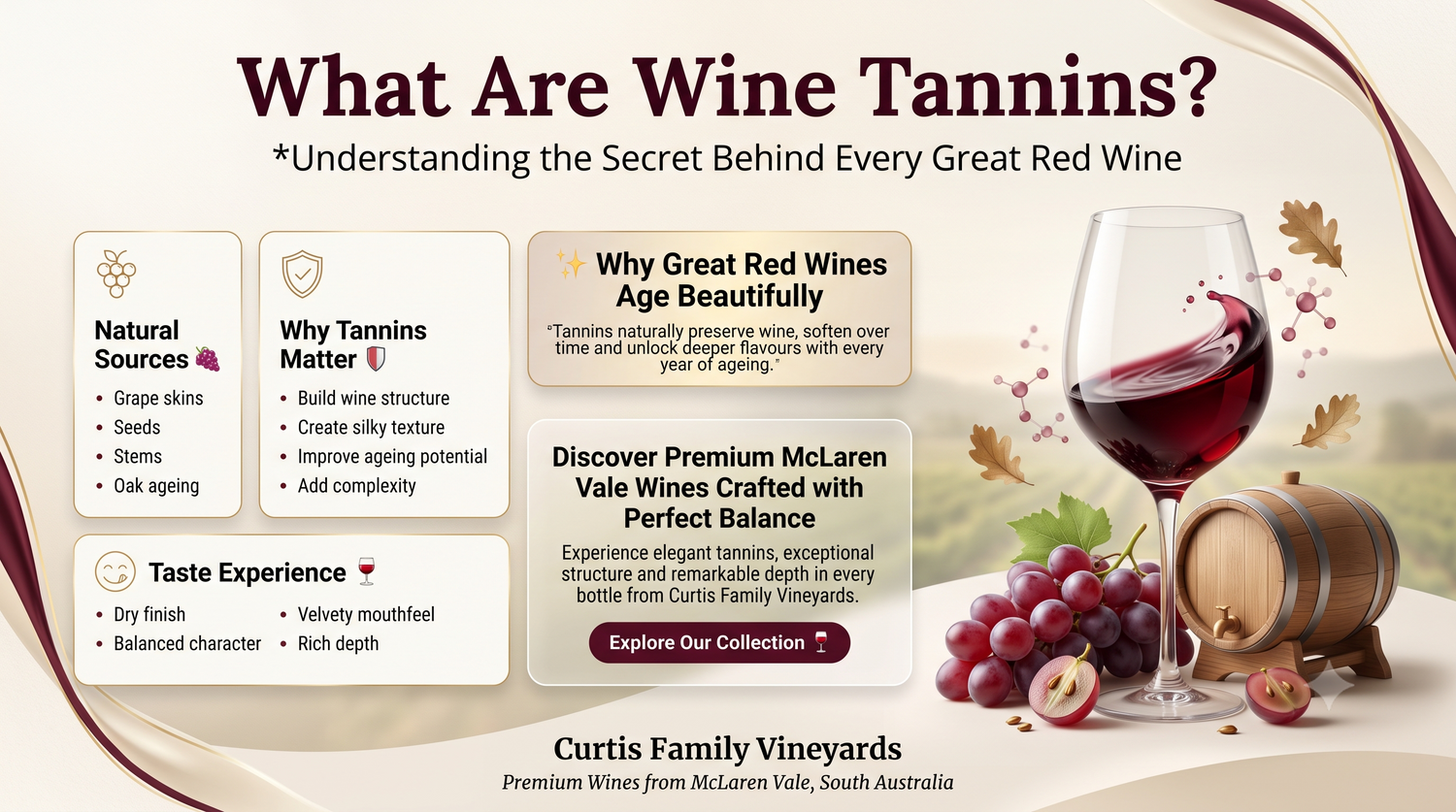
What Are Wine Tannins? Understanding the Secret Behind Every Great Red Wine
Wine tannins guide starts with understanding one of the most important elements that shapes the taste, texture and ageing potential of a wine. If you've ever taken a sip of red wine and noticed a dry, slightly grippy feeling on your tongue or gums, you've experienced tannins in action. They're not a flaw—they're one of the reasons great red wines become more complex and enjoyable over time.
Unlike sweetness or acidity, tannins add structure, depth and balance, helping wines develop beautifully in the bottle for years.
What Are Wine Tannins?
What are tannins in wine? Tannins are naturally occurring plant compounds called polyphenols. They are found in grape skins, seeds and stems, and they can also come from oak barrels used during wine maturation. Their main role is to give wine texture, protect it during ageing and enhance its overall character.
Think of tannins as the backbone of a well-made red wine. Without them, many full-bodied wines would taste flat and lose their ability to mature gracefully.
Where Do Wine Tannins Come From?

The level of tannins in a wine depends on both the grape variety and the winemaking process.
| Natural Source | How It Influences Wine |
|---|---|
| Grape skins | Add colour, structure and moderate tannins |
| Grape seeds | Contribute firmer, more noticeable tannins |
| Grape stems | Increase structure when used during fermentation |
| Oak barrels | Add refined tannins along with subtle spice and vanilla notes |
Winemakers carefully manage how long the juice stays in contact with these parts of the grape. This decision helps create wines that range from soft and approachable to bold and age-worthy.
Why Winemakers Value Tannins
Understanding wine tannins helps explain why experienced winemakers pay close attention to them throughout production. Well-balanced tannins don't simply make a wine feel dry—they create harmony between fruit, acidity and alcohol.
Balanced tannins help to:
- Give red wines a fuller, richer mouthfeel.
- Support long-term bottle ageing.
- Protect wine from oxidation naturally.
- Enhance complexity as the wine matures.
- Create a smoother finish when paired with food.
This is one reason premium wine regions like McLaren Vale are recognised for producing elegant reds with beautifully integrated tannins that become even more rewarding over time.
How Tannins Shape Body, Structure and Ageing
How tannins affect wine goes far beyond taste. Young wines often have firmer tannins that soften gradually during cellaring, revealing more layered aromas and flavours. This natural evolution is why many collectors enjoy ageing premium Shiraz and Cabernet Sauvignon for several years before opening them.
Research into wine polyphenols has also shown that tannins contribute to wine stability throughout maturation, helping preserve colour and flavour while supporting graceful ageing.
Why Tannins Matter When Choosing Premium Wines
When selecting a quality bottle, tannins can tell you a lot about the wine's style and ageing potential.
- Soft tannins are ideal for easy drinking and casual occasions.
- Medium tannins offer excellent balance with a wide variety of foods.
- Firm tannins are often found in premium wines designed for cellaring and rich meals.
Knowing the tannin profile helps you choose a wine that matches both your personal taste and the occasion.
Common Myths About Wine Tannins
Many wine lovers avoid tannins because of common misconceptions. Here's the truth:
-
Myth: Tannins make wine bad.
Reality: Balanced tannins are a sign of quality and structure. -
Myth: Only expensive wines contain tannins.
Reality: Most red wines naturally contain tannins, regardless of price. -
Myth: High tannins always mean bitter wine.
Reality: Well-made tannic wines can be smooth, elegant and beautifully balanced.
By understanding tannins, you'll read every glass differently—and with greater confidence. Whether you're discovering your first McLaren Vale Shiraz or choosing a premium cellar-worthy Cabernet Sauvignon, recognising the role of tannins is the first step towards finding a wine you'll truly enjoy.
How to Taste Wine Tannins Like a Professional and Instantly Recognise Their Quality
How to taste tannins is one of the easiest skills to learn, yet it can completely change the way you experience wine. Professional wine tasters don't just focus on flavour—they pay close attention to how a wine feels. The secret is to notice the texture after you swallow, not just the taste while the wine is in your mouth.
How Do Wine Tannins Feel in Your Mouth?
What do tannins taste like? Interestingly, tannins don't have a strong flavour of their own. Instead, they create a drying sensation by binding with proteins in your saliva, making your mouth feel less lubricated.
You may notice:
- A gentle dry feeling on your gums.
- A grippy or chalky texture on your tongue.
- A smooth, velvety finish in premium wines.
- A lingering sensation that stays after swallowing.
The more balanced the tannins, the more refined and enjoyable the wine feels.
Soft vs Firm vs Silky vs Bold Tannins
Wine texture explained becomes much easier when you compare different tannin styles.
| Tannin Style | Mouthfeel | Common Wine Styles |
|---|---|---|
| Soft | Smooth and easy-drinking | Merlot, Grenache |
| Silky | Velvety and elegant | Pinot Noir |
| Firm | Structured and dry | Cabernet Sauvignon |
| Bold | Powerful and full-bodied | McLaren Vale Shiraz |
Each style suits different palates, so there's no "best" tannin—only the one that matches your taste.
High Tannin vs Low Tannin Wines
Low tannin vs high tannin wine is a comparison every wine lover should understand before choosing a bottle.
| High Tannin Wines | Low Tannin Wines |
|---|---|
| Fuller body | Lighter body |
| More drying sensation | Softer finish |
| Excellent ageing potential | Ready to enjoy young |
| Best with rich meals | Great for casual sipping |
High-tannin wines often become smoother with age, while lower-tannin wines are usually approachable from the moment they're bottled.
Bitterness vs Astringency: Know the Difference
Dry feeling in red wine is often confused with bitterness, but they're not the same.
- Bitterness is a flavour detected on your tongue, similar to dark chocolate or black coffee.
- Astringency is a texture that creates a drying or puckering sensation inside your mouth.
Recognising this difference helps you judge a wine more accurately and appreciate its balance.
High Tannin vs Low Tannin Wines: Which Style Matches Your Palate Best?
High tannin vs low tannin wines is one of the biggest factors that influences whether you'll love—or leave—a bottle of red wine. The good news? Neither style is better. It all comes down to your taste preferences, the food you're pairing with the wine and the experience you're looking for.
If you enjoy bold, structured wines that evolve over time, high-tannin wines are likely to impress. If you prefer smooth, fruit-forward wines that are easy to drink, lower-tannin styles may be your perfect match.
What Are High Tannin Wines?
High tannin wines contain more natural tannins from grape skins, seeds and oak ageing. They often have a firmer structure, a noticeable drying sensation and excellent ageing potential.
These wines are ideal for:
- Rich steaks and slow-cooked meats.
- Long-term cellaring.
- Wine enthusiasts who enjoy complex, layered flavours.
- Special occasions where a bold red shines.
What Are Low Tannin Wines?
Low tannin wines offer a softer, smoother drinking experience with less mouth-drying texture. Their fruit flavours are often more noticeable, making them an excellent choice for beginners or relaxed entertaining.
They're perfect for:
- Casual dinners and social gatherings.
- Lighter meals and cheese platters.
- New wine drinkers exploring red wines.
- Enjoying without extended ageing.
Best Grape Varieties by Tannin Level
Different grape varieties naturally produce different tannin levels. Knowing these differences makes choosing a wine much easier.
| Grape Variety | Tannin Level | What to Expect |
|---|---|---|
| Cabernet Sauvignon | High | Firm structure, excellent ageing, dark fruit flavours |
| Shiraz | Medium to High | Rich, bold and balanced with ripe tannins |
| Grenache | Medium | Juicy fruit, soft spice and approachable texture |
| Pinot Noir | Low | Silky, elegant and light-bodied |
| Merlot | Low to Medium | Smooth, rounded and easy-drinking |
Expert Tip: McLaren Vale Shiraz is admired for producing ripe, well-integrated tannins that deliver power without excessive dryness, making it a favourite among both collectors and everyday wine lovers.
Young Wines vs Aged Wines
Young wine vs aged wine tannins can feel surprisingly different, even when made from the same grape variety.
| Young Wines | Aged Wines |
|---|---|
| Firmer and more noticeable tannins | Softer, smoother tannins |
| Fresh fruit flavours | Greater complexity and depth |
| More vibrant structure | Silky, well-integrated texture |
| Ready for immediate enjoyment | Ideal for special occasions and collectors |
As wine matures, tannins gradually soften and blend with the fruit, creating a more refined and harmonious drinking experience. This natural transformation is one reason premium red wines are often cellared before being enjoyed.
Which Tannin Style Is Right for You?
Choosing the right wine becomes much easier when you match tannin levels to your personal preferences.
- Love bold, full-bodied reds? Choose Cabernet Sauvignon or McLaren Vale Shiraz.
- Prefer smooth and approachable wines? Pinot Noir or Merlot are excellent options.
- Want something balanced? Grenache offers a great mix of ripe fruit and gentle tannins.
Understanding tannin levels gives you the confidence to select wines you'll genuinely enjoy. Instead of guessing from the label, you'll know exactly which style suits your palate—whether you're buying your first bottle or adding another premium wine to your collection.
Wine Tannins and Food Pairing: The Secret to Smoother, Richer and More Enjoyable Wines
Wine tannins and food pairing can completely transform your wine experience. Have you ever noticed that a bold red wine feels smoother when enjoyed with a perfectly cooked steak? That's not your imagination—it's wine science in action. The right food can soften tannins, highlight fruit flavours and create a more balanced, enjoyable glass.
Professional sommeliers rarely judge a wine on its own. Instead, they consider how it will interact with food, because the right pairing often reveals the wine at its very best.
Why Food Changes the Way Tannins Feel
Best food for tannic wines starts with understanding how tannins interact with your palate. Tannins naturally bind to proteins in your saliva, creating that familiar dry sensation. When protein-rich foods are added, the tannins bind with the food instead, making the wine feel softer, rounder and more balanced.
This is why a wine that seems firm on its own can become surprisingly smooth alongside a well-matched meal.
The Magic of Protein and Fat
Protein and healthy fats are some of the best partners for tannic red wines because they help reduce the drying effect of tannins while allowing the wine's fruit and spice characters to shine.
Some classic combinations include:
- Grilled rib-eye steak with Cabernet Sauvignon.
- Slow-cooked lamb with McLaren Vale Shiraz.
- Roast beef with full-bodied red blends.
- Beef burgers with medium-bodied Shiraz.
These pairings don't just complement each other—they create a richer tasting experience.
Cheese Pairings That Soften Tannins
Cheese and tannic wine is a timeless combination because the fat and creaminess of cheese naturally balance structured red wines.
Try these pairings:
| Cheese | Ideal Wine Style |
|---|---|
| Aged Cheddar | Cabernet Sauvignon |
| Gouda | Shiraz |
| Parmesan | Grenache |
| Brie | Merlot or Pinot Noir |
The result is a smoother mouthfeel and greater flavour complexity in both the wine and the cheese.
Delicious Vegetarian Pairings
Tannic wines aren't just for meat lovers. Many vegetarian dishes work beautifully with structured reds, especially those rich in umami flavours.
Great options include:
- Grilled mushrooms.
- Roast pumpkin and root vegetables.
- Lentil-based dishes.
- Eggplant cooked with herbs and olive oil.
These ingredients add depth and help create a more balanced tasting experience.
Chocolate and Dessert Pairings
Chocolate with red wine can be an indulgent match when the flavours are balanced. Dark chocolate, with its rich cocoa notes, pairs particularly well with bold reds that have ripe fruit and integrated tannins.
For the best results:
- Choose dark chocolate with at least 70% cocoa.
- Match sweeter desserts with fruit-forward red wines.
- Avoid pairing very dry wines with overly sweet desserts, as the wine may taste harsher.
Common Food Pairing Mistakes to Avoid
Even excellent wines can seem unbalanced with the wrong food. Keep these simple tips in mind:
- Avoid highly spicy dishes with very tannic wines, as they can make the wine feel more drying.
- Don't pair delicate foods with powerful reds that overpower subtle flavours.
- Be cautious with acidic sauces, which can make tannins seem firmer.
- Match the intensity of the wine with the richness of the meal for the best balance.
The secret to enjoying tannic wines isn't choosing the most expensive bottle—it's choosing the right pairing. Whether you're serving a premium McLaren Vale Shiraz with grilled lamb or enjoying a smooth Merlot alongside a cheese board, understanding how food influences tannins will help you appreciate every glass with greater confidence and enjoyment.
Choosing the Right Wine Tannins Guide for Every Wine Lover
Choosing wines by tannin level is one of the smartest ways to find a bottle you'll genuinely enjoy. Rather than focusing only on grape variety or price, understanding tannins helps you match a wine to your taste, your meal and even the occasion. Whether you're buying your first bottle or adding to a growing collection, the right tannin profile can make all the difference.
Best Wines for First-Time Red Wine Drinkers
Wines with soft tannins are an excellent starting point because they're smooth, approachable and easy to enjoy without feeling overly dry.
Great choices include:
- Merlot – soft, fruity and well-balanced.
- Pinot Noir – silky texture with bright red fruit flavours.
- Grenache – medium-bodied with gentle spice and ripe berry notes.
These styles allow new wine lovers to appreciate complexity without being overwhelmed by firm tannins.
Wines for Experienced Wine Enthusiasts
Best tannin wines often appeal to those who enjoy bold flavours, layered complexity and wines that evolve over time. These wines reward patience and pair beautifully with rich meals.
Popular choices include:
- Cabernet Sauvignon – structured, powerful and ideal for ageing.
- McLaren Vale Shiraz – full-bodied with ripe fruit, spice and beautifully integrated tannins.
- Premium red blends crafted for long-term cellaring.
These wines often become smoother and more complex as they mature, making them favourites among collectors.
Choose Wine for the Occasion
The best wine isn't always the most expensive—it's the one that suits the moment.
| Occasion | Recommended Wine Style |
|---|---|
| Casual dinner | Merlot or Grenache |
| Barbecue with friends | McLaren Vale Shiraz |
| Romantic evening | Pinot Noir |
| Celebration or gifting | Premium Cabernet Sauvignon |
| Cellaring for the future | Structured Shiraz or Cabernet Sauvignon |
Matching the wine to the occasion creates a more memorable experience for everyone at the table.
Match Tannins with Your Favourite Food
Choosing wines by food is one of the easiest ways to improve your wine experience.
- Rich red meats pair best with high-tannin wines.
- Roast lamb is a classic match for McLaren Vale Shiraz.
- Cheese boards complement medium-bodied reds beautifully.
- Mushroom-based vegetarian dishes work well with Pinot Noir or Grenache.
When food and tannins are balanced, both the meal and the wine taste even better.
Choose Based on Ageing Potential
If you enjoy collecting wine, tannins are an important indicator of ageing potential.
- Drink now: Merlot, Pinot Noir and lighter Grenache styles.
- Cellar for later: Cabernet Sauvignon, premium Shiraz and carefully crafted reserve wines.
Over time, tannins soften naturally, allowing more complex aromas and flavours to develop.
Quick Buying Guide Based on Tannin Preference
Use this simple guide when choosing your next bottle:
| If You Prefer... | Choose... |
|---|---|
| Smooth and easy-drinking wines | Merlot or Pinot Noir |
| Balanced, versatile reds | Grenache or Shiraz |
| Bold, structured wines | Cabernet Sauvignon |
| Wines for ageing and collecting | Premium Shiraz or Cabernet Sauvignon |
Expert Recommendations from Curtis Family Vineyards
Premium McLaren Vale wines are recognised for producing tannins that are powerful yet beautifully balanced. At Curtis Family Vineyards, careful vineyard management, quality fruit selection and thoughtful oak maturation create wines that offer both immediate enjoyment and excellent cellaring potential.
If you're new to tannic wines, start with a softer, fruit-driven style before exploring fuller-bodied Shiraz or Cabernet Sauvignon. As your palate develops, you'll discover how balanced tannins add depth, elegance and character to every glass—making it easier to choose wines you'll return to again and again.
The Role of Tannins in Winemaking
For winemakers, the challenge is to manage tannin levels during the vinification process to achieve a balanced and harmonious wine. The skill lies in knowing how to extract the right amount of tannins through skin contact and fermentation techniques. The art of blending becomes particularly important with varietals that have different tannin levels, such as in the crafting of certain red blends.
The Cavaliere Grenache Shiraz Mourvedre from Curtis Family Vineyards is a perfect example of a skillful blend that showcases how diverse tannin profiles can create a harmonious and complex wine. Grenache, with its softer tannins, Shiraz contributing spice and structure, and Mourvedre adding depth, all come together to deliver a delightful balanced wine.
Tannins and Wine Ageing
Tannins also contribute significantly to a wine's ageing potential. Wines with higher tannin content generally have a greater capacity for ageing, as the tannins gradually evolve and integrate over time, often leading to a mellower and more nuanced wine. The Heritage Cabernet Sauvignon is a prime example, where the firm tannin structure allows for a graceful development in the bottle, enhancing its appeal and complexity with age.
Contemporary Tannin Management
Modern techniques in tannin management allow winemakers to refine their approach, crafting wines that meet the desired flavour profiles while ensuring balance. The Cavaliere Shiraz takes full advantage of these contemporary techniques. This wine embodies a rich tannin structure complemented by vibrant berry flavours, creating an impactful yet elegant wine experience.
To explore more about the art of winemaking and the exquisite selections, visit Curtis Family Vineyards.
By delving into the world of tannins, winemakers not only master one of the craft's fundamental elements but also enhance the art of creating wines that reflect complexity, flavour, and a testament to the beautiful intricacies of nature's bounty.
