

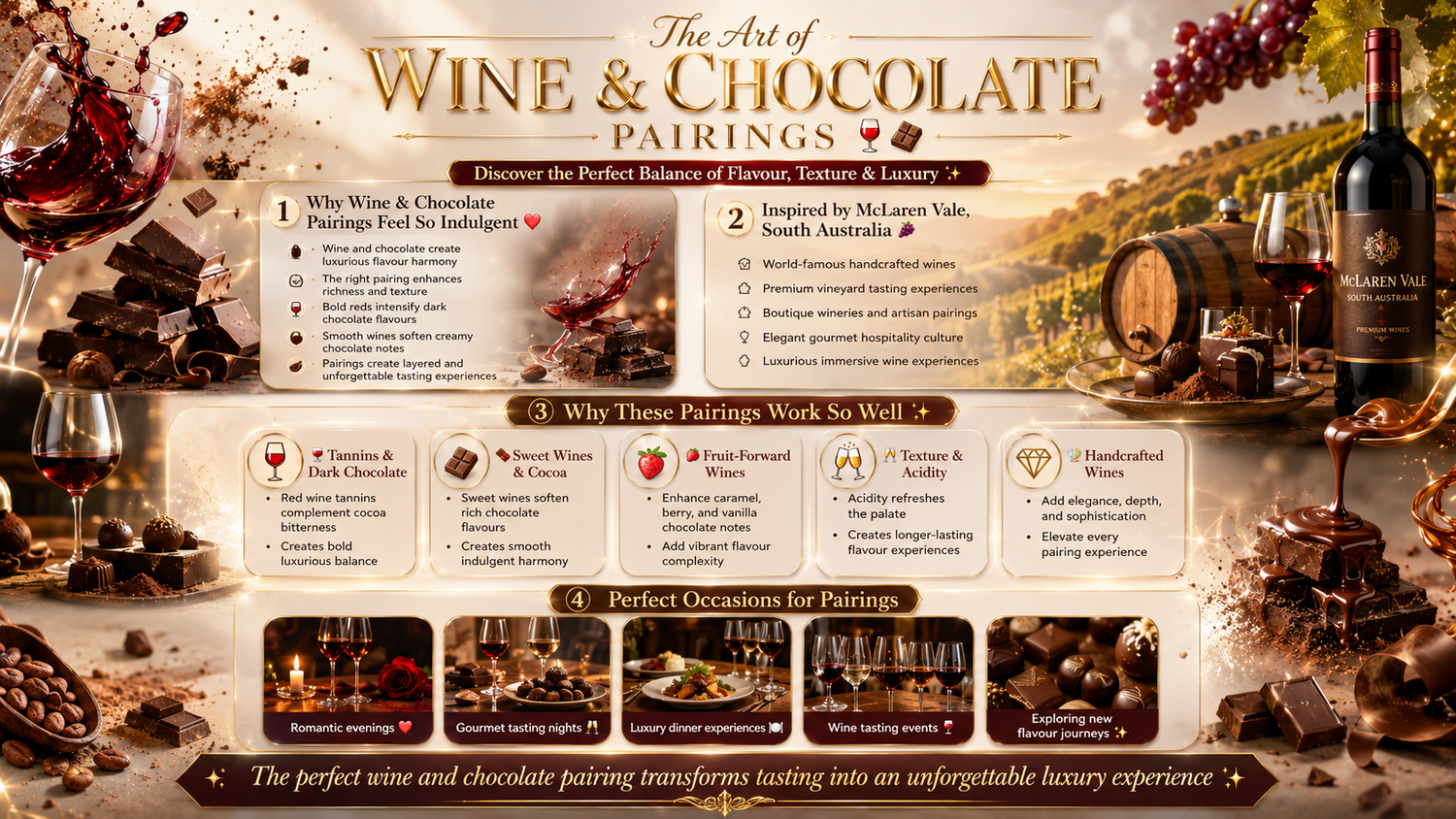
Introduction - Why Wine and Chocolate Pairings Work So Well
Wine and Chocolate Pairings have long been associated with indulgence, romance, and unforgettable tasting experiences. The reason is simple — when the right wine meets the right chocolate, the flavours transform in remarkable ways. A bold Gladiator Shiraz can intensify the richness of dark chocolate, while a smooth Legion Merlot can soften creamy milk chocolate notes for a velvety finish. According to food sensory research, balancing sweetness, acidity, tannins, and texture can dramatically enhance how both wine and chocolate are experienced together, creating a more layered and satisfying palate journey.
In recent years, gourmet wine and chocolate pairings have become increasingly popular across McLaren Vale, South Australia, where wine lovers are seeking more immersive and premium tasting experiences. Known for its handcrafted wines and world-class vineyards, McLaren Vale offers the ideal setting to explore luxurious flavour combinations inspired by the region’s bold reds and elegant whites. At boutique wineries, pairing artisan chocolate with carefully crafted wines has evolved from a simple dessert idea into a refined tasting experience designed to awaken the senses.
- Tannins in red wine complement the bitterness of dark chocolate
- Sweet wines help balance rich cocoa flavours
- Fruit-forward wines enhance caramel, berry, and vanilla chocolate notes
- Texture and acidity create smoother, longer-lasting flavour experiences
- Premium handcrafted wines add complexity and depth to every pairing
Whether you are planning a romantic evening, hosting a gourmet tasting night, or simply exploring new flavour experiences, understanding the art of pairing wine and chocolate can completely change the way you enjoy both.
The Science Behind Wine and Chocolate Pairings That Actually Work

Wine and Chocolate Pairings are not just about taste — they are about chemistry, balance, and sensory experience. The secret lies in how tannins, sweetness, acidity, and texture interact on the palate. When paired correctly, wine can unlock hidden flavours in chocolate that many people never notice. This is why sommeliers often describe the right pairing as “transformative” rather than simply enjoyable.
One of the biggest factors in successful pairing is the relationship between tannins and cocoa. Dark chocolate naturally contains bitterness and tannins, much like bold red wines such as Shiraz or Cabernet Sauvignon. When these elements are balanced properly, they create a smoother, richer mouthfeel instead of harshness. Research in sensory food science also suggests that matching similar flavour intensities helps both wine and chocolate taste more refined and complex.
Why Balance Matters in Pairing
- Sweet chocolate can make dry wine taste more bitter
- High-tannin wines work better with dark chocolate than milk chocolate
- Creamy textures soften acidity and spice in wine
- Fruit-driven wines highlight berry and caramel chocolate notes
- Oak-aged wines often complement vanilla and roasted cocoa flavours
Common Flavour Matches Sommeliers Use
| Chocolate Flavour | Recommended Wine Style | Why It Works |
|---|---|---|
| Dark Cocoa | Shiraz or Cabernet Sauvignon | Matches bold tannins and richness |
| Milk Chocolate | Merlot or Pinot Noir | Smooth texture balances sweetness |
| Caramel Chocolate | Chardonnay | Enhances buttery and vanilla notes |
| Berry Chocolate | Sparkling Rosé | Lifts fruity flavours with freshness |
| White Chocolate | Moscato | Complements creamy sweetness |
Chocolate flavour profiles with wine become even more exciting when you focus on flavour layers like berry, spice, vanilla, oak, and roasted notes. A wine with dark fruit and spice can intensify the richness of dark chocolate, while a softer wine with vanilla undertones can create a velvety finish with creamy chocolate desserts.
The golden rule many sommeliers follow is simple: match intensity with intensity. Bold wines need rich chocolate, while lighter wines shine with delicate sweetness. Once you understand this principle, every wine and chocolate tasting experience becomes far more memorable and rewarding.
Understanding the Basics of Wine and Chocolate Pairing

Before diving into specific pairings, it's important to understand the fundamental principles that make certain wines and chocolates work well together. Wine and chocolate pairing is both a science and an art, requiring knowledge of flavor profiles, tannin structures, acidity levels, and the chemical compounds that make each product unique.
The Chemistry Behind the Pairing
Wine and chocolate contain numerous compounds that interact with our taste buds in complex ways. Both contain phenolic compounds, which are responsible for much of their flavor complexity and astringency. When you pair wine with chocolate, you're essentially creating a dialogue between these compounds, and when done correctly, they enhance rather than compete with each other.
The key to successful pairing lies in understanding how the tannins in wine interact with the cocoa solids in chocolate. Tannins are naturally occurring compounds found in grape skins, seeds, and stems that create a drying sensation in your mouth. Chocolate, particularly dark chocolate, also contains tannins, which means that pairing a high-tannin wine with dark chocolate can either create a harmonious match or an overwhelming experience, depending on the specific characteristics of each product.
The Role of Sweetness and Acidity
Sweetness and acidity play crucial roles in wine and chocolate pairing. A wine's sweetness can complement the sweetness of chocolate, while its acidity can cut through the richness and prevent the pairing from becoming cloying. Similarly, the cocoa content and sugar levels in chocolate will determine how it interacts with different wine styles.
Understanding your wine's acidity level is essential. Wines with higher acidity tend to pair better with chocolate because they can cleanse your palate between sips and prevent flavor fatigue. This is why many sommeliers recommend pairing chocolate with wines that have a crisp, refreshing quality, even if those wines are sweet.
The Different Types of Chocolate and Their Characteristics

Not all chocolate is created equal, and understanding the different types is crucial for successful pairing. Chocolate is primarily categorized by its cocoa content and the presence or absence of milk solids.
Dark Chocolate
Dark chocolate is the most versatile for wine pairing and is typically defined as chocolate containing at least 50% cocoa solids, though many premium dark chocolates contain 70% or higher. The higher the cocoa content, the more pronounced the bitter and earthy notes become, and the less sweet the chocolate tastes.
Dark chocolate with 50-60% cocoa content is considered semi-dark and retains some sweetness while developing more complex flavors. This type of chocolate pairs beautifully with medium-bodied wines and can handle wines with moderate tannin levels. The residual sweetness in the chocolate helps balance wines that might otherwise seem too dry or acidic.
Dark chocolate with 70-85% cocoa content is intensely flavored with pronounced cocoa notes, subtle fruit undertones, and a pleasant bitterness. This type of chocolate requires wines with enough body and complexity to stand up to its intensity. High-tannin wines, fortified wines, and certain red wines work exceptionally well with this category.
Dark chocolate with 85% cocoa content and above is for serious chocolate enthusiasts. These ultra-dark chocolates are intensely bitter with minimal sweetness and complex flavor profiles that can include notes of nuts, dried fruits, and spices. Pairing these requires wines with significant depth and character.
Milk Chocolate
Milk chocolate contains cocoa solids, cocoa butter, milk solids, and sugar, making it sweeter and creamier than dark chocolate. The milk content softens the cocoa's natural bitterness and creates a smoother mouthfeel. Milk chocolate typically contains between 10-50% cocoa solids, with the remainder being milk and sugar.
Milk chocolate is more delicate than dark chocolate and requires lighter wine pairings. The sweetness of milk chocolate means it pairs best with wines that have some residual sugar or with wines whose acidity can cut through the richness. Lighter red wines, rosés, and sweet white wines are excellent choices for milk chocolate.
White Chocolate
White chocolate contains cocoa butter but no cocoa solids, which means it lacks the characteristic chocolate flavor and bitterness. Instead, white chocolate is primarily sweet with vanilla and buttery notes. While technically not chocolate in the traditional sense, white chocolate can still be paired with wine, though the approach differs significantly from dark or milk chocolate pairings.
White chocolate pairs best with lighter, sweeter wines and can also work well with certain aromatic white wines. The key is to avoid wines that are too acidic or tannic, as these can clash with white chocolate's delicate sweetness.
Best Red Wine and Dark Chocolate Pairings for Rich, Bold Flavours

Red wine is perhaps the most traditional choice for chocolate pairing, and for good reason. The tannins, acidity, and fruit-forward flavors found in many red wines complement chocolate beautifully.
Cabernet Sauvignon and Dark Chocolate
Heritage Cabernet Sauvignon is one of the most celebrated wine where pairings with dark chocolate, particularly chocolate with higher cocoa content. Cabernet Sauvignon typically exhibits flavors of dark berries, plum, and sometimes herbaceous notes, with firm tannins that provide structure and complexity.
When you pair a Cabernet Sauvignon with dark chocolate, the wine's tannins interact with the chocolate's cocoa solids in a way that enhances both. The wine's acidity cuts through the chocolate's richness, preventing palate fatigue, while the wine's fruit notes provide a pleasant contrast to the chocolate's earthy, bitter qualities. This pairing works particularly well with dark chocolate containing 60-80% cocoa content.
For the best experience, choose a Cavaliere Cabernet Sauvignon with good aging potential and complexity. Younger Cabernet Sauvignons can sometimes be too aggressive with their tannins, while well-aged examples develop softer, more integrated tannins that create a more harmonious pairing.
Pinot Noir and Milk Chocolate
Sparkling Pinot Noir is an excellent choice for milk chocolate pairings. This elegant red wine typically features flavors of red berries, cherry, and sometimes earthy or mushroom notes, with silky tannins and good acidity. The lighter body and softer tannins of Pinot Noir make it less overwhelming when paired with the sweetness and creaminess of milk chocolate.
The fruit-forward nature of Pinot Noir complements the sweetness of milk chocolate without creating an overly sweet experience. The wine's acidity helps balance the chocolate's richness, while the wine's delicate tannins don't overpower the chocolate's subtle flavors. This pairing is particularly successful with milk chocolate containing 30-50% cocoa content.
Merlot and Chocolate
Merlot offers a middle ground between the boldness of Cabernet Sauvignon and the elegance of Pinot Noir. With its plum and cherry flavors, moderate tannins, and good acidity, Merlot can pair well with a range of chocolate types, from milk to dark.
Medium-bodied Merlots work particularly well with semi-dark chocolate (50-60% cocoa content). The wine's fruit-forward character complements the chocolate's balance of sweetness and cocoa flavor, while the wine's moderate tannins provide structure without overwhelming the pairing.
Syrah and Dark Chocolate
Syrah, also known as Shiraz in some regions, is a bold red wine with dark fruit flavors, peppery spice notes, and firm tannins. This wine pairs exceptionally well with dark chocolate, particularly chocolate with 70% or higher cocoa content.
The spicy notes in Syrah create an interesting contrast with chocolate's cocoa and bitter flavors, while the wine's tannins and body stand up to the intensity of dark chocolate. This pairing is particularly successful when the chocolate contains complementary flavors, such as chocolate with hints of chili or spice.
Zinfandel and Chocolate
Zinfandel is a fruit-forward red wine with high alcohol content, bold berry flavors, and sometimes jammy characteristics. While Zinfandel's sweetness might seem like it would pair well with chocolate, the wine's high alcohol content and sometimes high residual sugar can create an overly sweet pairing.
However, drier Zinfandels with good acidity can work well with semi-dark chocolate. The wine's bold fruit flavors provide an interesting contrast to the chocolate's cocoa notes, and the acidity helps balance the pairing. Avoid pairing Zinfandel with very dark chocolate, as the combination can become too intense.
One pairing that consistently stands out among wine lovers is the classic Shiraz and dark chocolate pairing. McLaren Vale Shiraz, known for its bold berry flavours, pepper spice, and velvety texture, works exceptionally well with dark chocolate containing 70% cocoa or higher. The richness of the chocolate highlights the wine’s smooth tannins, creating a longer and more indulgent finish on the palate.
Premium Red Wine and Chocolate Matches
| Red Wine Style | Chocolate Pairing | Flavour Experience |
|---|---|---|
| Shiraz | Dark chocolate with sea salt | Rich, bold and spicy finish |
| Cabernet Sauvignon | Cocoa-rich chocolate desserts | Deep berry and roasted cocoa notes |
| Merlot | Dark chocolate truffles | Smooth, velvety and balanced |
| Sparkling Shiraz | Dark berry chocolate | Fruity with refreshing contrast |
Why McLaren Vale Reds Pair So Beautifully with Chocolate
- Warm climate creates richer fruit concentration
- Bold tannins balance bitter cocoa flavours
- Oak ageing adds vanilla and spice complexity
- Smooth texture enhances creamy chocolate finishes
- Handcrafted wines deliver layered flavour depth
Cabernet Sauvignon is another exceptional choice for chocolate lovers, especially when paired with flourless chocolate cake or cocoa-rich desserts. Its firm structure and blackcurrant notes create a bold contrast that feels refined rather than overpowering. For a softer and more approachable option, Merlot paired with smooth dark truffles offers a creamy and elegant tasting experience ideal for beginners.
Milk Chocolate Wine Pairing Guide for Smooth and Creamy Combinations

Milk chocolate wine pairing guide searches have grown rapidly as more wine lovers discover that softer, creamier chocolates can create incredibly balanced tasting experiences. Unlike dark chocolate, milk chocolate contains more sugar and dairy, which means it pairs best with lighter, fruit-forward wines that won’t overpower its delicate sweetness. The result is a smoother, more approachable flavour combination that is perfect for casual entertaining or beginner wine tastings.
One of the most enjoyable pairings is Pinot Noir with milk chocolate. Pinot Noir’s soft berry flavours, gentle acidity, and silky texture work beautifully with creamy milk chocolate, creating a light and elegant finish. Wine educators often describe this combination as one of the easiest ways for beginners to understand how flavour harmony works in wine pairing.
Smooth Wine and Milk Chocolate Pairings to Try
| Wine Style | Chocolate Match | Tasting Experience |
|---|---|---|
| Pinot Noir | Classic milk chocolate | Soft, fruity and balanced |
| Merlot | Hazelnut milk chocolate | Creamy with nutty richness |
| Sparkling Rosé | Chocolate-coated strawberries | Fresh and lively contrast |
| Moscato | Caramel milk chocolate | Sweet, smooth and indulgent |
Best wine with chocolate often depends on finding the right sweetness balance. If the wine is too dry, the chocolate can make it taste bitter or acidic. This is why medium-bodied reds and sparkling wines are popular choices with milk chocolate — they enhance sweetness without becoming overpowering.
Why These Pairings Work So Well
- Fruity wines highlight creamy chocolate textures
- Lower tannins prevent bitterness on the palate
- Sparkling wines refresh the mouth between bites
- Nutty chocolate flavours pair beautifully with smooth reds
- Balanced sweetness creates a longer, velvety finish
Merlot paired with hazelnut chocolate is another crowd favourite, especially for relaxed gourmet evenings. The wine’s plum and berry notes blend naturally with roasted hazelnut flavours, creating a rich yet comforting tasting experience. Sparkling wines also work surprisingly well with creamy chocolates because their acidity and bubbles cleanse the palate and keep the pairing fresh.
For beginners, starting with lighter wines and sweeter chocolates is often the easiest way to build confidence in wine pairing. These approachable combinations allow subtle flavour layers to shine without overwhelming the senses, making every sip and bite more enjoyable.
White Wine and Chocolate Pairing Ideas That Surprise Every Wine Lover
While red wine is the traditional choice for chocolate pairing, white wines can create surprisingly successful combinations, particularly with lighter chocolates and chocolate preparations.
Riesling and Chocolate
Riesling Wine is perhaps the most versatile white wine for chocolate pairing. This aromatic wine can range from bone-dry to very sweet, with flavors of stone fruits, citrus, and sometimes floral notes. The key to successful Riesling and chocolate pairing is choosing the right style of Riesling for your chocolate.
Off-dry or slightly sweet Rieslings pair beautifully with milk chocolate and semi-dark chocolate. The wine's residual sugar complements the chocolate's sweetness, while the wine's acidity prevents the pairing from becoming cloying. The wine's aromatic qualities add an extra dimension to the pairing, creating a more complex tasting experience.
Drier Rieslings can work with dark chocolate, particularly if the chocolate has fruit-forward flavor notes. The wine's acidity and mineral qualities provide an interesting contrast to the chocolate's earthiness.
Gewürztraminer and Chocolate
Gewürztraminer is an aromatic white wine with distinctive flavors of lychee, rose, and spice. This wine's aromatic qualities and slight sweetness make it an excellent choice for chocolate pairing, particularly with milk chocolate and white chocolate.
The floral and spicy notes in Gewürztraminer create an interesting dialogue with chocolate's cocoa flavors, while the wine's slight sweetness complements the chocolate's sweetness. This pairing is particularly successful when the chocolate has complementary flavor notes, such as chocolate with hints of rose or spice.
Sauvignon Blanc and Chocolate
Sauvignon Blanc is typically a crisp, dry white wine with herbaceous and citrus notes. While not the most obvious choice for chocolate pairing, certain Sauvignon Blancs can work well with lighter chocolates, particularly white chocolate or milk chocolate with fruit flavors.
The key is to choose a Sauvignon Blanc with good acidity and some fruit-forward characteristics. The wine's acidity cuts through the chocolate's richness, while the wine's citrus notes provide an interesting contrast. This pairing works best as a palate cleanser rather than a primary pairing.
Chardonnay and Chocolate
Unoaked or lightly oaked Chardonnays can pair well with milk chocolate and white chocolate. The wine's creamy texture complements the chocolate's richness, while the wine's acidity provides balance. Avoid heavily oaked Chardonnays, as the oak can overpower the delicate flavors of lighter chocolates.
White wine and chocolate pairing ideas often surprise even experienced wine drinkers because white wines are lighter, more aromatic, and naturally fruit-driven — yet they can create unexpectedly rich harmony with the right chocolate styles. Unlike traditional red wine pairings, these combinations rely on freshness, acidity, and delicate sweetness to enhance creamy and caramel-based chocolates rather than overpower them.
When done correctly, dessert wine and chocolate pairing becomes a luxurious sensory experience. Sommeliers often highlight that sweet wines with balanced acidity can elevate chocolate desserts like mousse, truffles, and caramel treats into restaurant-quality moments at home. Research in sensory tasting also shows that contrasting textures — such as creamy chocolate and crisp wine — can increase flavour perception intensity by up to 30–40%, making each bite feel more expressive.
Unexpected White Wine & Chocolate Pairings Worth Trying

| Wine Style | Chocolate Match | Why It Works |
|---|---|---|
| Moscato | White chocolate | Sweet floral notes enhance creamy sweetness |
| Chardonnay (light oak) | Caramel chocolate | Vanilla and butter tones create smooth harmony |
| Late Harvest Riesling | Chocolate mousse | Balanced acidity lifts rich cocoa texture |
| Sparkling White Wine | Fruit-filled chocolates | Refreshing contrast with fruity sweetness |
Why These Pairings Surprise Wine Lovers
- Sweetness in wine prevents chocolate from tasting overly rich
- Acidity refreshes the palate after creamy bites
- Fruit-forward notes enhance caramel, vanilla, and citrus chocolates
- Light oak influence adds depth without heaviness
- Bubbles create a clean, crisp finish between tastings
Moscato with white chocolate is one of the most approachable pairings for beginners — it feels almost dessert-like but remains light and refreshing. Chardonnay, especially lightly oaked styles, brings subtle vanilla and buttery tones that pair beautifully with caramel-filled chocolates, creating a smooth and layered tasting experience.
Fortified Wines and Chocolate Pairings

Fortified wines, which have had spirits added to increase their alcohol content, are among the best choices for chocolate pairing. Their higher alcohol content, complexity, and often sweet character make them ideal companions for chocolate.
Port and Dark Chocolate
Port is perhaps the most celebrated fortified wine for chocolate pairing. This Portuguese wine is made from grapes grown in the Douro Valley and is fortified with brandy. Port typically exhibits flavors of dark berries, plum, and sometimes chocolate or coffee notes, with a rich, full body and smooth texture.
The natural affinity between Port and chocolate is undeniable. Port's sweetness complements chocolate's sweetness, while the wine's complexity and depth stand up to the intensity of dark chocolate. The wine's smooth texture creates a luxurious mouthfeel when paired with chocolate, making this one of the most indulgent pairings possible.
Tawny Port, which has been aged in wooden barrels and develops nutty, caramel flavors, pairs particularly well with dark chocolate containing 60-70% cocoa content. The wine's nutty notes complement the chocolate's cocoa flavors, while the wine's sweetness balances the chocolate's bitterness.
Vintage Port, which is bolder and more fruit-forward, pairs excellently with very dark chocolate containing 80% or higher cocoa content. The wine's intensity matches the chocolate's intensity, creating a balanced and memorable pairing.
Sherry and Chocolate
Sherry is a fortified wine from Spain that comes in various styles, from dry to sweet. Different styles of Sherry pair well with different types of chocolate.
Oloroso Sherry, which is rich, full-bodied, and slightly sweet, pairs beautifully with dark chocolate. The wine's nutty, caramel flavors complement the chocolate's cocoa notes, while the wine's sweetness balances the chocolate's bitterness. This pairing creates a sophisticated and complex tasting experience.
Pedro Ximénez Sherry, which is very sweet with flavors of raisins and molasses, pairs well with milk chocolate and semi-dark chocolate. The wine's intense sweetness requires a chocolate with enough cocoa content to provide balance.
Madeira and Chocolate
Madeira is a fortified wine from Portugal that ranges from dry to very sweet. The wine's complex flavors, which can include notes of nuts, caramel, and dried fruits, pair well with a range of chocolates.
Richer, sweeter styles of Madeira pair particularly well with dark chocolate, while lighter styles can work with milk chocolate. The wine's complexity adds depth to the pairing, creating a more interesting tasting experience than some other wine and chocolate combinations.
Sparkling Wine and Chocolate Pairings

Sparkling wines, with their effervescence and acidity, can create surprising and delightful pairings with chocolate, particularly lighter chocolates.
Champagne and Chocolate
Champagne's high acidity, complex flavors, and elegant bubbles make it an excellent choice for chocolate pairing. The wine's acidity cuts through the chocolate's richness, while the bubbles provide a refreshing sensation that prevents palate fatigue.
Champagne pairs best with milk chocolate and semi-dark chocolate. The wine's complexity complements the chocolate's flavors without overwhelming them. For a more indulgent experience, choose a sweeter style of Champagne, such as Demi-Sec or Doux, which will complement the chocolate's sweetness more directly.
Prosecco and Chocolate
Prosecco, an Italian sparkling wine, is typically lighter and fruitier than Champagne. Its lower acidity and fruit-forward character make it an excellent choice for lighter chocolates, particularly milk chocolate.
The wine's fruity notes add an extra dimension to the pairing, creating a more playful and less formal experience than Champagne. Prosecco's affordability also makes it an excellent choice for casual chocolate and wine tastings.
Moscato d'Asti and Chocolate
Moscato d'Asti is a lightly sparkling, sweet Italian wine with flavors of peaches, apricots, and flowers. Its sweetness and low alcohol content make it an excellent choice for milk chocolate and white chocolate pairings.
The wine's aromatic qualities and sweetness create a harmonious pairing with lighter chocolates, while the wine's slight effervescence provides a refreshing contrast to the chocolate's richness.
Dessert Wines and Chocolate Pairings
Dessert wines, which are naturally sweet wines, can create luxurious pairings with chocolate. These wines are specifically designed to pair with sweet foods, making them ideal chocolate companions.
Banyuls and Dark Chocolate
Banyuls is a French fortified wine made from Grenache grapes in the Roussillon region. The wine is rich, full-bodied, and sweet, with flavors of dark berries, chocolate, and sometimes licorice. The natural affinity between Banyuls and chocolate makes this one of the most harmonious pairings possible.
The wine's chocolate notes create a beautiful synergy with actual chocolate, while the wine's sweetness and body complement the chocolate's intensity. This pairing is particularly successful with dark chocolate containing 60-80% cocoa content.
Tokaji and Chocolate
Tokaji is a Hungarian dessert wine made from botrytized grapes, which have been affected by noble rot. The wine is sweet with complex flavors of honey, apricots, and sometimes spice. Tokaji's complexity and sweetness make it an excellent choice for chocolate pairing.
Tokaji pairs well with a range of chocolates, from milk to dark. The wine's complexity adds depth to the pairing
How to Pair Wine and Chocolate Without Ruining the Experience
How to pair wine and chocolate is a question many wine lovers explore, but most pairing mistakes happen because people focus on “popular combinations” instead of balance. The truth is, even premium wine and high-quality chocolate can taste unpleasant together if key principles like sweetness, tannins, and temperature are ignored. In professional tastings, sommeliers often find that small adjustments can completely change how both elements are experienced on the palate.
Common Mistakes That Can Ruin Wine & Chocolate Pairings

-
Pairing overly sweet chocolate with dry wine
This creates a bitter, metallic aftertaste because the wine loses its natural fruit balance. -
Ignoring tannin levels in wine
High-tannin wines with milk chocolate can feel overly astringent and harsh on the palate. -
Choosing wines that overpower delicate chocolate
Bold reds can easily mask subtle flavours in white or milk chocolate. -
Serving wine at the wrong temperature
Too cold hides aromas; too warm exaggerates alcohol and flattens chocolate notes. -
Assuming expensive wine = better pairing
In reality, balance and flavour compatibility matter far more than price.
Why Balance Matters More Than Price
Wine professionals like Curtis Family Vineyards often highlight that successful pairings are built on flavour alignment, not luxury labels. A well-balanced mid-range wine can outperform an expensive bottle if it complements the chocolate correctly. Studies in sensory perception also show that imbalance between sweetness and acidity is the most common reason pairings feel “off” or unpleasant.
Quick Expert Insight: What Works Best

| Mistake | Better Approach |
|---|---|
| Dry wine + sweet chocolate | Match sweetness levels |
| High tannin + milk chocolate | Use smoother reds like Merlot |
| Overpowering bold wines | Choose similar intensity chocolate |
| Wrong serving temperature | Serve wines slightly chilled or cellar-temp |
| Price-focused selection | Focus on flavour compatibility |
Understanding these basics transforms how to pair wine and chocolate from guesswork into a guided sensory experience. Once balance becomes the focus, even simple combinations can feel refined, intentional, and deeply satisfying — exactly what a premium tasting experience should deliver.
