

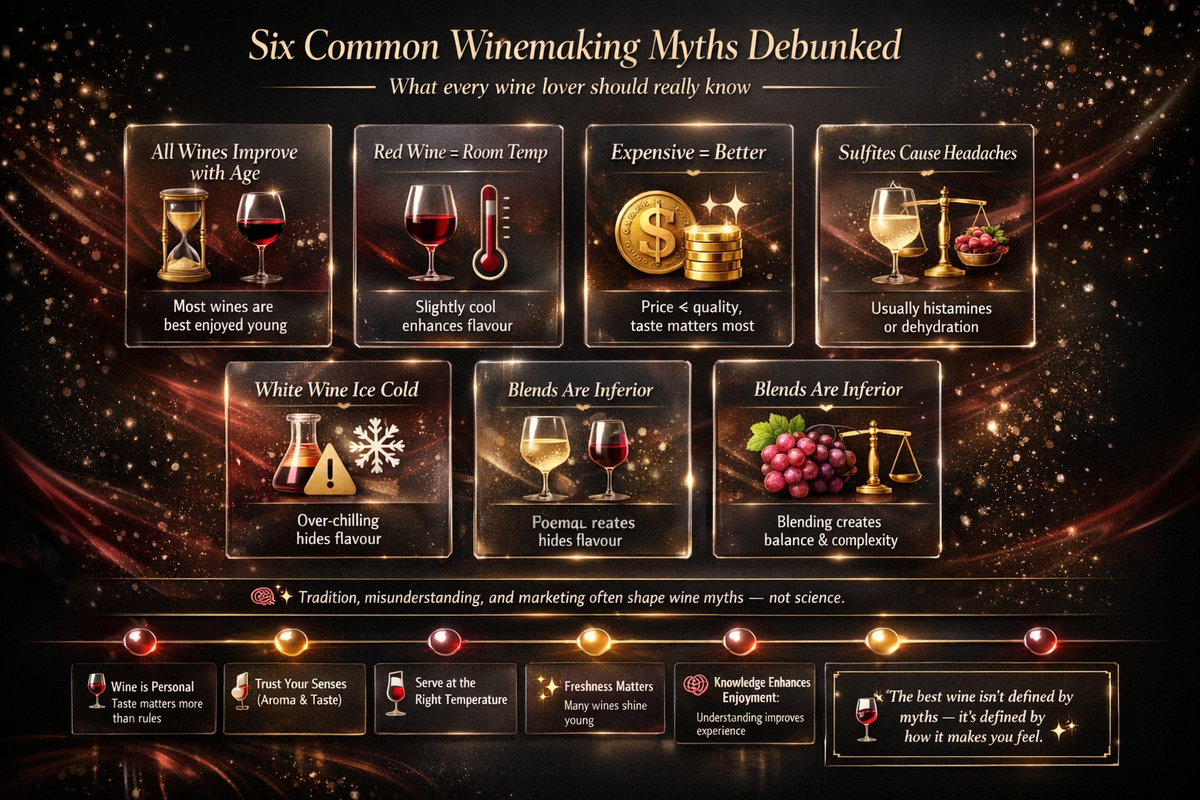
Wine is often surrounded by confusion and long-held beliefs, which is why six winemaking myths debunked is all about separating fact from fiction. Many ideas about ageing, sweetness, alcohol, and quality sound convincing but don’t always reflect how wine is actually made. In this article, we clear up six common myths and explain the real winemaking process in a simple, honest way—so you can enjoy every glass with clarity and confidence.
Welcome, wine enthusiasts! Whether you're a seasoned connoisseur or a budding oenophile, there's always something new to learn about the world of winemaking. However, with the vast sea of information comes a tide of myths and misconceptions. Today, we're here to uncork some truths and debunk six common winemaking myths. And while we're at it, we'll introduce you to some stellar selections from Curtis Family Vineyards that exemplify the debunked truths!
Myth 1: All Wines Improve with Age

The romantic notion of dusty cellars filled with aged bottles is pervasive, but the truth is that not all wines benefit from lengthy ageing. Most wines are meant to be enjoyed within a few years of bottling. Wines like the Queen of Hearts Rosè or Blanc de blanc perfect for immediate enjoyment. Drinking a wine at the right time lets you enjoy its best flavours, balance, and character—just the way the winemaker intended.
| Wine | Best Time to Drink | Why Try Early |
|---|---|---|
| Queen of Hearts Rosé | Drink young | Best enjoyed for its fresh fruit flavours, crisp acidity, and vibrant style. |
| Sparkling Brut / Pinot Noir Sparkling | Enjoy young | Shows its best freshness, fine bubbles, and lively character when consumed early. |
Myth 2: Red Wine Should Be Served at Room Temperature

While many believe red wine should be consumed at room temperature, this can result in a warm, overly alcoholic taste. The term 'room temperature' originally referred to the cooler rooms of old European estates. Reds, such as our Heritage Cabernet Sauvignon and Limited Series Shiraz, are best enjoyed slightly cooler, around 15-18°C, to fully appreciate their intricate flavours and aromas.
Most red wines actually taste better when served slightly cool, especially lighter styles. A short chill helps bring out fresh fruit flavours, keeps the wine balanced, and makes it far more enjoyable—especially in warmer weather.
| Wine | Best Time to Drink | Why Try Early |
|---|---|---|
| Heritage Grenache | Drink young | Fresh red fruit flavours and soft tannins shine when enjoyed early and slightly cool. |
| Cavaliere GSM (Grenache Shiraz Mourvèdre) | Enjoy young | Balanced, smooth, and fruit-driven—perfect without long ageing. |
Myth 3: More Expensive Wine Equals Better Quality

It’s easy to think a higher price means a better wine, but that’s not always true. Wine prices can be influenced by branding, packaging, or how rare a wine is—not just how it tastes. Some of the most enjoyable wines are made to be honest, balanced, and easy to drink, without a big price tag.
While price and quality can be related, it's not a universal truth. Factors like branding and rarity can inflate prices without a corresponding improvement in taste or quality. A wine's value is ultimately determined by personal palate preference. Why not explore our Small Batch Riesling, & Heritage Grenache and Legion Chardonnay for an exquisite experience that won't break the bank?
| Wine | Best Time to Drink | Why It’s Good Value |
|---|---|---|
| Heritage Grenache | Drink young | Bright fruit, smooth texture, and excellent balance without needing cellaring. |
| Queen of Hearts Rosé | Enjoy young | Fresh, vibrant, and easy-drinking—perfect value for everyday enjoyment. |
| Cavaliere GSM | Drink young | Well-balanced blend showing depth and flavour at an accessible price. |
Myth 4: Sulfites in Wine Cause Headaches

Many people blame sulfites for wine headaches, but this is mostly a myth. Sulfites are a natural part of winemaking and are found in very small, safe amounts. In fact, many everyday foods like dried fruit have more sulfites than wine.
Blaming sulfites for wine headaches is a common misconception. In reality, sulfites are a natural byproduct of fermentation and are found in minimal quantities in wines. The culprit for headaches is often histamines or tannins. Headaches are more often caused by things like histamines, tannins, dehydration, or drinking too quickly. Well-made wines like Octavian Shiraz, Pasha Shiraz or Small batch durif enjoyed in moderation and with food and water, are usually easier on the body.
All wines, including those from Curtis Family Vineyards, adhere to regulations ensuring sulfite levels remain safe for consumption.
- Don’t assume sulfites are the main cause of headaches
- Avoid drinking wine too quickly or on an empty stomach
- Don’t skip water while drinking wine
- Avoid overconsumption, even with good-quality wines
Myth 5: White Wines Are Always Served Ice Cold

While it's true that white wines are best chilled, serving them too cold can mask their flavours. A slight chill brings out the best in wines like our Queen of Hearts Rosè, or Pinot Noir Rose accentuating its refreshing notes without numbing your taste buds.
- Better Flavour – Fruit and floral notes are more expressive
- Balanced Acidity – Gentle chill keeps the wine fresh without dulling taste
- Enhanced Aroma – Subtle scents come through more clearly in the glass
- Smooth Drinking Experience – Less sharp or muted, making the wine more enjoyable
Myth 6: Blended Wines Are Inferior

Blended wines are often – wrongly – dismissed as inferior. In reality, skilful blending can bring out the best characteristics of each variety involved. Our Cavaliere Grenache Shiraz Mourvedre is a testament to the art of blending, offering complexity and balance that single-variety wines often cannot achieve.
Some people think blended wines are “lesser” than single-variety wines, but that’s not true. A good blend is an art form, combining the best traits of each grape variety to create balance, complexity, and harmony that a single grape can’t always achieve.
- Balanced Flavours – Each grape contributes something unique, creating harmony in the glass.
- Complexity – Blends often have layered aromas and taste notes that single-variety wines can’t achieve.
- Approachable Young – Many blends taste great early, with soft tannins and fresh fruit.
- Versatility with Food – The mix of grapes makes them pair well with a wide range of dishes.
- Consistent Quality – Blending can smooth out variations between vintages, keeping taste reliable.
- Expresses Winemaker Skill – Shows the craft and intention behind combining grapes for flavour and balance.
These advantages make blended wines enjoyable, versatile, and perfect for both beginners and seasoned wine lovers.
So there you have it, six myths debunked for the curious wine lover. Remember, the world of wine is vast and intricate, with each bottle telling its own story. We invite you to explore these flavours and more at Curtis Family Vineyards and Visit Wine club continue your journey of discovery. Cheers!
