

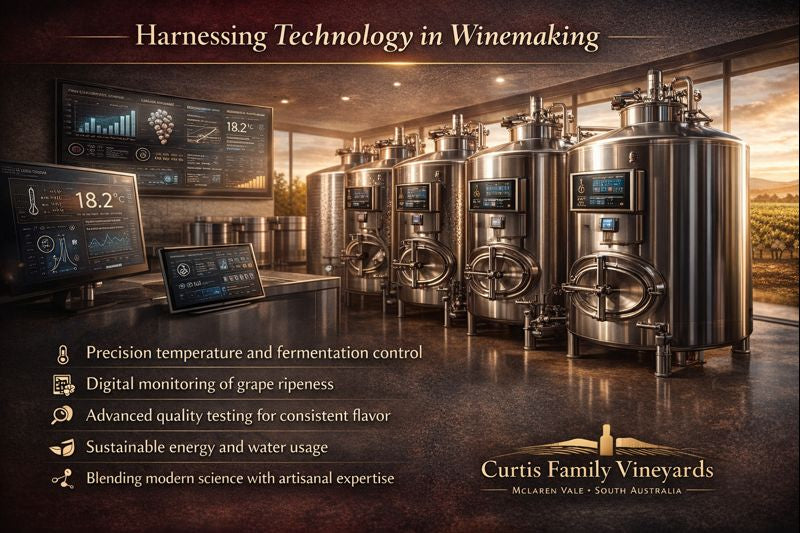
Harnessing technology in winemaking has transformed the way wineries craft their wines, making the process more precise, consistent, and insightful—even for beginners. From vineyard sensors that track soil moisture and climate, to smart fermentation tanks that monitor temperature and yeast activity, technology allows winemakers to make informed decisions at every stage.
In regions like McLaren Vale, where sunlight and temperature can vary quickly, these tools help preserve flavour, aroma, and balance while still respecting traditional winemaking craftsmanship. The result is wines that are both authentic and refined, showcasing the perfect harmony between innovation and nature.
Winemaking, a revered tradition, has embraced technological advancements to enhance the art of producing exquisite wines. At Curtis Family Vineyards, we are passionate about combining innovation with heritage to craft wines that capture the essence of McLaren Vale. For beginners keen on exploring how technology influences winemaking, this post will guide you through the journey from grape to glass.
Winemaking Enters the Digital Age: Why Technology Matters

Digital winemaking is revolutionising how wines are crafted, even in regions steeped in tradition like McLaren Vale. Harnessing technology in winemaking doesn’t replace the winemaker—it enhances their skills, helping them make smarter, faster, and more precise decisions without losing the artistry of the craft.
From vineyard sensors that monitor soil moisture and temperature to smart fermentation tanks that track yeast activity in real time, technology allows winemakers to respond instantly to nature’s whims. Studies from Australian viticulture research show that vineyards using precision tools produce grapes with more consistent quality and flavour intensity, even in warmer climates.
How technology supports traditional winemaking:
- Real-time vineyard monitoring for healthier grapes
- Controlled fermentation for perfect balance and aroma
- Data-driven decisions for optimal harvest timing
- Predictive tools to reduce waste and improve sustainability
Traditional vs Digital Winemaking

| Traditional Winemaking | Digital Winemaking |
|---|---|
| Relies on experience & observation | Uses sensors & data analytics |
| Fermentation managed manually | Temperature & yeast tracked digitally |
| Harvest decisions based on feel | Precision timing guided by climate data |
| Risk of inconsistency | Greater consistency & quality |
By blending innovation with craftsmanship, wineries like Curtis Family Vineyards are creating wines that are both authentic and precise—a perfect harmony of tradition and technology
The Role of Technology in Viticulture

The journey of winemaking begins in the vineyard, where precision viticulture has transformed grape growing. Using technologies like drone surveillance and soil sensors, we monitor vine health and soil conditions. This data allows us to make informed decisions on irrigation and disease management, ensuring our grapes reach peak quality.
Our commitment to precision in the vineyard is evident in our Ancestor Shiraz, a testament to the balance and richness achieved through careful grape cultivation.
From Vineyard to Data: How Technology Shapes Better Grapes
Vineyard monitoring systems are changing the way winemakers care for their vines, and wine production technology is making it easier than ever to respond to nature in real time. In warm regions like McLaren Vale, where sunlight is generous and temperatures can shift quickly, these tools help growers make precise decisions that impact flavour, yield, and grape health.
Sensors in the vineyard track soil moisture, temperature, and vine stress, while climate monitoring tools predict heatwaves or rainfall. This data allows winemakers to irrigate, protect, or harvest grapes at the perfect moment—something that was once based purely on intuition. Research from Australian viticulture studies shows that precision viticulture can improve grape quality by up to 20%, producing more consistent and expressive fruit.
How technology transforms vineyards:
- Real-time soil and climate monitoring for optimal grape health
- Early warning alerts for pests, frost, or heat stress
- Precision irrigation to conserve water and enhance flavour
- Data-driven harvest timing for perfect ripeness
Traditional vs Tech-Enhanced Vineyard

| Traditional Vineyard | Tech-Enhanced Vineyard |
|---|---|
| Decisions based on observation | Data-driven decisions |
| Irrigation applied uniformly | Precision irrigation by soil & vine needs |
| Harvest timing based on guesswork | Harvest guided by sensors & climate forecasts |
| Risk of inconsistent grape quality | Consistent, flavourful, high-quality grapes |
By combining traditional knowledge with cutting-edge vineyard technology, McLaren Vale growers like Curtis Family Vineyards ensure every grape reaches the winery at its absolute peak—ready to create wines with depth, balance, and personality
Innovative Winemaking Techniques
In the winery, technology continues to play a pivotal role. Advanced fermentation technologies help us control and optimise the wonderful complexities of flavour and aroma inherent in each varietal we produce. We employ temperature-controlled fermentation tanks and automated systems to maintain perfect conditions for each batch.
For those interested in the harmonious complexity achieved in modern winemaking, try our Terra Rossa Shiraz, a wine that embodies the depth and finesse of progressive winemaking techniques.
Quality Control Through Technology
Quality control is paramount in ensuring every bottle meets our exacting standards. Technologies like digital wine analysis and spectroscopy allow us to monitor the progression of wine from fermentation to bottling. This ensures you experience the perfect taste of McLaren Vale in every sip.
If you're curious about the precision and quality that technology affords, explore our Cavaliere Shiraz, epitomising the elegance and structure achieved through meticulous quality control.
Precision Fermentation & Smarter Wine Decisions
Fermentation control technology is transforming how wineries craft wines with precision, and climate data in winemaking ensures each batch captures the vineyard’s true character. By monitoring temperature, yeast activity, and fermentation progress in real time, winemakers can protect the delicate flavours, aromas, and balance that make every wine unique.
In traditional winemaking, subtle changes in temperature or yeast behaviour could alter the outcome. Today, smart fermentation tanks and automated sensors allow winemakers in McLaren Vale to respond instantly, adjusting conditions to maintain consistency while preserving the wine’s personality. Studies from Australian wine science show that controlled fermentation reduces off-flavours, enhances aroma expression, and improves overall quality.
How technology improves fermentation:

- Temperature monitoring keeps aromas and flavours intact
- Real-time yeast tracking ensures complete and healthy fermentation
- Automated adjustments prevent surprises and maintain balance
- Data logging helps winemakers learn and refine each vintage
Traditional vs Technology-Enhanced Fermentation
| Traditional Fermentation | Technology-Enhanced Fermentation |
|---|---|
| Temperature managed manually | Automated temperature control |
| Yeast activity monitored by feel | Real-time yeast tracking sensors |
| Risk of off-flavours or stuck fermentation | Predictable, balanced, consistent wine |
| Limited data for future improvement | Full fermentation data for insights |
By blending traditional intuition with smart fermentation technology, Curtis Family Vineyards ensures each McLaren Vale wine achieves perfect balance, expressive aroma, and vibrant flavour—every bottle telling the story of both nature and innovation
A Blending of Tradition and Innovation
While technology plays a critical role in our processes, we remain deeply rooted in winemaking traditions passed down through generations. This blend of old and new is what defines Curtis Family Vineyards, inviting both novices and connoisseurs to experience the unique stories told through each bottle.
For those new to wine tasting, sample the diversity of our product range starting with the Limited Series Grenache, whose vibrant profile demonstrates the dynamic interplay between heritage and modern technology.
At Curtis Family Vineyards, we invite you to delve into the world of wine—a place where tradition meets technology to create memorable experiences for every wine lover. Visit us to start your journey and discover the finest wines McLaren Vale has to offer.
Blending Innovation with Tradition: The Future of Modern Winemaking
Wine analysis technology and data-driven winemaking are more than buzzwords—they are the tools helping wineries like Curtis Family Vineyards shape the future while staying rooted in McLaren Vale’s rich winemaking heritage. By combining cutting-edge technology with decades of local knowledge, modern winemakers can craft wines that are consistent, expressive, and full of character.
Data-driven approaches allow every stage—from grape to bottle—to be monitored and optimised. Sensors, climate data, and lab analysis guide decisions without compromising the traditional artistry that defines premium wines. Research from Australian viticulture shows that wineries using advanced analytics achieve higher flavour precision and fewer production inconsistencies, proving that technology enhances creativity rather than replacing it.
How innovation and tradition work together:

- Real-time analysis ensures perfect balance in aroma and flavour
- Data-guided decisions refine fermentation, ageing, and blending
- Traditional techniques like hand-harvesting and terroir expression remain central
- Continuous learning improves quality across vintages
Traditional vs Modern Winemaking Approach
| Traditional Winemaking | Modern, Tech-Enhanced Winemaking |
|---|---|
| Decisions rely on experience | Guided by real-time data & analysis |
| Vintage variation can be high | Greater consistency & precision |
| Limited fermentation monitoring | Smart tanks & fermentation tracking |
| Craftsmanship only | Craftsmanship + innovation |
By harnessing technology without losing the human touch, Curtis Family Vineyards ensures that every bottle from McLaren Vale is both authentic and exceptional—a perfect blend of heritage, trust, and forward-thinking innovation
For more insights into our range and philosophy, explore Curtis Family Vineyards.
