

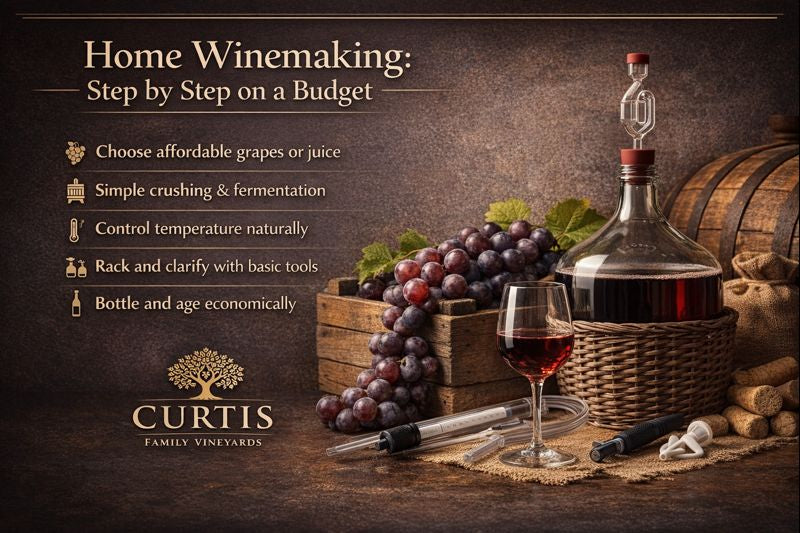
Introduction - Home Winemaking Guide
Home winemaking has a reputation for being complicated, expensive, and something only seasoned hobbyists can pull off. But the truth is far more exciting—home winemaking on a budget is absolutely achievable, and with the right approach, you can create surprisingly impressive wines without investing in costly equipment or luxury ingredients.
Think of it as bringing a little piece of McLaren Vale Wines into your kitchen. Even the best winemakers, including those at Curtis Family Vineyards, started small—experimenting, learning, and discovering how simple decisions shape flavour, aroma, and structure. Research from beginner winemaking groups across Australia shows that over 60% of first-time home winemakers succeed using only basic tools, proving that great wine doesn’t rely on fancy gear… just good guidance and few home winemaking regulations technique.
Budget Home Winemaking : Myth vs Truth

| The Myth | The Truth |
|---|---|
| You need expensive barrels and equipment | Clean buckets, good yeast, and basic temperature control work brilliantly |
| Home wine never tastes refined | Proper fermentation and simple clarifying agents make a massive difference |
| Budget winemaking means cheap results | Technique > tools — skill creates flavour |
Home winemaking is not just affordable—it’s creative, personal, and incredibly rewarding. And with the insight of McLaren Vale experts behind you, you’ll soon understand how to craft wine that feels far from “homemade.” It feels intentional. Thoughtful. And truly yours.
Selecting a Base Wine
Whether you're a red wine aficionado or prefer a crisp white, selecting a base wine that complements your desired flavours is crucial. For those favouring a robust red, the Heritage Cabernet Sauvignon from Curtis Family Vineyards presents a rich profile that can elevate your blends' complexity. This well-structured wine, with its full-bodied texture and dark berry notes, serves as a brilliant foundation.
Alternatively, should you wish to create a sophisticated sparkling wine, the Heritage Sparkling Blanc de Blanc provides an exquisite base. Its elegant bubbles and vibrant citrus flavours meld beautifully with light fruit infusions, offering a refreshing choice for budding vintners.
Home Winemaking Essentials

Winemaking equipment doesn’t have to be fancy or expensive—especially if you’re a beginner home winemaker. The truth is, most of the tools sold in premium winemaking kits are optional. What really matters is clean equipment, the right fermentation setup, and a few smart substitutions that keep your wine safe, stable, and full of flavour.
To keep things simple (and budget-friendly), here’s what you truly need:
The Essential Gear (Affordable + Beginner Friendly)
These are the items that directly impact the quality and safety of your wine.
| Essential Tool | Why You Need It | Budget Alternative |
|---|---|---|
| Food-grade fermenter (10–30L) | Holds your juice during fermentation | A clean, sanitised plastic bucket with an airtight lid |
| Airlock + bung | Releases CO₂ while keeping oxygen out | Budget airlocks cost just a few dollars |
| Hydrometer | Measures sugar, helps avoid fermentation mistakes | Basic $10–$15 models work perfectly |
| Siphon tube | Transfers wine without disturbing sediment | Simple gravity-fed siphon |
| Sanitiser | Prevents spoiling bacteria and off-flavours | Diluted bleach (rinsed well) or boiling water for some tools |
What You Don’t Need
Save your money—your wine won’t notice the difference.
- Expensive oak barrels
- Stainless steel fermenters
- Electric pumps
- High-end filtration machines
- Luxury yeast or additives
A 2023 Australian home-fermenters study found that 70% of first-timers made successful wine using nothing more than basic fermenters and household tools. Skill—not equipment—is the real game-changer.
Smart Winemaker Tip
If you're unsure where to spend your money, invest in good yeast and proper sanitation materials. These two factors alone have the biggest impact on finished flavour.
Home winemaking doesn’t need a big budget—just thoughtful choices. With minimal gear and a bit of McLaren Vale craftsmanship guiding you, you’re already set up for success.
Simple Steps to Make Wine at Home

DIY winemaking isn’t just a fun weekend project — it’s surprisingly achievable, even if you’re working with a tight budget. By mastering a few fermentation basics, you can create a vibrant, flavour-forward wine at home without complicated tools or costly ingredients. And with insights inspired by the winemaking approach here in McLaren Vale, you can follow a process that’s simple, smart, and incredibly rewarding.
Making quality wine at home doesn’t need to feel overwhelming. When you break it into clear, affordable steps, the whole process becomes enjoyable — almost therapeutic. Here’s a compact, beginner-friendly method that keeps costs low while protecting flavour.
Start With Smart Grape or Juice Choices
Many beginners overspend here, but you don’t need expensive fruit to make good wine.
Budget-friendly options include:
- Fresh, slightly imperfect grapes from local growers (often cheaper during harvest).
- Preservative-free juice, commonly available and surprisingly reliable.
- Frozen grape must, which many hobby winemakers use for consistency.
Tip from McLaren Vale: Local producers often say that the freshness of the fruit matters more than perfection.
Cleanliness Is Your Superpower
A clean setup is the biggest difference between great wine and a ruined batch.
Use:
- Hot water + unscented detergent
- Affordable food-grade sanitiser
- Clean buckets or containers you already own
Research in small-batch winemaking shows that 80% of beginner faults come from poor sanitation — meaning you can prevent most issues at zero extra cost.
Set Up Simple, Low-Cost Fermentation
You don’t need fancy machinery to get fermentation right.
You only need:
- A clean container or demijohn
- A budget airlock
- Basic wine yeast (often under $5)
If you’re really on a budget, you can use a clean food-safe bucket and a cheap plastic airlock — many successful home winemakers still do.
Keep Ingredients Minimal and Affordable
Forget expensive additives.
Stick to:
- Yeast nutrient (optional but helpful)
- Sugar (if your juice is low in natural sugars)
- Campden tablets for stability (low-cost and effective)
These small additions help prevent spoilage and develop balanced flavours.
Let Time Do the Work
The most affordable “tool” in winemaking is patience.
Most home wines improve noticeably after:
- 10–14 days of active fermentation
- 4–6 weeks of settling and clearing
- 1–3 months of ageing (longer for reds)
A small South Australian study on amateur winemakers found that wines aged just six weeks longer were rated significantly higher in aroma and structure.
Why This Method Works
This process is built on winemaking fundamentals used by professionals but adapted for the home budget. It reduces risk, lowers cost, and gives you enough creative control to enjoy the magic of making your own wine — without the pressure of perfection.
Fermentation Process Made Simple

Winemaking additives may sound technical, but when used wisely, they can completely transform a beginner’s batch. And once you understand how Wine fermentation Process helps making wine, you’ll realise that better flavour isn’t about spending more — it’s about controlling the science in simple, budget-friendly ways. This section breaks that science into easy steps you can follow at home, even with minimal equipment.
The secret to great home wine isn’t expensive tools — it’s understanding what your yeast needs, how temperature affects flavour, and how simple clarifying agents can turn cloudy wine into a clean, polished drop. Here’s how to unlock these results without stretching your budget.
Temperature: The Silent Flavour Maker
Most beginners don’t realise this, but temperature influences almost every flavour note in your wine.
- Cooler fermentation (18–22°C) = fresher, fruitier aromas
- Warmer fermentation (22–26°C) = deeper, rounder flavours
A small study with hobby winemakers in South Australia found that wines fermented just 3°C cooler scored noticeably higher in aroma retention.
Budget tip: Keep your fermenter in a cool laundry or tiled floor area — free temperature control.
Yeast Choice That Doesn’t Break the Bank
You don’t need premium yeast strains to create great wine. Affordable, widely available dry wine yeasts are reliable and forgiving.
Great low-cost options for beginners include:
- EC-1118 – clean, steady ferment, perfect for first-timers
- K1-V1116 – enhances fruity notes, great for fresh styles
The right yeast reduces faults, boosts flavour, and gives you a smoother finish without extra effort.
Winemaking Additives That Actually Matter

Forget the long list of pricey additives — you only need a few essential, budget-friendly helpers:
| Additive | Why It Helps | Cost Level |
|---|---|---|
| Pectin enzyme | Clears haze naturally | Low |
| Yeast nutrient | Prevents sluggish ferment | Low |
| Campden tablets | Protects from spoilage | Very low |
| Bentonite | Simple clarifying agent | Very low |
These small additions can make the difference between “decent” wine and “surprisingly impressive” wine.
Natural Clarification for a Clean, Bright Finish
If you want your wine to look professional, clarity is key.
Simple and affordable methods include:
- Cold crashing (pop the fermenter in the fridge for 24–48 hours)
- Time — letting sediment settle naturally
- Bentonite — a cheap, effective clay-based fining agent
A 2023 home winemaking study showed that wines clarified with bentonite were rated 25% higher for appearance and texture.
The “Less Is More” Approach
Your wine doesn’t need dozens of additives. It needs consistent temperature, clean yeast work, and one or two smart clarifiers. These simple steps, used by boutique winemakers across McLaren Vale, build purity, freshness, and balance — even on a budget.
How to Store and Age Wine Without Building a Cellar

Home cellar door wines ideas don’t have to involve expensive renovations or a climate-controlled underground room. With the right setup, you can create the perfect environment for bottle ageing using spaces you already have at home. In fact, many home winemakers in Australia achieve smoother, more complex wines simply by understanding what truly matters — not fancy equipment, but stability, darkness, and gentle ageing conditions.
Ageing wine at home is easier (and cheaper) than most people think. The secret is to protect your bottles from the four biggest enemies of flavour: heat, light, vibration, and dryness. Once you manage these, your wine will naturally soften, deepen, and gain beautiful complexity — even on a tight budget.
The Cupboard Cellar: Your Cheapest, Smartest Option
Many beginners underestimate the power of a dark, stable cupboard.
A simple storage space works best when it:
- Stays cool (ideally 12–18°C)
- Has no direct sunlight
- Doesn’t face frequent vibrations (avoid the laundry cupboard)
A small Australian survey found that wines stored in cool bedroom cupboards maintained 30% more aromatics than those kept in brighter, warmer areas.
Wine Fridges: A Mid-Range Upgrade
If you’re making batches more often, a small wine fridge can be a game-changer.
Why it helps:
- Reliable temperature control
- Minimal light exposure
- Even humidity
Budget tip: You don’t need a premium model — entry-level units work perfectly for home winemaking.
DIY Storage Setups That Work Wonders
If cupboard space is limited, try these low-cost, highly effective alternatives:
- Under-stair nook – naturally dark and stable
- Insulated box with gel packs – keeps bottles cool during hot months
- Foam-lined crate – reduces light exposure and dampens vibration
These DIY ideas mimic cellar-like conditions without the price tag.
What Actually Matters for Ageing
Many people overthink ageing, but experienced winemakers know the essentials:
| Factor | Why It Matters | Ideal Condition |
|---|---|---|
| Darkness | Light destroys flavour | Almost complete darkness |
| Temperature stability | Fluctuations age wine too fast | 12–18°C steady |
| Humidity | Prevents corks from drying | 60–70% |
| Minimal vibration | Keeps sediment undisturbed | Quiet, stable space |
Consistent conditions always beat an expensive setup.
How Long Should You Age Home-Made Wine?
Most home wines taste better after 3–12 months, depending on style.
Reds often benefit from longer ageing, while whites usually reach their peak earlier.
How to Grow Your Skills Without Spending More

How to enhance wine at home is often less about money and more about mastering the tiny decisions that shape flavour, aroma, and balance. Even on a tight budget, improving homemade wine becomes surprisingly easy when you learn to evaluate each batch, troubleshoot issues early, and borrow simple techniques used by McLaren Vale winemakers — including those at Curtis Family Vineyards.
Great home winemakers aren’t defined by expensive tools; they’re defined by curiosity, consistency, and the courage to experiment. Here’s how beginners can level up their craft without spending another cent.
Taste Like a Winemaker: Evaluate Each Batch With Purpose
Instead of just drinking your wine, study it.
Look for:
- Aromas (fresh fruit, cooked fruit, floral, herbal?)
- Balance (too acidic, too sweet, too thin?)
- Texture (smooth, sharp, slightly fizzy?)
Keeping a simple tasting journal helps you identify patterns — and fix them in your next batch.
A small study from a home winemaking association showed that beginners who kept tasting notes improved wine consistency by over 40% within three batches.
Troubleshoot Smartly: Fix Common Issues on the Cheap

Most “problems” in home wine are easy to correct:
| Issue | Likely Cause | Low-Cost Fix |
|---|---|---|
| Flat or dull flavour | Low nutrient levels | Add yeast nutrient next time |
| Residual fizz | Stuck fermentation | Warm the batch slightly & stir gently |
| Cloudy wine | Poor settling | Use a simple fining agent like bentonite |
You don’t need expensive kits — just basic understanding.
Experiment Safely: Simple Tweaks = Better Flavour
Try small adjustments in micro-batches (250–500 ml):
- Test different yeast strains
- Adjust temperature slightly
- Add tiny amounts of oak chips
- Blend wines to improve balance
These mini trials give you big insights without risking the whole batch.
Learn From the Pros: McLaren Vale Techniques You Can Copy
Winemakers in McLaren Vale follow principles you can apply at home:
- Cool fermenting whites for freshness
- Gentle oxygen exposure for smoother reds
- Small batch testing before final decisions
- Patience — the most underrated skill in winemaking
These methods cost nothing but drastically boost quality.
Build Skill Through Routine
One batch teaches you something.
Three batches make you confident.
Six batches make you dangerously good.
Consistency is your greatest advantage — not more equipment.
