

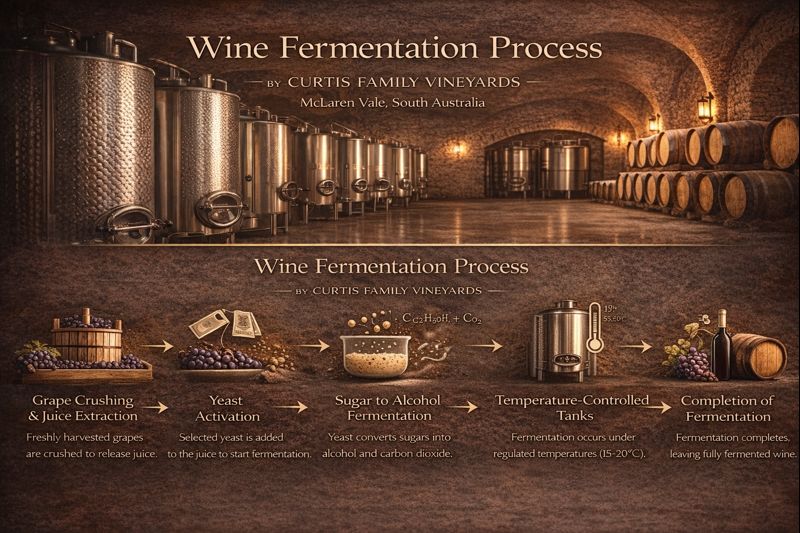
Wine Fermentation Process is more than a technical step — it’s the moment grape juice begins its transformation into the wine we love. For many beginners, fermentation feels like a mystery. Yet behind this “magic” lies a fascinating mix of science, nature, and craftsmanship that shapes every aroma, flavour, and texture in your glass.
What makes this stage so exciting is that it all happens out of sight, but its impact is unforgettable. The moment yeast meets grape sugars, thousands of microscopic reactions begin. Alcohol forms. Colour deepens. Aromas bloom. Structure builds. In fact, research from leading Australian wine science institutes shows that up to 70 percent of a wine’s final character is shaped during fermentation — long before ageing even begins.
How Yeast Transforms Simple Juice into Character-Rich Wine

Fermentation science in winemaking is where the real magic begins — the moment grape juice starts transforming into something far more expressive, complex, and full of life. At the heart of this change is yeast, a tiny organism with a massive job, turning natural grape sugars into alcohol, heat, and CO₂ while creating the aromas and flavours that define every Mclaren Vale wines.
This process, known as yeast fermentation in wine, is both beautifully simple and scientifically fascinating:
- Sugar Meets Yeast: When yeast is added to freshly crushed grape juice, it begins feeding on glucose and fructose — the natural sugars in grapes.
- Alcohol Creation: Through a biochemical reaction called glycolysis, yeast converts these sugars into ethyl alcohol, the backbone of every wine.
- CO₂ Release: As yeast works, it releases carbon dioxide, which creates those lively bubbles during fermentation.
- Heat Production: Fermentation naturally generates heat. Winemakers monitor temperature carefully because warmer ferments can boost richness, while cooler ferments protect delicate aromatics.
- Aromatic Compounds: Here’s where the magic lies — yeast also produces esters and higher alcohols, the compounds that shape wine’s fragrance. Think berry notes in Shiraz, stone-fruit aromas in Chardonnay, or floral hints in Rosé.
Why This Matters for Wine Quality
A fascinating study from the Australian Wine Research Institute found that different yeast strains can alter a wine’s aromatic profile by up to 40% — showing how crucial these tiny organisms are in crafting style, balance, and flavour.
At Curtis Family Vineyards, this science guides every batch we ferment. By choosing the right yeast, monitoring temperature, and respecting the natural pace of fermentation, we encourage each wine to reveal its authentic character — from bold reds to crisp whites.
The Role of Temperature, Time & Technique
Yeast fermentation in wine depends heavily on three powerful factors — temperature, time, and technique. While the grape sugars & yeast reaction is the spark that starts the alcohol fermentation process, it’s the way winemakers control these elements that determines whether a wine becomes bold and robust… or delicate and aromatic.
In premium wine regions like McLaren Vale, consistency is everything. Even a few degrees difference during fermentation can completely shift a wine’s flavour, colour, and texture.
Here’s how it works:
-
Warm Fermentations (typically for reds):
Higher temperatures (around 24–30°C) help extract deeper colour, tannins, and richer flavours. This is why Shiraz and Cabernet often feel fuller and more powerful.
Research from the Australian Wine Research Institute shows that warm ferments increase phenolic extraction by up to 35%, directly impacting structure. -
Cool Fermentations (mostly for whites & rosé):
Cooler ranges (12–18°C) protect delicate aromatics. Think crisp Sauvignon Blancs, floral Rosés, or bright Chardonnays. These wines stay fresh because cooler temperatures slow the yeast activity, preserving fruit purity. -
Time Matters:
Faster ferments can create bold intensity, while slower, controlled ferments build layered aromatics and smoother textures. Winemakers adjust timing to shape style and balance.
Technique Makes the Difference:
- Red wines like Legion Merlot Or Small Batch Durif may be pumped over or plunged down to keep skins in contact with juice.
- White Wines like Small Batch Riesling are often fermented without skins to maintain softness and clarity.
- Temperature-controlled tanks allow precision — a hallmark of McLaren Vale’s premium winemaking.
In the end, fermentation Process temperature control isn’t just a technical step. It’s the craft that turns a simple sugar–yeast reaction into a wine with character, complexity, and the unmistakable Curtis Family Vineyards signature.
Primary vs Secondary Fermentation: The First Big Change

Primary vs secondary fermentation is where the real transformation of wine takes place. These two stages shape everything from aroma to acidity, and understanding them explains why McLaren Vale wines feel so smooth, balanced, and expressive in the glass.
This is the stage where mixing and matching grape varieties for sugars turn into alcohol, heat, and CO₂. It’s fast, energetic, and full of flavour development.
During primary fermentation, yeast forms the backbone of the wine’s aroma — fruity notes, floral tones, and early texture all emerge here.
What happens:
- Yeast consumes grape sugars
- Alcohol and primary aromas form
- Colour and tannin extraction (especially for reds)
A 2023 AWRI study found that over 70% of a wine’s final aromatic compounds are shaped in this stage — showing just how crucial the timing and temperature control really are.
Secondary Fermentation: The Softening Stage
Once primary fermentation settles, winemakers may encourage secondary fermentation, usually in the form of malolactic fermentation (MLF).
This is where sharper malic acid (think green apple) converts into softer lactic acid (like cream), giving wines a rounder, fuller mouthfeel.
How MLF influences the wine:

- Reduces sharp acidity
- Creates creamy, buttery notes (common in Chardonnay)
- Adds smoothness and weight
- Improves stability for long-term ageing
This step is often used for most reds and selected whites to create a more luxurious, balanced texture.
Why Both Stages Matter
Together, the two fermentations act like a two-part transformation:
- Primary fermentation builds structure and energy
- Secondary fermentation brings harmony and softness
It’s this blend of science and craftsmanship that shapes the signature style of Curtis Family Vineyards — bold, expressive wines with beautifully polished edges.
Fermentation Vessels & Their Impact

Fermentation temperature control and wine chemistry are deeply influenced by the vessel a winemaker chooses. At Curtis Family Vineyards in McLaren Vale, selecting the right fermenter isn’t just about tradition — it’s a precise decision that shapes flavour, texture, and overall wine style.
Stainless Steel Tanks:
- Ideal for white wines and crisp styles
- Maintain precise temperature control
- Preserve fresh fruit aromatics and vibrant acidity
- Minimal interaction with oxygen keeps flavours pure
Oak Barrels:
- Adds layers of complexity and subtle vanilla or spice
- Micro-oxygenation softens tannins and enhances mouthfeel
- Perfect for reds or fuller-bodied whites
- Research shows oak influences phenolic development, contributing to structure
Concrete Eggs:
- Offer gentle oxygen exposure without oak flavours
- Promote natural yeast activity and textural depth
- Adds minerality and rounded character
- Favoured for artisan McLaren Vale winemaking experiments
Choosing a vessel is more than tradition — it’s a balance of wine chemistry, flavour development, and stylistic goals. At Curtis Family Vineyards, this thoughtful approach ensures each batch reflects both the grape’s purity and the region’s premium winemaking techniques.
Curtis Family Vineyards fermentation methods are where tradition, science, and creativity come together to craft wines that truly reflect McLaren Vale’s premium terroir. For over generations, the family has combined careful observation, small-batch precision, and sustainable practices to create wines that are both expressive and balanced.
What Sets Our Fermentation Apart
- Small-Batch Attention: Each lot is monitored closely, allowing winemakers to fine-tune temperature, yeast selection, and timing for maximum flavour and aroma.
- Sustainable Handling: From grape to glass, eco-friendly techniques preserve vineyard health while enhancing wine quality.
- Generational Expertise: Years of accumulated knowledge guide every decision, ensuring consistency and depth across vintages.
- Award-Winning Results: Our methods have produced wines celebrated both nationally and internationally, proving that science and artistry go hand in hand.
At Curtis Family Vineyards, fermentation isn’t just a process — it’s a living, evolving craft where every detail matters, and every bottle tells the story of McLaren Vale’s unique character.
