

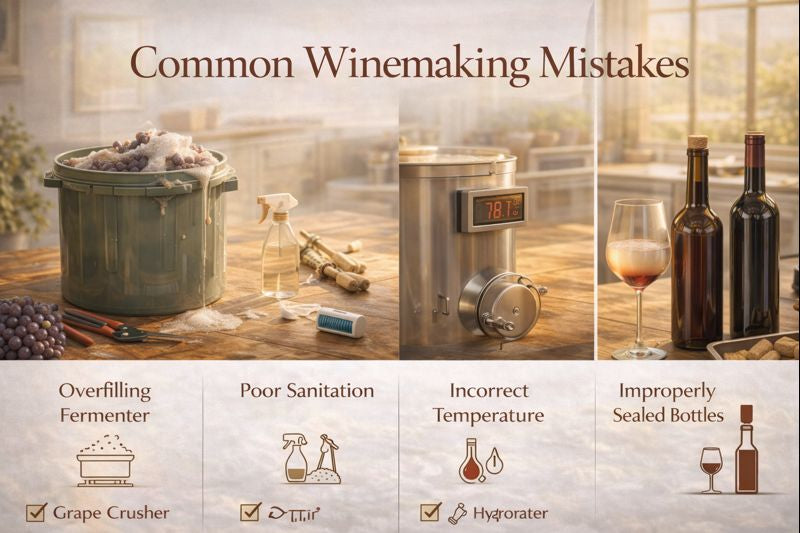
Introduction - Common winemaking mistakes
Common winemaking mistakes don’t usually come from a lack of passion—they come from small assumptions made at the wrong moment. Whether you’re making wine at home or running a commercial operation, winemaking is a live process. Grapes change daily, yeast behaves differently each season, and even tiny shifts in temperature or timing can quietly reshape the final wine.
In regions like McLaren Vale, experienced winemakers see this every vintage. A perfectly ripe parcel can lose balance if fermentation runs too hot. Clean fruit can be compromised by rushed sanitation. Even confidence can become a risk when instinct replaces measurement. These aren’t beginner errors—they’re human ones.
What makes the difference is awareness. The most respected wineries don’t avoid mistakes by chance; they avoid them by paying attention. Years of hands-on work teach when to step in, when to wait, and when to let the wine speak for itself.
Why these mistakes happen so often:
- Winemaking relies on biological processes, not fixed formulas
- Seasonal variation changes how grapes and yeast behave
- Small oversights can have big flavour consequences
- Passion sometimes pushes people to rush decisions
The good news? Every mistake is preventable once you recognise it. Understanding why things go wrong is the first step toward making cleaner, more consistent, and more confident wines—vintage after vintage.
Mistakes That Start in the Vineyard: Grape Choice & Timing

Grape selection mistakes and home winemaking mistakes often begin long before fermentation ever starts. The vineyard is where quality is decided, yet it’s also where many winemakers—especially enthusiastic beginners—make their first costly calls.
Choosing grapes based only on variety or price, rather than site and season, can flatten flavour before it even has a chance. Harvesting too early leads to thin wines with sharp acidity. Waiting too long can push sugars too high, creating heavy alcohol and tired fruit. The timing window is narrow—and that’s where experience matters.
In McLaren Vale, producers reduce these risks by knowing their blocks inside out. Ripeness isn’t guessed; it’s tracked. Sugar, acid, flavour development, and even seed texture are checked together, not in isolation. This layered approach helps avoid the “looks ready” trap that catches many home winemakers.
Common vineyard-stage mistakes to watch for:
- Picking grapes based on calendar dates instead of ripeness
- Ignoring how soil and microclimate affect flavour
- Chasing high sugar while losing natural acidity
- Using one grape source for every wine style
The lesson is simple but powerful: great wine starts with the right grape at the right moment. When selection and timing are handled with care, everything that follows in the winery becomes easier—and far more rewarding.
Ignoring Regional Characteristics
Every region offers unique characteristics, from climate to soil, that impact the flavour and aroma of wine. Ignoring these traits can lead to uninspired results. At Curtis Family Vineyards, our Ancestor Shiraz exemplifies the rich profile of the McLaren Vale region, showcasing how terroir can enhance wine quality.
Fermentation Errors That Can Ruin Great Fruit
Fermentation mistakes in winemaking can undo weeks of careful vineyard work in just a few days. This is the most fragile stage of the process, where yeast, sugar, temperature, and timing all need to work in quiet harmony. When one element slips, even beautiful fruit can lose its magic.
One of the biggest errors is poor temperature control. Too hot, and fermentation races ahead, burning off delicate aromas. Too cool, and yeast can slow or stop completely, leaving unwanted sweetness and dull flavours. Stressed yeast is another silent troublemaker—often caused by low nutrients or sudden temperature shifts—leading to off-odours and uneven alcohol levels.
Balance matters just as much. Ignoring the sugar-to-acid relationship can produce wines that feel heavy, flat, or sharp. Experienced McLaren Vale producers rely on regular monitoring, not guesswork, using simple science to guide every decision.
Common fermentation errors to avoid:
- Letting ferment temperatures spike or drop suddenly
- Overworking or underfeeding yeast
- Failing to track sugar and acidity together
- Relying on instinct instead of daily checks
The takeaway is clear: great fermentation isn’t about control—it’s about attention. When science backs every step, consistency follows, and great fruit is allowed to become great wine.
Cleanliness, Oxygen & Equipment: The Silent Wine Killers

Oxygen exposure in winemaking is one of the quietest ways a good wine can lose its life before it ever reaches a glass. Add poor cleanliness and the wrong equipment, and the damage often happens without warning — no drama, just flat aromas and tired flavours.
Sanitation failures are more common than people realise. A hose that looks clean, a fermenter not fully sanitised, or a reused corker can introduce unwanted bacteria and wild microbes. These invisible intruders compete with yeast, dull fruit character, and shorten shelf life. Professional wineries don’t take shortcuts here — hygiene is treated as non-negotiable science, not a finishing touch.
Oxygen is another double-edged sword. A controlled touch can help wine evolve, but accidental exposure during transfers, bottling, or ageing quickly strips freshness. This is why experienced McLaren Vale producers minimise splashing, seal vessels tightly, and use the right tools at the right moment.
Silent wine killers to watch for:
- Poorly cleaned tanks, hoses, or bottles
- Excess oxygen during racking or bottling
- Worn or incorrect equipment seals
- Inconsistent cleaning routines
The lesson is simple but powerful: great wine is protected long before it’s tasted. When cleanliness is obsessive, oxygen is managed, and equipment is respected, flavour, aroma, and longevity stay exactly where they belong — in the bottle.
Poor Sanitation Practices
Sanitation cannot be overlooked; any introduction of unwanted bacteria can spoil a batch and impact flavour. Meticulous cleanliness, akin to our practices at Curtis Family Vineyards, ensures the longevity and purity of the wine.
Overworking the Wine: When Intervention Does More Harm Than Good

Over-extraction and under-extraction are two of the most common signs that a wine has been worked too hard — or not understood well enough. In the rush to “improve” a wine, many winemakers unintentionally strip away what made the fruit special in the first place.
Over-extraction happens when skins, seeds, or stems are pushed too far during fermentation. The result? Bitter tannins, heavy textures, and flavours that feel forced rather than expressive. Under-extraction, on the other hand, leaves wines thin, short, and lacking character. Both usually come from impatience, over-handling, or trying to fix what doesn’t need fixing.
Excessive adjustments — adding too much oak, correcting acidity repeatedly, or rushing maturation — often mask terroir instead of revealing it. Boutique producers in regions like McLaren Vale take a different path. They trust the vineyard, taste constantly, and step in only when the wine truly needs guidance.
Extraction mistakes at a glance
| Winemaking Approach | What Happens in the Glass |
|---|---|
| Over-extraction | Harsh tannins, bitterness, heavy mouthfeel |
| Under-extraction | Pale colour, weak aroma, short finish |
| Balanced extraction | Texture, depth, and true varietal character |
The real skill lies in restraint. When winemakers slow down, taste often, and allow time to do its work, the wine speaks more clearly — not louder.
Over-Oaking and Failing to Plan for Bottle Shock
While oak can add desirable notes, overdoing it can overwhelm a wine's natural character. Balance is key, as demonstrated in the nuanced oak presence of our Heritage Sparkling Blanc de Blanc. After bottling, wines often undergo a temporary phase where flavours are muted—this is known as bottle shock. Allow your wine time to rest, as we do with our Terra Rossa Shiraz, which benefits from careful timing before it reaches the glass.
Not Tasting Regularly and Mismanaging pH Levels
Regular tastings throughout the winemaking process enable adjustments and ensure the desired outcome. Engaging in frequent tastings helps achieve the refined character evident in our Cavaliere Shiraz. The pH of wine impacts its stability and flavour profile. Failing to manage pH levels can invite spoilage bacteria. Wines like our Queen of Hearts Rosè or Pinot Noir Rose demonstrate the bright character that comes from finely-tuned pH balance.
Through understanding and avoiding these common mistakes, you can refine your winemaking skills and develop wines that express their full potential. To explore more about our winemaking processes and products, visit Curtis Family Vineyards.
How Experienced Wineries Avoid These Mistakes
Boutique winery best practices in McLaren Vale show that avoiding winemaking mistakes is as much about observation and patience as it is about tools and techniques. At Curtis Family Vineyards, years of hands-on experience have created a blueprint for turning potential errors into learning opportunities.
From careful grape selection to gentle handling in the winery, each step is guided by tasting, timing, and attention to detail. Mistakes aren’t ignored—they’re analysed, understood, and used to refine the next vintage.
Lessons from Experienced Wineries at a Glance

| Common Mistake | How Boutique Wineries Avoid It |
|---|---|
| Grape choice & timing | Daily vineyard checks, ripeness tracking, site-specific selection |
| Fermentation errors | Controlled temperatures, healthy yeast, consistent monitoring |
| Oxygen exposure & hygiene | Rigorous sanitisation, minimal handling, proper sealing |
| Overworking the wine | Gentle extraction, minimal adjustments, patience in maturation |
| Inconsistent quality | Small batch focus, tasting at every stage, iterative improvements |
By combining tradition with careful observation, boutique wineries like Curtis Family Vineyards transform potential pitfalls into a signature style that speaks of McLaren Vale’s terroir, quality, and dedication. Experience, patience, and love for the craft become the ultimate secret to consistently exceptional wine.
