

Wine Blending: The Hidden Art Behind Great Wines
Wine blending is one of the most fascinating and quietly powerful skills in winemaking. Many wine lovers assume that the finest bottles come from a single grape variety, yet some of the world’s most iconic wines are carefully blended. From classic European traditions to modern Australian wineries, blending allows winemakers to craft wines that are more balanced, expressive, and memorable.
In regions such as McLaren Vale, experienced producers like Curtis Family Vineyards often rely on blending to shape the final character of their wines. It is where science, tasting expertise, and creativity meet.
What Is Wine Blending?
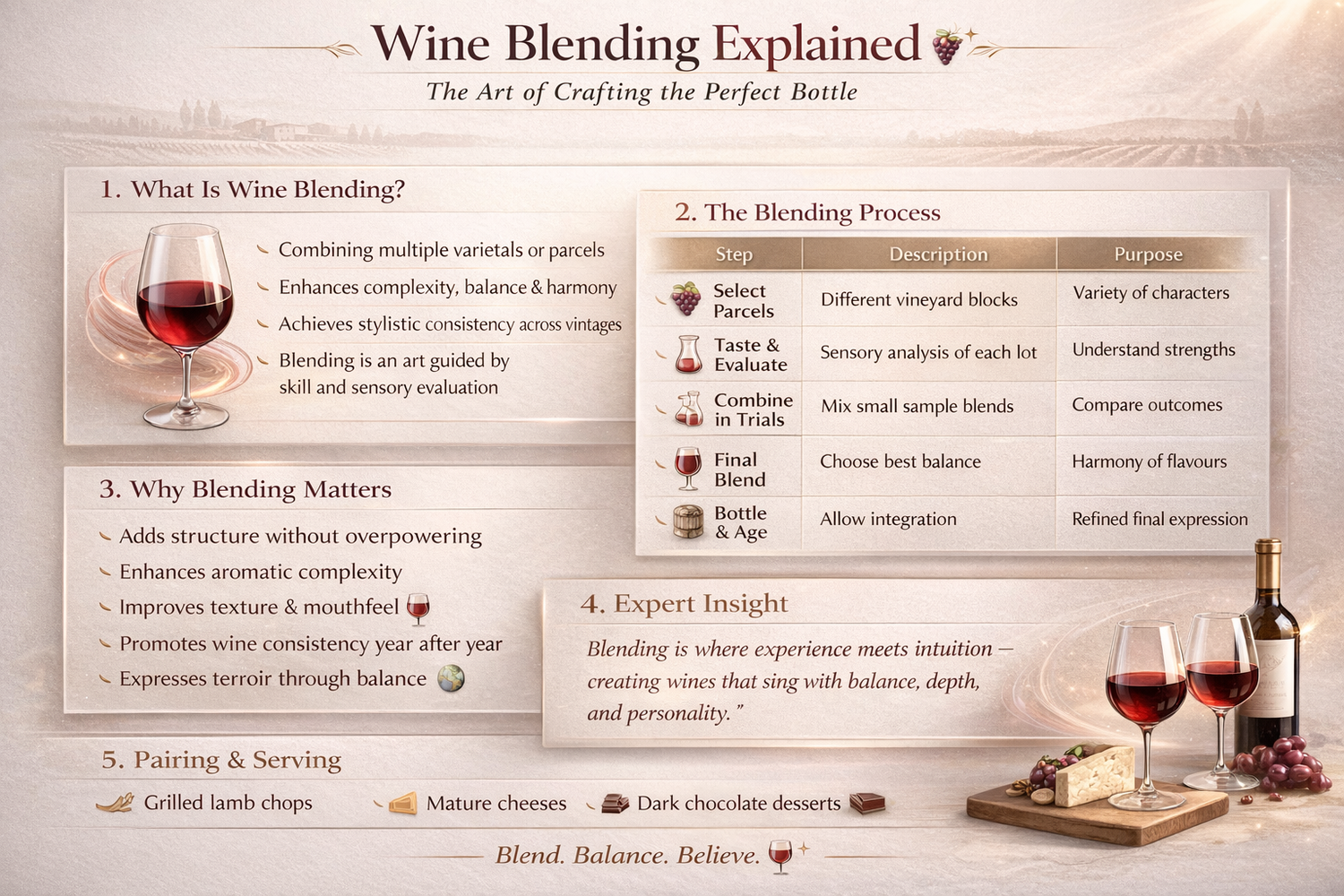
What is wine blending? Simply put, it is the practice of combining wines made from different grape varieties, vineyard blocks, or barrels to create a final wine with greater harmony and complexity.
Rather than letting a single component dominate, winemakers carefully assemble a blend so each element contributes something valuable:
- Aromatic lift from one variety
- Structure and tannin from another
- Fresh acidity from a cooler vineyard parcel
- Depth and richness from riper fruit
Think of it like composing music: individual notes matter, but the magic happens when they come together in balance.
Single Varietal vs Blended Wine: What’s the Difference?

The debate around single varietal vs blended wine often surprises wine drinkers.
| Style | What It Means | Key Benefit |
|---|---|---|
| Single Varietal Wine | Made primarily from one grape variety | Highlights the pure character of the grape |
| Blended Wine | Combines multiple grape varieties or parcels | Creates balance, depth, and complexity |
Single varietal wines showcase a grape’s personality. Blended wines, however, allow winemakers to fine-tune flavour, structure, and texture, often producing a more layered and polished result.
Why Winemakers Blend Wine
Why winemakers blend wine is both practical and artistic. Grapes behave differently each season, and blending gives winemakers the flexibility to craft a consistent, high-quality wine.
Some of the key reasons include:
- Balance – Softening strong tannins or boosting freshness
- Complexity – Layering different flavour profiles in one wine
- Consistency – Maintaining a house style from vintage to vintage
- Structure – Combining grapes that complement each other naturally
For example, in many Australian blends, Shiraz may provide body and spice, while Grenache contributes bright fruit and softness. Together, they create a wine that feels more complete than either would alone.
The Wine Blending Process: Where Craft Meets Precision

The wine blending process is rarely rushed. Winemakers often spend weeks or even months tasting and adjusting small trial blends before deciding on the final composition.
A typical blending session might involve:
- Tasting dozens of individual barrels
- Creating trial blends in small samples
- Adjusting percentages by tiny margins
- Re-tasting repeatedly to find perfect balance
This meticulous process explains why blending is often called the hidden art of winemaking. One small change—sometimes just a few percent—can transform a wine’s aroma, texture, and finish.
Ultimately, blending is not about hiding imperfections. It is about unlocking potential. When done well, the result is a wine that feels seamless, complex, and deeply satisfying—proof that sometimes the greatest wines are not built from one voice, but from a carefully crafted harmony of many.
The timeless skill of wine blending is pivotal in the creation of exceptional wines and is regarded as both a science and an art. At Curtis Family Vineyards, this expertise is carried out with impressive precision and passion. By thoughtfully selecting and combining different grape varieties, we are able to craft distinct wines that highlight complexity and depth, making each sip an unforgettable experience.
What Is Wine Blending? Understanding the Science and the Craft

What is wine blending? In modern winemaking, wine blending is the practice of combining wines from different grape varieties, vineyard blocks, or fermentation batches to create a final wine with better balance, flavour, and structure. Rather than relying on one component, winemakers carefully assemble several elements to craft a wine that feels complete and harmonious.
In premium wine regions such as McLaren Vale, blending is often considered one of the most important steps before bottling. Skilled producers like Curtis Family Vineyards evaluate individual barrels and parcels, tasting them repeatedly to decide how they might complement each other in the final blend.
Where the Tradition of Blending Began
Blending is not a modern trend. It has deep historical roots in famous wine regions across Europe. Winemakers discovered centuries ago that certain grape varieties work better together than alone.
Some classic examples include:
- Bordeaux blends combining Cabernet Sauvignon, Merlot, and Cabernet Franc for structure and elegance
- Rhône-style blends pairing Grenache, Shiraz, and Mourvèdre for richness and spice
- Mediterranean regions blending grapes to manage ripeness and climate influence
These traditions eventually inspired winemakers around the world, including Australia, where blending allows producers to adapt to warm climates and create distinctive regional styles.
The Balance Between Science and Creativity
Wine blending sits at a fascinating crossroads between technical knowledge and sensory skill. Winemakers use both data and instinct to guide their decisions.
During blending trials, they consider several elements:
- Acidity – for freshness and balance
- Tannin structure – for mouthfeel and ageing potential
- Aroma intensity – to enhance complexity
- Fruit concentration – to create depth of flavour
Even a small change—sometimes just 5–10% of a different component—can dramatically alter how a wine tastes.
Turning Separate Wines into One Seamless Style
The real magic of blending happens when individual wines begin to behave like a single, unified wine. What once tasted like separate parts slowly becomes something greater.
Winemakers often describe the moment when a blend “clicks” — when:
- aromas become more layered
- the palate feels smoother and more balanced
- flavours linger longer on the finish
This transformation is why blending is often called the quiet art behind great wines. It turns individual pieces into a carefully crafted whole, creating bottles that feel refined, expressive, and unmistakably complete.
Inside the Winemaker’s Studio: How Wines Are Actually Blended
How winemakers blend wine is often compared to an artist perfecting a painting. The final bottle you see on the shelf is the result of careful tasting, tiny adjustments, and countless blending trials carried out long before bottling begins.
The Wine Blending Process: Step by Step
The wine blending process usually takes place after fermentation and initial ageing. Winemakers first evaluate individual barrels or batches before testing combinations in small samples.
Typical steps include:
- Assessing each wine component
tasting wines from different grape varieties, vineyard blocks, or barrels
- Creating small trial blends - mixing tiny measured samples in laboratory-style glasses
- Comparing multiple variations - adjusting percentages until the most balanced blend appears
- Final tasting and validation - ensuring the wine has harmony, structure, and a long finish
Sometimes dozens of experimental blends are created before the final composition is chosen.
Blending Red Wines vs White Wines

Blending red wines vs white wines often requires slightly different approaches.
| Wine Type | Blending Focus | Why It Matters |
|---|---|---|
| Red Wines | tannins, body, structure | helps soften harsh tannins and add complexity |
| White Wines | acidity, aroma, freshness | enhances brightness and aromatic lift |
For example, a richer variety may add body to a blend, while a brighter variety contributes freshness and energy.
The Role of Barrel Blending Techniques
Barrel blending techniques allow winemakers to evaluate how ageing has shaped each wine. Even wines made from the same grape can taste different depending on:
- oak barrel type
- ageing duration
- vineyard parcel
- fermentation style
By tasting wines barrel by barrel, winemakers can identify which components bring depth, spice, fruit intensity, or softness to the final blend.
Tasting and Adjusting Blends for Perfect Balance
During blending trials, the focus is always on balancing tannins, acidity, and body so the wine feels smooth and complete.
Winemakers typically evaluate:
- Tannins – providing structure and ageing potential
- Acidity – adding freshness and vibrancy
- Aromas – enhancing complexity and character
- Body – shaping the texture and weight on the palate
Sometimes the difference between a good wine and an exceptional one can come from just a 5% adjustment in a blend.
That is why blending sessions often involve repeated tasting over several days. When the elements finally come together, the result is a wine that feels seamless, balanced, and truly expressive.
Legendary Blends That Shaped the Wine World

Bordeaux blends are among the most recognised examples of classic blended wines. Originating in France, these wines combine grape varieties such as Cabernet Sauvignon, Merlot, and Cabernet Franc to achieve a balanced and age-worthy style. Each grape plays a specific role: Cabernet Sauvignon often contributes structure and tannin, while Merlot adds softness and ripe fruit.
What makes these blends fascinating is how winemakers use different varieties almost like ingredients in a recipe, adjusting proportions to create harmony in every vintage.
Rhône-Style Blends: Rich, Spicy and Expressive
Rhône-style blends from southern France introduced the world to powerful yet elegant combinations of grapes like Grenache, Syrah (Shiraz), and Mourvèdre. These wines are celebrated for their bold fruit, spice, and layered texture.
Why these combinations work so well:
- Grenache – bright fruit and warmth
- Shiraz/Syrah – body, colour, and peppery spice
- Mourvèdre – structure and earthy complexity
Together, they create wines that are both generous and balanced, a style that has influenced many modern wineries around the world.
The Rise of the GSM Wine Blend
The GSM wine blend (Grenache Shiraz Mourvèdre) has become one of the most respected blends in Australia. Winemakers discovered that these three grapes complement each other beautifully in warm, Mediterranean-style climates.
Typical flavour contributions include:
- Grenache – red berry fruit and softness
- Shiraz – richness, dark fruit, and spice
- Mourvèdre – depth, tannin, and savoury notes
In regions like McLaren Vale, Cavaliere GSM blends have become a signature style, producing wines with vibrant fruit, complexity, and excellent ageing potential. Producers such as Curtis Family Vineyards often explore these blends to highlight the region’s expressive fruit and balanced structure.
How New World Wine Regions Reimagined Blending

New World wine blends from Australia, the United States, and South America have taken inspiration from European traditions but introduced more flexibility and creativity.
Unlike strict Old World rules, many New World winemakers experiment with:
- unconventional grape combinations
- modern fermentation and ageing techniques
- blending grapes from different vineyard parcels
This freedom often results in wines that feel bold, fruit-forward, and uniquely regional.
Why Classic Blended Wine Styles Work So Well
The reason classic blended wine styles have endured for centuries is simple: balance. Each grape variety contributes something different, allowing winemakers to fine-tune flavour, texture, and structure.
Blending helps achieve:
- greater complexity in aroma and flavour
- better balance between fruit, acidity, and tannin
- consistent quality across vintages
It is this thoughtful combination of grapes that has shaped many of the world’s most celebrated wines—and continues to inspire modern winemakers today. 🍷
One extraordinary blend offered by Curtis Family Vineyards is the Cavaliere Grenache Shiraz Mourvedre. This blend beautifully illustrates the synergy possible through blending: Grenache brings bright, red fruit notes, Shiraz contributes spice and fullness, and Mourvedre adds depth and tannins for a wine that is greater than the sum of its parts.
For those who love a full-bodied red, the Cavaliere Cabernet Sauvignon offers its own unique characteristics. It's a testament to how a single varietal can stand strong on its own, while also reminding us of the careful blending of terroir and winemaker expertise required to craft a perfect wine.
The journey doesn’t end with reds. The art of blending also extends to vibrant whites, such as the Heritage Sparkling Blanc de Blanc. This elegant wine showcases the freshness and complexity a well-crafted blend can achieve, delivering a sparkling sensation with a fruit-forward profile and a refined finish.
Why Blended Wines Often Taste More Balanced and Complex

Why blended wines taste balanced is one of the most common questions among wine lovers. The answer lies in how different grape varieties complement each other. Each grape brings its own character—some contribute fruit intensity, others add acidity, tannins, or aroma. When combined carefully, these elements create a wine that feels smoother and more complete on the palate.
In respected wine regions like McLaren Vale, winemakers at wineries such as Curtis Family Vineyards often blend varieties to achieve this harmony, ensuring the final wine delivers both flavour and structure.
The Secret Behind Complexity in Blended Wines
Complexity in blended wines comes from the interaction of multiple grape varieties. Instead of experiencing a single dominant flavour, drinkers discover layers that unfold gradually with each sip.
For example:
- one grape may provide bright red fruit aromas
- another adds spice and depth
- a third contributes structure and length on the finish
This multi-layered experience keeps the wine interesting from the first sip to the last.
Flavour Layering in Wine: A Winemaker’s Strategy

Flavour layering in wine is similar to building a carefully balanced recipe. Each component wine is selected because it contributes something unique.
Typical flavour contributions might include:
- Fruit richness – berries, plum, or dark cherry
- Aromatic lift – floral or herbal notes
- Texture – roundness or smoothness on the palate
- Length – a lingering, satisfying finish
When these layers align, the wine feels more expressive and refined.
Structure and Harmony in Wine
The true goal of blending is achieving structure and harmony in wine. This means balancing three essential elements:
| Element | Role in the Wine |
|---|---|
| Tannins | provide structure and ageing potential |
| Acidity | adds freshness and balance |
| Body | creates texture and mouthfeel |
If one element is too strong, the wine may feel unbalanced. Blending allows winemakers to fine-tune these components so the wine feels seamless.
Why Premium Wines Often Depend on Blending

Many premium wines rely on blending because it allows winemakers to maintain consistent quality and style across vintages. Climate, rainfall, and vineyard conditions change each year, but blending helps producers adjust the final wine to achieve the desired balance.
The result is a bottle that offers depth, harmony, and complexity—qualities that wine enthusiasts around the world consistently appreciate.
Appreciating Blended Wines Like a Winemaker
How to identify blended wine is easier than many people think. Most wine labels give helpful clues about whether a wine is a blend or made from a single grape variety. Sometimes the label lists multiple grapes, while other times the wine is named after a style or region.
Here are a few quick ways to recognise a blend:
- Multiple grape varieties listed on the label
- Style names such as GSM or Rhône-style blend
- Wines labelled by region rather than a single grape
- Tasting notes that describe layered flavours and complexity
Many premium wineries in McLaren Vale, including Curtis Family Vineyards, craft blends that showcase the region’s fruit while maintaining balance and elegance.
How to Taste Blended Wine Like a Professional
How to taste blended wine involves slowing down and paying attention to the different flavour layers that appear from aroma to finish.
Try this simple approach used by winemakers:
- Observe the aroma- swirl the glass and notice multiple scent notes such as berries, spice, or floral hints
- Take a small sip- focus on how the flavours change across your palate
- Notice the finish - quality blends often leave a long, smooth aftertaste
You may discover that the wine evolves in the glass, revealing new aromas and textures with time.
Are Blended Wines Better?

Are blended wines better than single varietals? The honest answer is that it depends on what you enjoy. However, many wine experts appreciate blends because they often deliver:
- Greater balance between fruit, acidity, and tannin
- More complexity in flavour and aroma
- Consistency in quality across vintages
That is why some of the world’s most respected wines rely heavily on blending techniques.
Choosing Blended Wines for Different Occasions
Choosing blended wines can be a great way to explore new flavours and styles. Because blends combine several grape characteristics, they tend to be versatile with food and suitable for many occasions.
Blended wines are often ideal for:
- Dinner gatherings where wines must pair with different dishes
- Wine tasting experiences that highlight complexity
- Exploring regional styles from places like McLaren Vale
For wine lovers looking to deepen their appreciation, tasting thoughtfully crafted blends is one of the best ways to understand the true artistry of winemaking.
To explore further and find the perfect blend to elevate your next occasion, visit Curtis Family Vineyards and discover the artistry that defines our wines.
