

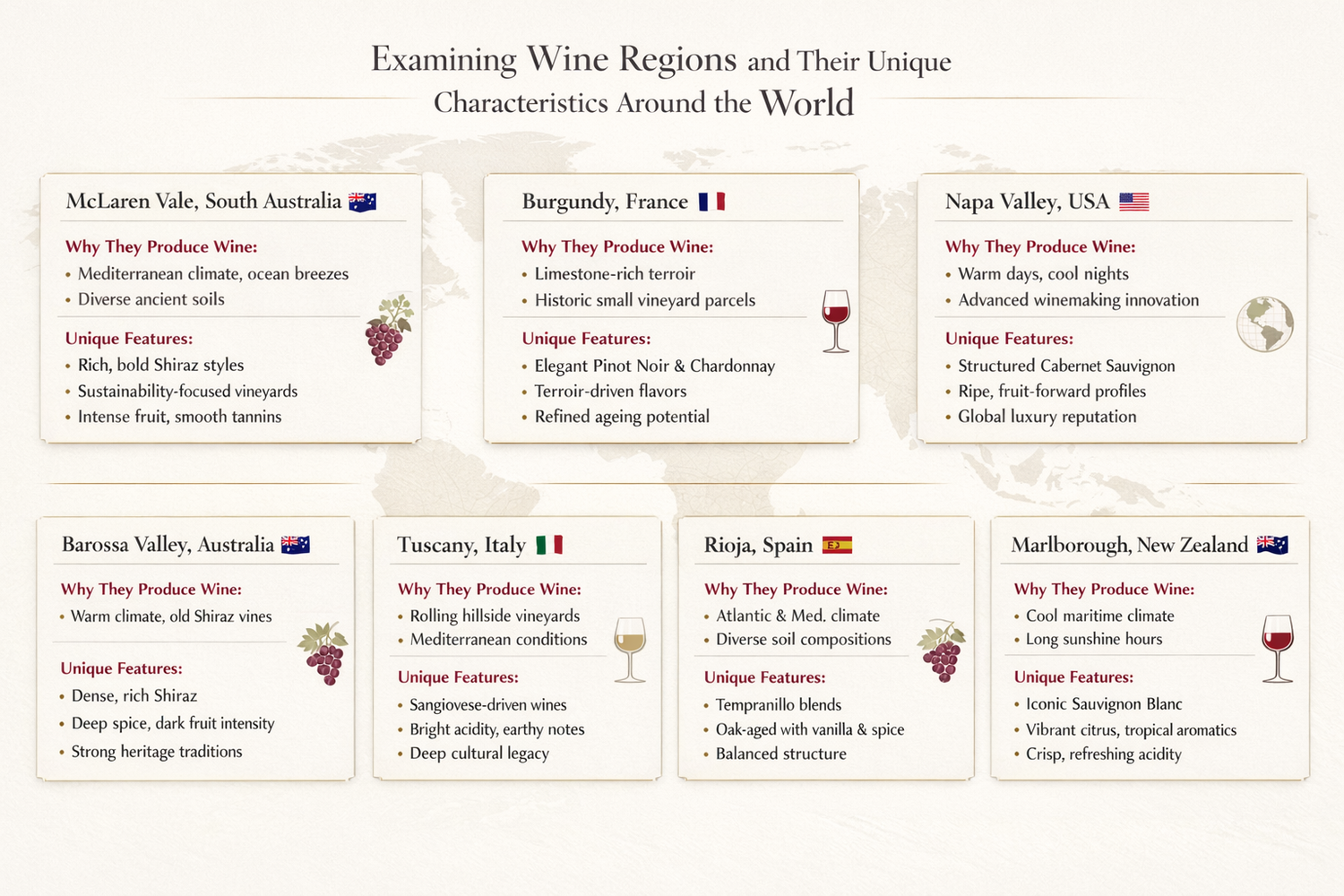
Introduction - Wine Regions guide
Wine region characteristics and Famous wine regions of the world are more than just names on a label — they tell a powerful story about place, climate, heritage, and craftsmanship. For wine lovers, understanding where a wine comes from often unlocks a deeper appreciation of its flavour, aroma, and personality.
Every wine region has its own identity shaped by three major forces:
Terroir: The Soul of Wine
Terroir refers to the natural environment where grapes grow. It includes soil, climate, topography, and even vineyard altitude. Together, these elements influence how grapes develop and how the final wine tastes.
- Soil composition can add minerality, structure, or softness to wine.
- Climate conditions influence ripeness, acidity, and flavour intensity.
- Landscape features such as coastal breezes or hillside vineyards help shape balance and complexity.
Research published by global wine education organisations highlights that consumers increasingly associate terroir-driven wines like Ancestor Shiraz or Legion Chardonnay with authenticity and premium quality — showing that place truly matters in modern wine appreciation.
Cultural Traditions: Where Heritage Meets Craft
Across the famous wine regions of the world, winemaking techniques are often passed down through generations. These traditions influence grape selection, fermentation methods, and ageing styles, creating distinct regional expressions.
For example:
- Traditional regions often focus on preserving historic styles and strict production rules.
- Modern regions blend heritage with innovation, creating exciting and diverse wine profiles.
This balance between tradition and evolution keeps wine regions both timeless and relevant.
Why Wine Lovers Seek Regional Identity
Today’s wine drinkers are more curious and experience-driven than ever before. Many actively explore wines based on origin because regional character offers:
- A sense of discovery and storytelling
- Confidence in quality and authenticity
- Unique flavour profiles that reflect specific landscapes
- Strong connection between wine, food, and local culture
Rising Curiosity in Regional Authenticity
Recent consumer behaviour studies in the wine industry suggest that buyers increasingly prefer wines with a clear sense of origin. Wines that highlight their regional story often build stronger brand loyalty and emotional connection with customers.
For wineries, showcasing wine region characteristics is not just about geography — it’s about sharing a journey from vineyard to glass, allowing drinkers to experience the landscape, climate, and heritage in every sip. Each region offers something unique, creating wines with special characteristics that reflect their origins. Today, we explore some of these remarkable wine regions and highlight how their unique environments shape the wines that are celebrated around the world.
McLaren Vale, South Australia: Coastal Influence Meets Mediterranean Warmth

McLaren Vale wine region profile and Soil types in global wine regions reveal why this celebrated part of South Australia produces wines that consistently excite both critics and everyday wine lovers. Known for its rare combination of coastal freshness and Mediterranean warmth, McLaren Vale offers an environment where grapes develop remarkable flavour depth while maintaining natural balance.
Maritime Breezes: Nature’s Temperature Control
One of McLaren Vale’s biggest advantages is its close proximity to the ocean. Cooling sea breezes flow through vineyards during warm growing seasons, helping grapes ripen slowly and evenly.
This coastal influence helps create wines that are:
- Rich in fruit flavour yet beautifully balanced
- Naturally vibrant with refreshing acidity
- Consistent in quality across different vintages
Studies from Australian viticulture research bodies highlight that regions with maritime airflow often produce wines with improved structure and longevity — a signature strength seen in McLaren Vale Shiraz and Heritage Grenache wine
Diverse Soils: The Secret Behind Layered Flavour
McLaren Vale stands out globally because of its extraordinary soil diversity. Within short vineyard distances, growers work with limestone, clay, sand, and ancient ironstone soils. Each soil type contributes unique character to grape development.
| Soil Type | Influence on Wine Style |
|---|---|
| Sandy soils | Enhances aromatics and elegance |
| Clay-rich soils | Builds body, depth, and plush texture |
| Limestone-based soils | Supports freshness and mineral complexity |
This variation allows winemakers to craft blends and single-vineyard wines with remarkable personality and layered fruit intensity.
Sustainability Leadership and Forward Thinking
McLaren Vale is widely recognised as a leader in sustainable viticulture. Many vineyards adopt environmentally responsible practices designed to protect the land for future generations.
Key sustainability innovations include:
- Organic and biodynamic vineyard management
- Water conservation and soil regeneration programs
- Precision viticulture technology to improve grape quality
- Reduced chemical intervention to enhance terroir expression
These practices not only protect vineyard ecosystems but also help deliver wines that genuinely reflect their environment.
Signature Style: Richness Meets Natural Freshness
The true magic of McLaren Vale lies in its ability to balance power with elegance. Wines from the region often display:
- Concentrated dark fruit and spice complexity
- Smooth tannin structure
- Bright, natural freshness driven by coastal climate
- Excellent ageing potential without losing approachability
For wine enthusiasts seeking authenticity and expressive regional character, McLaren Vale continues to set global benchmarks — offering wines that capture both landscape and innovation in every glass.
Burgundy, France - The Art of Terroir Precision

Moving to Europe, Burgundy in France is synonymous with fine wine production, particularly Pinot Noir and Chardonnay. The region's cool climate and varied limestone soils allow for the creation of complex and elegant wines. Burgundy's microclimates and small vineyard plots, known as climats, enable the production of wines with subtlety and nuance.
Napa Valley, USA- Innovation Driving Luxury and Consistency

Napa Valley in California is another illustrious wine region, famed for its warm climate and picturesque landscapes. Known predominantly for its Cabernet Sauvignon, Napa Valley’s wines are powerful and opulent. The region benefits from a diverse range of microclimates and soils, providing an array of winemaking possibilities.
Napa Valley premium wine productions have reshaped the global wine conversation by blending scientific precision with bold creativity. Known for producing luxurious, high-impact wines, this iconic American wine region has built a reputation for consistency, innovation, and world-class branding that continues to capture the attention of wine lovers and collectors worldwide.
Warm Valley Climate: Power Meets Balance
Napa Valley’s warm Mediterranean-style climate provides ideal ripening conditions, especially for Cabernet Sauvignon. Long sunny days combined with cool evening breezes help grapes develop rich flavours while preserving structure.
This climate advantage supports:
- Deep black fruit intensity and ripe tannin structure
- Consistent vintage quality across seasons
- Wines with strong ageing potential
Studies from Californian viticulture research groups highlight that Napa’s temperature patterns allow winemakers to achieve both flavour ripeness and natural balance, a key factor behind the region’s global prestige.
Precision Viticulture and Modern Technology
Napa Valley is widely recognised for pushing the boundaries of vineyard and winery innovation. Many producers use advanced monitoring tools to track vine health, soil moisture, and ripening stages with incredible accuracy.
Key innovation practices include:
- Drone and satellite vineyard mapping
- Temperature-controlled fermentation systems
- Data-driven harvest timing for optimal flavour development
- Sustainable irrigation and soil management programs
These precision techniques help deliver consistency while allowing winemakers to fine-tune wine style year after year.
Premium Branding and Global Recognition
Napa Valley’s success is not just about wine quality — it is also about storytelling, luxury positioning, and consumer trust. The famous 1976 “Judgment of Paris” tasting dramatically boosted Napa’s global reputation, proving New World wines could rival historic European regions.
Today, Napa wines are strongly associated with:
- Prestige and collectability
- High-end dining and luxury wine tourism
- Strong export demand and international brand recognition
Style Hallmark: Bold, Structured, and Fruit-Forward
Napa Valley wines are admired for their powerful personality and approachability. Winemakers often balance tradition with modern techniques to craft wines that are both expressive and polished.
Signature characteristics often include:
- Concentrated dark fruit flavours
- Firm yet refined tannin structure
- Silky texture supported by oak ageing
- A confident, memorable finish
For wine enthusiasts exploring global wine regions, Napa Valley demonstrates how innovation, climate advantage, and visionary branding can transform regional winemaking into an international luxury benchmark.
Barossa Valley, Australia: Heritage Vines and Bold Character

Barossa Valley bold red wine heritage stands as one of Australia’s most powerful wine success stories, blending deep-rooted tradition with unmistakable regional character. Globally respected for producing intense and age-worthy red wines, Barossa has built its identity on historic vineyards, family winemaking legacies, and a climate perfectly suited to rich Shiraz expressions.
Ancient Vines: Living History in Every Glass
Barossa Valley is home to some of the oldest continuously producing Shiraz vines in the world, with certain vineyards dating back to the mid-1800s. These heritage vines naturally produce lower yields but deliver grapes with extraordinary flavour concentration.
Wine research consistently shows that older vines often produce:
- Greater fruit intensity and complexity
- More balanced natural structure
- Unique flavour signatures linked to deep root systems
- Stronger reflection of regional soil character
These historic vineyards are carefully preserved, making Barossa a global symbol of vine longevity and authenticity.
Warm Climate Creating Powerful Reds
Barossa Valley’s warm, dry climate allows grapes to ripen fully, creating wines known for richness and depth. Long sunshine hours encourage bold fruit flavours while cool evening temperatures help maintain balance.
Climate advantages support wines with:
- Lush blackberry and plum flavour profiles
- Natural spice and chocolate undertones
- Smooth yet firm tannin structure
- Excellent cellaring potential
Generational Family Winemaking Legacy
One of Barossa’s most fascinating strengths is its strong family winemaking culture. Many producers have passed down knowledge through multiple generations, combining traditional craftsmanship with modern vineyard management techniques.
This heritage-driven approach encourages:
- Preservation of regional winemaking traditions
- Strong community identity and shared expertise
- Careful vineyard stewardship focused on long-term quality
Signature Expression: Concentration, Spice, and Depth
Barossa Valley wines are widely recognised for their bold personality and comforting richness. Winemakers often balance powerful fruit flavours with structured ageing techniques, especially through oak maturation.
Typical Barossa wine characteristics include:
- Concentrated dark berry fruit intensity
- Warm spice and savoury complexity
- Full-bodied texture with smooth finish
- Strong ageing capability that evolves beautifully over time
For wine lovers exploring global wine regions, Barossa Valley delivers an unforgettable experience, where heritage vines, passionate family traditions, and climate strength combine to create wines that are both powerful and deeply expressive of place.
Tuscany, Italy: Tradition and Landscape in Perfect Harmony

Tuscany sangiovese traditions represent one of the world’s most admired examples of how landscape, culture, and history can shape a wine’s identity. Nestled among rolling hills, historic villages, and sun-drenched vineyards, Tuscany has built its global reputation on producing elegant, food-friendly wines that balance bright acidity with savoury depth.
Landscape and Soils Shaping Elegance
Tuscany’s vineyard scenery is more than visually stunning — it directly influences grape character. Many vineyards sit on limestone-rich and clay-based soils, which naturally enhance structure and freshness in wines. Research into soil mineral composition shows limestone soils often contribute to wines with refined tannins and lifted aromatics.
Key terroir influences include:
- Limestone soils promoting bright acidity and fine structure
- Rolling hills improving drainage and sun exposure
- Mediterranean climate supporting slow, balanced ripening
- Altitude variation creating subtle flavour differences across vineyards
A Deep Connection Between Food and Wine Culture
In Tuscany, wine is designed to complement food rather than overpower it. Local winemaking traditions evolved alongside regional cuisine, which is rich in olive oil, herbs, and slow-cooked meats. This natural pairing philosophy has shaped Tuscany wines into versatile, table-friendly styles loved by sommeliers worldwide.
This cultural connection encourages wines that offer:
- Vibrant acidity that refreshes the palate
- Earthy and savoury flavour layers
- Medium-bodied structure suited to diverse dishes
- Natural balance rather than excessive weight or alcohol
Tradition Meets Modern Innovation
Tuscany carefully preserves strict wine classification systems while allowing winemakers to experiment creatively. Historical DOCG regulations protect authenticity and regional identity, while modern producers use advanced vineyard mapping and fermentation control to enhance quality and consistency.
This balanced approach supports:
- Preservation of traditional winemaking techniques
- Improved grape selection through modern vineyard technology
- Greater precision in expressing micro-terroirs
- Continued global relevance through innovation
Signature Expression: Fresh, Savoury, and Age-Worthy
Tuscany wines are widely celebrated for their energetic acidity, layered herbal complexity, and long ageing potential. These characteristics create wines that evolve beautifully over time while remaining approachable in their youth.
Typical Tuscany wine characteristics include:
- Bright cherry and red berry fruit notes
- Subtle dried herb and earthy undertones
- Smooth tannin structure with lively freshness
- Excellent compatibility with food and cellaring
For wine lovers exploring global wine regions, Tuscany offers a fascinating blend of scenic beauty, cultural depth, and winemaking precision — proving that tradition and innovation can thrive together to produce wines with timeless personality.
Rioja, & Marlborough: Where Ageing Meets Aromatic Innovation

Rioja: Tradition, Time, and Oak-Layered Complexity
Rioja ageing and oak influence reveal one of the most fascinating flavour journeys in global winemaking. Rioja has built its international reputation on carefully structured maturation systems that transform grape character through time, patience, and skilled barrel ageing. Wine studies have consistently shown that controlled oak maturation can soften tannins while introducing layered spice and vanilla complexity.
What makes Rioja ageing so captivating?
- Strict maturation categories guiding flavour development and quality standards
- Oak barrels enhancing texture, adding subtle smoke and spice layers
- Balanced structure allowing wines to age gracefully for years
- Winemaking traditions preserving regional identity and craftsmanship
These wines often surprise drinkers by evolving from vibrant fruit-driven youth into silky, complex, and savoury masterpieces.
Marlborough: Aromatic Precision and Modern Global Success
Marlborough sauvignon blanc style showcases how climate and modern vineyard innovation can redefine a grape variety on the world stage. Since the late 20th century, Marlborough has rapidly gained global attention for producing intensely expressive white wines shaped by its cool maritime climate and sunshine-rich growing season.
Key factors driving Marlborough’s aromatic success include:
- Cool ocean breezes preserving fresh acidity and vibrant aromatics
- Long sunshine hours boosting tropical fruit intensity
- Modern vineyard technology ensuring flavour precision and consistency
- Early harvesting techniques maintaining crisp and lively character
These wines are widely loved for their striking freshness, delivering bold passionfruit, citrus, and herbaceous notes that immediately capture attention and refresh the palate.
Old World Patience vs New World Energy: A Fascinating Contrast
Together, these two regions demonstrate how winemaking philosophy shapes wine personality:
- Rioja highlights patience, tradition, and structured flavour evolution
- Marlborough celebrates freshness, aromatic power, and modern viticulture
- Both regions prove terroir and technique can create globally iconic wine identities
For wine lovers exploring international styles, Rioja and Marlborough offer an exciting contrast — one shaped by time-honoured ageing traditions, the other by vibrant aromatic innovation that continues to influence global wine trends.
To discover more about the Mclaren Vale wines produced by Curtis Family Vineyards, visit website.
