

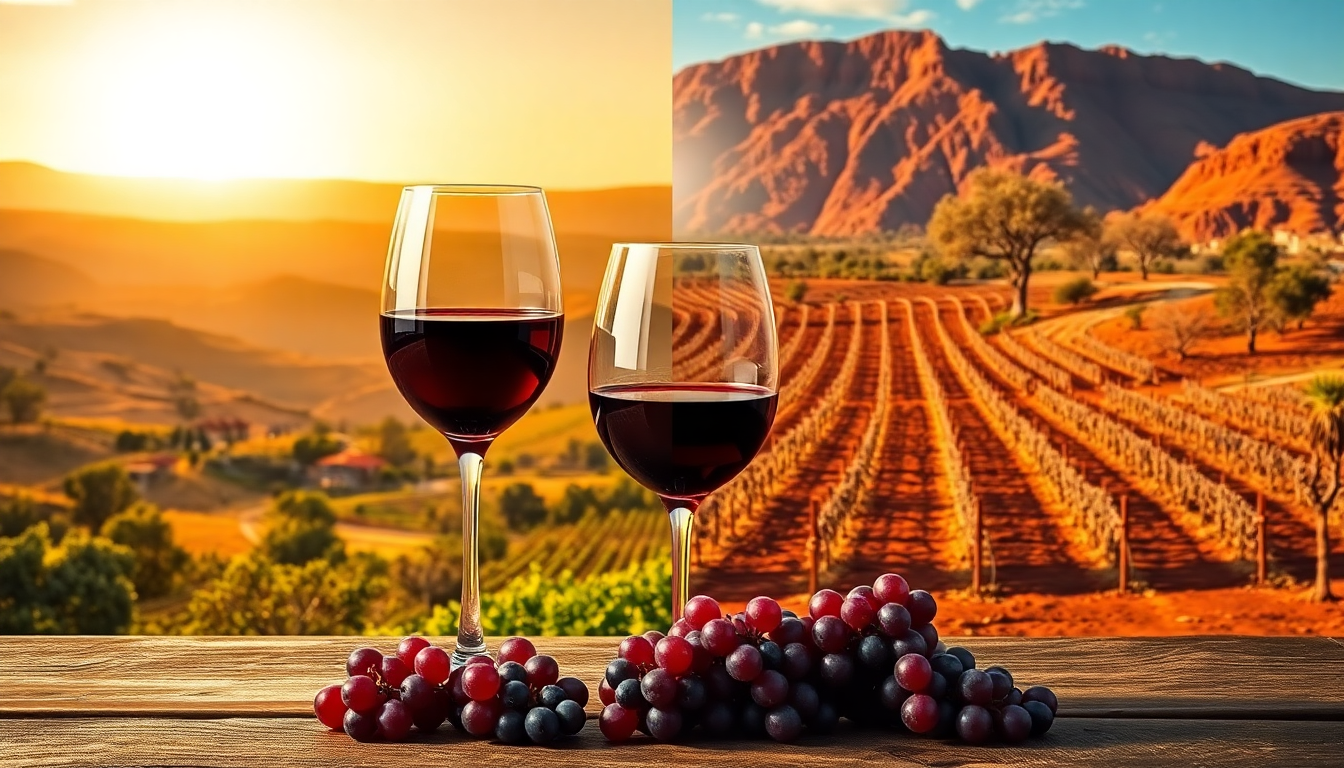
When most wine enthusiasts think of Tempranillo, their minds immediately drift to the sun-baked vineyards of Spain's Rioja and Ribera del Duero regions. For centuries, Spain has held the crown as the undisputed master of this noble grape variety, producing wines of extraordinary complexity, aging potential, and cultural significance. However, in recent decades, a new player has emerged on the global wine stage: Australia. The Australian wine industry, known for its innovation, experimentation, and willingness to challenge traditional winemaking conventions, has begun producing Tempranillo wines that are garnering international attention and respect.
At Curtis Family Vineyards, we've watched with great interest as Australian winemakers have embraced Tempranillo and adapted it to their unique terroir. This exploration has led to fascinating discoveries about how this Spanish classic transforms when grown in the diverse climates and soils of Australia. The question that increasingly occupies the minds of wine lovers is not whether Australian Tempranillo can compete with Spanish versions, but rather how these two distinct expressions of the same grape variety can coexist and complement each other in the global wine marketplace.
This comprehensive exploration will delve deep into the world of Tempranillo, examining its origins, its traditional Spanish expressions, and the exciting new interpretations emerging from Australian vineyards. We'll investigate the factors that influence how Tempranillo develops in different environments, compare the characteristics of Spanish and Australian versions, and consider what the future might hold for this increasingly popular variety.
Understanding Tempranillo: The Grape's Rich Heritage
Tempranillo is one of Spain's most important and prestigious grape varieties, with a history that stretches back centuries. The name itself derives from the Spanish word "temprano," which means "early," a reference to the grape's tendency to ripen earlier than many other varieties grown in Spain. This characteristic has made it particularly valuable in regions where the growing season can be unpredictable or relatively short.
The grape's origins are somewhat debated among ampelographers and wine historians. While it is definitively associated with Spain, some evidence suggests that Tempranillo may have been brought to the Iberian Peninsula by Phoenician traders or Roman colonizers. What is certain is that by the medieval period, Tempranillo was well-established in Spanish vineyards, particularly in the regions that would later become famous for their Tempranillo-based wines.
Tempranillo's rise to prominence in Spain's wine hierarchy occurred gradually over centuries. In Rioja, the region most closely associated with the variety, Tempranillo became the dominant grape by the 19th century, though it was often blended with other varieties like Garnacha, Graciano, and Mazuelo. The wine style that emerged from Rioja became the template for how Tempranillo should be made: elegant, age-worthy wines with balanced acidity, moderate alcohol levels, and complex flavor profiles that evolved beautifully over decades in the bottle.
The grape's characteristics are well-suited to producing serious, structured wines. Tempranillo typically produces wines with medium to full body, moderate to high acidity, and tannins that range from fine and elegant to robust and powerful, depending on growing conditions and winemaking techniques. The flavor profile often includes red fruits like cherry and plum, along with earthy, herbal, and sometimes leathery notes. In cooler years or regions, Tempranillo can display more herbaceous characteristics, while in warmer conditions, it tends toward riper fruit flavors and higher alcohol levels.
The Spanish Tradition: Rioja and Ribera del Duero
To understand Australian Tempranillo, we must first establish a clear picture of how Tempranillo is traditionally made in Spain. The two most important Spanish regions for Tempranillo are Rioja and Ribera del Duero, each with its own distinct character and winemaking philosophy.
Rioja, located in northern Spain in the autonomous community of La Rioja, is perhaps the most famous Tempranillo region in the world. The region benefits from a temperate climate moderated by Atlantic influences, with warm days and cool nights that allow for a long, gradual ripening period. This extended growing season is crucial for developing the complexity and balance that characterizes great Rioja wines.
Traditional Rioja winemaking emphasizes aging in oak, particularly American oak, which imparts vanilla, coconut, and spice notes to the wine. The region's classification system reflects this emphasis on aging: Crianza wines must spend at least one year in oak and two years total aging before release; Reserva wines require at least one year in oak and three years total aging; and Gran Reserva wines must age for at least two years in oak and five years total before release. This extended oak aging has become synonymous with Rioja's identity, though modern producers are increasingly experimenting with shorter oak aging periods and French oak to create fresher, more fruit-forward expressions.
Ribera del Duero, located further inland along the Duero River, represents a different expression of Tempranillo. The region's continental climate features more extreme temperature variations, with hot days and cold nights. The altitude of many vineyards in Ribera del Duero contributes to this temperature differential, as the region sits at elevations between 700 and 900 meters above sea level. These conditions produce Tempranillo wines that are often more powerful and concentrated than their Rioja counterparts, with higher alcohol levels and more robust tannins.
Ribiera del Duero's winemaking tradition, while still emphasizing oak aging, tends to focus more on French oak and shorter aging periods than Rioja. The resulting wines are often more modern in style, with greater emphasis on fruit expression and less of the oxidative character that extended American oak aging can impart. The region's most famous wine, Vega Sicilia, has become one of Spain's most prestigious and expensive wines, demonstrating the quality potential of Tempranillo in this region.
Both regions produce wines of extraordinary quality and complexity, and both have established themselves as benchmarks against which other Tempranillo producers around the world are measured. The Spanish Tempranillo tradition emphasizes balance, elegance, and the ability to age gracefully for decades. These wines are designed to evolve in the bottle, developing secondary flavors and becoming more complex and integrated over time.
Australia's Wine Revolution and the Tempranillo Discovery
Australia's wine industry is a relatively young one in global terms, but it has achieved remarkable success in a remarkably short time. European settlement of Australia began in 1788, and wine production started almost immediately, with the first vines planted in Sydney in 1791. However, it wasn't until the latter half of the 20th century that Australian wine began to gain international recognition and respect.
The Australian wine boom of the 1980s and 1990s was driven by several factors: investment in modern winemaking technology, a willingness to experiment with different grape varieties and techniques, a focus on fruit-forward, accessible wines that appealed to a broad audience, and aggressive marketing that positioned Australian wines as innovative and exciting. Varieties like Shiraz and Chardonnay became synonymous with Australian wine, and the country's winemakers earned a reputation for producing high-quality wines at reasonable prices.
However, as the Australian wine industry matured, many producers began to feel that they had exhausted the creative possibilities of the varieties that had brought them success. Shiraz, while still important, had become somewhat commodified. Chardonnay production was declining as consumers' tastes shifted. Producers began looking for new varieties that could offer fresh creative challenges and help differentiate their wines in an increasingly crowded marketplace.
Tempranillo entered this context as an intriguing possibility. The variety had proven its quality potential in Spain, but it had never been seriously attempted in Australia. The grape's early ripening characteristics made it potentially well-suited to Australia's warm climate, but it was unclear how it would perform or what style of wine it would produce. This uncertainty was precisely what attracted innovative Australian winemakers: the opportunity to explore uncharted territory and potentially create something entirely new.
The first serious attempts at growing Tempranillo in Australia began in the early 2000s, with producers in regions like Barossa Valley, McLaren Vale, and the Yarra Valley experimenting with small plantings. These early efforts were largely exploratory, with winemakers trying to understand how the variety would behave in Australian conditions and what winemaking techniques would best suit it.
The Australian Terroir: Climate, Soil, and Growing Conditions
To understand how Australian Tempranillo differs from Spanish Tempranillo, we must first understand the fundamental differences in terroir between Australia and Spain. Terroir, the French term encompassing climate, soil, topography, and other environmental factors that influence grape growing, is perhaps the most important factor in determining how a wine will taste.
Australia's climate is dramatically different from Spain's. While Spain's wine regions benefit from a Mediterranean climate with moderate temperatures and relatively predictable rainfall patterns, Australia's climate is far more variable and extreme. Australia is the driest inhabited continent, and many of its wine regions experience hot, dry summers with significant temperature fluctuations between day and night.
The Barossa Valley, one of Australia's most important wine regions and a major center for Tempranillo experimentation, experiences average January temperatures (summer in the Southern Hemisphere) of around 21 degrees Celsius, compared to Rioja's average July temperature of around 20 degrees Celsius. However, Barossa Valley's temperatures can swing dramatically, with daytime highs regularly exceeding 35 degrees Celsius and nighttime lows dropping to around 15 degrees Celsius. This diurnal temperature variation is actually beneficial for grape growing, as the cool nights allow grapes to retain acidity while the hot days promote ripening.
McLaren Vale, another important Australian wine region, experiences similar temperature patterns but with slightly more moderate conditions due to its proximity to the Southern Ocean. The maritime influence provides some cooling effect, particularly in the evening and early morning hours. The Yarra Valley, located in Victoria and at higher elevation than many other Australian wine regions, experiences cooler conditions overall, with average summer temperatures several degrees lower than Barossa Valley or McLaren Vale.
Rainfall patterns in Australian wine regions are quite different from Spain's. While Spanish wine regions typically receive between 400 and 600 millimeters of rain annually, distributed relatively evenly throughout the year, Australian wine regions often receive less total rainfall and experience more pronounced dry seasons. This necessitates irrigation in many Australian vineyards, a practice that is less common in traditional Spanish wine regions.
The soils in Australian wine regions also differ significantly from Spanish soils. Rioja's soils are characterized by a mixture of clay, limestone, and iron oxide, which contribute to the region's distinctive wine character. Ribiera del Duero's soils are similarly complex, with significant limestone content. Australian wine regions, by contrast, often feature sandy loam soils with lower limestone content. Some regions, like parts of Barossa Valley, have red volcanic soils that contribute distinctive mineral characteristics to wines.
These fundamental differences in climate and soil mean that Tempranillo grown in Australia will inevitably develop differently than Tempranillo grown in Spain. The warmer Australian climate promotes faster ripening and higher sugar accumulation, leading to higher alcohol levels. The lower rainfall and irrigation-dependent growing conditions can concentrate flavors and tannins. The different soil profiles contribute different mineral and elemental characteristics to the grapes.
Australian Tempranillo: Characteristics and Style
The Tempranillo wines emerging from Australian vineyards display characteristics that are distinctly different from their Spanish counterparts, reflecting both the different environmental conditions and the different winemaking philosophies that Australian producers have adopted.
Australian Tempranillo wines typically display higher alcohol levels than Spanish versions, often ranging from 14.5% to 15.5% ABV, compared to Spanish Tempranillos which often fall in the 13% to 14.5% range. This higher alcohol is a direct result of the warmer climate and longer growing season, which allow grapes to accumulate more sugar before harvest.
The flavor profile of Australian Tempranillo tends to emphasize ripe, fruit-forward characteristics. Where Spanish Tempranillos often display restrained cherry and plum flavors with earthy and herbal undertones, Australian versions frequently showcase more exuberant fruit expression, with flavors of ripe cherry, blackberry, and plum taking center stage. Some Australian Tempranillos display jammy or even stewed fruit characteristics, particularly those from the warmest regions or those made in a more modern, fruit-forward style.
The tannin structure in Australian Tempranillo also tends to differ from Spanish versions. Spanish Tempranillos, particularly those from Ribiera del Duero, often display fine-grained, elegant tannins that integrate beautifully with the wine's other components. Australian Tempranillos, particularly those from warmer regions like Barossa Valley, often display more robust, sometimes even rustic tannins that can take longer to integrate and soften.
Oak aging practices in Australia differ from Spanish traditions. While Spanish producers often use American oak for extended periods, Australian producers have experimented with French oak, American oak, and various combinations, often for shorter periods than traditional Spanish practice. Some Australian producers use minimal oak aging, allowing the fruit character to shine through. Others employ extended oak aging similar to Spanish traditions, but often with French oak rather than American oak, resulting in different flavor contributions.
The acidity levels in Australian Tempranillo can be lower than in Spanish versions, a consequence of the warmer climate and faster ripening. This lower acidity can make Australian Tempranillos more approachable in their youth, but it can also raise questions about their aging potential compared to more acidic Spanish versions.
Comparing Spanish and Australian Tempranillo: A Detailed Analysis
When we place Spanish and Australian Tempranillos side by side, the differences become immediately apparent, yet both can be excellent expressions of the variety. Understanding these differences helps us appreciate what each region brings to the table.
Flavor Profile Comparison
Spanish Tempranillo, particularly from Rioja, typically displays a complex flavor profile that evolves as the wine ages. In its youth, a Rioja Tempranillo might show bright cherry and plum flavors with herbal and mineral notes. As it ages, secondary flavors develop: leather, tobacco, dried fruit, and earthy characteristics become more prominent. The oak aging contributes vanilla, spice, and sometimes coconut notes, but these are typically well-integrated rather than dominant.
Australian Tempranillo, by contrast, tends to lead with fruit. A young Australian Tempranillo from a warm region like Barossa Valley might display flavors of ripe cherry, blackberry, plum, and even hints of licorice or anise. The fruit flavors are often more intense and immediate than in Spanish versions. Oak aging, when employed, tends to be less pronounced, allowing the fruit to remain the dominant flavor element.
Ribiera del Duero Tempranillo occupies a middle ground between Rioja and Australian styles. These wines often display more concentrated fruit flavors than Rioja, with higher alcohol and more robust tannins, but they typically retain more elegance and complexity than many Australian versions.
Tannin Structure and Mouthfeel
The tannin structure is perhaps the most significant difference between Spanish and Australian Tempranillos. Spanish Tempranillos, particularly those from Rioja, are known for their fine-grained, silky tannins that provide structure without overwhelming the palate. These tannins integrate beautifully over time, becoming increasingly refined as the wine ages.
Australian Tempranillos, particularly from warm regions, often display more prominent, sometimes even coarse tannins. These tannins can be quite gripping in the wine's youth, creating a more assertive mouthfeel. While these tannins can soften and integrate over time, they may never achieve the silky elegance of fine Rioja tannins.
This difference in tannin structure has significant implications for aging potential. Spanish Tempranillos, with their fine tannins and balanced acidity, are designed to age gracefully for decades. Australian Tempranillos, with their higher alcohol and more robust tannins, may be more approachable in their youth but might not develop the same complexity over extended aging.
Acidity and Balance
Acidity plays a crucial role in wine balance and aging potential. Spanish Tempranillos typically maintain good acidity levels, which contributes to their freshness and aging potential. The cooler climate and longer growing season in Spain allow grapes to ripen fully while retaining adequate acidity.
Australian Tempranillos often display lower acidity levels, a consequence of the warmer climate and faster ripening. This lower acidity can make the wines more immediately appealing and approachable, but it can also make them feel less fresh and potentially less age-worthy. Some Australian producers address this by harvesting slightly earlier to preserve acidity, but this can result in less ripe fruit flavors.
Oak Aging and Winemaking Philosophy
The approach to oak aging represents a fundamental philosophical difference between Spanish and Australian Tempranillo producers. Spanish producers, particularly in Rioja, view oak aging as an integral part of the winemaking process, with extended aging in American oak considered essential to the wine's development and character. This extended oak aging imparts distinctive vanilla and spice notes while also allowing for slow oxidation that contributes to the wine's complexity.
Australian producers have taken a more experimental approach to oak aging. Some employ extended oak aging similar to Spanish traditions, while others use minimal oak or no oak at all. Many Australian producers use French oak rather than American oak, which imparts different flavor characteristics: French oak tends to contribute more subtle spice and oak flavors compared


Leave a comment
This site is protected by hCaptcha and the hCaptcha Privacy Policy and Terms of Service apply.