

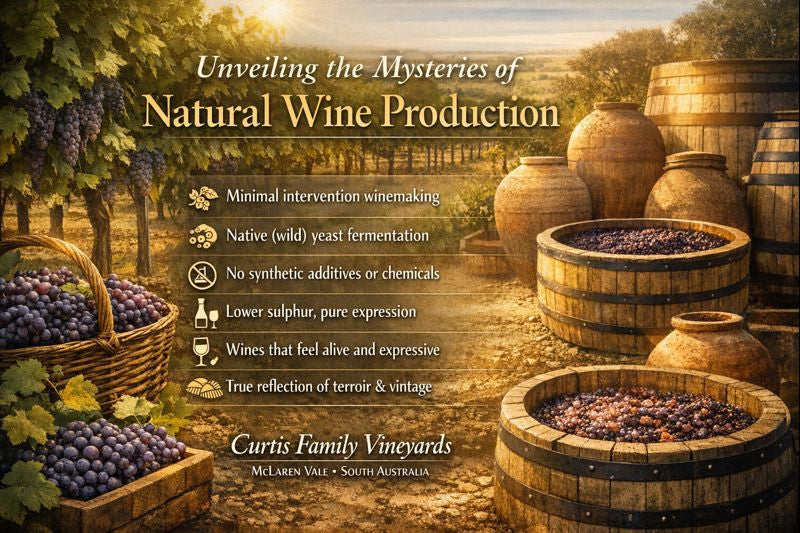
Natural Wine, with its rich history and deep cultural roots, has been an essential part of human civilisation for millennia. However, the trend towards natural wine production has brought a fresh narrative to the world of viticulture. At Curtis Family Vineyards, we're proud to be part of this sustainable movement, offering wines that embody the purest expression of the grape and the land.
Natural Wine Uncovered: Why This Ancient Method Is Winning

Natural wine production is all about stepping back and letting nature take the lead. At its core, it’s a return to how wine was made centuries ago—before additives, shortcuts, and heavy processing became the norm. Think of it less as a trend and more as a philosophy rooted in honesty, patience, and respect for the vineyard.
So, what is natural wine really? It’s wine made with minimal intervention, using hand-harvested grapes, wild (native) yeasts, and little to no additives. Nothing hidden. Nothing unnecessary. Just grapes, time, and care.
What’s driving its modern revival? Wine lovers today crave authenticity. According to global wine research groups like IWSR, consumers—especially younger drinkers—are actively seeking wines that feel real, transparent, and connected to place. Natural wine delivers exactly that.
Why natural wine feels different:
- Grapes are often organically or biodynamically grown
- Fermentation uses native yeasts, not lab-made ones
- Wines are usually unfiltered and unfined, keeping texture and character
- Sulphur use is minimal or avoided altogether
Natural Wine vs Conventional Wine (Simple Comparison)

| Natural Wine | Conventional Wine |
|---|---|
| Minimal intervention | Highly controlled process |
| Native yeast fermentation | Commercial yeast added |
| Few or no additives | Additives often used |
| Expresses terroir clearly | Style-driven and standardised |
In regions like McLaren Vale, this approach makes perfect sense. The climate, soils, and long history of sustainable farming allow natural wines to shine—vibrant, expressive, and full of personality.
Natural wine isn’t about perfection. It’s about truth in the glass—and that’s exactly why modern wine lovers are paying attention
The Essence of Natural Wine
Natural wine challenges traditional winemaking processes by minimising intervention. This means using organic or biodynamic practices, wild yeasts for fermentation, and eschewing filtering and fining whenever possible. The aim is to create wines that reflect their terroir — the unique environmental factors like soil, climate, and landscape that shape their distinct flavours and characteristics.
From Soil to Vine: Where Natural Wine Truly Begins
Low intervention wine starts long before grapes reach the winery—it begins in the soil. In natural winemaking, the vineyard isn’t just a source of fruit; it’s the heartbeat of the wine. Healthy soils, living ecosystems, and thoughtful farming choices shape every aroma, texture, and flavour in the glass.
At the foundation are organic vineyard practices. By avoiding synthetic chemicals and nurturing biodiversity, vineyards allow vines to grow stronger roots and express their true environment. Research from Australian viticulture studies consistently shows that living soils improve grape balance, flavour concentration, and resilience—key elements for expressive natural wines.
In McLaren Vale, this matters even more. The region’s ancient soils, coastal influence, and warm climate reward growers who work with nature, not against it.
What sets natural vineyards apart:
- Chemical-free soils that support microbial life
- Cover crops to improve soil health and moisture retention
- Hand-harvested grapes to protect fruit integrity
- Lower yields, but higher flavour intensity
Natural Vineyard vs Conventional Vineyard

| Natural Wine Vineyard | Conventional Vineyard |
|---|---|
| Organic or biodynamic farming | Synthetic fertilisers used |
| Hand-harvested grapes | Machine harvesting |
| Soil-first approach | Yield-focused approach |
| Reflects terroir clearly | More uniform flavour |
This careful, hands-on approach creates grapes that don’t need fixing later. When vines are healthy, the wine tells its own story—pure, honest, and unmistakably McLaren Vale. That’s where natural wine truly begins: in the ground beneath your feet
Benefits of Natural Wine Production
Producing wine naturally not only respects the environment but also ensures that each bottle is a testament to the purity and authenticity of its origin. This approach typically results in wines that are fresher and more vibrant, with a more profound connection to the vineyard's soil and climate.
Wild Fermentation & Minimal Touch
Wild fermentation sits at the heart of sustainable winemaking. Instead of adding cultured yeast or winemaking aids, natural wines rely on the native yeasts already present on the grape skins and in the winery environment. It’s unpredictable, yes—but that’s where the magic lives.
This hands-off approach allows the wine to ferment at its own pace, revealing layers of flavour that can’t be manufactured. Studies from Australian wine research bodies have shown that native yeast fermentation often produces greater aroma complexity and a stronger sense of place—what winemakers call terroir expression.
Just as important is what’s not added. Natural wines avoid unnecessary additives and are often left unfined and unfiltered, keeping the wine’s natural texture and energy intact. A slight haze? That’s not a flaw—it’s proof the wine hasn’t been stripped of its character.
Why minimal intervention matters:
- Native yeasts create unique, site-driven flavours
- No additives means nothing masks the grape’s true voice
- Unfiltered wines retain mouthfeel and depth
- Less handling preserves freshness and vitality
Wild Fermentation vs Controlled Fermentation

| Wild Fermentation | Controlled Fermentation |
|---|---|
| Native yeast used | Commercial yeast added |
| Unique, expressive flavour | Predictable flavour profile |
| Reflects vineyard and season | Standardised style |
| Minimal winery intervention | High level of control |
In a region like McLaren Vale, where fruit quality speaks volumes, letting nature lead isn’t risky—it’s respectful. The result is wine that feels alive, honest, and deeply connected to its origin
The Texture, Energy & Personality of Natural Wine
Fresh and lively wines are the hallmark of natural winemaking, and they offer an experience unlike any conventional bottle. From the first swirl to the last sip, natural wines tell a story—of the vineyard, the season, and the careful hands that nurtured them.
Natural wine flavours are often surprising and layered. You might notice:
- Vibrant fruit and floral aromas that evolve as you drink
- Slight cloudiness, a sign of minimal filtering and living yeast
- A texture that feels alive—sometimes silky, sometimes tangy, always engaging
- A freshness that keeps the wine dynamic on the palate
Research from the Australian Wine Research Institute shows that wines with minimal intervention often retain more of their natural acidity and aromatic compounds, giving each sip a sense of motion and energy. For adventurous drinkers, every bottle is a new discovery.
What You Can Expect: Natural vs Conventional Wines
| Natural Wine | Conventional Wine |
|---|---|
| Fresh, evolving flavours | Predictable, uniform taste |
| Slightly cloudy, unfiltered | Clear, filtered and stable |
| Texture-driven, lively mouthfeel | Smooth but less dynamic |
| Reflects terroir & season | Style-focused, less site-specific |
In McLaren Vale, these characteristics shine. The region’s unique soils, warm climate, and organic vineyard practices create wines that are expressive, spirited, and truly alive in every glass
Curtis Family Vineyards' Natural Wine Selection
Our commitment to natural wine production is evident in our carefully curated selections. From the lush vineyards of McLaren Vale, we offer wines that speak the language of their region.
Cavaliere Shiraz
At Curtis Family Vineyards, our Cavaliere Shiraz wine embodies the heart of McLaren Vale's natural wine movement. This Shiraz, with its robust flavours of dark berries and earthy undertones, allows the natural characteristics of the vineyard to shine through, honouring the region’s rich winemaking tradition.
Terra Rossa Shiraz
For those seeking a wine that truly represents the McLaren Vale terroir, the Terra Rossa Shiraz is an exceptional choice. Known for its rich red soil, the Terra Rossa region imparts unique mineral notes and a distinct vibrancy to this Shiraz, making each sip an experience in itself.
A Commitment to Sustainability
The decision to produce natural wine is rooted in our enduring commitment to sustainability and the environment. At Curtis Family Vineyards, we believe that respecting and nurturing the land today ensures that future generations will continue to enjoy its bounty.
Explore our natural wine range and discover the flavours of McLaren Vale with us. Visit Curtis Family Vineyards and become a part of our sustainable journey in winemaking.
To learn more about our Mclaren Vale wines and the passion that goes into every bottle, visit our website and explore the unique offerings of Curtis Family Vineyards. Join us in celebrating the mysteries and magic of natural wine production.
