

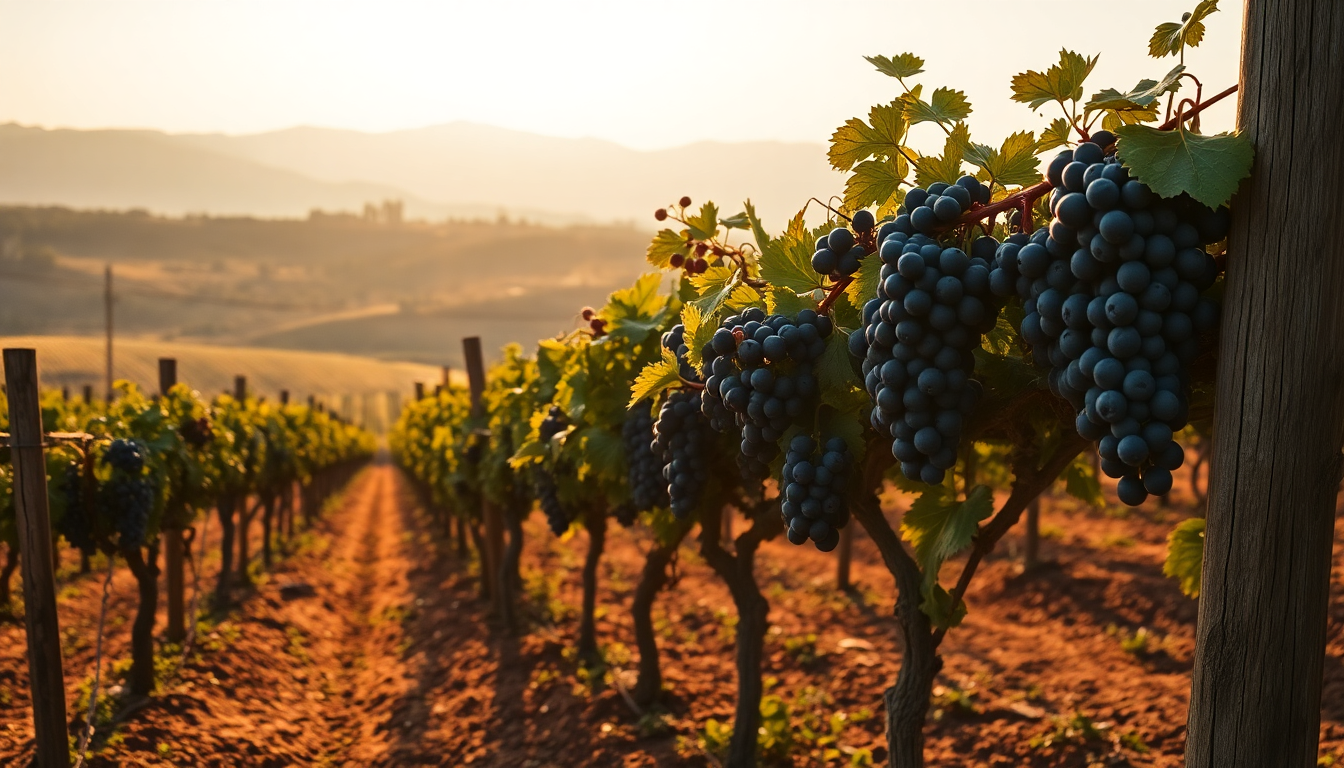
Mourvedre is one of the most fascinating and underappreciated grape varieties in the world of wine. While it may not have the household name recognition of Cabernet Sauvignon or Pinot Noir, this Spanish varietal has been quietly building a devoted following among wine enthusiasts and serious collectors. At Curtis Family Vineyards, we believe that understanding Mourvedre is essential for anyone who wants to deepen their appreciation for Rhone-style blends and Mediterranean wines. This comprehensive guide will explore everything you need to know about this remarkable grape, from its origins to its role in some of the world's most celebrated wine blends.
The Origins and History of Mourvedre
Mourvedre, also known as Monastrell in Spain and Mataro in Australia, has a rich and complex history that spans centuries and continents. The grape's origins are believed to be in Spain, specifically in the region of Murcia, where it has been cultivated for generations. The name Mourvedre itself is thought to derive from Murviedro, a town near Valencia in Spain, though some historians suggest it may come from the Arabic word for "dark wine."
The grape's journey through history is a testament to its quality and adaptability. Spanish winemakers recognized the potential of Mourvedre early on, cultivating it extensively throughout the Iberian Peninsula. However, it was in France, particularly in the Rhone Valley and Provence, where Mourvedre truly flourished and gained international recognition. French winemakers embraced the grape and incorporated it into their traditional blends, where it became a cornerstone of Rhone-style wines.
During the 19th century, Mourvedre spread to other parts of the world, including Australia, where it became known as Mataro. The grape was also planted in California and other New World wine regions, though it remained somewhat obscure compared to other Vitis vinifera varieties. In recent decades, there has been a resurgence of interest in Mourvedre, particularly among winemakers seeking to create more complex, age-worthy wines with distinctive character.
Understanding the Characteristics of Mourvedre
Mourvedre is a dark-skinned grape variety that produces deeply colored wines with distinctive aromatic and flavor profiles. The grape is known for its thick skin, which contributes to high tannin levels and deep color extraction. This characteristic makes Mourvedre an ideal blending partner for other varieties, as it provides structure, depth, and aging potential to wines.
The flavor profile of Mourvedre is complex and multifaceted. Young Mourvedre wines often display aromas of dark berries, particularly blackberry and plum, along with hints of leather, tobacco, and game. As the wine ages, these primary fruit flavors evolve into more secondary and tertiary notes, including dried fruit, forest floor, herbs, and spice. The wine typically has moderate to high acidity and significant tannin structure, which gives it excellent aging potential.
One of the most distinctive characteristics of Mourvedre is its ability to express terroir. The grape is sensitive to its growing environment, and the wines it produces can vary significantly depending on climate, soil, and winemaking techniques. In cooler climates, Mourvedre tends to produce wines with more herbaceous notes and higher acidity. In warmer regions, the grape develops riper fruit flavors and higher alcohol levels, often resulting in more voluptuous, fruit-forward wines.
The alcohol content of Mourvedre wines typically ranges from 13.5% to 15.5%, depending on the ripeness of the grapes at harvest and the specific growing conditions. The grape requires warm growing conditions to ripen fully, which is why it thrives in Mediterranean climates and struggles in cooler regions. This requirement for warmth is one reason why Mourvedre is primarily grown in southern France, Spain, and other warm wine regions around the world.
Mourvedre in the Rhone Valley
The Rhone Valley is perhaps the most important region for understanding Mourvedre's role in modern winemaking. In the southern Rhone, particularly in appellations like Chateauneuf-du-Pape and Gigondas, Mourvedre plays a crucial role in traditional blends. These wines are typically composed of multiple grape varieties, with Grenache often serving as the primary component, but Mourvedre providing essential structure and complexity.
In Chateauneuf-du-Pape, Mourvedre is one of the thirteen permitted grape varieties, though it typically comprises only a small percentage of the final blend. However, its contribution is disproportionate to its volume. The tannins and color that Mourvedre provides help to balance the softer, more fruit-forward characteristics of Grenache, creating wines with greater aging potential and complexity. Many of the finest Chateauneuf-du-Pape wines contain between 10% and 30% Mourvedre, though some producers use higher percentages to create wines with more structure and power.
Gigondas is another important Rhone appellation where Mourvedre plays a significant role. Like Chateauneuf-du-Pape, Gigondas blends are typically dominated by Grenache, but Mourvedre and Syrah provide essential supporting roles. The combination of these three varieties creates wines with remarkable complexity, depth, and aging potential. Gigondas wines are often more structured and age-worthy than their Chateauneuf-du-Pape counterparts, and Mourvedre's contribution to this structure cannot be overstated.
The northern Rhone, while famous for its Syrah-based wines, also produces some wines that incorporate Mourvedre, though this is less common. The cooler climate of the northern Rhone makes it less suitable for Mourvedre cultivation, but some innovative producers have experimented with the variety, often with interesting results. These northern Rhone Mourvedres tend to be more elegant and restrained than their southern counterparts, with more pronounced herbaceous and mineral characteristics.
Mourvedre in Provence
Provence, the region just east of the Rhone Valley, has a long and distinguished history with Mourvedre. The grape is one of the key components in many Provence rosé wines, where it contributes color, structure, and aging potential. While Provence rosés are often perceived as light and refreshing, many of the finest examples have significant depth and complexity, thanks in part to the contribution of Mourvedre.
In addition to rosé production, Provence also produces red wines that feature Mourvedre prominently. The appellation of Bandol is particularly famous for its Mourvedre-based wines. In fact, Bandol regulations require that red wines contain at least 50% Mourvedre, making it one of the few regions where Mourvedre is the dominant grape rather than a supporting player. Bandol reds are known for their power, complexity, and remarkable aging potential. Young Bandol wines can be quite tannic and austere, but with proper aging, they develop into wines of extraordinary complexity and elegance.
The success of Mourvedre in Bandol has helped to elevate the grape's reputation internationally. Wine enthusiasts who have experienced a mature Bandol wine understand the potential of Mourvedre to create wines of world-class quality. The combination of Mourvedre's natural tannin structure, the Mediterranean climate of Provence, and the traditional winemaking techniques employed by Bandol producers creates wines that can age gracefully for decades.
Mourvedre in Spain
While Mourvedre may have found its greatest international fame in France, the grape remains deeply rooted in Spanish winemaking tradition. In Spain, the grape is known as Monastrell, and it is particularly important in the regions of Murcia, Jumilla, and Yecla. These regions, located in southeastern Spain, have warm, dry climates that are ideal for Mourvedre cultivation.
Spanish Monastrell wines are often more fruit-forward and approachable than their French counterparts, reflecting the warmer climate and different winemaking traditions. However, the finest Spanish Monastrell wines can rival the best Mourvedres from France in terms of complexity and aging potential. The wines typically display ripe berry flavors, with notes of spice, leather, and herbs, and they often have a rustic, earthy character that reflects the terroir of southeastern Spain.
In recent years, there has been a resurgence of interest in Spanish Monastrell wines, particularly among wine enthusiasts seeking authentic, traditional wines with character and personality. Many Spanish producers have begun to focus more on quality, employing modern winemaking techniques while respecting traditional methods. This has resulted in a new generation of Monastrell wines that combine the best of old and new, offering consumers wines with both depth and accessibility.
Mourvedre in Other Wine Regions
Beyond the traditional strongholds of the Rhone Valley, Provence, and Spain, Mourvedre has found homes in wine regions around the world. In Australia, where the grape is known as Mataro, it has a long history dating back to the 19th century. Australian Mataro wines are often bold and fruit-forward, reflecting the warm climate and the winemaking style of the region. Some of Australia's finest Mataro wines come from regions like the Barossa Valley and McLaren Vale, where the grape thrives in the warm Mediterranean-like climate.
In California, Mourvedre has gained increasing attention in recent years, particularly in regions like Paso Robles and Santa Barbara County. California winemakers have embraced Mourvedre as a blending component and as a standalone varietal, creating wines that showcase the grape's versatility and potential. California Mourvedres tend to be riper and more fruit-forward than their European counterparts, reflecting the warm climate and the New World winemaking philosophy.
South Africa, Argentina, and other wine regions around the world have also begun to cultivate Mourvedre, recognizing its potential to create distinctive, age-worthy wines. As climate change continues to warm many traditional wine regions, Mourvedre is likely to become increasingly important in regions that were previously too cool for the grape to ripen fully.
The Role of Mourvedre in Blending
One of the most important aspects of understanding Mourvedre is recognizing its role as a blending grape. While Mourvedre can be produced as a standalone varietal wine, its greatest contribution to winemaking comes through its use in blends. The grape's natural characteristics make it an ideal blending partner for other varieties, particularly Grenache and Syrah.
When blended with Grenache, Mourvedre provides structure, tannin, and aging potential to wines that might otherwise be soft and fruit-forward. Grenache is known for its ripe fruit flavors and relatively low tannin levels, making it a wine that is often approachable in its youth. Mourvedre's contribution of tannin and structure helps to create wines with greater complexity and aging potential. The combination of Grenache's fruit and Mourvedre's structure creates a harmonious balance that is greater than the sum of its parts.
When blended with Syrah, Mourvedre adds depth, complexity, and a distinctive character that complements Syrah's peppery, spicy notes. Syrah is known for its bold, assertive character, and Mourvedre's earthy, leathery notes can add nuance and sophistication to Syrah-based wines. The combination of these two varieties creates wines with remarkable complexity and aging potential.
In traditional Rhone-style blends, Mourvedre often plays a supporting role to Grenache and Syrah, but its contribution is essential to the overall character of the wine. The three-way combination of Grenache, Syrah, and Mourvedre creates wines with remarkable balance, complexity, and aging potential. This classic blend has been refined over centuries, and it remains one of the most successful and celebrated wine blends in the world.
Tannin Structure and Aging Potential
One of the most important characteristics of Mourvedre is its significant tannin content. The grape's thick skin and high seed-to-pulp ratio result in wines with substantial tannin levels, which contribute to the wine's structure, complexity, and aging potential. Young Mourvedre wines can often be quite tannic and austere, requiring time in the bottle to fully develop and integrate.
The tannins in Mourvedre wines are typically fine and elegant, rather than harsh or aggressive. This is one reason why Mourvedre-based wines can age so gracefully. As the wine ages, the tannins gradually soften and integrate, while the wine develops more complex secondary and tertiary flavors. A well-made Mourvedre wine can continue to improve for decades, developing layers of complexity that reward patient collectors.
The aging potential of Mourvedre wines depends on several factors, including the specific terroir, the winemaking techniques employed, and the percentage of Mourvedre in the blend. A wine with a high percentage of Mourvedre, such as a Bandol red, can often age for 20, 30, or even 40 years or more. Even wines with lower percentages of Mourvedre, such as traditional Chateauneuf-du-Pape blends, can age gracefully for 15 to 25 years or more.
For collectors and serious wine enthusiasts, the aging potential of Mourvedre wines is one of their most attractive characteristics. Unlike many modern wines that are designed to be consumed young and fruit-forward, Mourvedre-based wines reward patience and proper cellaring. The evolution of these wines over time is a fascinating journey, as the initial fruit-forward characteristics gradually give way to more complex, earthy, and mineral notes.
Terroir and Climate Considerations
Mourvedre is a grape that is highly sensitive to its growing environment, and the wines it produces can vary significantly depending on terroir and climate. The grape requires warm growing conditions to ripen fully, which is why it is primarily grown in Mediterranean climates and other warm wine regions. In cooler climates, Mourvedre struggles to ripen, often resulting in wines with higher acidity and more herbaceous characteristics.
The soil composition also plays an important role in determining the character of Mourvedre wines. In the southern Rhone, the famous galets roulés (large, smooth stones) that cover many vineyard sites help to retain heat and promote ripening. These stones also reflect heat onto the vines, creating a microclimate that is ideal for Mourvedre cultivation. The mineral-rich soils of the region contribute to the distinctive mineral character that is often found in Rhone-style wines.
In Provence, the soils are typically more varied, ranging from limestone to clay to sandy soils. This diversity of soil types contributes to the diversity of wines produced in the region. Mourvedre grown in limestone-rich soils tends to produce wines with more mineral character and higher acidity, while Mourvedre grown in clay soils often produces wines with more body and richness.
Climate change is likely to have significant implications for Mourvedre cultivation in the coming decades. As global temperatures continue to rise, regions that were previously too cool for Mourvedre cultivation may become suitable for the grape. Conversely, some traditional Mourvedre-growing regions may become too hot, potentially affecting the quality and character of the wines produced. Winemakers will need to adapt their practices and potentially explore new vineyard sites and techniques to ensure the continued success of Mourvedre cultivation.
Winemaking Techniques and Mourvedre
The winemaking techniques employed by producers can have a significant impact on the final character of Mourvedre wines. Traditional winemaking methods, such as extended maceration and aging in large wooden vessels, tend to produce wines with more complexity and elegance. Modern winemaking techniques, such as temperature-controlled fermentation and aging in new oak barrels, can produce wines that are more fruit-forward and approachable in their youth.
Many traditional Rhone Valley producers employ extended maceration techniques, where the grape skins remain in contact with the fermenting juice for an extended period. This technique helps to extract more color, tannin, and flavor compounds from the grape skins, resulting in wines with greater depth and complexity. The extended maceration also helps to develop the distinctive earthy and leathery notes that are characteristic of many Mourvedre wines.
The choice of aging vessel also plays an important role in determining the final character of Mourvedre wines. Traditional producers often age their wines in large wooden vessels, such as foudres or demi-muids, which allow for slow oxidation and the development of complex secondary flavors. Modern producers may choose to age their wines in new oak barrels, which can impart vanilla, spice, and toasted notes to the wine. Some producers use a combination of both techniques, aging their wines in large wooden vessels for part of the aging period and then transferring them to smaller oak barrels for further aging.
The length of aging also varies significantly among producers. Some producers bottle their wines relatively early, after 12 to 18 months of aging, while others age their wines for two, three, or even more years before bottling. Longer aging periods tend to result in wines with more integrated tannins and more complex secondary flavors, but they also require more patience and financial investment from the producer.
Pairing Mourvedre Wines with Food
Mourvedre wines, with their distinctive character and significant tannin structure, are excellent candidates for food pairing. The wines' earthy, leathery notes and moderate to high acidity make them particularly well-suited to a wide range of foods, from hearty meat dishes to Mediterranean cuisine.
Red meat

Leave a comment
This site is protected by hCaptcha and the hCaptcha Privacy Policy and Terms of Service apply.