

Introduction
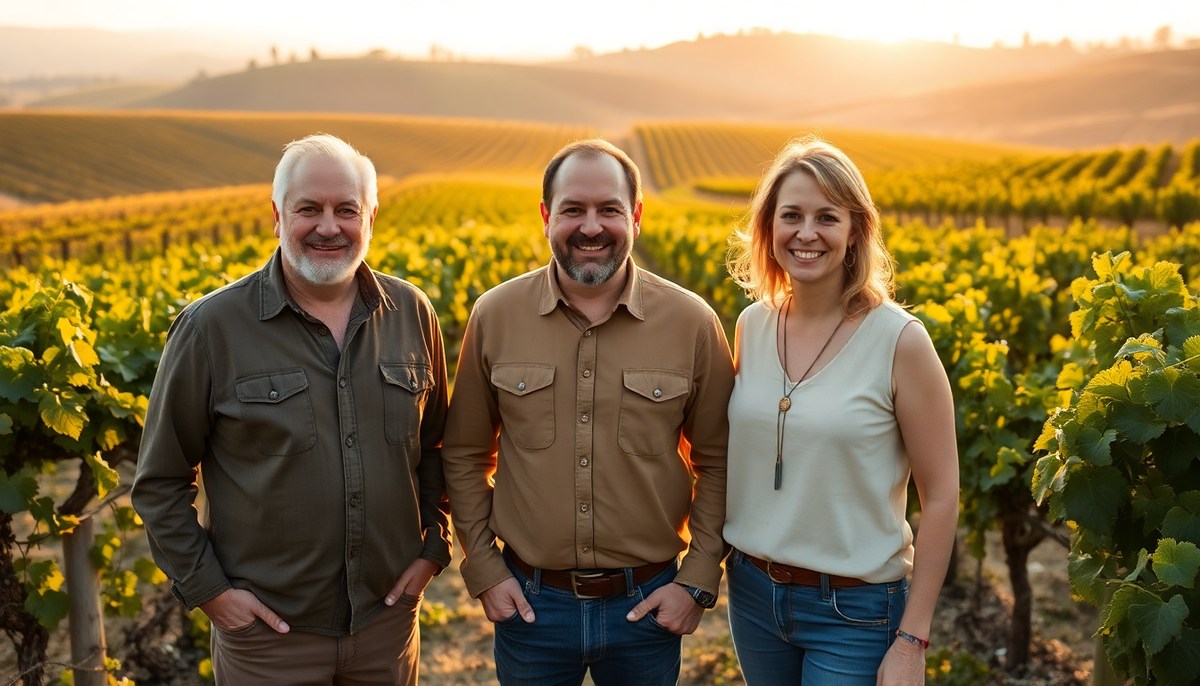
The world of winemaking is often shrouded in mystery and romance, conjuring images of sprawling vineyards bathed in golden sunlight, ancient oak barrels aging precious vintages, and generations of family tradition passed down through time. Yet behind every bottle of exceptional wine stands a story—a narrative of passion, dedication, and countless hours of meticulous work. At Curtis Family Vineyards, this story is brought to life through the remarkable journey of three individuals whose combined expertise, vision, and love for the craft have shaped one of the region's most respected wine producers. This is the story of Mark, Tom, and Jenna Curtis, three winemakers whose commitment to excellence has transformed their family vineyard into a beacon of quality and innovation in the wine industry.
The Curtis family's journey into winemaking wasn't born from a sudden epiphany or a chance encounter with a bottle of fine wine. Rather, it evolved organically over decades, rooted in the family's deep connection to the land and a genuine desire to create something meaningful and lasting. Today, as we explore the lives and work of Mark, Tom, and Jenna, we'll discover how their individual talents, perspectives, and experiences have converged to create a winemaking operation that honors tradition while embracing innovation. Their story is one of resilience, learning, and an unwavering commitment to producing wines that reflect the unique character of their terroir and the values that define the Curtis family.
The Foundation: Understanding Curtis Family Vineyards
Before we delve into the individual stories of Mark, Tom, and Jenna, it's essential to understand the context in which they work. Curtis Family Vineyards represents more than just a business venture; it's a manifestation of a family's values, dreams, and commitment to excellence. The vineyard spans several hundred acres of carefully managed land, featuring diverse microclimates and soil compositions that allow for the cultivation of a wide variety of grape varieties.
The vineyard's location is particularly significant. Situated in a region known for its ideal growing conditions, Curtis Family Vineyards benefits from the perfect balance of warm days and cool nights, adequate rainfall, and well-draining soils. These natural advantages, combined with the family's meticulous management practices, create an environment where grapes can reach optimal ripeness while maintaining the acidity and complexity that characterize truly exceptional wines.
The operation itself is a blend of traditional winemaking techniques and modern technology. The Curtis family has invested in state-of-the-art equipment and facilities while maintaining respect for time-honored practices that have proven their worth over centuries. This balanced approach allows them to produce wines that are both technically excellent and deeply expressive of their origin.
Mark Curtis: The Visionary Leader
Mark Curtis stands as the patriarch of the modern Curtis Family Vineyards operation. His journey into winemaking began not in the vineyards themselves, but in the corporate world, where he spent nearly two decades in business management and strategic planning. This background, while seemingly distant from winemaking, would prove invaluable in shaping the vineyard's growth and success.
Mark's initial interest in wine came during his corporate years, when he began collecting wines as a hobby. What started as a casual interest quickly evolved into a passionate pursuit of understanding wine's complexities, its history, and the craftsmanship involved in its creation. He attended wine tastings, took courses in viticulture and enology, and spent countless hours reading about winemaking traditions from around the world. This self-directed education laid the groundwork for what would become a complete career change.
The turning point came when Mark inherited a portion of family land that had been used for various agricultural purposes over the years. Rather than viewing this as simply another asset, Mark saw an opportunity to pursue his passion for winemaking on a meaningful scale. He spent the first year conducting extensive soil analysis, studying climate patterns, and researching which grape varieties would thrive in the specific conditions of his land. This methodical approach, influenced by his business background, set the tone for how Curtis Family Vineyards would operate.
Mark's vision for the vineyard extended beyond simply producing good wine. He wanted to create a destination, a place where people could experience wine in its full context—understanding not just the product, but the philosophy, the land, and the people behind it. This vision led to the development of the vineyard's tasting room, educational programs, and events that have become central to the Curtis Family Vineyards experience.
As the operational leader, Mark oversees the business aspects of the vineyard, including vineyard management, production planning, and marketing strategy. His background in business management has been crucial in scaling the operation while maintaining quality standards. He's implemented systems and processes that ensure consistency across vintages and allow the vineyard to grow without losing the personal touch that defines the Curtis family brand.
Mark's leadership style is characterized by a deep respect for expertise and a willingness to delegate to those with specialized knowledge. He recognized early on that successful winemaking requires collaboration among individuals with different skill sets and perspectives. This recognition led him to build a team that includes his brother Tom and his daughter Jenna, each bringing their own unique talents to the operation.
Tom Curtis: The Technical Master
If Mark represents the visionary and business mind of Curtis Family Vineyards, Tom Curtis embodies the technical expertise and hands-on dedication that transforms grapes into exceptional wine. Tom's path to winemaking was more direct than his brother's, rooted in a lifelong fascination with agriculture and fermentation science.
Growing up, Tom spent his summers working in the family's agricultural operations, developing an intimate understanding of how plants grow, how soil composition affects plant health, and how environmental factors influence crop outcomes. This early exposure to agriculture provided a foundation that would later inform his approach to viticulture. However, it was a college course in fermentation science that truly ignited Tom's passion for winemaking specifically.
Tom pursued formal education in enology, earning a degree in wine science from a respected university program. His studies covered everything from the chemistry of fermentation to the microbiology of yeast strains, from the physics of barrel aging to the sensory evaluation of wine. This formal training, combined with his practical agricultural background, made Tom uniquely qualified to manage the technical aspects of winemaking.
In his role at Curtis Family Vineyards, Tom oversees all aspects of wine production, from harvest planning through bottling. His responsibilities include deciding when grapes are ready for harvest—a decision that requires assessing sugar levels, acidity, and phenolic ripeness—and managing the fermentation process to ensure optimal flavor development. Tom works closely with the vineyard team to monitor vine health throughout the growing season, making decisions about pruning, canopy management, and irrigation that directly impact grape quality.
One of Tom's most significant contributions to Curtis Family Vineyards has been his development of sustainable viticulture practices. Recognizing that the long-term health of the vineyard depends on maintaining soil health and ecological balance, Tom has implemented practices that reduce the need for chemical inputs while improving the overall resilience of the vineyard. These practices include cover cropping, integrated pest management, and careful water management—all designed to work with nature rather than against it.
Tom's approach to winemaking is characterized by a deep respect for the grapes and a desire to let their natural qualities shine through. While he's not opposed to using modern techniques and technology, he believes that the winemaker's role is to guide and facilitate rather than to dominate or mask the inherent character of the fruit. This philosophy is evident in the wines produced at Curtis Family Vineyards, which are known for their balance, complexity, and clear expression of terroir.
Beyond his technical work, Tom is also deeply involved in the educational mission of Curtis Family Vineyards. He leads vineyard tours, conducts tastings, and shares his knowledge with visitors and aspiring winemakers. His ability to explain complex winemaking concepts in accessible terms has made him a beloved figure among the vineyard's customers and has helped establish Curtis Family Vineyards as not just a producer of fine wine, but also as an educational resource.
Jenna Curtis: The Innovative Voice
Jenna Curtis represents the next generation of Curtis family winemakers, bringing fresh perspectives and innovative ideas to the operation. As Mark's daughter and Tom's niece, Jenna grew up surrounded by wine and winemaking, but her path to joining the family business was her own unique journey.
Jenna initially pursued a different career path, studying business and marketing in college with the intention of working in the technology sector. However, during her college years, she became increasingly interested in wine and began to see the potential for innovation in how wineries communicate with and engage their customers. She took courses in wine studies, interned at several wineries, and gradually came to realize that her true passion lay in the wine industry.
What sets Jenna apart is her perspective as someone who came to winemaking as an adult, rather than growing up immersed in it. This outsider's perspective has proven invaluable in helping Curtis Family Vineyards evolve and reach new audiences. She recognized early on that while the vineyard produced exceptional wine, many people didn't know about it, and those who did often found it difficult to understand the nuances of what made Curtis wines special.
Jenna's role at Curtis Family Vineyards encompasses marketing, brand development, and customer engagement. She's been instrumental in developing the vineyard's digital presence, creating engaging content that tells the story of the vineyard and its wines. Through social media, a redesigned website, and innovative marketing campaigns, Jenna has helped Curtis Family Vineyards reach a much broader audience while maintaining the authenticity and integrity that define the brand.
Beyond marketing, Jenna has also become involved in the winemaking process itself. She's studied enology and works closely with Tom on various aspects of production, particularly in areas where innovation and experimentation can lead to new and exciting wines. She's championed the development of new wine styles, including some experimental blends and single-varietal wines that showcase the diversity of the vineyard's fruit.
One of Jenna's most significant contributions has been her work in developing the vineyard's wine club and direct-to-consumer sales strategy. Recognizing that many wine enthusiasts prefer to purchase directly from producers, Jenna created a wine club program that offers members exclusive access to limited-production wines, special events, and educational content. This program has not only increased revenue but has also created a community of loyal customers who feel personally connected to the Curtis family and their mission.
Jenna is also deeply committed to sustainability and social responsibility, values that she's helped integrate throughout the Curtis Family Vineyards operation. She's worked to ensure that the vineyard's practices are environmentally sound, that workers are treated fairly and paid well, and that the vineyard contributes positively to the local community. These values resonate strongly with many modern wine consumers, and Jenna's commitment to them has helped position Curtis Family Vineyards as a leader in sustainable winemaking.
The Collaborative Process: How Mark, Tom, and Jenna Work Together
While each of the three winemakers brings distinct talents and perspectives to Curtis Family Vineyards, the true strength of the operation lies in how effectively they collaborate. Their working relationship is built on mutual respect, clear communication, and a shared commitment to excellence.
The collaborative process begins with harvest planning. Months before the grapes are ready to pick, Mark, Tom, and Jenna meet to discuss the upcoming vintage. They review weather forecasts, assess vine health, and plan the logistics of harvest. Tom provides technical input on grape ripeness and fermentation planning, Mark ensures that the business side is organized and that resources are allocated appropriately, and Jenna considers how the vintage will be marketed and what story it will tell.
As harvest approaches, the collaboration intensifies. Tom works with the vineyard team to monitor grape ripeness daily, making the crucial decision about when to harvest each block of grapes. Mark ensures that the harvest logistics run smoothly, coordinating equipment, labor, and scheduling. Jenna documents the process, capturing images and stories that will later be shared with customers and wine enthusiasts.
During fermentation and aging, Tom takes the lead in managing the technical aspects, but he regularly consults with Mark and Jenna about decisions that will affect the final product. For example, when deciding how long to age a wine in oak barrels, Tom considers the technical implications for flavor development, Mark considers the business implications for cash flow and inventory management, and Jenna considers how the aging decision will affect the wine's positioning and appeal to customers.
The tasting and blending process is perhaps the most collaborative aspect of their work. When wines are ready to be evaluated, the three of them taste together, discussing the characteristics of each wine and how different wines might be blended to create the final product. These tastings are not always harmonious—they sometimes disagree about which wines should be blended together or how long a wine should age—but they've developed a process for working through these disagreements respectfully and arriving at decisions that reflect the best thinking of all three.
This collaborative approach extends beyond the winemaking process itself. When Curtis Family Vineyards faces challenges—whether it's a difficult vintage, a market downturn, or operational issues—the three of them work together to find solutions. Mark's business acumen, Tom's technical knowledge, and Jenna's innovative thinking combine to create a problem-solving approach that's more effective than any one of them could achieve alone.
The Vineyard's Philosophy and Approach
At the heart of Curtis Family Vineyards lies a clear philosophy about what wine should be and how it should be made. This philosophy, developed collaboratively by Mark, Tom, and Jenna, guides every decision made at the vineyard.
First and foremost, Curtis Family Vineyards is committed to producing wines that authentically express their terroir—the unique combination of soil, climate, and geography that defines a particular place. Rather than trying to make wines that conform to a particular style or appeal to a broad market, the Curtis family focuses on understanding what their land naturally produces and then crafting wines that showcase those natural characteristics.
This commitment to terroir expression requires a deep understanding of the vineyard's microclimates and soil types. Tom has spent years mapping the vineyard, identifying areas with different soil compositions, aspect, and elevation. This detailed knowledge allows the team to make informed decisions about which grape varieties to plant in which locations and how to manage each block of vines to optimize fruit quality.
The philosophy also emphasizes quality over quantity. Rather than maximizing grape production, Curtis Family Vineyards practices careful canopy management and selective harvesting to ensure that only the highest-quality fruit makes it into the wine. This approach means lower yields per acre, but it results in wines with greater concentration, complexity, and aging potential.
Sustainability is another core element of the vineyard's philosophy. The Curtis family believes that they have a responsibility to steward the land for future generations. This commitment manifests in numerous ways, from the use of organic and biodynamic practices to the protection of native vegetation and wildlife habitat. Tom has been particularly instrumental in developing these practices, but the commitment comes from all three winemakers.
Finally, Curtis Family Vineyards is committed to transparency and education. The family believes that wine is meant to be enjoyed and understood, not mystified or treated as an exclusive luxury good. They welcome visitors to the vineyard, conduct educational tastings, and share information about their winemaking process openly. This commitment to education has made Curtis Family Vineyards a destination for wine enthusiasts who want to deepen their understanding of wine and winemaking.
The Wines of Curtis Family Vineyards
The philosophy and approach of Curtis Family Vineyards are reflected in the wines they produce. The vineyard's portfolio includes several flagship wines, each representing a different aspect of the vineyard's character and the winemakers' vision.
The flagship red wine is a Cabernet Sauvignon that showcases the depth and complexity that the vineyard's terroir can produce. Made from grapes grown in the vineyard's warmest blocks, this wine is aged in French oak for 18 months, developing rich flavors of dark fruit, spice, and earth. The wine is structured and age-worthy, capable of developing additional complexity over 10-15 years in the bottle.
The vineyard also produces an exceptional Pinot Noir from a cooler block of the property. This wine is lighter in body than the Cabernet but equally complex, with elegant flavors of red fruit, herbs, and minerals. The Pinot Noir represents Tom's philosophy of allowing the grapes to express their natural character, with minimal intervention in the winemaking process.
A white wine program includes both a Chardonnay and a Sauvignon Blanc. The Chardonnay is aged in oak and develops rich, creamy flavors while maintaining good acidity and minerality. The Sauvignon Blanc is unoaked, allowing the bright, herbaceous character of the grape to shine through. Both wines are excellent examples of how Curtis Family Vineyards' commitment to quality and terroir expression applies across different wine styles.
In recent years, Jenna has championed the development of several experimental wines that push the boundaries of what Curtis Family Vineyards produces. These include a skin-contact white wine with unusual texture and complexity, a natural wine made with minimal intervention, and a rosé that showcases the versatility of the vineyard's fruit. While these experimental wines represent a small portion of the vineyard's production, they demonstrate the family's willingness to innovate and explore new possibilities.
Challenges and Triumphs: The Curtis Family's Journey
Like any winemaking operation, Curtis Family Vineyards has faced significant challenges over the years. Understanding how Mark, Tom, and Jenna have navigated these challenges provides insight into their character and their commitment to the vineyard's mission.
One of the earliest challenges came during the vineyard's first few vintages, when the team was still learning how to work together and how to manage the specific

Leave a comment
This site is protected by hCaptcha and the hCaptcha Privacy Policy and Terms of Service apply.