

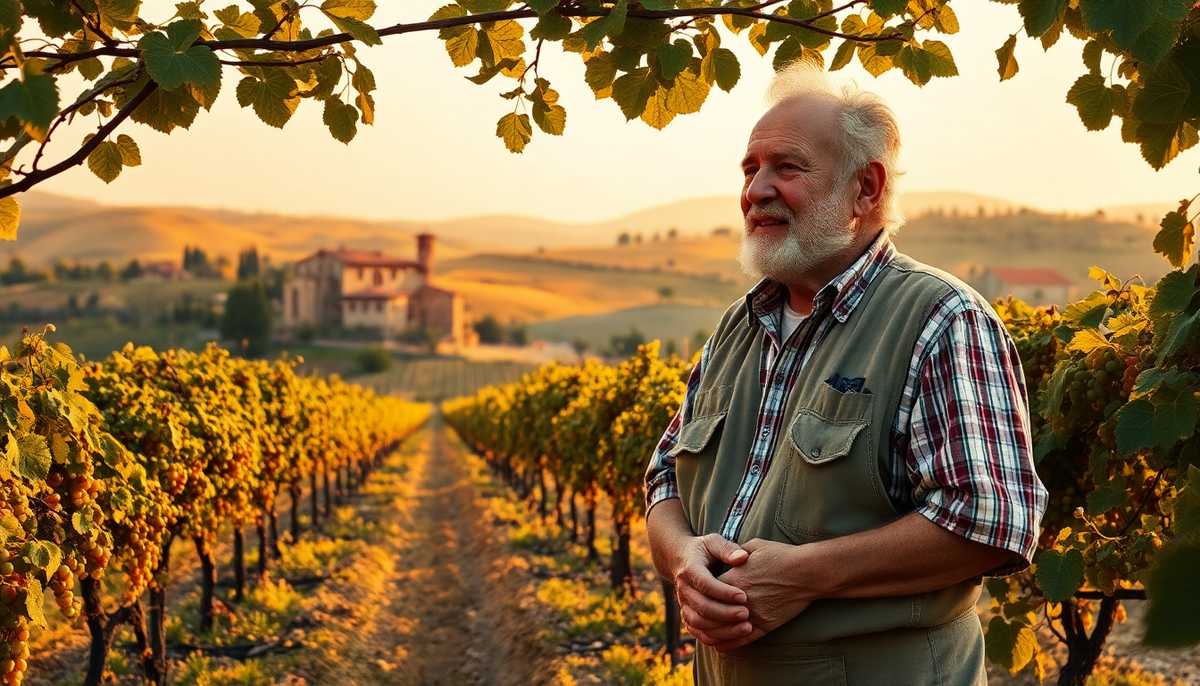
At Curtis Family Vineyards, we believe that wine is more than just a beverage—it's a story, a legacy, and a connection to the past. Our Italian heritage runs deep through every bottle we produce, influencing not only the wines we create but also the values and philosophies that guide our entire operation. This blog post explores how our family's Italian roots have shaped our winemaking practices, our vineyard management techniques, and ultimately, the exceptional quality of wines that bear the Curtis name.
The Foundation of Our Heritage
The Curtis family's connection to winemaking begins not in the vineyards where we work today, but in the rolling hills of Italy, where generations of our ancestors cultivated grapes and produced wine. This heritage is not merely a historical footnote in our family story—it is the very foundation upon which Curtis Family Vineyards was built. When our family decided to establish vineyards in our current location, we brought with us centuries of accumulated knowledge, time-tested techniques, and an unwavering commitment to quality that defines Italian winemaking tradition.
Italian winemaking is characterized by a deep respect for the land, an understanding of terroir, and a commitment to sustainable practices that have been refined over centuries. These principles were instilled in our family long before we ever planted our first vine in our current location. Our ancestors understood that great wine cannot be rushed, that shortcuts compromise quality, and that the relationship between the winemaker and the vineyard is sacred. These lessons have been passed down through generations, and they remain at the heart of everything we do at Curtis Family Vineyards.
Understanding Terroir: The Italian Way
One of the most fundamental concepts in Italian winemaking is the notion of terroir—the idea that the characteristics of a wine are deeply influenced by the geographical and environmental conditions in which the grapes are grown. This concept goes far beyond simply understanding soil composition or climate patterns. True terroir encompasses the entire ecosystem of a vineyard: the mineral content of the soil, the angle of the sun's rays, the patterns of wind and rain, the microorganisms that live in the earth, and even the cultural practices of the people who tend the vines.
Our Italian heritage taught us to approach terroir with reverence and scientific precision. Rather than viewing our vineyards as blank canvases upon which we could impose our will, we see them as living entities with their own character and personality. Before we plant a single vine, we spend months—sometimes years—studying the land. We analyze soil samples, observe weather patterns across seasons, and consult with local experts who understand the unique characteristics of our region.
This approach to terroir is distinctly Italian. In regions like Tuscany, Piedmont, and Veneto, winemakers have spent centuries learning to work with their specific terroir rather than against it. They understand that a wine produced in one vineyard will taste different from a wine produced in another vineyard just a few kilometers away, even if the same grape varieties are used and the same winemaking techniques are applied. This is the magic of terroir, and it is something we have embraced wholeheartedly at Curtis Family Vineyards.
Traditional Grape Varieties and Our Selection
Italian winemaking is inextricably linked to specific grape varieties that have been cultivated in Italy for centuries. Varieties like Nebbiolo, Barbera, Sangiovese, Montepulciano, Pinot Grigio, and Vermentino are not simply grapes—they are cultural icons, each with its own history, its own region of origin, and its own unique characteristics. When we decided which grape varieties to plant in our vineyards, we drew heavily on our Italian heritage and our family's experience with these classic varieties.
The decision to plant specific grape varieties is not made lightly in Italian winemaking tradition. Each variety has particular requirements in terms of soil composition, climate conditions, and cultivation techniques. Nebbiolo, for example, requires a long growing season and specific soil conditions to develop its characteristic complexity and aging potential. Sangiovese thrives in warm, well-drained soils and has been the foundation of Tuscan winemaking for centuries. By selecting grape varieties that align with both our heritage and our terroir, we ensure that our wines have authenticity and a genuine connection to Italian winemaking tradition.
At Curtis Family Vineyards, we have carefully selected grape varieties that not only reflect our Italian heritage but also thrive in our specific growing conditions. This selection process involved consulting with viticulturists, studying historical records of our family's winemaking practices, and conducting extensive trials to determine which varieties would produce the highest quality wines in our vineyards. The result is a portfolio of wines that honors our heritage while also reflecting the unique characteristics of our land.
Sustainable Vineyard Management: Learning from the Past
Italian winemaking tradition emphasizes sustainable practices that have been refined over centuries. Long before sustainability became a modern buzzword, Italian winemakers were practicing techniques that minimized environmental impact and maintained the health of their vineyards for future generations. These practices were born out of necessity—in a region where wine production has been central to the economy for thousands of years, it was essential to develop methods that could be sustained indefinitely.
Our Italian heritage has taught us that sustainable vineyard management is not a burden or an additional cost—it is simply the right way to farm. At Curtis Family Vineyards, we employ many traditional Italian techniques that have proven their worth over centuries. We practice minimal intervention in the vineyard, allowing the vines to develop naturally while providing careful guidance and support. We use cover crops to improve soil health and prevent erosion. We employ integrated pest management techniques that minimize the use of chemical pesticides and fungicides. We practice careful canopy management to ensure that grapes receive adequate sunlight while maintaining the health of the vine.
These practices reflect the Italian understanding that the vineyard is not separate from the broader ecosystem but is an integral part of it. By working with nature rather than against it, we create wines that are not only of exceptional quality but also produced in a way that respects the land and ensures its viability for future generations. This philosophy is deeply embedded in our family's Italian heritage and continues to guide our vineyard management practices today.
The Art of Winemaking: Techniques Passed Down Through Generations
Italian winemaking is as much an art as it is a science, and this artistic sensibility has been passed down through generations of our family. The techniques used to transform grapes into wine are not simply mechanical processes to be optimized for efficiency. Rather, they are carefully considered decisions that reflect the winemaker's understanding of the grapes, the vintage conditions, and the desired final product.
One of the most important techniques we have inherited from our Italian heritage is the practice of careful fermentation management. In Italian winemaking tradition, fermentation is not rushed. Instead, winemakers allow fermentation to proceed at its own pace, carefully monitoring temperature and other conditions to ensure that the process develops the desired flavors and characteristics. This approach contrasts sharply with some modern winemaking practices that prioritize speed and efficiency. At Curtis Family Vineyards, we follow the Italian tradition of patient, careful fermentation management.
Another key technique we have inherited is the practice of extended maceration—allowing the grape skins to remain in contact with the juice for extended periods to extract color, tannins, and flavor compounds. This technique is particularly important in the production of red wines and is a hallmark of Italian winemaking, particularly in regions like Tuscany and Piedmont. By allowing adequate time for maceration, we ensure that our red wines develop the complexity and depth of flavor that characterizes the finest Italian wines.
The use of oak in winemaking is another area where our Italian heritage profoundly influences our practices. Italian winemakers have a long tradition of using oak to age and develop wines, but they approach this practice with great subtlety. Rather than using heavily toasted oak that dominates the wine's flavor profile, Italian winemakers typically prefer more neutral oak that allows the characteristics of the grape and terroir to shine through. At Curtis Family Vineyards, we carefully select oak for aging our wines, considering factors such as the origin of the oak, the level of toasting, and the size and age of the barrel. This thoughtful approach to oak usage reflects our commitment to honoring Italian winemaking tradition.
The Importance of Family and Community
Italian culture places tremendous emphasis on family and community, and these values are deeply reflected in how we operate Curtis Family Vineyards. In Italy, winemaking has traditionally been a family affair, with knowledge and techniques passed down from generation to generation. The vineyard is not simply a business—it is a family legacy, a source of pride, and a connection to ancestors and to the land itself.
At Curtis Family Vineyards, we have maintained this family-centered approach to winemaking. Multiple generations of our family are involved in the operation of the vineyard, from vineyard management to winemaking to sales and marketing. This multi-generational involvement ensures that our Italian heritage and values are continuously reinforced and passed on to younger family members. It also means that decisions about the vineyard are made with a long-term perspective, considering not just the current vintage but the legacy we are building for future generations.
Beyond our immediate family, we have also cultivated strong relationships with our local community. In Italian winemaking regions, the vineyard is not an isolated entity but is deeply embedded in the broader community. Local workers, suppliers, and other businesses are all part of the ecosystem that supports winemaking. We have tried to replicate this sense of community at Curtis Family Vineyards. We employ local workers, source materials from local suppliers whenever possible, and actively participate in community events and initiatives. This approach reflects our Italian heritage and our belief that a vineyard should be a positive force in its community.
Seasonal Rhythms and the Agricultural Calendar
Italian winemaking is intimately connected to the seasons and the agricultural calendar. The rhythm of the vineyard—budbreak in spring, flowering in early summer, veraison in late summer, and harvest in fall—shapes the entire year and dictates the activities and concerns of the winemaker. This seasonal rhythm is not simply a practical matter but is deeply embedded in Italian culture and tradition.
At Curtis Family Vineyards, we have embraced this seasonal rhythm as a fundamental aspect of our operation. We plan our activities around the natural cycles of the vineyard rather than imposing an artificial schedule. Spring is a time of careful observation as we monitor budbreak and assess the health of the vines. Early summer brings the work of canopy management and pest monitoring. Late summer is a time of anticipation as we watch the grapes develop and mature. Fall is dominated by the harvest, a time of intense activity and careful decision-making about when to pick each block of grapes.
This seasonal approach to vineyard management reflects our Italian heritage and our understanding that wine is fundamentally a product of nature. While modern technology allows us to exert greater control over vineyard conditions, we believe that working with the natural rhythms of the seasons, rather than against them, produces superior wines. This philosophy is evident in every aspect of our operation, from our pruning practices to our harvest decisions to our winemaking techniques.
The Role of Food and Wine in Italian Culture
In Italian culture, wine is not consumed in isolation but is an integral part of the dining experience. Wine is meant to be enjoyed with food, and the pairing of wine and food is considered an art form. This cultural understanding has profoundly influenced how we think about our wines at Curtis Family Vineyards. We do not produce wines designed to impress in a tasting room or to score highly with critics. Rather, we produce wines designed to be enjoyed with food, wines that enhance the dining experience and bring people together around the table.
This philosophy influences many of our winemaking decisions. We tend to favor wines with good acidity and moderate alcohol levels—characteristics that make wines food-friendly and versatile with a wide range of dishes. We avoid excessive extraction or overly ripe fruit flavors that can overwhelm food pairings. We focus on developing complexity and balance rather than power and intensity. These choices reflect our Italian heritage and our understanding of wine's role in culture and society.
At Curtis Family Vineyards, we also recognize that wine is a vehicle for hospitality and connection. In Italian tradition, sharing wine with guests is a fundamental expression of welcome and respect. We have tried to embody this spirit in our tasting room and in our interactions with customers. We view every bottle of Curtis Family Vineyards wine as an invitation to sit down, share a meal, and connect with others. This approach to wine and hospitality is deeply rooted in our Italian heritage.
Quality Over Quantity: The Italian Philosophy
One of the most important lessons our Italian heritage has taught us is the principle of quality over quantity. In Italy, winemakers have traditionally focused on producing the finest possible wines rather than maximizing production volume. This philosophy reflects a deep respect for the craft of winemaking and an understanding that great wine cannot be mass-produced.
At Curtis Family Vineyards, we have embraced this philosophy wholeheartedly. We limit our production to ensure that we can maintain the highest standards of quality. We carefully manage yields in the vineyard, sometimes removing fruit to ensure that the remaining grapes develop optimal flavor and character. We are selective in our winemaking decisions, sometimes deciding not to produce a particular wine if we feel that the vintage conditions do not allow us to achieve our quality standards. We age our wines for appropriate periods before release, refusing to rush them to market before they are ready.
This commitment to quality over quantity sometimes means that our wines are more expensive than some alternatives. However, we believe that this is a fair trade-off. Our customers are not simply purchasing wine—they are purchasing the result of generations of accumulated knowledge, careful stewardship of the land, and an unwavering commitment to excellence. This is the Italian way, and it is the way of Curtis Family Vineyards.
Innovation Within Tradition
While our Italian heritage emphasizes tradition and time-tested practices, it is important to understand that Italian winemaking has never been static or resistant to innovation. Throughout history, Italian winemakers have adopted new technologies and techniques when they could improve quality or efficiency without compromising core values. This balance between honoring tradition and embracing innovation is a hallmark of Italian winemaking culture.
At Curtis Family Vineyards, we have tried to strike this same balance. We employ modern laboratory techniques to monitor fermentation and ensure optimal conditions. We use precision viticulture tools to better understand our vineyard conditions and make more informed management decisions. We have invested in modern winemaking equipment that allows us to implement our techniques more effectively. However, we are always careful to ensure that these innovations serve our core mission of producing exceptional wines that honor our Italian heritage. We do not adopt new technologies simply because they are new or trendy. Rather, we carefully evaluate whether they will help us achieve our goals while remaining true to our values.
This approach to innovation reflects the Italian understanding that tradition and progress are not mutually exclusive. The greatest Italian wines are produced by winemakers who respect tradition while remaining open to new ideas and technologies. At Curtis Family Vineyards, we strive to embody this philosophy in everything we do.
The Language of Wine: Italian Terminology and Concepts
The language of wine is deeply rooted in Italian terminology and concepts. Many of the terms we use to describe wines and winemaking practices come directly from Italian. Terms like terroir, maceration, malolactic fermentation, and tannins are all concepts that were developed and refined in Italian winemaking regions. Even the structure of wine classifications and quality designations in many parts of the world reflects Italian models, such as the Denominazione di Origine Controllata (DOC) system that originated in Italy.
At Curtis Family Vineyards, we use this Italian terminology not simply as a matter of convention but as a way of honoring the heritage and traditions from which these concepts emerged. When we talk about the terroir of our vineyard, we are invoking centuries of Italian winemaking wisdom. When we discuss malolactic fermentation, we are referencing techniques that have been refined in Italian cellars for generations. This language connects us to a broader tradition of winemaking excellence and reminds us of the heritage we are privileged to carry forward.
Aging and the Development of Complexity
Italian winemaking tradition places great emphasis on the aging potential of wines and the development of complexity over time. Many of the greatest Italian wines are designed to age for decades, developing increasingly complex flavors and aromas as they mature. This philosophy reflects an understanding that wine is not a static product but a living thing that continues to evolve and develop long after it leaves the winery.
At Curtis Family Vineyards, we have embraced this philosophy of aging and complexity development. We produce wines designed to age gracefully, developing greater complexity and refinement with time. We carefully select oak and other aging vessels to support this development. We monitor our wines as they age, ensuring that they are developing as intended. We provide guidance to our customers about optimal drinking windows and storage conditions to ensure that they can experience our wines at their best.
This commitment to aging potential reflects our Italian heritage and our understanding that great wine is not meant to be consumed immediately but is meant to be savored and appreciated over many years. It also reflects our long-term perspective on winemaking—we are not simply trying to produce wines that taste good today but wines that will bring joy and pleasure to our customers for decades to come.
The Connection to Place and History
One of the most profound aspects of our Italian heritage is the deep connection between wine and place. In Italy, wine is inextricably linked to specific regions and locations. The wines of Barolo come from the Barolo region, the wines of Chianti come from Tuscany, the wines of Prosecco come from the Veneto region. This connection to place is not simply a matter of marketing or branding—it reflects a genuine belief that wine is an expression of its terroir and that understanding the history and character of a place is essential to understanding its wines.
At Curtis Family


Leave a comment
This site is protected by hCaptcha and the hCaptcha Privacy Policy and Terms of Service apply.