

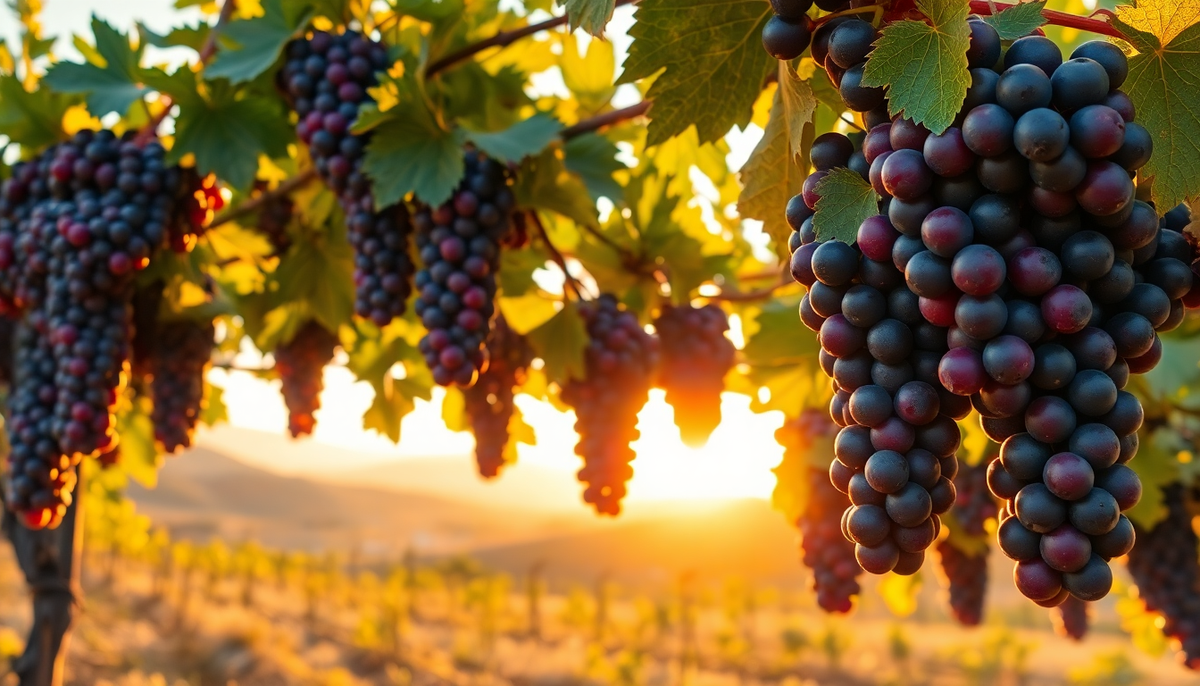
When you reach for a glass of wine at Curtis Family Vineyards, there's a good chance you're enjoying something special. If that wine happens to be a GSM blend—a combination of Grenache, Syrah, and Mourvèdre—then you're experiencing one of the wine world's most captivating partnerships. But have you ever stopped to wonder about the star of this show? Grenache, the grape that often takes center stage in these beloved blends, has a story that's as rich and complex as the wine itself.
Grenache is more than just a component in a popular wine blend. It's a grape variety with centuries of history, a global presence, and the ability to produce wines of remarkable depth and character. From the sun-drenched vineyards of Spain to the rolling hills of France's Rhône Valley, Grenache has established itself as one of the world's most important red wine grapes. Yet despite its prominence, many wine enthusiasts remain somewhat mystified by this varietal. What makes Grenache so special? How does it contribute to the GSM blend? And why should you care about understanding this particular grape?
This comprehensive guide will take you on a journey through the world of Grenache. We'll explore its origins, examine its characteristics, understand how it's cultivated, and discover why it's become such an integral part of modern winemaking. Whether you're a seasoned wine collector or someone just beginning to explore the world of fine wines, understanding Grenache will deepen your appreciation for the wines you love.
The Historical Journey of Grenache
Origins and Early History
Grenache's story begins in Spain, where it's known as Garnacha. The grape likely originated in the Aragon region of northeastern Spain, though some wine historians suggest it may have roots in the broader Mediterranean region. What we know for certain is that Grenache has been cultivated in Spain for centuries, becoming deeply embedded in the Spanish wine tradition.
The grape's journey from Spain to other parts of the world is a fascinating tale of trade, conquest, and cultural exchange. During the medieval period, as Spanish influence expanded throughout the Mediterranean, Grenache traveled with traders and settlers. By the 14th century, the grape had made its way to southern France, particularly to the Rhône Valley and Provence regions. The French adopted the grape enthusiastically, and it became known as Grenache in French-speaking regions.
The expansion of Grenache didn't stop in France. As European powers established colonies and trading posts around the world, Grenache traveled to North Africa, the Middle East, and eventually to the New World. Spanish conquistadors and missionaries brought the grape to the Americas, where it found homes in Mexico, California, and South America. By the 19th century, Grenache had become a truly global grape, cultivated on multiple continents.
The Phylloxera Crisis and Grenache's Resilience
The late 19th century brought a devastating crisis to European vineyards. Phylloxera, a tiny insect native to North America, was accidentally introduced to European vineyards and wreaked havoc on the continent's wine production. Millions of vines were destroyed, and the wine industry faced an existential threat.
Grenache proved to be one of the more resilient varieties during this crisis. While many classic European grape varieties were devastated, Grenache's hardy nature and ability to adapt to various conditions made it a valuable resource for replanting efforts. This resilience contributed to Grenache's increased prominence in the post-phylloxera era. Winemakers who were replanting their vineyards often chose Grenache because of its proven ability to survive and thrive in challenging conditions.
The phylloxera crisis ultimately led to the widespread use of American rootstocks, onto which European vines were grafted. Grenache adapted well to this new approach, and its cultivation continued to expand. This period marked a turning point in Grenache's history, establishing it as not just a traditional Spanish grape, but a truly international variety.
Understanding Grenache's Characteristics
Flavor Profile and Tasting Notes
One of the most distinctive aspects of Grenache is its flavor profile. Unlike some red wine grapes that are known for their bold, aggressive tannins, Grenache tends to be more approachable and fruit-forward. This characteristic makes it particularly appealing to a wide range of wine drinkers.
Grenache wines typically display bright red fruit flavors, with notes of strawberry, raspberry, and red cherry being particularly common. These primary fruit flavors are often complemented by secondary characteristics that develop during fermentation and aging. You might encounter hints of white pepper, licorice, or even floral notes like rose petals in a well-made Grenache wine.
The exact flavor profile of a Grenache wine depends on numerous factors, including the climate where the grapes were grown, the soil composition, the winemaking techniques employed, and the age of the wine. A young Grenache from a cooler climate might emphasize bright acidity and fresh red fruit flavors, while an older Grenache from a warmer region might display more concentrated fruit, earthiness, and developed complexity.
One of Grenache's most appealing characteristics is its versatility. The grape can produce light, refreshing wines that are perfect for casual drinking, as well as complex, age-worthy wines that can develop beautifully over decades. This range of expression is one reason why Grenache has become so popular among winemakers and wine lovers alike.
Tannin Structure and Acidity
Grenache is known for having relatively soft tannins compared to other red wine varieties. This is an important characteristic that influences how the wine tastes and how it ages. Soft tannins make Grenache wines more approachable when young, as they don't create that drying sensation in the mouth that can be off-putting to some wine drinkers.
However, this doesn't mean that Grenache wines lack structure. The tannins present in Grenache are often fine and elegant, providing a framework that supports the wine's fruit flavors without overwhelming them. In blended wines like GSM, Grenache's soft tannins work beautifully with the more structured tannins of Syrah and Mourvèdre, creating a balanced and harmonious final product.
Acidity in Grenache wines is typically moderate. This moderate acidity contributes to the wine's approachability and food-friendliness. It's high enough to provide freshness and prevent the wine from tasting flabby or overly ripe, but not so high that it creates an overly tart or sharp sensation. This balance is one of the reasons why Grenache pairs so well with a wide variety of foods.
Alcohol Content
Grenache is a grape that tends to produce wines with higher alcohol content compared to some other varieties. This is because Grenache grapes accumulate sugar as they ripen, and yeast converts this sugar into alcohol during fermentation. In warm climates, where Grenache thrives, the grapes can become very ripe, leading to wines with alcohol levels that often exceed 14 percent.
This higher alcohol content is not necessarily a drawback. When balanced with the wine's other characteristics—its fruit flavors, acidity, and tannin structure—the alcohol can add warmth and richness to the wine. However, winemakers must be careful to harvest at the right moment to ensure that the alcohol level is balanced with the other components of the wine.
Grenache Around the World
Spain: The Homeland
Spain remains the largest producer of Grenache in the world, and the grape continues to play a crucial role in Spanish winemaking. In Spain, Grenache is known as Garnacha, and it's deeply woven into the fabric of Spanish wine culture.
In the Aragon region, where Grenache likely originated, the grape is still widely cultivated. The Campo de Borja and Calatayud regions are known for producing excellent Garnacha wines that showcase the grape's ability to thrive in continental climates. These Spanish Grenaches often display concentrated fruit flavors and a distinctive mineral quality that reflects the region's unique terroir.
The Priorat region in Catalonia is another important area for Grenache production in Spain. Priorat wines are known for their intensity and complexity, with old-vine Grenaches from this region commanding high prices and critical acclaim. The steep, terraced vineyards of Priorat, combined with the region's slate-rich soil, create conditions that allow Grenache to express itself in particularly compelling ways.
In Rioja, Spain's most famous wine region, Grenache (Garnacha) plays a supporting role to Tempranillo but is still an important component in many blends. Some producers in Rioja have begun to focus more on Grenache, recognizing its potential to produce distinctive wines that reflect the region's character.
France: The Rhône Valley and Beyond
France, particularly the Rhône Valley, is where Grenache truly flourished after arriving from Spain. The warm, sunny climate of the southern Rhône Valley proved ideal for this heat-loving grape, and it became the dominant variety in many of the region's most famous wines.
Châteauneuf-du-Pape, one of the world's most prestigious wine regions, is built on a foundation of Grenache. The appellation allows up to 13 different grape varieties, but Grenache is the star, often comprising 70 to 80 percent of the final blend. The distinctive pebble-strewn vineyards of Châteauneuf-du-Pape, which absorb and radiate heat, create perfect conditions for Grenache to reach optimal ripeness.
Grenache-based wines from Châteauneuf-du-Pape are known for their power, complexity, and aging potential. These wines often display concentrated dark fruit flavors, along with notes of herbs, spices, and sometimes even leather or tobacco. The best examples can age for 20 years or more, developing increasingly complex secondary flavors as they mature.
Gigondas, another important Rhône Valley appellation, also relies heavily on Grenache. Wines from Gigondas tend to be slightly lighter and more elegant than those from Châteauneuf-du-Pape, but they still showcase Grenache's ability to produce wines of considerable depth and character.
In Provence, Grenache is a key component in many rosé wines. The region's warm climate and limestone-rich soils create conditions that allow Grenache to produce pale, delicate rosés with surprising complexity and aging potential. These Provençal rosés have become increasingly popular in recent years, introducing many wine drinkers to Grenache's versatility.
California and the New World
Grenache arrived in California with Spanish missionaries in the 18th century, but for much of the 20th century, it remained somewhat overlooked in favor of more prestigious varieties like Cabernet Sauvignon and Pinot Noir. However, in recent decades, California winemakers have rediscovered Grenache, recognizing its potential to produce distinctive wines that reflect the state's diverse terroirs.
The Central Coast of California, particularly regions like Paso Robles and Santa Barbara County, has emerged as an important area for Grenache production. The warm, dry climate of these regions is ideal for Grenache, and winemakers have found that old-vine Grenache from these areas can produce wines of remarkable quality and character.
In Australia, Grenache has also found a home, particularly in the Barossa Valley and McLaren Vale regions. Australian Grenaches tend to be riper and more fruit-forward than their European counterparts, reflecting the warm climate and winemaking style of the region. These wines have gained considerable popularity in recent years, offering a different expression of Grenache than what you might find in France or Spain.
South Africa, Argentina, and other wine-producing regions around the world also cultivate Grenache, each bringing their own unique perspective to the grape. This global presence demonstrates Grenache's adaptability and its appeal to winemakers in diverse climates and cultures.
The GSM Blend: A Perfect Partnership
The Origins of GSM
The GSM blend—a combination of Grenache, Syrah, and Mourvèdre—originated in the Rhône Valley of France, where these three grapes have been grown together for centuries. However, the modern concept of GSM as a distinct style of wine is largely a creation of the late 20th century, particularly in Australia.
In the 1980s and 1990s, Australian winemakers began to focus on blending these three Rhône varieties, creating wines that showcased the unique characteristics of each grape while creating a harmonious whole. This approach was revolutionary at the time, as many wine producers were focused on single-varietal wines or traditional European blends.
The GSM blend quickly gained popularity, not just in Australia but around the world. Winemakers in California, South Africa, and other regions began to experiment with their own versions of GSM, recognizing the potential of this combination to create wines of exceptional quality and balance.
How Grenache Contributes to GSM
In a GSM blend, Grenache typically plays the role of the primary fruit provider and the wine's approachable foundation. The soft tannins and bright red fruit flavors of Grenache make up the bulk of the blend, often comprising 40 to 60 percent of the final wine.
Syrah, which typically comprises 20 to 40 percent of a GSM blend, contributes darker fruit flavors, more structured tannins, and often peppery or spicy notes. Syrah adds complexity and aging potential to the blend, providing a counterpoint to Grenache's approachability.
Mourvèdre, usually the smallest component at 10 to 20 percent, adds earthiness, structure, and sometimes meaty or leathery notes. This grape also contributes additional tannins and can help the wine age gracefully.
Together, these three grapes create a wine that is greater than the sum of its parts. Grenache provides the foundation and approachability, Syrah adds complexity and structure, and Mourvèdre contributes depth and aging potential. The result is a wine that is both immediately enjoyable and capable of developing beautifully over time.
The Appeal of GSM Blends
GSM blends have become increasingly popular among wine drinkers for several reasons. First, they offer excellent value. By blending three varieties, winemakers can create complex, interesting wines at price points that are often more accessible than single-varietal wines from prestigious regions.
Second, GSM blends are remarkably food-friendly. The balance of fruit, tannin, and acidity in a well-made GSM makes it suitable for pairing with a wide variety of foods. Whether you're enjoying grilled meats, Mediterranean cuisine, or even vegetarian dishes, a GSM blend can complement your meal beautifully.
Third, GSM blends showcase the versatility of Grenache. By seeing how Grenache interacts with Syrah and Mourvèdre, wine drinkers can develop a deeper understanding of this important grape and its characteristics.
Cultivating Grenache: From Vineyard to Bottle
Climate and Terroir Requirements
Grenache is a heat-loving grape that thrives in warm, sunny climates. The grape requires long growing seasons to reach optimal ripeness, and it performs best in regions with hot summers and mild winters. This preference for warmth is one reason why Grenache is so prevalent in Mediterranean wine regions.
However, Grenache is also remarkably adaptable. While it prefers warm climates, it can produce excellent wines in cooler regions as well. In cooler areas, Grenache tends to produce wines with higher acidity and more elegant, restrained fruit flavors. In warmer regions, the grape produces riper, more concentrated wines with higher alcohol levels.
Soil composition also plays an important role in Grenache cultivation. The grape performs well in a variety of soil types, from sandy soils to rocky, mineral-rich soils. In fact, Grenache's ability to thrive in poor, rocky soils is one of its great strengths. Many of the world's best Grenache vineyards are located in areas with challenging soil conditions that would be unsuitable for other varieties.
Viticulture Practices
Grenache vines are vigorous growers, and managing this vigor is one of the key challenges in Grenache cultivation. Excessive vigor can lead to overly leafy vines that shade the fruit, reducing ripeness and concentration. Experienced Grenache growers use various techniques to manage vine vigor, including careful pruning, canopy management, and sometimes even stress-inducing practices like limiting water availability.
Old-vine Grenache is particularly prized by winemakers. As Grenache vines age, their vigor naturally decreases, and they produce smaller crops of more concentrated fruit. Vines that are 50, 75, or even 100 years old can produce exceptional fruit that results in wines of remarkable depth and complexity. Many of the world's finest Grenache wines come from old-vine vineyards.
Grenache is also relatively disease-resistant, which is another advantage for growers. The grape is less susceptible to many of the fungal diseases that plague other varieties, making it a relatively low-maintenance crop from a disease management perspective.
Harvest and Ripeness Decisions
Determining the optimal harvest time for Grenache is crucial for winemakers. Because Grenache tends to produce high-alcohol wines, winemakers must carefully monitor sugar levels and decide when to

Leave a comment
This site is protected by hCaptcha and the hCaptcha Privacy Policy and Terms of Service apply.