

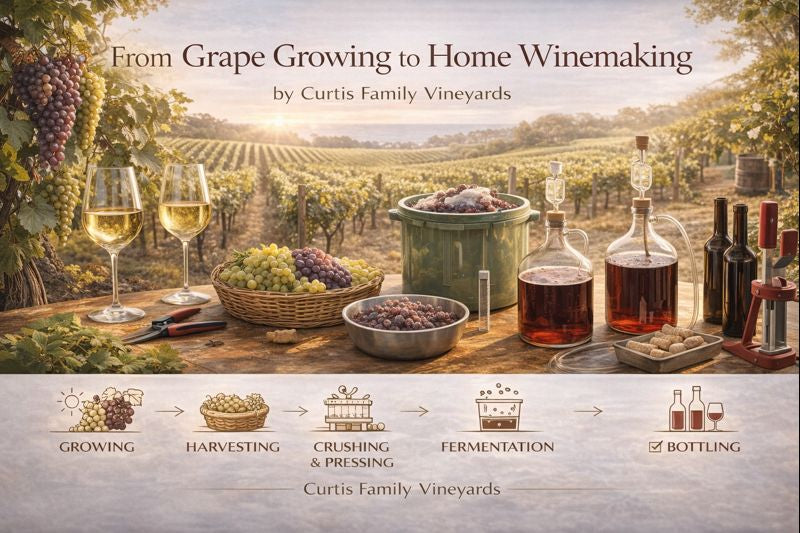
Embarking on the journey from grape growing to home winemaking can be a rewarding endeavour, allowing you to experience the full lifecycle of wine production. Whether you're an aspiring vintner or a seasoned grape grower, creating your own wine can offer unparalleled fulfilment. In this blog post, we'll explore key steps to successfully transition from cultivating grapes to crafting delightful wines at home.
Understand Your Grapes
The first critical step in home winemaking is a deep understanding of your grapes. Different grape varieties have unique characteristics and require specific approaches in the winemaking process. For instance, the nuances of Grenache can be expertly highlighted in wines like our Heritage Grenache, which showcases the rich, fruitful essence of this varietal.
Invest in Essential Equipment
Proper equipment is essential to transform your grapes into quality wine. Essential tools include fermenters, carboys, airlocks, and bottles. Sterilisation is critical, so ensure you have the necessary cleaning solutions and brushes to ensure hygiene. While some equipment may require an initial investment, quality gear will significantly influence the consistency and quality of your wine.
Develop Your Winemaking Skills
Winemaking is both an art and a science. Familiarise yourself with various fermentation and ageing techniques. Experience with different blends can also broaden your understanding and skill set. Consider experimenting with varietals that complement one another, such as Grenache, Shiraz, and Mourvedre, which are harmoniously blended in our Cavaliere Grenache Shiraz Mourvedre.
Embrace Experimentation
One of the joys of home winemaking is the ability to experiment and personalise your creations. Don’t hesitate to try new fermentation methods, yeast types, or blending techniques. By documenting your process and results, you can refine your methods over time.
Age to Perfection
Patience is a virtue in winemaking. Ageing your wine properly can enhance its flavours and depth. Make use of oak barrels or oak chips to incorporate complex flavour profiles, such as the rich, bold notes found in the Cavaliere Shiraz.
Indulge and Share
Once your wine reaches its ideal maturity, indulge in tasting sessions with family and friends. Sharing your creation can be one of the most gratifying aspects of winemaking. It’s an opportunity to receive feedback and enjoy the fruits of your labour in good company.
By following these steps, you can create outstanding wines that reflect both your passion and personal taste. For more inspiration and guidance on crafting your own wine journey, visit Curtis Family Vineyards.
Happy winemaking!
Note: This blog post provides a helpful guide to transition into home winemaking, incorporating products from Curtis Family Vineyards that align with the content.
