

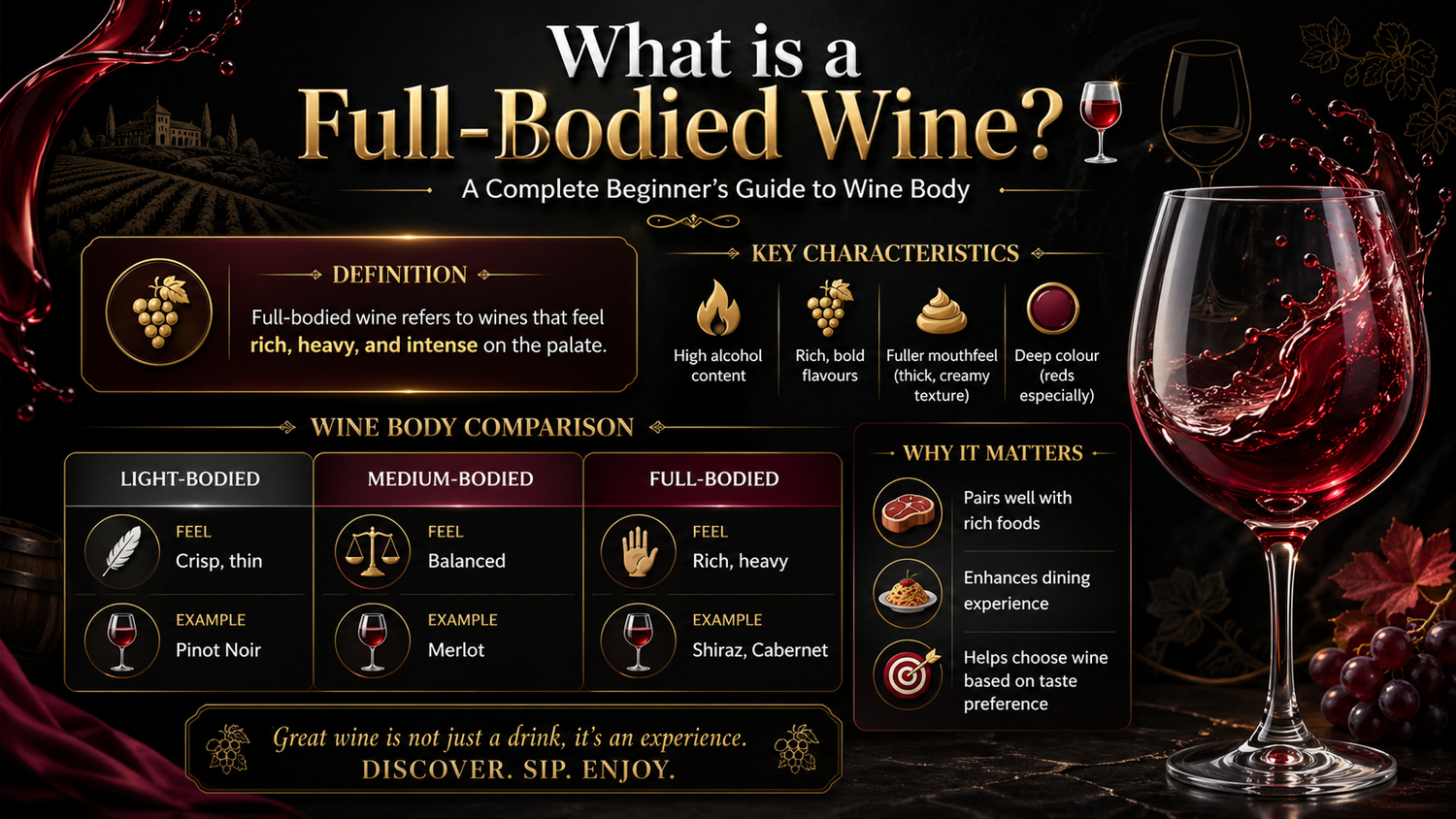
When you're browsing the wine section at Curtis Family Vineyards or any wine shop, you've likely encountered the term "full-bodied wine" on labels, tasting notes, or in conversations with wine enthusiasts. But what exactly does this term mean, and why does it matter when selecting a wine? Understanding wine body is one of the fundamental aspects of wine appreciation that can significantly enhance your tasting experience and help you make better choices based on your personal preferences.
Wine body refers to the weight, texture, and overall mouthfeel of a wine as you drink it. It's a sensory characteristic that goes beyond just the flavor profile and encompasses how the wine feels in your mouth. Full-bodied wines are those that create a heavier, more substantial sensation on your palate, often leaving a lingering impression that can last well after you've swallowed. This comprehensive guide will explore everything you need to know about full-bodied wines, from what creates this characteristic to how to identify and enjoy them.
Understanding Wine Body: The Basics

Wine body is one of the most important characteristics to understand when learning about wine. It's often described using terms like light, medium, or full-bodied, and these descriptors help wine drinkers quickly understand what to expect from a particular wine. The body of a wine is determined by several factors, including alcohol content, tannins, glycerin, and the concentration of flavor compounds.
When you take a sip of wine, you're not just tasting the flavors; you're also experiencing the physical sensation of the liquid in your mouth. A light-bodied wine might feel almost watery or delicate, while a full-bodied wine feels rich, thick, and substantial. Think of it like comparing skim milk to whole milk or cream. The difference in texture and weight is immediately noticeable and significantly affects your overall experience.
What Creates Wine Body?

Several components work together to create the body of a wine. The primary factor is alcohol content. Wines with higher alcohol levels tend to feel heavier and more full-bodied because alcohol itself has weight and texture. When grapes are riper, they contain more sugar, which ferments into alcohol, resulting in a higher alcohol percentage and a fuller-bodied wine.
Tannins also play a crucial role in creating the sensation of body. Tannins are compounds found primarily in grape skins, seeds, and stems, and they create a drying sensation in your mouth. Red wines typically have more tannins than white wines, which is one reason why many full-bodied wines are red. The tannins create a gripping sensation that contributes to the overall perception of body and weight.
Glycerin is another important component. This natural byproduct of fermentation adds sweetness and viscosity to wine, making it feel smoother and more full-bodied. Wines with higher glycerin content will coat your mouth and create a more substantial mouthfeel. Additionally, the concentration of flavor compounds, including acids and other dissolved solids, contributes to how full-bodied a wine feels.
The Alcohol Content Connection

Alcohol content is perhaps the most straightforward factor in determining wine body. Wines with alcohol levels below 12.5% are typically considered light-bodied, wines between 12.5% and 13.5% are medium-bodied, and wines above 13.5% are generally considered full-bodied. However, this is not an absolute rule, as other factors can influence the perception of body.
At Curtis Family Vineyards and other quality wine producers, you'll notice that full-bodied wines often come from Mclaren Vale regions with warm climates where grapes can fully ripen and develop higher sugar content. The warmer the growing season, the riper the grapes become, and the more sugar they accumulate. This sugar ferments into alcohol, creating wines with higher alcohol percentages and fuller bodies.
The relationship between alcohol and body is so strong that many wine drinkers use alcohol content as a quick indicator of whether a wine will be full-bodied. However, it's important to remember that alcohol is just one piece of the puzzle. A wine with 14% alcohol might still feel lighter than expected if it has low tannin content and high acidity, while a wine with 13% alcohol might feel fuller if it has rich tannins and lower acidity.
Tannins and Their Role in Full-Bodied Wines

Tannins are perhaps the most misunderstood aspect of wine body, yet they're incredibly important in creating the sensation of fullness. These compounds are naturally present in grape skins, seeds, and stems, and they're also found in oak barrels used for aging wine. When you drink a full-bodied red wine and experience a drying sensation in your mouth, you're experiencing tannins.
The tannin content in a wine is largely determined by the grape variety and how long the wine's juice remains in contact with the grape skins during fermentation. Red wines, which ferment with their skins, typically have much higher tannin content than white wines, which are usually separated from their skins early in the fermentation process. This is why most full-bodied wines are red wines.
Different grape varieties naturally contain different levels of tannins. Legion Cabernet Sauvignon or Heritage Cabernet Sauvignon, for example, is known for its high tannin content and is a classic full-bodied wine. Syrah, Malbec, and Nebbiolo are other grape varieties that produce naturally tannic, full-bodied wines. These wines often require aging to allow the tannins to soften and integrate with the other components of the wine.
The way tannins contribute to body is unique. They don't add sweetness or flavor in the traditional sense; instead, they create a physical sensation. Tannins bind to proteins in your saliva, causing your mouth to feel dry and creating a gripping sensation. This astringency is a key characteristic of full-bodied wines and is often described as part of the wine's structure.
Glycerin and Viscosity

Glycerin is a natural alcohol produced during fermentation, and it plays an important role in creating the mouthfeel of full-bodied wines. Unlike ethanol, which is the primary alcohol in wine, glycerin is sweet and viscous, adding body and texture to the wine. Wines with higher glycerin content will feel smoother, rounder, and more substantial in your mouth.
The amount of glycerin in a wine depends on several factors, including the yeast strain used during fermentation, the fermentation temperature, and the ripeness of the grapes. Riper grapes tend to produce wines with higher glycerin content, which is another reason why full-bodied wines often come from warm climates where grapes can fully ripen.
When you swirl a glass of full-bodied wine, you might notice that the wine clings to the sides of the glass, leaving visible trails called legs or tears. These are created by the higher viscosity of the wine, which is partly due to glycerin content. While the presence of legs doesn't necessarily indicate quality, it is a visual indicator of the wine's body and alcohol content.
Flavour Concentration and Extraction

The concentration of flavors in a wine also contributes to its perceived body. Full-bodied wines typically have intense, concentrated flavors that create a more substantial impression on your palate. This concentration comes from the quality and ripeness of the grapes used to make the wine.
When grapes are fully ripe, they contain higher concentrations of sugars, acids, and flavor compounds. These concentrated flavors, combined with higher alcohol content and tannins, create the full-bodied sensation. Winemakers at Curtis Family Vineyards and other quality producers carefully manage their vineyards to ensure optimal ripeness, which is crucial for creating full-bodied wines with complex, concentrated flavors.
The extraction process during winemaking also affects flavor concentration. For red wines, the longer the juice remains in contact with the grape skins, the more tannins and color compounds are extracted. This extended contact can create a fuller-bodied wine with more intense flavors and deeper color.
Classic Full-Bodied Red Wine Varieties

Several grape varieties are renowned for producing full-bodied wines. Understanding these varieties can help you navigate wine selections and find wines that match your preferences.
Cabernet Sauvignon
Cabernet Sauvignon is perhaps the most famous full-bodied red wine variety. Known for its high tannin content and deep color, Cabernet Sauvignon produces wines with rich, complex flavors often featuring notes of blackcurrant, plum, and cedar. These wines are typically aged in oak, which adds vanilla and spice notes while allowing the tannins to soften over time. Cabernet Sauvignon wines from warm regions tend to be fuller-bodied than those from cooler climates.
Syrah
Syrah, also known as Shiraz in Australia, is another classic full-bodied red wine variety. These wines are known for their peppery spice, dark fruit flavors, and substantial tannin structure. Syrah wines often have a slightly higher alcohol content and can develop complex flavors with aging. The variety thrives in warm climates and produces some of the world's most impressive full-bodied wines.
Malbec
Malbec has gained significant popularity in recent years, particularly from Argentina where it thrives in the warm climate of Mendoza. These wines are deeply colored, full-bodied, and feature flavors of dark plum, blackberry, and spice. Malbec wines typically have good acidity to balance their fullness, making them food-friendly and approachable despite their substantial body.
Nebbiolo
Nebbiolo, the grape behind Barolo and Barbaresco wines from Italy, produces some of the world's most structured and full-bodied wines. These wines are known for their high tannin content, high acidity, and complex flavors. Nebbiolo wines require significant aging to become approachable, but they can develop into magnificent wines with decades of aging potential.
Petit Sirah
Petit Sirah is a lesser-known but impressive full-bodied red wine variety. These wines are deeply colored, intensely flavored, and packed with tannins. Petit Sirah wines often feature flavors of dark berries, pepper, and licorice, and they age well, developing more complexity over time.
Full-Bodied White Wines

While most full-bodied wines are red, several white wine varieties can produce full-bodied wines. These are less common but equally worthy of exploration.
Chardonnay
Chardonnay is the most common full-bodied white wine variety. When aged in oak barrels, Chardonnay develops a richer, fuller body with flavors of butter, vanilla, and toasted nuts. Unoaked Chardonnays tend to be lighter-bodied, but oak-aged versions from regions like Burgundy and California can be quite full-bodied and complex.
Viognier
Viognier is a white wine variety from the Rhône Valley in France that produces full-bodied, aromatic wines. These wines are known for their floral and stone fruit flavors and their rich, textured mouthfeel. Viognier wines often have higher alcohol content, which contributes to their full body.
Marsanne
Marsanne is another Rhône Valley white wine variety that produces full-bodied wines. These wines are known for their rich texture, herbal notes, and ability to age well. Marsanne wines often have lower acidity than other white wines, which contributes to their fuller, rounder mouthfeel.
Grüner Veltliner
While typically lighter-bodied, some Grüner Veltliner wines, particularly those from warmer vintages or older vines, can achieve a fuller body. These Austrian white wines are known for their crisp acidity and mineral character, but fuller examples can have a more substantial mouthfeel.
How to Identify Full-Bodied Wines

Learning to identify full-bodied wines can help you make better selections at the wine shop or when dining out. There are several clues you can look for.
Visual Indicators
The color of a wine can provide clues about its body. Full-bodied red wines typically have deeper, more intense colors, ranging from ruby to garnet to nearly black. The depth of color suggests higher concentration of flavor compounds and tannins. When you swirl the wine in your glass, full-bodied wines often leave visible legs or tears on the sides of the glass, indicating higher viscosity.
Reading Wine Labels
Wine labels often provide information about body, though this isn't always explicitly stated. Looking at the alcohol content can give you a quick indication of body. Wines with alcohol above 13.5% are likely to be full-bodied. Additionally, the grape variety listed on the label can help you predict body. If you see Cabernet Sauvignon, Syrah, or Malbec, you can expect a full-bodied wine.
Tasting Notes
Professional tasting notes often describe wine body. Words like "full," "rich," "structured," "powerful," and "concentrated" indicate full-bodied wines. Conversely, words like "light," "delicate," "crisp," and "refreshing" suggest lighter-bodied wines.
Personal Tasting
The most reliable way to identify full-bodied wines is through personal tasting. When you drink a wine, pay attention to how it feels in your mouth. Does it feel heavy and substantial, or light and delicate? Does it coat your mouth and linger after swallowing? These sensations indicate a full-bodied wine.
The Relationship Between Full-Bodied Wines and Food Pairing

Understanding wine body is crucial for successful food pairing. Full-bodied wines pair best with rich, flavorful foods that can stand up to the wine's intensity and tannin structure.
Red Meat Pairings
Full-bodied red wines are classic pairings with red meat. The tannins in the wine interact with the proteins and fats in the meat, creating a harmonious combination. A Cabernet Sauvignon pairs beautifully with a grilled steak, while a Syrah complements lamb dishes. The richness of the wine matches the richness of the meat, creating a balanced dining experience.
Game and Poultry
Full-bodied wines also pair well with game meats like venison and duck. The intensity of these meats matches the intensity of full-bodied wines. A Malbec or Nebbiolo can be an excellent choice with roasted duck or venison stew.
Cheese Pairings
Full-bodied wines pair wonderfully with aged, hard cheeses. The tannins and acidity in the wine complement the complexity and richness of cheeses like aged Cheddar, Parmesan, or Gruyère. A full-bodied Cabernet Sauvignon and a wedge of aged Cheddar is a classic combination.
Spiced and Flavorful Dishes
Full-bodied wines can handle spiced and flavorful dishes. A Syrah with its peppery notes pairs well with spiced meats and dishes with bold flavors. The wine's intensity won't be overwhelmed by strong flavors in the food.
Avoiding Light Pairings
It's generally best to avoid pairing full-bodied wines with delicate, light foods. A full-bodied Cabernet Sauvignon would overpower a delicate fish or light pasta dish. The wine's intensity would dominate the meal rather than complement it.
The Aging Potential of Full-Bodied Wines
One of the most appealing characteristics of full-bodied wines is their aging potential. Many full-bodied wines improve significantly with age, developing more complexity and allowing their tannins to soften.
Why Full-Bodied Wines Age Well
Full-bodied wines age well because they have the structural components necessary for long-term aging. The tannins, acidity, and alcohol content all act as preservatives, protecting the wine from oxidation. Additionally, the concentration of flavor compounds in full-bodied wines allows them to develop more complexity as they age.
Optimal Aging Conditions
To age full-bodied wines properly, store them in a cool, dark place with a consistent temperature. The ideal temperature is around 45 to 65 degrees Fahrenheit. Keep the bottles on their side so the cork remains moist, which prevents it from drying out and allowing air into the bottle. Avoid exposure to light, which can degrade the wine over time.
Aging Timeline
The aging timeline for full-bodied wines varies depending on the specific wine. Some full-bodied wines, like certain Wine i.e Legion Cabernet Sauvignon and Barolos, can age for 20, 30, or even 50 years. Others might reach their peak after 5 to 10 years. Consulting tasting notes and producer recommendations can help you determine when a particular wine will be at its best.
Drinking Windows
Understanding the drinking window of a full-bodied wine is important. Some wines are approachable when young, while others require years of aging before they become pleasant to drink. A young Nebbiolo might be too tannic and austere to enjoy, but after 10 years of aging, it can develop into a magnificent wine. Conversely, some full-bodied wines reach their peak after just a few years and may decline if aged too long.
