

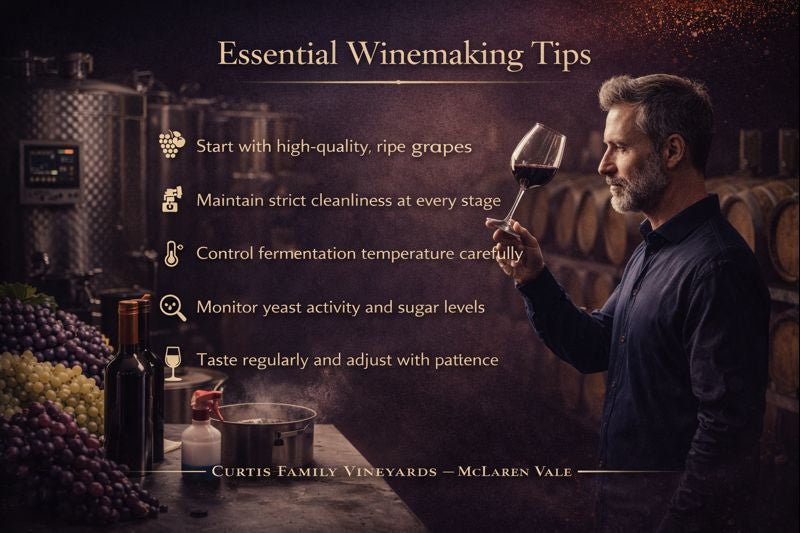
The Foundation: Great Wine Begins in the Vineyard, Not the Cellar
Essential winemaking tips always start in one place — the vineyard. Before barrels, before blending, before fermentation even begins, the real story of a wine is written in the soil, the sunlight, and the fruit itself. If the grapes are exceptional, the winemaker’s role becomes refinement, not rescue.
Why Grape Quality Defines Everything

Think of grapes as the blueprint. No technique can fully fix poor fruit. Research across leading Australian wine regions consistently shows that balanced fruit — with the right sugar, acidity, and tannin structure — produces wines with greater longevity and flavour clarity.
In premium regions like McLaren Vale, growers focus on:
- Low yields for concentration
- Even ripening across the vineyard
- Healthy canopies for natural sun protection
- Careful water management for flavour intensity
When vines are slightly stressed (but not struggling), they produce smaller berries with thicker skins — and that’s where deep colour, structure, and complexity live.
The Power of McLaren Vale Terroir
The secret? Ancient soils and a Mediterranean climate. Warm days build ripeness. Cool coastal breezes preserve freshness.
This natural balance allows grapes to develop:
- Rich dark fruit flavours
- Fine, ripe tannins
- Bright natural acidity
- Depth without heaviness
It’s not luck — it’s location meeting careful vineyard management.
Harvest Timing: The Make-or-Break Moment

One of the most underestimated decisions in winemaking is when to pick.
Pick too early → thin, sharp flavours.
Pick too late → jammy, flat wines.
Experienced growers test for:
- Sugar levels (for alcohol balance)
- Acidity (for freshness)
- Phenolic ripeness (for smooth tannins)
This precise timing is what separates good wine from truly memorable wine.
Winemaking tips for beginners often focus on fermentation or equipment. But seasoned producers know the truth: premium wine begins long before yeast is added.
Great wine isn’t made — it’s grown. And when the vineyard is respected, the cellar simply reveals what nature has already perfected.
Exploring the art of winemaking can be an exhilarating journey for any enthusiast. At Curtis Family Vineyards, we believe that understanding the intricacies of producing quality wine can enhance your appreciation of each bottle you savour. Here are some essential tips to enrich your winemaking journey.
Understanding the Basics
Before delving into the complex world of winemaking, it's important to grasp the basic principles. Winemaking is a combination of both science and art, requiring a balance of technical knowledge and creativity. Key elements include the choice of grapes, fermentation process, and the flavours you wish to cultivate.
Choose Quality Grapes
The foundation of any great wine lies in the grapes. It's crucial to select high-quality grapes, as they will impact the taste and aroma of your final product. For instance, at Curtis Family Vineyards, our Limited Series Grenache is crafted with meticulous selection to ensure a wine that stands apart in flavour and elegance.
Fermentation is where grape juice is transformed into wine. The temperature during fermentation plays a significant role; for reds, a higher temperature is often employed to extract more tannins, providing depth and structure. Experimenting with fermentation can lead to fascinating results.

Fermentation temperature control is one of the most critical decisions a winemaker makes. A few degrees too warm, and delicate fruit aromas can disappear. Too cool, and fermentation may slow or stall.
In regions like McLaren Vale, where ripe fruit intensity is a hallmark, careful temperature management protects freshness while preserving structure.
Experienced winemakers monitor fermentation daily because temperature directly influences:
- Aroma expression – cooler ferments retain vibrant fruit notes
- Texture and mouthfeel – steady heat supports balanced extraction
- Colour stability – especially important in Shiraz and other reds
- Fermentation health – reducing the risk of stuck ferments
Studies in Australian winemaking research consistently show that controlled fermentations lead to more consistent quality and cleaner flavour profiles. Precision here is not optional — it’s essential.
Natural vs cultured yeast is another decision that shapes a wine’s personality.
Wild (natural) yeast can create complexity and unique character, reflecting vineyard identity. However, it can also be unpredictable. Cultured yeast strains offer reliability and allow winemakers to guide specific aroma profiles, such as enhancing dark berry notes or spice.
Many premium producers take a balanced approach:
- Use natural yeast for small-batch complexity
- Introduce selected strains when consistency is critical
- Closely track sugar levels to prevent incomplete fermentation
Avoiding common mistakes comes down to vigilance:
- Sanitise thoroughly to prevent unwanted bacteria
- Monitor sugar drop daily
- Taste frequently — your palate is a powerful tool
Fermentation may look simple — grapes and yeast in a tank — but it’s a living, breathing process. The real craft lies in knowing when to step in, and when to let nature lead.
Oak & Time: The Art of Maturation

Oak aging in wine is where patience turns potential into polish. After fermentation, the wine may be vibrant and expressive — but time in barrel adds depth, texture and quiet complexity. It softens tannins, integrates flavours, and introduces subtle layers like spice, vanilla or roasted notes.
In premium regions such as McLaren Vale, maturation is never rushed. Winemakers taste regularly because timing is everything.
What oak ageing can do:
- Smooth firm tannins
- Add structure and body
- Enhance aroma complexity
- Improve ageing potential
- Create a silkier mouthfeel
French oak vs American oak is more than a technical choice — it’s a stylistic decision.

| French Oak | American Oak |
|---|---|
| Subtle spice and fine grain | Bolder vanilla and coconut notes |
| Elegant structure | Stronger flavour impact |
| Slower flavour release | More immediate influence |
Many producers blend both to achieve balance and depth.
Barrel Strategy & Bottling Timing

Not all wines need the same ageing period:
- Bold reds (like Shiraz) may mature 12–24 months
- Elegant reds may need less time to preserve freshness
- Most whites see minimal or no oak to protect fruit purity
The most crucial decision? Knowing when to bottle. Too early, and the wine feels disjointed. Too late, and fruit vibrancy can fade.
Experienced winemakers rely on structured tasting, tannin development, and balance — not the calendar. Because in the end, great wine isn’t made by the clock. It’s guided by judgement, patience, and craft.
Experiment with Blending
Blending different grape varietals can create a symphony of flavours, balancing the wine’s body, aroma, and taste. Try experimenting with different blends to find a unique profile that suits your palate. If you're inclined towards wines with a robust character, the Cavaliere Cabernet Sauvignon or Octavian Shiraz can serve as an excellent inspiration with its complex layers and depth.
Small Adjustments, Big Impact: Mastering the Details

Crafting balanced wine is rarely about one big decision. It’s about dozens of small, precise adjustments made every single day. During fermentation, winemakers closely monitor sugar levels, temperature, aroma development and tannin extraction. A slight shift can change texture, flavour and overall harmony.
Daily checks often include:
- Measuring sugar drop to track fermentation health
- Tasting for tannin softness or harshness
- Adjusting pump-overs for gentle extraction
- Watching acidity to maintain freshness
Gentle extraction is especially important in bold reds like Small Batch Durif, Terra Rossa Shiraz or Cavaliere Shiraz from McLaren Vale. Too aggressive, and tannins become bitter. Too soft, and structure feels weak. The balance lies in restraint and timing.
How aging improves wine becomes clear when blending decisions begin. Before bottling, different parcels are tasted side by side. One may bring structure, another perfume, another length. Alone, they are good. Together, they can be exceptional.
Professional winemakers taste analytically, asking:
- Is the acidity lifting the fruit?
- Are tannins silky or drying?
- Does the finish linger or fall flat?
Studies across premium Australian wineries show that structured tasting sessions significantly improve final blend quality. It’s not guesswork — it’s trained judgement.
The magic of Mclaren Vale wines often hides in these quiet refinements. Small changes. Careful tasting. Patient decisions. That’s how good wine becomes memorable.
Handling with Care
Each step, from fermentation to bottling, requires careful handling to preserve the wine's integrity. Gentle pressing of grapes and cautious bottling are necessary to avoid introducing any off-flavours.
Maintaining Patience
Winemaking is a process that rewards patience. Allowing the wine to mature over time can enhance its characteristics. Investing time in the ageing process will often yield a more refined and balanced wine.
Incorporating these essential winemaking tips can elevate your journey from an enthusiast to a connoisseur, and allow you to produce wines that not only reflect your personal taste but also offer a homemade luxury. For more insights and to discover exceptional wines, visit Curtis Family Vineyards.
Happy winemaking!
