

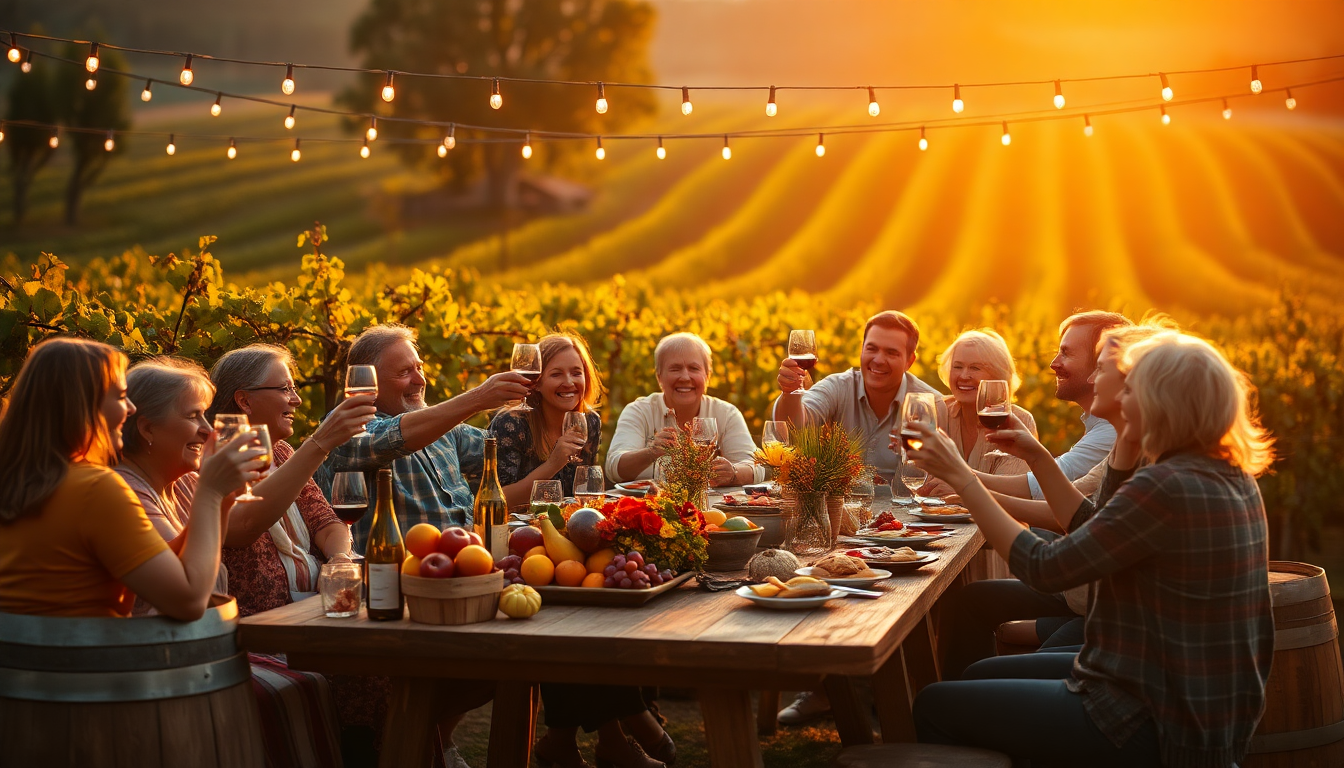
The end of vintage season represents one of the most significant moments in the wine industry. It's a time when vineyards across the world celebrate the culmination of months of hard work, dedication, and careful stewardship of their precious grapevines. At Curtis Family Vineyards, this period holds special meaning, as it marks not just the completion of another harvest cycle, but also a celebration of tradition, family legacy, and the art of winemaking that has been perfected over generations.
The vintage season, which typically runs from late summer through early fall, is the busiest and most critical time for any vineyard. It's when grapes reach their optimal ripeness, when decisions must be made about harvest timing, and when the entire operation shifts into high gear to bring in the fruit before weather conditions change. For Curtis Family Vineyards, this annual ritual is more than just a business operation—it's a deeply personal affair that connects the family to their land, their craft, and their community.
Understanding the Vintage Season
The term "vintage" refers to both the year in which grapes are harvested and the wine produced from those grapes. However, the vintage season itself is the period during which this harvest takes place. Understanding what makes a vintage special requires knowledge of the many factors that influence grape quality and wine production.
The Agricultural Foundation
Curtis Family Vineyards, like all quality wine producers, understands that great wine begins in the vineyard. The vintage season doesn't start when the harvest begins—it actually starts months earlier, during the growing season. From spring budbreak through summer, the vineyard team carefully monitors vine health, manages canopy growth, and ensures that each grape cluster receives the optimal amount of sunlight and air circulation.
The quality of a vintage is determined by numerous environmental factors. Temperature fluctuations, rainfall patterns, humidity levels, and soil conditions all play crucial roles in determining how grapes develop. A warm, dry growing season might produce grapes with higher sugar content and more concentrated flavors, while a cooler season might result in wines with higher acidity and more delicate characteristics.
At Curtis Family Vineyards, the team has developed deep expertise in reading these environmental signals. They understand their specific microclimates, knowing which vineyard blocks tend to ripen earlier or later, which areas might be more susceptible to frost damage, and how to optimize conditions for each varietal they grow. This knowledge, accumulated over years of observation and experience, allows them to make informed decisions about when to harvest each block of grapes.
The Science of Ripeness
Determining when grapes are perfectly ripe is both an art and a science. While modern technology provides precise measurements of sugar content, acidity, and phenolic ripeness, experienced winemakers also rely on sensory evaluation. They taste grapes, assess their color, feel their firmness, and evaluate the overall appearance of the vineyard blocks.
Sugar content, measured in degrees Brix, is one key indicator of ripeness. However, it's not the only factor. Phenolic ripeness—the maturity of the grape's seeds, skins, and stems—is equally important, especially for red wines. Acidity levels also matter significantly, as they contribute to the wine's balance and aging potential.
Curtis Family Vineyards employs both traditional methods and modern technology to assess ripeness. Their team conducts regular sampling throughout the vineyard, testing grapes from different blocks and different positions on the vine. This detailed approach ensures that when harvest decisions are made, they're based on comprehensive data and experienced judgment.
The Harvest Process
Once the decision is made that grapes have reached optimal ripeness, the actual harvest begins. This is where the vintage season truly kicks into high gear at Curtis Family Vineyards.
Timing and Logistics
Harvest timing is critical. Grapes must be picked at precisely the right moment—not too early, when they lack full flavor development, and not too late, when they might become overripe or vulnerable to disease. Weather forecasts become essential reading during this period. A sudden rainstorm can dilute grapes and affect quality, while unexpected heat can push ripeness levels higher than desired.
At Curtis Family Vineyards, the harvest typically involves a combination of hand-picking and mechanical harvesting, depending on the varietal and the specific block being harvested. Hand-picking allows for careful selection of individual grapes and clusters, ensuring that only the best fruit makes it into the winery. This labor-intensive method is particularly important for premium wine production and for grapes destined for their finest wines.
The logistics of harvest are complex. Grapes must be transported quickly from the vineyard to the winery to minimize oxidation and maintain freshness. Temperature control during transport is crucial, as is the timing of processing. At Curtis Family Vineyards, they've invested in equipment and infrastructure that allows them to handle large volumes of grapes efficiently while maintaining the quality standards that define their brand.
The Crush
Once grapes arrive at the winery, they enter the crush process. For white wines, this typically involves pressing the grapes to separate juice from solids. For red wines, the grapes are usually crushed and the juice is left in contact with the skins to extract color, tannins, and flavor compounds.
The crush facility at Curtis Family Vineyards is equipped with modern equipment designed to handle grapes gently and efficiently. Temperature control is maintained throughout the process, as fermentation can begin spontaneously if conditions aren't carefully managed. The team monitors every step, making adjustments as needed to ensure that the winemaking process proceeds according to plan.
Fermentation and Early Winemaking
After the crush, the real transformation begins. Fermentation is the process by which yeast converts the sugars in grape juice into alcohol and carbon dioxide. This is where grape juice becomes wine.
Yeast Selection and Management
Curtis Family Vineyards uses both wild yeasts naturally present on grape skins and cultured yeasts selected for specific characteristics. The choice of yeast can significantly influence the final wine's flavor profile, aroma, and texture. Different yeasts ferment at different temperatures and rates, and they produce different byproducts that contribute to the wine's complexity.
Temperature management during fermentation is critical. Too warm, and fermentation can become uncontrolled, producing off-flavors and potentially killing the yeast. Too cool, and fermentation might stall, leaving residual sugar in the wine. Curtis Family Vineyards maintains careful temperature control in their fermentation facilities, using both passive cooling methods and active temperature management systems.
Monitoring and Adjustment
Throughout fermentation, the winemaking team at Curtis Family Vineyards monitors progress closely. They measure sugar levels, pH, and alcohol content regularly. They assess the development of flavors and aromas, tasting samples to ensure that fermentation is proceeding as expected. If adjustments are needed—perhaps adding nutrients to support yeast health or adjusting temperature—they make these changes promptly.
This hands-on approach to fermentation management is one of the hallmarks of quality winemaking. It requires knowledge, experience, and constant attention to detail. The team at Curtis Family Vineyards brings all of these elements to their work, ensuring that each vintage develops its full potential.
The Celebration of Harvest
As fermentation progresses and the vintage season winds down, Curtis Family Vineyards traditionally celebrates the completion of the harvest. This celebration serves multiple purposes—it acknowledges the hard work of the team, honors the vintage that's been brought in, and strengthens the bonds within the vineyard community.
Harvest Festival Traditions
Many vineyards, including Curtis Family Vineyards, host harvest festivals or celebration events. These gatherings bring together vineyard workers, winemaking staff, family members, and often members of the local community. They're occasions for feasting, sharing stories, and reflecting on the season that's just concluded.
At Curtis Family Vineyards, the harvest celebration typically features food and wine pairings that showcase the vineyard's products. There's often live music, and the atmosphere is one of joy and accomplishment. These events serve as important touchstones in the vineyard's calendar, marking the transition from the intense activity of harvest to the more measured pace of fermentation and aging.
Honoring the Vintage
Each vintage has its own character, shaped by the specific conditions of that growing season. A particularly challenging vintage—one marked by unexpected frost, disease pressure, or weather extremes—might be celebrated for the quality achieved despite difficulties. A particularly favorable vintage might be celebrated for the exceptional fruit quality it produced.
Curtis Family Vineyards takes time to reflect on each vintage's characteristics. The winemaking team discusses what made this year unique, what challenges were overcome, and what opportunities the vintage presented. This reflection helps inform decisions for future vintages and deepens the team's understanding of their vineyard and their craft.
The Science of Wine Aging
Once fermentation is complete and the vintage celebration has concluded, the focus shifts to aging and maturation. This is where wine develops complexity and refinement.
Oak Aging and Barrel Selection
Many of Curtis Family Vineyards' premium wines spend time aging in oak barrels. The choice of oak—French, American, or other origins—influences the wine's flavor development. The age of the barrels matters too; new barrels impart more oak character, while older barrels contribute more subtle influences.
The duration of oak aging varies depending on the wine style and the winemaker's vision. Some wines might spend just a few months in oak, while others might age for two years or more. During this time, the wine undergoes subtle chemical changes. Tannins soften, flavors integrate, and the wine develops the complexity that distinguishes fine wines from simple ones.
Malolactic Fermentation
Many of Curtis Family Vineyards' red wines undergo malolactic fermentation, a secondary fermentation process in which lactic acid bacteria convert malic acid to lactic acid. This process reduces the wine's acidity and adds complexity, contributing flavors that are often described as buttery or creamy.
Malolactic fermentation can occur spontaneously or can be induced by inoculating the wine with specific bacteria. The timing of malolactic fermentation—whether it occurs during or after primary fermentation—affects the wine's development. Curtis Family Vineyards carefully manages this process, ensuring that it contributes positively to the wine's final character.
Blending and Final Adjustments
As wines age, the winemaking team at Curtis Family Vineyards periodically tastes and evaluates them. This ongoing assessment informs decisions about blending, adjustments, and eventual bottling.
The Art of Blending
Many of Curtis Family Vineyards' wines are blends of different grape varieties or different vineyard blocks. Blending allows the winemaker to create wines with greater complexity and balance than any single component could achieve alone. A wine that might be too acidic or too tannic on its own can be balanced by blending with another wine that has complementary characteristics.
Blending decisions are made carefully, often after extensive tasting and evaluation. The winemaking team might experiment with different blend ratios, tasting each combination to determine which creates the most harmonious result. This process requires both technical knowledge and artistic sensibility.
Fining and Clarification
Before bottling, wines typically undergo fining and clarification processes to remove suspended particles and achieve clarity. Curtis Family Vineyards uses various fining agents—substances that bind to particles and cause them to settle out of the wine. These might include egg whites, bentonite clay, or other natural substances.
Some wines might also be filtered to achieve additional clarity. However, excessive filtration can strip wines of desirable flavors and textures, so Curtis Family Vineyards carefully balances the desire for clarity with the goal of preserving wine quality.
Bottling and Release
The final stage of the vintage season is bottling, when the finished wine is transferred from barrels or tanks into bottles for distribution and sale.
Bottling Operations
Bottling is a precise operation that requires careful attention to detail. Bottles must be clean and free of any contamination. The wine must be at the proper temperature and in the proper condition. Corks or closures must be of high quality to ensure proper aging potential.
At Curtis Family Vineyards, bottling is typically done in-house, allowing for complete control over the process. The team monitors every aspect, from the initial filling of bottles to the application of labels and capsules. This hands-on approach ensures that every bottle meets the vineyard's quality standards.
Labeling and Packaging
The label on a wine bottle tells a story. It identifies the vineyard, the vintage year, the grape variety or blend, and often includes additional information about the wine's characteristics or the vineyard's history. For Curtis Family Vineyards, labels are carefully designed to reflect the vineyard's identity and values.
Packaging extends beyond the label. The bottle itself, the closure, and any additional packaging materials all contribute to the overall presentation. Curtis Family Vineyards pays attention to these details, recognizing that the first impression a consumer has of a wine often comes from its packaging.
The Significance of Vintage Variation
One of the most fascinating aspects of wine is that each vintage is unique. This vintage variation is a direct result of the different conditions each growing season presents.
Understanding Vintage Charts
Wine enthusiasts often consult vintage charts, which rate the quality of wines from different years. A particularly favorable vintage might receive high ratings across multiple regions, while a challenging vintage might receive lower ratings. However, these charts are generalizations; individual producers often achieve excellent results even in challenging vintages through skillful winemaking.
Curtis Family Vineyards has produced excellent wines in both highly-rated and more challenging vintages. Their reputation is built on consistent quality, achieved through careful vineyard management, skilled winemaking, and a commitment to excellence that transcends any single vintage's inherent advantages or challenges.
The Collector's Perspective
Wine collectors often seek out particular vintages, recognizing that certain years produced exceptional wines. A great vintage from a respected producer can appreciate in value over time, making it both a pleasure to drink and a sound investment. Curtis Family Vineyards' best vintages are sought after by collectors who recognize the quality and aging potential of their wines.
Community and Culture
The end of vintage season at Curtis Family Vineyards is also a time to reflect on the broader community and culture that surrounds winemaking.
The Vineyard Community
Vineyards are communities unto themselves. The seasonal workers who arrive for harvest, the permanent staff who manage the vineyard year-round, the winemaking team, and the family members who oversee the operation all form a interconnected group. The vintage season intensifies these relationships, as everyone works together toward the common goal of bringing in the harvest and producing excellent wine.
Curtis Family Vineyards recognizes the importance of this community. They invest in their workers, provide good working conditions, and foster a culture of respect and collaboration. The harvest celebration is one way they acknowledge and honor the contributions of everyone involved in the vintage season.
Local and Regional Connections
Vineyards are also embedded in their local communities and regions. Curtis Family Vineyards sources equipment and supplies from local vendors, employs local workers, and participates in regional wine industry organizations. The vintage season brings increased economic activity to the region, as harvest workers spend money locally and visitors come to experience the harvest season.
The vineyard also contributes to the region's wine culture and reputation. As a quality producer, Curtis Family Vineyards helps establish the region as a destination for wine lovers. They participate in regional wine events, collaborate with other producers, and work to elevate the reputation of wines from their area.
Sustainability and Modern Practices
Contemporary vintage seasons at Curtis Family Vineyards incorporate modern sustainability practices alongside traditional winemaking methods.
Environmental Stewardship
Vineyards are agricultural operations that depend on healthy soil, clean water, and a balanced ecosystem. Curtis Family Vineyards has implemented various sustainability practices to minimize their environmental impact. These might include cover cropping to improve soil health, integrated pest management to reduce pesticide use, and water conservation measures to minimize irrigation needs.
The vintage season itself presents opportunities for sustainable practices. Harvest waste—grape stems, seeds, and skins—can be composted or used for other purposes rather than being discarded. Energy-efficient equipment reduces the carbon footprint of the winemaking process. These practices reflect Curtis Family Vineyards' commitment to environmental responsibility.
Social Responsibility
Beyond environmental concerns, Curtis Family Vineyards also considers social responsibility. Fair wages, safe working conditions, and respect for workers are fundamental principles. The vineyard works to ensure that everyone involved in the vintage season is treated fairly and has access to safe, healthy working conditions.
Curtis Family Vineyards also engages with their local community through various initiatives. They might sponsor local events, support charitable organizations, or provide educational opportunities related to wine and agriculture. These efforts reflect a commitment to being a responsible corporate citizen.
The Future of Vintage Seasons
As climate change and other factors reshape the wine industry, the future of vintage seasons is evolving.
Climate Adaptation
Rising temperatures and changing precipitation patterns are affecting grape growing regions worldwide. Some regions are experiencing earlier harvest dates, while others face new challenges from extreme weather events. Curtis Family Vineyards, like other forward-thinking producers, is adapting to these changes.
Adaptation strategies might include planting different grape varieties better suited to warmer conditions, adjusting vineyard management practices to conserve water, or modifying harvest timing to account for earlier ripening. These changes are made carefully, with consideration for how they might affect wine quality and the vineyard's identity.
Technological Innovation
Modern technology continues to offer new tools for vineyard management and winemaking. Precision agriculture techniques using drones and sensors can provide detailed information about vineyard conditions. Advanced fermentation monitoring systems allow for more precise control of the w

Leave a comment
This site is protected by hCaptcha and the hCaptcha Privacy Policy and Terms of Service apply.