

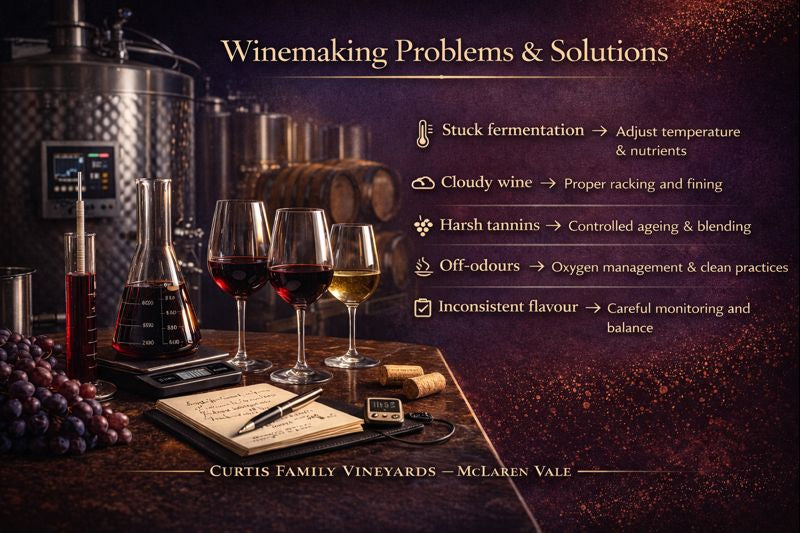
Wine lovers appreciate the delicate art of winemaking, but even seasoned vintners face challenges during the process. At Curtis Family Vineyards, we strive to overcome these hurdles with skill and precision, ensuring that every bottle maintains our hallmark quality. In this blog post, we delve into some common problems winemakers encounter and provide practical solutions to address them.
Preventing Oxidation in Wine

One of the biggest concerns in winemaking is oxidation, which can dull the flavours and aromas of wine. To prevent this, maintaining accurate levels of antioxidants, such as sulphur dioxide, is crucial. Careful monitoring and adjustments can protect wines from unwanted oxidative reactions.
For those eager to explore wines that exhibit refined balance and robust character, we recommend our Ancestor Shiraz. Carefully crafted, it showcases the depth and vibrancy that come with expertly managed winemaking techniques.
When Fermentation Fights Back - Managing Fermentation

Fermentation can be a tricky phase, with temperature control being essential for managing yeast activity. Uncontrolled temperatures can lead to stuck or excessively rapid fermentations, impacting the wine's profile. Utilizing temperature-controlled fermenters or cooling jackets can ensure the process remains steady and consistent.
Our winemakers apply these vital techniques to craft the Martins Vineyard Shiraz, a wine known for its refined structure and complexity. Its creation is a testament to the importance of precision during fermentation.
stuck fermentation and slow fermentation in wine are two of the most frustrating challenges winemakers face—especially when everything seemed perfect just days earlier. One moment the ferment is ticking along, the next it stalls, overheats, or races ahead too fast, putting flavour, aroma, and balance at risk.
For experienced winemakers, fermentation isn’t just chemistry—it’s careful observation and timing. Small signals matter: a sudden drop in activity, unusual aromas, or rising temperatures can all hint that yeast is under stress. Research from Australian wine institutes shows that most fermentation problems link back to temperature swings, low nutrients, or yeast strain mismatch—issues that are fixable when caught early.
How professionals stay in control:
- Monitor temperature daily to avoid yeast shock
- Match yeast strains to grape variety and ripeness
- Feed yeast gently with nutrients when needed
- Adjust airflow and tank size to manage heat build-up
Common Fermentation Problems & Smart Responses

| Issue | What’s Happening | Practical Fix |
|---|---|---|
| Stuck fermentation | Yeast stops before sugars are used | Warm gently, re-inoculate yeast |
| Slow fermentation | Yeast is stressed or underfed | Add nutrients, stabilise temp |
| Runaway fermentation | Too much heat, too fast | Cool tanks, reduce cap activity |
At Curtis Family Vineyards, this hands-on, calm approach helps turn potential setbacks into learning moments—protecting wine quality while shaping a confident personal winemaking style.
Off Aromas, Flat Palates & Faults: Reading the Warning Signs Early

off flavours in wine and wine aroma problems rarely appear overnight—they whisper first. A faint sulphur note, a dull palate, or a strange herbal edge can all be early warning signs that something isn’t quite right. The best winemakers learn to listen early, long before faults become permanent.
Many aroma and flavour issues develop during fermentation, ageing, or poor oxygen management. Australian wine research consistently shows that trained tasting, combined with regular monitoring, is one of the most effective ways to prevent faults before bottling. In other words, your senses are just as important as your tools.
Common causes professionals watch for:
- Yeast stress leading to sulphur or rotten egg aromas
- Oxygen exposure flattening fruit and freshness
- Poor hygiene causing musty or earthy notes
- Imbalanced sulphur levels masking true flavour
Early Warning Signs & Smart Responses
| Warning Sign | What It Means | Action to Take |
|---|---|---|
| Sulphur smell | Yeast under stress | Improve aeration, add nutrients |
| Flat palate | Oxidation or low acidity | Review oxygen control, adjust balance |
| Musty notes | Contamination risk | Check hygiene, isolate batches |
At Curtis Family Vineyards, regular tasting is treated as a skill—not a guess. By training the palate and trusting sensory clues, winemakers protect quality, sharpen their personal style, and ensure every bottle reflects confidence, care, and craftsmanship.
Fixing Acidity, Alcohol & Texture Before It’s Too Late

wine acidity problems and alcohol imbalance in wine are often the quiet line between an okay bottle and a truly memorable one. In warm regions like McLaren Vale, grapes ripen beautifully—but that generosity of sun can push sugar, alcohol, and softness too far if timing and technique aren’t spot on.
Experienced winemakers know balance isn’t fixed at harvest—it’s shaped through a series of smart, early decisions. Research from Australian wine studies shows that even small adjustments during picking, fermentation, and blending can dramatically improve freshness, texture, and drinkability.
Where balance can drift—and how pros respond:
- Low acidity can make wines taste flat → earlier harvest picks or acid adjustments restore lift
- High alcohol can feel hot or heavy → cooler ferments and careful blending soften impact
- Thin texture lacks mouthfeel → lees contact or oak choices build weight and length
Reading Balance Before It’s Locked In
| Issue | How It Shows Up | Smart Fix |
|---|---|---|
| Soft acidity | Dull, short finish | Adjust harvest timing or acid |
| High alcohol | Burning warmth | Blend parcels, manage sugar |
| Weak texture | Watery mouthfeel | Lees work, oak influence |
At Curtis Family Vineyards, mastering balance is about foresight, not rescue. By understanding McLaren Vale’s climate and responding early, winemakers turn potential problems into signature strengths—creating wines that feel polished, confident, and unmistakably premium.
From Vineyard Stress to Winery Solutions: Where Problems Really Begin

grape ripeness issues and harvest timing problems are where most winemaking challenges truly begin—long before grapes ever reach the winery. In a climate like McLaren Vale, heat can push fruit to ripen fast, creating hidden stress that quietly shapes flavour, acidity, and balance. When grapes are picked too early, wines can feel thin and sharp; too late, and alcohol rises while freshness fades.
Seasoned winemakers treat the vineyard as their first control room. Studies from Australian viticulture research consistently show that fruit condition at harvest accounts for the majority of wine quality outcomes—more than any later correction in the cellar.
How vineyard stress turns into winery problems:
- Heat spikes → higher sugar, rising alcohol
- Water stress → uneven ripeness across blocks
- Late harvest → softer acidity, heavier texture
Vineyard Decisions vs Winery Consequences
| Vineyard Factor | What Happens Later | Smart Response |
|---|---|---|
| Over-ripe fruit | High alcohol, low lift | Earlier picking, parcel selection |
| Under-ripe fruit | Green flavours | Targeted harvest timing |
| Heat stress | Flat aromas | Canopy and irrigation control |
At Curtis Family Vineyards, terroir knowledge is power. By reading the vineyard closely and acting early, winemakers prevent problems instead of fixing them—protecting style, quality, and the signature expression of McLaren Vale.
Avoiding Contamination in Wine

Contamination from bacteria or wild yeasts can spoil the entire batch, altering the wine's intended taste and bouquet. Sanitation is paramount; from cleaning equipment to using sterile techniques in the winery, adherence to hygiene protocols is essential for quality production.
The Limited Series Shiraz or Octavian Shiraz Wine benefits from these rigorous standards, resulting in a wine that consistently impresses with its purity and depth of flavour.
Practical Winemaking Solutions That Actually Work

Corrective winemaking techniques and maintaining wine consistency are not about heavy-handed fixes—they’re about calm, confident decisions made at the right moment. The best wineries don’t “rescue” wine; they gently guide it back into balance. Research from Australian wine institutes consistently shows that small, early interventions protect flavour far better than late-stage corrections.
Practical fixes that actually work
- Temperature control: Slowing fermentation preserves aroma and prevents harsh alcohol edges.
- Oxygen management: Careful aeration can soften tannins without stripping freshness.
- Targeted blending: Small parcel blends restore balance while keeping regional character.
- Lees contact: Adds texture and mouthfeel naturally, without additives.
Smart Corrections vs Over-Manipulation
| Issue Detected | Proven Adjustment | Result |
|---|---|---|
| Hard acidity | Lees ageing | Softer, rounder palate |
| Thin mid-palate | Selective blending | Improved depth |
| Rough tannins | Gentle oxygen exposure | Smoother finish |
These proven methods reflect experience, not shortcuts. By correcting with restraint and intent, winemakers refine their personal style while delivering consistent, premium wines that feel authentic—vintage after vintage.
Conclusion
Winemaking is both an art and a science, with a myriad of factors influencing the final product. At Curtis Family Vineyards, our commitment to quality is unwavering, ensuring each bottle represents the finest expression of our efforts. By addressing these common challenges with expertise and careful management, we continue to deliver exceptional wines to our patrons.
Explore our full range of wines at Curtis Family Vineyards and experience the blends that result from our dedication to solving these winemaking challenges.
