

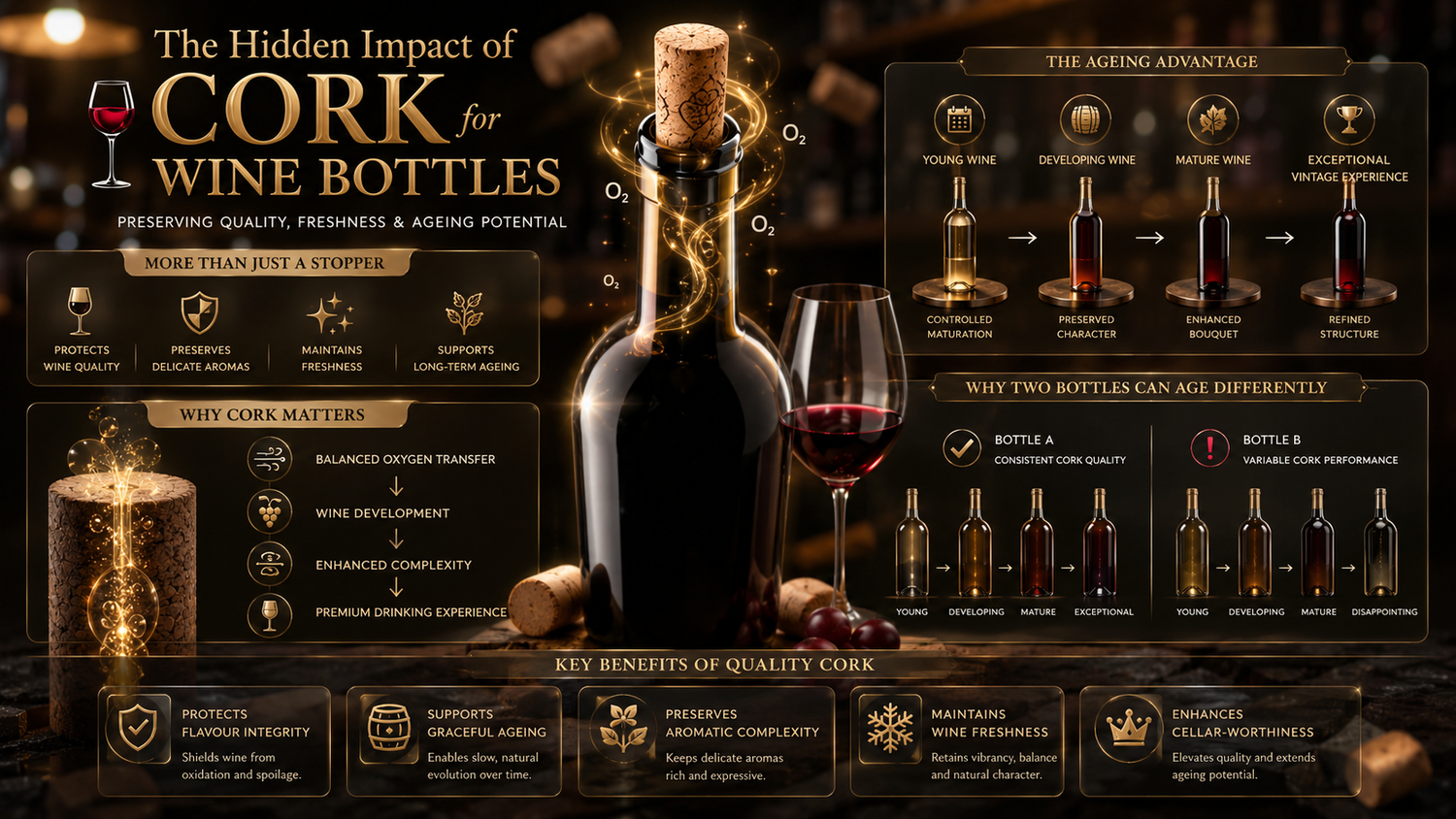
When it comes to selecting the right cork for your wine bottles, it's much more than just a stopper—it's about sealing in quality and preserving the essence of your wine. Cork for Wine Bottles plays a much bigger role in wine quality than many people realise. While most wine lovers focus on the grape variety, vintage, or region, the closure quietly works behind the scenes to protect everything that makes a wine special. A well-chosen cork can help preserve delicate aromas, maintain freshness, and support graceful ageing over many years.
One question often surprises wine enthusiasts: why can two bottles of the same wine evolve differently over time? In many cases, the answer begins with the closure. The quality, structure, and consistency of the cork can influence how much oxygen enters the bottle, directly affecting the wine's development and drinking experience.
Wine preservation and ageing depend on achieving the right balance. Too much oxygen may accelerate ageing and diminish freshness, while too little can limit a wine's ability to develop complexity. This is why leading wineries invest significant time and expertise into selecting closures that match the style and ageing potential of each wine.

Key benefits of choosing the right cork include:
- Protecting wine freshness and flavour integrity
- Supporting long term cellaring and maturation
- Preserving delicate aromas and regional character
- Enhancing consumer confidence and drinking enjoyment
- Strengthening a winery's reputation for quality
In premium wine regions such as McLaren Vale, closure selection is never an afterthought. Winemakers understand that every decision, from vineyard management to bottling, contributes to the final result in the glass. Selecting the right cork helps safeguard the unique characteristics of the fruit, ensuring that each bottle delivers the quality, balance, and expression intended by the winemaker.
For wineries and wine enthusiasts alike, understanding how to choose the best cork is an important step towards protecting wine quality and maximising every bottle's potential.
Understanding Cork for Wine Bottles and Why It Matters for Wine Quality

Cork for Wine Bottles is far more than a simple stopper. It acts as a protective barrier between the wine and the outside environment, helping preserve the character that winemakers work so hard to create. From the moment a wine is bottled until it is opened years later, the cork plays a crucial role in safeguarding quality, freshness, and consistency.
One of the most fascinating aspects of cork is its ability to manage oxygen exposure. While many people assume a bottle is completely sealed, a quality cork allows tiny amounts of oxygen to interact with the wine over time. This gradual process can help certain wines develop greater complexity, smoother textures, and more integrated flavours as they mature.
Wine preservation and ageing rely heavily on choosing the right closure. Research within the wine industry has shown that controlled oxygen transfer can positively influence the ageing process, particularly for premium red wines designed for cellaring. However, selecting the wrong closure may lead to premature ageing, flavour loss, or reduced wine expression.
The impact of cork quality can be seen in several key areas:
- Helps maintain freshness and fruit character
- Supports balanced wine development over time
- Protects delicate aromas from oxidation
- Contributes to texture and mouthfeel evolution
- Enhances long term cellaring potential
Closure choice can also shape the overall drinking experience. A premium wine with carefully selected cork may reveal deeper aromas, richer flavours, and greater complexity as it ages. This is especially important for varieties such as Shiraz, Cabernet Sauvignon, and Grenache, where maturation can unlock additional layers of character.
For premium wineries in McLaren Vale, cork selection is an important quality decision rather than a packaging choice. Every detail matters when preserving regional expression and vineyard character. By choosing high quality corks that match the wine's intended style and ageing potential, winemakers can help ensure that every bottle delivers the authentic taste, balance, and craftsmanship that wine lovers expect.
Types of Cork for Wine Bottles and Where Each Option Performs Best

Types of Cork for Wine Bottles vary significantly in performance, longevity, and suitability for different wine styles. Choosing the right option is not simply about sealing a bottle—it is about matching the closure to the wine's intended journey. A cork that works perfectly for a fresh Riesling may not be the best choice for a premium Shiraz destined for long-term cellaring.
Natural Cork for Wine Bottles remains the preferred choice for many premium and age-worthy wines. Harvested from cork oak trees, natural cork offers excellent elasticity and controlled oxygen transfer, helping wines develop complexity over time. This makes it particularly suitable for premium reds and reserve wines that may spend years in a cellar before being enjoyed.
Technical Cork for Wine Bottles is designed to deliver greater consistency and reliability. Made using carefully selected cork materials and advanced manufacturing processes, technical corks reduce variation while still offering many of the benefits associated with natural cork. They are commonly used for quality wines intended for medium-term ageing.
Agglomerated Cork for Wine Bottles is produced from compressed cork granules and is often chosen for everyday drinking wines. It provides an affordable closure solution while maintaining effective sealing performance for wines that are expected to be consumed within a few years of bottling.
Synthetic Cork for Wine Bottles offers a reliable alternative for wines designed for short-term consumption. These closures eliminate the risk of cork taint and are often used for fresh, fruit-driven wines that are best enjoyed soon after release.
Quick Comparison of Common Cork Types

| Cork Type | Best Suited For | Typical Drinking Window |
|---|---|---|
| Natural Cork | Premium and cellar-worthy wines | 5 to 20+ years |
| Technical Cork | Quality wines with ageing potential | 3 to 10 years |
| Agglomerated Cork | Everyday wines | 1 to 3 years |
| Synthetic Cork | Fresh and early-drinking wines | Within 1 to 3 years |
Choosing Cork for Wine Bottles should always align with the wine style, ageing goals, and consumer expectations. A carefully matched closure helps preserve quality, protect flavour, and ensure the wine reaches the glass exactly as the winemaker intended. For premium wine regions such as McLaren Vale, selecting the right cork is an important step in delivering an exceptional wine experience from the first pour to the final sip.
Natural Cork for Wine Bottles and Its Role in Premium Wine Ageing

Natural Cork for Wine Bottles continues to be the benchmark closure for many of the world's most respected wines. Despite advances in alternative closures, premium wineries still rely on natural cork because of its unique ability to support graceful wine ageing while preserving authenticity and character. For wines designed to evolve over many years, few closures offer the same balance of tradition and performance.
One reason natural cork remains highly valued is its ability to allow extremely small amounts of oxygen to enter the bottle over time. This controlled oxygen transfer helps wines mature gradually, encouraging the development of greater complexity, softer tannins, and more integrated flavours. It is one of the hidden factors behind the transformation that occurs as premium wines age.
Oxygen transfer and controlled maturation can significantly influence how a wine develops in the bottle. Rather than ageing rapidly, quality wines evolve slowly, revealing new layers of aroma and texture that were not present when first released. This is why many collectors and winemakers consider closure selection a critical part of the ageing process.
Natural cork is particularly well suited to cellar-worthy varieties such as:
- Shiraz
- Cabernet Sauvignon
- Grenache
- Cabernet Shiraz blends
- Other premium red wines intended for long term ageing
Why Premium Winemakers Choose Natural Cork

| Benefit | Impact on Wine |
|---|---|
| Controlled oxygen exchange | Supports gradual maturation |
| Excellent sealing properties | Protects freshness and structure |
| Natural elasticity | Maintains closure integrity over time |
| Proven ageing performance | Suitable for long term cellaring |
| Premium presentation | Enhances perceived wine quality |
Premium Cork for Wine Bottles also contributes to the overall wine experience. The familiar ritual of opening a cork-sealed bottle is often associated with quality, craftsmanship, and tradition. For wineries producing premium wines in regions such as McLaren Vale, natural cork helps reinforce the connection between careful vineyard management, skilled winemaking, and long-term wine evolution.
When selected correctly, a high-quality natural cork does more than seal a bottle—it becomes an active partner in the wine's journey, helping protect its character today while unlocking greater complexity for years to come.
Key Factors to Consider When Choosing the Best Cork for Wine Bottles

Best Cork for Wine Bottles is not determined by price alone. The ideal cork depends on how the wine is made, how long it is expected to age, and the experience the winery wants to deliver. A closure that performs exceptionally well for a premium Cabernet Sauvignon may not be the right fit for a fresh, early-drinking white wine.
Choosing Cork for Wine Bottles starts with understanding the wine itself. Varietal characteristics, structure, acidity, and tannin levels all influence closure requirements. Wines with strong ageing potential often benefit from higher-grade corks that support gradual development, while wines intended for immediate enjoyment may require a different approach.
Before selecting a cork, wineries should evaluate:
- Wine style and intended drinking window
- Cellaring potential and ageing goals
- Bottle size and closure compatibility
- Cork grade, density, and consistency
- Sustainability objectives
- Consumer expectations and market positioning
One often overlooked factor is cork quality. Higher-density corks generally provide better sealing performance and consistency, which can be particularly valuable for premium wines expected to age for many years. Lower-grade closures may be suitable for wines designed for short-term consumption.
Factors That Influence Cork Selection

| Consideration | Why It Matters |
|---|---|
| Wine style | Different wines require different ageing profiles |
| Shelf life | Longer ageing demands higher-quality closures |
| Cork dimensions | Must fit bottle specifications correctly |
| Cork density | Affects sealing performance and longevity |
| Sustainability | Supports environmentally responsible winemaking |
| Brand image | Influences consumer perception of quality |
Sustainable Cork for Wine Bottles has also become increasingly important in today's wine industry. Many consumers actively seek products that align with environmental values, making responsibly sourced cork an attractive option for wineries looking to strengthen their sustainability credentials.
In premium wine markets, closure choice sends a powerful message. Consumers often associate high-quality corks with craftsmanship, tradition, and attention to detail. For wineries in McLaren Vale and other respected wine regions, selecting the right cork is not simply a technical decision—it is an investment in wine quality, brand reputation, and long-term customer trust.
Cork for Wine Bottles Versus Alternative Wine Closures
Cork for Wine Bottles remains one of the most recognised and trusted closure options in the wine industry, but it is no longer the only choice available. Modern wineries can also choose from screw caps and synthetic closures, each offering distinct advantages depending on the wine style, target market, and intended drinking window. The real question is not which closure is universally best, but which one is best suited to the wine inside the bottle.
A common misconception is that one closure outperforms all others. In reality, successful wineries match the closure to the wine's purpose. Premium, cellar-worthy wines often benefit from closures that support gradual development, while fresh, fruit-driven wines may require a closure focused on consistency and convenience.
Comparing Popular Wine Closure Options

| Closure Type | Key Advantages | Best Suited For |
|---|---|---|
| Natural Cork | Supports ageing, premium image, traditional appeal | Cellar-worthy and premium wines |
| Screw Cap | Excellent freshness retention, easy to open | Fresh whites and early-drinking wines |
| Synthetic Cork | Consistent performance, no cork taint risk | Wines intended for short-term consumption |
Wine Closure Options should be assessed based on several important factors:
- Intended ageing potential
- Wine style and varietal characteristics
- Consumer preferences
- Brand positioning and presentation
- Sustainability objectives
- Export market requirements
For boutique wineries and premium producers, closure selection can significantly influence how consumers perceive quality. Natural cork is often associated with craftsmanship, heritage, and premium wine experiences, making it a popular choice for reserve wines, Shiraz, Cabernet Sauvignon, and other age-worthy releases.
Premium Wine Bottle Closures are increasingly selected through a combination of science and market understanding. Australian winemakers now consider not only wine preservation but also customer expectations, sustainability goals, and global market trends when choosing closures.
In modern Australian winemaking, there is no one-size-fits-all solution. The most successful closure is the one that protects wine quality, aligns with the winery's vision, and delivers the drinking experience exactly as intended. Whether that choice is natural cork, screw cap, or synthetic closure, the ultimate goal remains the same—preserving the integrity and character of every bottle.
Selecting the Right Cork for Curtis Family Vineyards Wines
Understanding the style and ageing potential of your wine can guide you to the ideal cork choice. For instance, our Curtis Heritage Sparkling Blanc de Blanc pairs beautifully with a natural cork, allowing the wine's vibrant character to mature gracefully.
When it comes to robust reds like our Martins Vineyard Shiraz and the Ancestor Shiraz, a high-quality natural cork ensures that these wines can evolve in the bottle over time, enhancing their depth and complexity.
Conclusion
Selecting the right cork may seem like a small detail, but it's a pivotal element in the journey of a wine from bottle to glass. At Curtis Family Vineyards, we’re proud to ensure that every bottle meets the highest standards of quality and taste. Whether you’re sealing a sparkling celebration or a bold Shiraz, the right cork choice is key to a sublime wine experience.
Explore our full range of wines and learn more about our ethos at Curtis Family Vineyards.
