

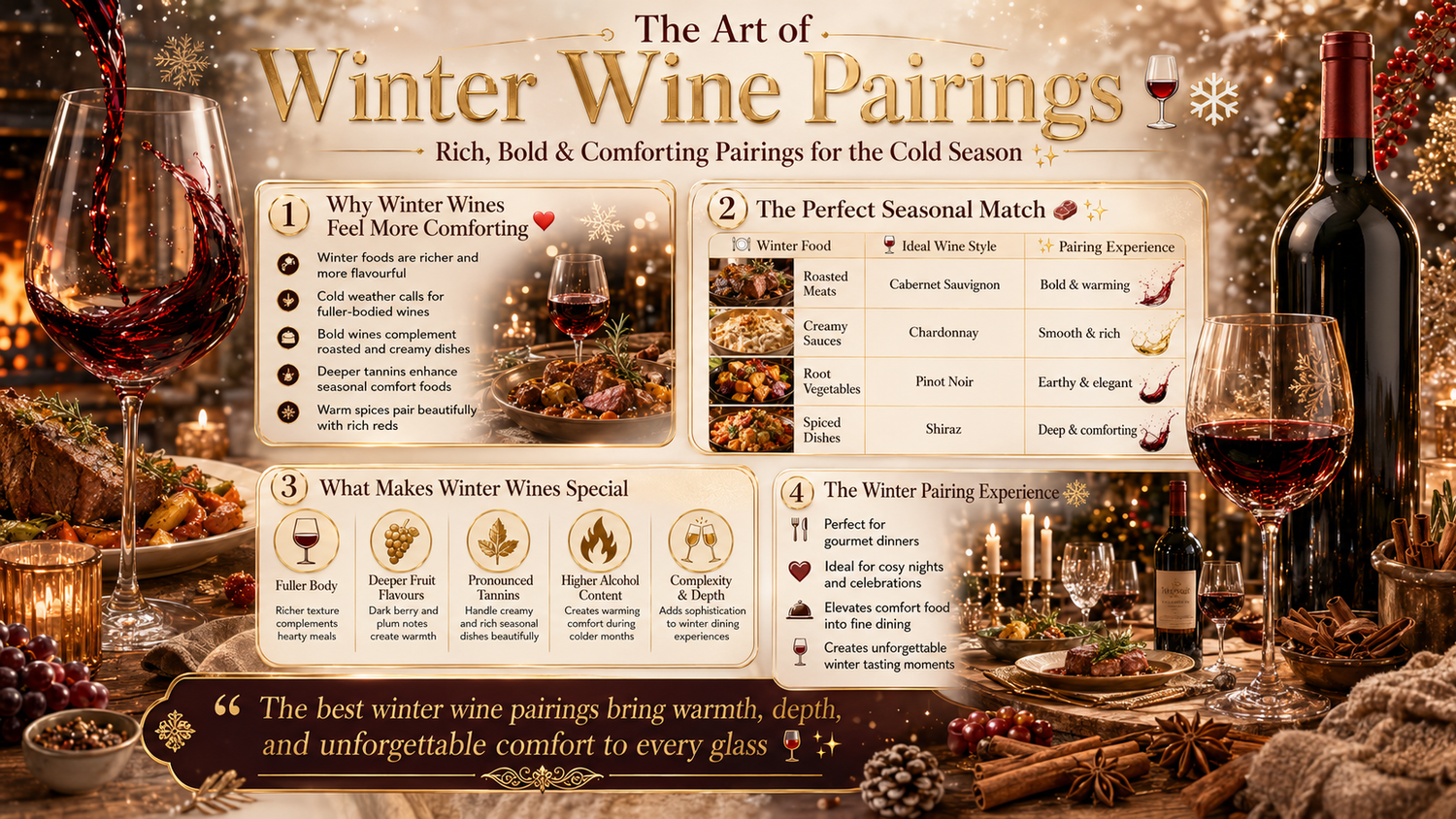
As the temperature drops and winter settles in, there's nothing quite like curling up with a glass of wine and a delicious meal basically Perfect Winter Wine Pairing with meals. Winter is the perfect season to explore rich, full-bodied wines that complement hearty, warming dishes. At Curtis Family Vineyards, we believe that the right wine pairing can transform a simple meal into an unforgettable culinary experience. This comprehensive guide will walk you through the art of winter wine pairings, helping you discover the perfect combinations to elevate your cold-weather dining.
Understanding Winter Wine Pairings

Winter wine pairings are fundamentally different from their summer counterparts. While summer calls for light, crisp wines that refresh the palate, winter demands wines with more body, depth, and complexity. The cold months naturally draw us toward richer foods—think roasted meats, creamy sauces, root vegetables, and warming spices. These ingredients require wines that can stand up to their intensity while complementing their flavours.
The key to successful winter wine pairing lies in understanding the relationship between the wine's characteristics and the food's components. A wine's body, acidity, tannins, and flavor profile all play crucial roles in how well it pairs with specific dishes. During winter, we typically seek wines with higher alcohol content, deeper fruit flavors, and more pronounced tannin structures that can handle the richness of seasonal cuisine.
The Science Behind Wine and Food Pairing
Wine pairing isn't merely about personal preference; there's actual science behind why certain combinations work beautifully together. When you pair wine with food, you're looking for harmony between the wine's components and the dish's flavors and textures.
Tannins, those compounds that create a drying sensation in your mouth, are particularly important in winter pairings. They bind with proteins in food, which can either enhance or diminish the overall experience. A wine with well-integrated tannins paired with a protein-rich dish can create a more pleasant mouthfeel than either element alone.
Acidity in wine serves as a palate cleanser, cutting through rich fats and heavy sauces. This is especially valuable in winter cooking, where cream, butter, and oil are frequently used. A wine with good acidity will refresh your palate between bites, allowing you to fully appreciate each component of your meal.
The alcohol content of a wine also matters significantly. Higher alcohol wines tend to have more body and warmth, making them particularly appealing during cold months. They also pair better with richer, more substantial foods.
Red Wines for Winter: The Classic Choice

Red wines are undoubtedly the stars of winter wine pairings. Their deeper colors, complex flavors, and robust structures make them ideal companions for the season's hearty fare. Let's explore some of the best red wine options for winter dining.
Cabernet Sauvignon: The Winter Powerhouse
Cavaliere Cabernet Sauvignon stands as one of the most versatile and reliable choices for winter pairings. This full-bodied red wine, with its characteristic dark fruit flavors and structured tannins, pairs exceptionally well with beef dishes. Whether you're enjoying a perfectly seared steak, a slow-cooked beef stew, or a rich beef bourguignon, Cabernet Sauvignon provides the necessary weight and complexity to match these dishes.
The wine's natural tannin structure helps cut through fatty meats, while its acidity cleanses the palate. Cabernet Sauvignon also develops secondary flavors with age—think leather, tobacco, and cedar—that add sophistication to winter meals. When selecting a Cabernet for winter, look for wines with at least 13.5% alcohol content and a good balance between fruit and oak.
Cabernet Sauvignon pairs beautifully with herb-crusted prime rib, mushroom-based sauces, and even game meats like venison or duck. The wine's structure can handle bold spices and rich reductions, making it an excellent choice for complex winter recipes.
Merlot: The Approachable Alternative
While Cabernet Sauvignon often steals the spotlight, Merlot deserves recognition as an excellent winter pairing option. Merlot offers a softer, more approachable profile than Cabernet, with plush fruit flavors and silky tannins. This makes it an ideal choice for those who prefer wines that are rich but not overly aggressive.
Merlot's medium to full body and lower tannin levels make it particularly suitable for dishes with creamy sauces or lighter meat preparations. A Merlot pairs wonderfully with braised lamb, roasted chicken with mushroom sauce, or even vegetarian dishes featuring root vegetables and cream-based components.
The wine's flavor profile typically includes notes of plum, cherry, and chocolate, which complement winter spices like cinnamon, nutmeg, and clove. Merlot also tends to be more affordable than premium Cabernet Sauvignon, making it an excellent choice for everyday winter entertaining.
Pinot Noir: The Elegant Winter Option
Pinot Noir might seem like a lighter choice, but don't underestimate its winter pairing potential. Quality Pinot Noir, particularly from cooler climate regions, develops enough body and complexity to handle many winter dishes. Its silky tannins and bright acidity make it particularly versatile.
Pinot Noir excels with duck, which is a classic winter protein. The wine's earthy undertones and red fruit flavors complement duck's rich, gamey qualities perfectly. It also pairs beautifully with mushroom-based dishes, roasted salmon, and even beef preparations that aren't overly heavy.
The wine's lower alcohol content compared to Legion Cabernet Sauvignon or Legion Merlot makes it an excellent choice for longer meals or when you want to enjoy multiple glasses without becoming too full. Sparkling Pinot Noir Rose's elegance and finesse make it perfect for special winter dinners where sophistication is desired.
Syrah/Shiraz: The Bold Winter Statement
For those seeking a wine with real power and presence, Syrah (known as Shiraz in Australia) is an exceptional choice. This full-bodied red wine boasts dark fruit flavors, peppery spice notes, and substantial tannins that can handle the boldest winter dishes.
Syrah pairs magnificently with grilled or roasted meats, particularly those with smoky or charred elements. It's also excellent with game meats, spiced meat preparations, and dishes featuring bold herbs like rosemary and thyme. The wine's peppery character complements black pepper-crusted steaks and other spiced preparations beautifully.
Australian Shiraz tends to be riper and more fruit-forward, while French Syrah from regions like the Rhône Valley offers more restraint and elegance. Both styles work wonderfully for winter, depending on your preference for fruit-forward versus more structured wines.
Bordeaux Blends: The Sophisticated Choice
Bordeaux blends, typically combining Cabernet Sauvignon with Merlot and other varieties, offer the best of both worlds. These wines provide the structure and aging potential of Cabernet with the approachability of Merlot, creating complex, well-balanced wines perfect for winter entertaining.
Premium Bordeaux blends from regions like Napa Valley or Bordeaux itself can age for decades, developing incredible complexity. These wines are ideal for special occasions and pairing with your most impressive winter dishes. They handle rich sauces, multiple courses, and complex flavor combinations with ease.
White Wines for Winter: Beyond the Obvious

While red wines dominate winter pairings, certain white wines can be equally impressive during the cold months. These fuller-bodied whites offer richness and complexity that complement winter cuisine beautifully.
Chardonnay: The Winter White Champion
Chardonnay, particularly oak-aged versions, is the white wine most suited to winter dining. The wine's full body, richness, and complexity make it capable of handling dishes typically paired with red wine. Chardonnay's buttery, creamy characteristics complement cream sauces, roasted poultry, and seafood preparations with rich accompaniments.
A well-made Chardonnay from regions like Burgundy or California's Napa Valley offers layers of flavor including apple, pear, butter, and vanilla. These wines have enough acidity to cut through rich foods while maintaining the body necessary for winter pairings.
Chardonnay pairs beautifully with lobster thermidor, creamy mushroom risotto, roasted chicken with cream sauce, and even lighter fish preparations with butter-based sauces. The wine's versatility makes it an excellent choice for winter entertaining when you're serving multiple dishes.
Sauvignon Blanc: The Crisp Winter Option
While Sauvignon Blanc is typically considered a summer wine, certain styles work wonderfully for winter pairings. Fuller-bodied Sauvignon Blancs, particularly those from the Loire Valley or New Zealand, offer enough substance to complement lighter winter dishes.
Sauvignon Blanc's bright acidity and herbaceous notes make it particularly suitable for seafood preparations, especially those with herb-based sauces or citrus elements. It also pairs well with goat cheese, which appears frequently in winter appetizers and salads.
The wine's crisp nature provides a refreshing contrast to rich winter meals, making it an excellent choice if you prefer white wine but want something with more presence than a typical light white.
Riesling: The Underrated Winter Gem
Riesling Wine deserves more recognition as a winter pairing option. This versatile white wine, particularly off-dry or dry versions, offers surprising depth and complexity. Riesling's natural acidity and aromatic qualities make it excellent for pairing with Asian-inspired winter dishes, spiced preparations, and even certain meat dishes.
A quality Riesling from Alsace or Germany can handle rich foods while maintaining elegance. The wine's stone fruit flavors and floral aromatics complement dishes with ginger, soy sauce, and other Asian seasonings beautifully. Riesling also pairs wonderfully with pork, particularly when the meat is prepared with fruit-based sauces or spices.
Fortified Wines: Winter's Warming Treasures

Fortified wines—wines with added spirits—are particularly suited to winter entertaining. These wines offer higher alcohol content, concentrated flavors, and natural sweetness that make them perfect for cold weather.
Port: The Classic Winter Indulgence
Port, a fortified wine from Portugal, is perhaps the quintessential winter wine. Its rich, sweet character and warming alcohol content make it perfect for sipping by the fire after dinner. Tawny Port, aged in wooden barrels, develops complex nutty and caramel flavors that pair beautifully with chocolate desserts, nuts, and aged cheeses.
Vintage Port, while more expensive, offers incredible depth and aging potential. These wines can accompany the most special winter occasions and pair wonderfully with rich chocolate desserts or blue cheese.
Sherry: The Versatile Fortified Wine
Sherry, from Spain's Jerez region, offers remarkable versatility for winter entertaining. Dry sherries like Fino and Amontillado work as aperitifs or with appetizers, while richer styles like Oloroso complement desserts and cheese courses.
Sherry's complex flavor profile, ranging from dry and crisp to sweet and rich, makes it suitable for various winter dishes. A glass of Amontillado pairs beautifully with roasted nuts, cured meats, and aged cheeses—perfect for winter entertaining.
Madeira: The Forgotten Treasure
Madeira, another Portuguese fortified wine, deserves more attention for winter pairings. This wine's complex flavors and high acidity make it suitable for both savory and sweet applications. Madeira pairs wonderfully with soups, particularly cream-based winter soups, and with desserts featuring nuts or caramel.
Winter Dishes and Their Perfect Wine Matches
Now that we've explored the wines available for winter, let's examine specific winter dishes and their ideal pairings.

Beef Preparations
Beef is the king of winter proteins, and the wine pairing depends on the preparation method. A perfectly seared steak with minimal seasoning pairs beautifully with a classic Cabernet Sauvignon, allowing the wine's structure and the meat's natural flavors to shine. The wine's tannins complement the meat's proteins, creating a harmonious combination.
For beef stew, a medium-bodied Merlot or a Pinot Noir works wonderfully. These wines have enough body to match the dish's richness but won't overpower the vegetables and broth. The wine's acidity helps cut through the fat, while its fruit flavors complement the savory elements.
Beef bourguignon, that classic French winter dish, pairs perfectly with a Burgundy wine or a quality Pinot Noir. The wine's earthy undertones complement the mushrooms and pearl onions, while its acidity balances the rich sauce.
For beef with peppercorn sauce or other bold spice preparations, a Syrah or Shiraz is ideal. The wine's peppery character echoes the dish's spices, creating a cohesive flavor profile.
Lamb and Game

Lamb, particularly when roasted or braised, pairs beautifully with medium to full-bodied red wines. A Merlot or a Côtes du Rhône blend works wonderfully with herb-crusted lamb. The wine's fruit flavors complement the meat's natural richness, while its tannins provide structure.
Game meats like venison, duck, and pheasant require wines with enough body and complexity to match their intense flavors. A full-bodied Syrah or a premium Bordeaux blend is ideal. These wines' earthy undertones and structured tannins complement game meats perfectly.
Duck, in particular, pairs beautifully with Pinot Noir. The wine's silky tannins and red fruit flavors complement duck's rich, gamey qualities without overwhelming them. A Pinot Noir from Burgundy or Oregon is particularly suitable.
Poultry and Lighter Meats

Chicken, when prepared with cream sauces or rich accompaniments, pairs well with full-bodied whites like Chardonnay or lighter reds like Pinot Noir. The wine's body matches the dish's richness while maintaining elegance.
Roasted chicken with herbs pairs beautifully with a medium-bodied red wine like Merlot or a lighter Syrah. The wine's fruit flavors complement the herbs, while its acidity cleanses the palate between bites.
Pork, particularly when braised or prepared with fruit-based sauces, pairs wonderfully with Riesling or a medium-bodied red like Pinot Noir. The wine's acidity complements the meat's richness, while its fruit flavors echo any fruit elements in the dish.
Seafood and Fish
While seafood is often paired with white wine, certain preparations benefit from red wine pairings. Salmon, particularly when roasted or prepared with rich sauces, pairs beautifully with Pinot Noir. The wine's silky tannins and red fruit flavors complement the fish's richness.
Lobster and other shellfish pair wonderfully with full-bodied whites like Chardonnay, particularly when prepared with cream sauces or butter. The wine's richness matches the dish's decadence, while its acidity provides balance.
Seafood stews and chowders, common winter preparations, pair well with Sauvignon Blanc or a dry Riesling. These wines' acidity cuts through the cream and richness, while their aromatic qualities complement the seafood.
Vegetarian and Vegetable-Forward Dishes

Winter vegetables like root vegetables, mushrooms, and squash offer wonderful pairing opportunities. Mushroom-based dishes, particularly those with rich sauces, pair beautifully with Pinot Noir or Merlot. The wine's earthy undertones complement the mushrooms' umami flavors.
Roasted root vegetables with herbs pair well with medium-bodied reds like Côtes du Rhône or lighter Syrah. The wine's fruit flavors complement the vegetables' natural sweetness, while its acidity provides balance.
Creamy vegetable soups and risottos pair wonderfully with Chardonnay or other full-bodied whites. The wine's richness matches the dish's creaminess, while its acidity prevents the pairing from becoming too heavy.
Comfort Food Classics
Winter comfort foods like pot pies, casseroles, and braised dishes deserve special attention. A beef pot pie pairs beautifully with a medium-bodied red like Merlot or a Côtes du Rhône blend. The wine's body matches the dish's richness, while its acidity cuts through the pastry and sauce.
Chicken and dumplings pair well with a lighter red like Pinot Noir or a full-bodied white like Chardonnay. The wine's acidity complements the broth-based sauce, while its fruit flavors add complexity to the simple dish.
Lasagna and other pasta dishes with meat sauces pair beautifully with Italian reds like Chianti or Barbera. These wines' acidity cuts through the tomato sauce and cheese, while their fruit flavors complement the meat.
