

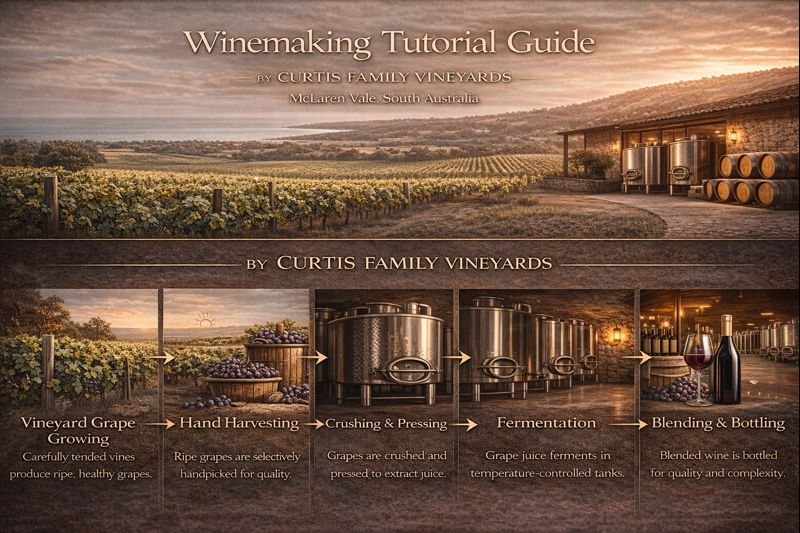

In this blog post, we will guide you step-by-step through the journey of winemaking tutorial, drawing from the rich traditions and expertise embodied by Curtis Family Vineyards. Let's explore the art of winemaking and help you create a beautiful bottle that you can savour and share.
Selecting Your Grapes

Grape selection for winemaking is the single most important decision a beginner will ever make—long before tanks, barrels, or fancy tools come into play. You simply cannot make great wine from poor fruit. Experienced winemakers often say, “The vineyard writes the recipe; the winery just follows it.” That’s why learning to judge grape quality is the real starting line.
Healthy grapes bring natural balance—clean flavours, stable acidity, and the right sugar levels—while stressed or underripe fruit forces winemakers to fix problems later. Regions like McLaren Vale are ideal learning grounds because consistent sunshine, cooling sea breezes, and diverse soils produce grapes that clearly express ripeness and character. This clarity helps beginners understand what quality fruit truly looks and tastes like.
What to Look for in Quality Wine Grapes
| Grape Factor | Why It Matters |
|---|---|
| Ripeness | Drives flavour, alcohol, and mouthfeel |
| Vineyard health | Reduces faults and off-flavours |
| Regional climate | Shapes style and balance |
| Variety suitability | Ensures grapes match local conditions |
Research from Australian viticulture studies consistently shows that over 80% of final wine quality is determined in the vineyard, not the winery. Start with great grapes, and the winemaking process becomes simpler, cleaner, and far more rewarding—exactly how beginners should learn.. The Heritage Grenache from Curtis Family Vineyards embodies the elegance and versatility of this variety, and it can serve as an excellent benchmark for your endeavour.

Crushing and Fermentation
Crushing and pressing grapes is where winemaking truly comes alive—the moment raw fruit begins its transformation into wine. Once grapes arrive from the vineyard, they are gently crushed to release juice while keeping bitterness in check. Timing and care matter here: too rough, and harsh flavours creep in; too soft, and you lose structure. This delicate balance is why experienced wineries treat this stage with near-ritual respect.
Next comes yeast and fermentation, the quiet magic behind flavour and alcohol. Natural or selected yeasts convert grape sugars into alcohol while unlocking aromas—from fresh berries to spice and florals. Research from modern wineries shows that controlled fermentation temperatures preserve fruit purity and prevent faults, especially for beginners learning consistency.
Key Steps That Shape the Wine Early
| Stage | What It Creates |
|---|---|
| Crushing | Juice release and flavour foundation |
| Pressing | Texture and tannin control |
| Yeast choice | Aroma, style, and complexity |
| Fermentation | Alcohol, body, and balance |
For first-time winemakers, understanding this heart of the process builds confidence. Get these steps right, and you’re already halfway to a well-made wine—before the bottle is even in sight.

Pressing and Ageing
After fermentation, the next critical step is pressing your wine to separate the liquid from the solid grape matter. After pressing, your wine will need to mature. Ageing allows complex flavours to develop and settle. Oak barrels or stainless steel can each contribute different characteristics. If you're inspired by the deep, rich qualities of a Shiraz, consider sampling the Ancestor Shiraz from Curtis Family Vineyards to understand the potential depth ageing can bring.
Shaping Style and Flavour: Red, White, and Rosé Explained
Red vs white vs Rosé winemaking process is where style is decided long before the wine reaches a glass. For beginners, this is one of the most exciting stages—small early choices create big flavour differences. The key factor is skin contact, which controls colour, texture, and intensity.
Red wines ferment with grape skins, building depth, tannins, and bold structure. White wines are pressed early, keeping skins away from the juice to preserve freshness and bright aromatics. Rosé sits beautifully in between—short skin contact delivers colour and vibrancy without heaviness. Studies across Australian wineries show that managing extraction time is one of the strongest predictors of balance and drinkability.
How Winemaking Choices Shape Style
| Wine Style | Skin Contact | Flavour Profile | Texture |
|---|---|---|---|
| Red | Full fermentation | Rich, dark fruit, spice | Firm, structured |
| White | Minimal or none | Fresh, citrus, floral | Light, crisp |
| Rosé | Short contact | Berry, delicate, dry | Smooth, refreshing |
For new winemakers, understanding these contrasts builds intuition. Master skin contact early, and you gain control over colour, balance, and personality—before fermentation even finishes.
Bottling Your Wine

Bottling wine at home is where patience and attention to detail transform grape juice into a polished, drinkable wine. For beginners, understanding ageing, stabilisation, and bottling is essential—not just for taste, but for clarity, balance, and shelf life.
Wine evolves over time, whether in oak, stainless steel, or glass, allowing flavours to integrate and textures to smooth. Stabilisation removes unwanted sediments and ensures the wine stays bright and fault-free. Finally, bottling is more than filling glass; it locks in quality, aroma, and freshness—turning weeks of careful work into a lasting experience.
Ageing and Bottling Essentials
| Step | Options | Purpose | Key Tip |
|---|---|---|---|
| Ageing | Oak barrels, stainless steel, glass | Develop flavour, texture | Monitor regularly for taste & aroma |
| Stabilisation | Cold, fining, filtration | Clarity and stability | Avoid rushing; sediments settle naturally |
| Bottling | Glass bottles with cork or screwcap | Preserve wine quality | Sanitize equipment to prevent spoilage |
Even at home, treating each stage with care allows your wine to shine—showing that patience is truly the secret ingredient in quality winemaking.
How Wineries Perfect the Craft
Enjoying Your Creation
Finally, it's your moment to taste the fruits of your labour. Open a bottle, pour a glass, and savour the aromas and flavours you've nurtured. Share your creation with friends and family and gather feedback. You may discover the unique characteristics of your wine remind you of the lush flavours found in a Cavaliere Cabernet Sauvignon, renowned for its complexity.
Embarking on your winemaking journey is a rewarding experience filled with learning and discovery. As you gain confidence and skill, you'll be able to experiment with more varieties and techniques. The artistry of winemaking is a tradition well embraced by Curtis Family Vineyards, where passion and expertise culminate in exquisite wines. For more inspiration and guidance, explore the offerings at Curtis Family Vineyards.
Happy winemaking!
