

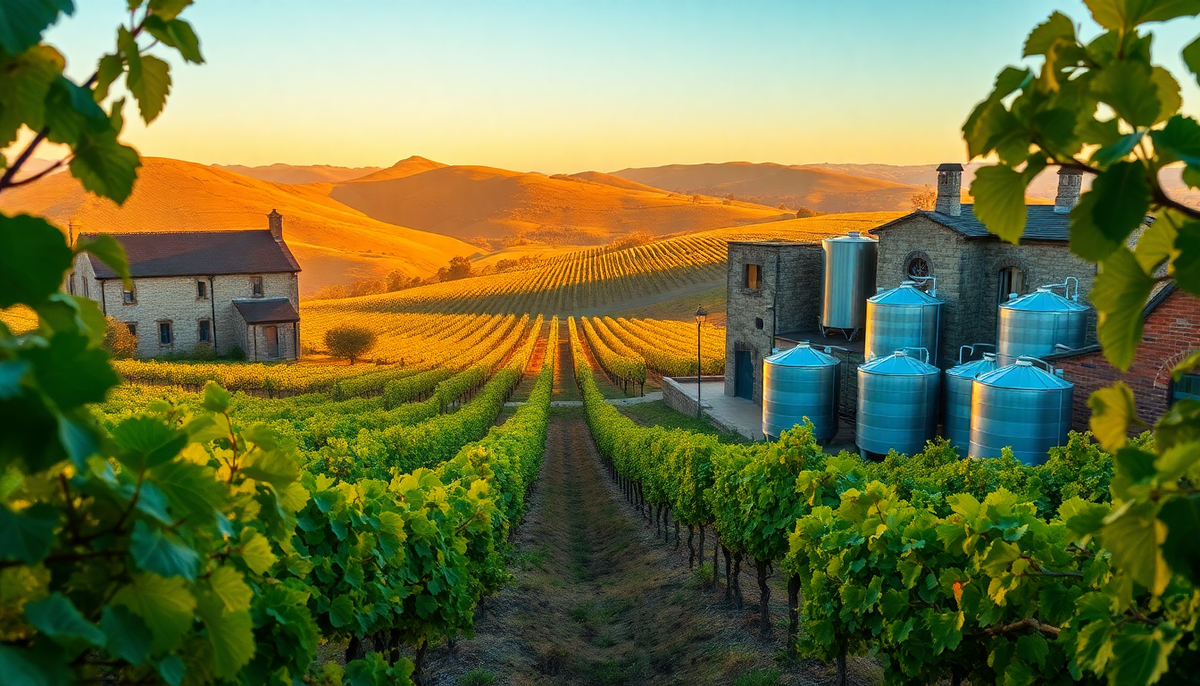
McLaren Vale, nestled in the heart of South Australia, stands as one of the most significant wine regions in the Southern Hemisphere. With a history spanning nearly two centuries, this picturesque valley has transformed from a remote agricultural settlement into a world-renowned destination for premium wine production. The story of winemaking in McLaren Vale is one of resilience, innovation, and an unwavering commitment to quality that continues to define the region today.
The Early Colonial Period and First Vineyards
The history of winemaking in McLaren Vale begins in the early nineteenth century, during a time when European settlers were establishing themselves across South Australia. The region, originally inhabited by the Kaurna people for thousands of years, was gradually colonized by British settlers seeking new opportunities in this distant land. The first European to recognize the potential of the McLaren Vale area for agriculture was John McLaren, a Scottish settler who arrived in South Australia in 1839. McLaren established a property in the valley that would eventually bear his name, though his primary focus was on general farming rather than viticulture.
The true pioneers of winemaking in McLaren Vale were the English settlers who arrived in the 1850s and 1860s. These early vintners recognized that the region's Mediterranean climate, with its warm, dry summers and mild winters, closely resembled the conditions found in the great wine regions of Europe. The soil composition, characterized by red loam over limestone, proved ideal for growing quality grape varieties. Among the first to establish vineyards were Thomas Hardy and his family, who arrived in South Australia in 1850. Hardy's vision and expertise would prove instrumental in establishing McLaren Vale as a serious wine-producing region.
Thomas Hardy, originally from Devon, England, possessed considerable knowledge of winemaking and viticulture. He initially worked for other vineyard owners before establishing his own vineyard in 1853 near the town of Reynella, which borders McLaren Vale. Hardy's success with his early vintages demonstrated that the region could produce wines of exceptional quality, capable of competing with European wines. His wines began to gain recognition not only in South Australia but also in other Australian colonies and eventually in England itself. This early success attracted other settlers to the region, each bringing their own expertise and ambitions to the emerging wine industry.
The Expansion Era and Growing Recognition
By the 1870s and 1880s, McLaren Vale had begun to establish itself as a significant wine-producing region. The expansion was driven by several factors: the discovery of gold in Victoria and New South Wales had created a wealthy class of consumers with disposable income for fine wines, the development of better transportation links had made it easier to distribute wines to distant markets, and the reputation of early producers like Thomas Hardy had attracted investment and skilled labor to the region.
During this period, numerous vineyards were established throughout McLaren Vale. Families such as the Osborns, the Reynells, and the Morphetts invested heavily in viticulture, planting extensive vineyards and constructing impressive stone cellars for wine production and storage. These early winemakers experimented with various grape varieties, gradually determining which cultivars thrived best in the local conditions. While European varieties like Shiraz, Cabernet Sauvignon, and Grenache proved successful, the region also became known for its fortified wines, particularly Tawny and Muscat styles that were popular in the late nineteenth century.
The 1880s and 1890s saw McLaren Vale wines gaining international recognition. Wines from the region began to win medals at international exhibitions, including the prestigious Paris Exposition. This recognition elevated the status of McLaren Vale wines and attracted further investment in the region. Wealthy merchants and investors from Adelaide and Melbourne established vineyards in McLaren Vale, viewing wine production as both a profitable enterprise and a prestigious endeavor. The region's population grew, and small towns like McLaren Vale itself developed to serve the needs of the expanding wine industry.
The Phylloxera Crisis and Adaptation
The late nineteenth century brought a significant challenge to the wine industry not only in McLaren Vale but throughout Australia and the world. Phylloxera, a tiny insect that devastated European vineyards by attacking the roots of grapevines, threatened to destroy the emerging Australian wine industry. The pest had been introduced to Europe from America in the 1860s and had spread rapidly, destroying millions of acres of vineyards and causing economic devastation across the continent.
Australia, being geographically isolated, initially escaped the phylloxera plague. However, the threat was very real, and the Australian wine industry took precautions to prevent its introduction. Strict quarantine measures were implemented, and the importation of grape vines and plant material was carefully controlled. These measures proved effective, and Australia remained phylloxera-free, giving Australian winemakers a significant advantage over their European counterparts who were forced to replant their vineyards with phylloxera-resistant rootstocks.
This crisis, while threatening, ultimately benefited McLaren Vale and other Australian wine regions. As European vineyards struggled to recover from phylloxera, Australian wines found increased demand in international markets. British consumers, in particular, turned to Australian wines as a reliable source of quality wine when European supplies were disrupted. McLaren Vale producers capitalized on this opportunity, expanding their production and establishing themselves as reliable suppliers of quality wines to the British market. This period of growth and prosperity lasted until the early twentieth century, when the situation in Europe stabilized and competition from European wines resumed.
The Twentieth Century: Wars, Prohibition, and Recovery
The twentieth century brought dramatic changes to the wine industry in McLaren Vale. The First World War disrupted international trade and diverted resources to the war effort. Many young men from the region enlisted or were conscripted into military service, creating labor shortages in the vineyards and wineries. Despite these challenges, the wine industry in McLaren Vale continued to operate, and wines from the region continued to be produced and exported, though in reduced quantities.
The post-war period of the 1920s saw a brief resurgence in the wine industry. However, this recovery was short-lived. The Great Depression of the 1930s devastated the Australian economy, and the wine industry was particularly hard hit. Demand for wine collapsed as consumers had less disposable income, and many vineyards and wineries were forced to close or significantly reduce their operations. Prices for wine fell dramatically, making it difficult for producers to cover their costs. Many families who had invested heavily in vineyards over generations were forced to abandon their properties or sell them at a fraction of their value.
The Second World War brought further challenges. Again, young men left the region to serve in the military, and resources were diverted to the war effort. However, the war also created some opportunities for the wine industry. Wine was needed for medicinal purposes and for military supplies, and some producers found markets for their products in these sectors. Additionally, the isolation of Australia during the war meant that local wines faced less competition from imported wines, allowing some recovery in domestic consumption.
The post-war period of the 1940s and 1950s saw a gradual recovery of the wine industry in McLaren Vale. However, the region faced significant challenges. The reputation of Australian wines, particularly fortified wines, had suffered during the Depression and war years when quality control had been difficult to maintain. Additionally, changing consumer preferences were shifting away from the heavy fortified wines that had been the region's specialty toward lighter table wines. The wine industry in McLaren Vale had to adapt to these changing preferences and rebuild its reputation for quality.
The Modern Era Begins: The 1960s and 1970s
The 1960s and 1970s marked a turning point in the history of winemaking in McLaren Vale. A new generation of winemakers, many of whom had studied viticulture and winemaking at universities or in Europe, brought fresh ideas and modern techniques to the region. These innovators were committed to producing high-quality table wines that could compete on the international stage. They invested in modern equipment, implemented scientific approaches to viticulture, and experimented with new grape varieties and winemaking techniques.
During this period, several important developments occurred. The first was a shift in focus from fortified wines to dry table wines, particularly red wines made from Shiraz and Cabernet Sauvignon. These wines, when made with care and aged properly, proved to be of exceptional quality and began to gain recognition among wine critics and consumers. The second development was the establishment of new wineries by entrepreneurs who were not necessarily from wine-making families but who recognized the potential of the region. These newcomers brought capital, business acumen, and fresh perspectives to the industry.
The third important development was the beginning of wine tourism in McLaren Vale. As the region's reputation for quality wines grew, visitors began to travel to the valley to visit wineries, taste wines, and learn about winemaking. This tourism provided an additional revenue stream for producers and helped to build the reputation of the region. Wineries began to develop cellar door facilities where visitors could taste and purchase wines directly, and some established restaurants and accommodation facilities to cater to tourists.
The 1970s saw continued growth and innovation in McLaren Vale. The region began to develop a distinct identity as a producer of high-quality Shiraz wines. The warm climate and red soil of the region proved particularly well-suited to this variety, and winemakers discovered that Shiraz from McLaren Vale had distinctive characteristics that set it apart from Shiraz produced in other regions. The wines were full-bodied, with rich fruit flavors and a distinctive peppery spice that became the signature of McLaren Vale Shiraz.
The Wine Revolution: The 1980s and 1990s
The 1980s and 1990s were transformative decades for winemaking in McLaren Vale. This period coincided with a broader revolution in Australian wine that saw the country emerge as a major player in the international wine market. Several factors contributed to this transformation. First, Australian winemakers had developed the technical expertise and knowledge to produce wines of world-class quality. Second, the Australian wine industry had invested heavily in marketing and promotion, building awareness of Australian wines in international markets. Third, the quality of Australian wines had improved dramatically, earning recognition from wine critics and consumers around the world.
During this period, McLaren Vale established itself as one of Australia's premier wine regions. The region's reputation for Shiraz was solidified as wines from McLaren Vale began to win major awards at international wine competitions. Winemakers in the region also began to explore other varieties, producing excellent Cabernet Sauvignon, Grenache, and Chardonnay wines. The diversity of wines produced in the region expanded, allowing producers to appeal to a broader range of consumers and markets.
The 1980s and 1990s also saw significant investment in the region's wine industry. Established wine companies from other parts of Australia and from overseas recognized the potential of McLaren Vale and established operations in the region. Additionally, many small, family-owned wineries were established by entrepreneurs who were passionate about winemaking and committed to producing high-quality wines. This combination of large-scale producers and small, artisanal winemakers created a dynamic and diverse wine industry in McLaren Vale.
Wine tourism continued to grow during this period. The region developed infrastructure to support visitors, including improved roads, accommodation facilities, and restaurants. Wine festivals and events were established to celebrate the region's wines and attract visitors. The McLaren Vale Wine Festival, first held in 1991, became an annual event that attracted thousands of visitors to the region. These festivals not only promoted the wines of the region but also contributed significantly to the local economy through tourism spending.
The Twenty-First Century: Global Recognition and Sustainability
The twenty-first century has seen McLaren Vale continue to grow in stature as a world-class wine region. The region's wines have gained increasing recognition from international wine critics and consumers. Wines from McLaren Vale regularly receive high scores from prestigious wine publications and win medals at major international wine competitions. The region has developed a strong reputation not only for Shiraz but also for other varieties, including Cabernet Sauvignon, Grenache, and white wines such as Chardonnay and Sauvignon Blanc.
The early years of the twenty-first century saw continued expansion of the wine industry in McLaren Vale. New wineries were established, and existing producers expanded their operations. The region's wine industry became increasingly sophisticated, with producers investing in state-of-the-art facilities and employing advanced winemaking techniques. Many producers also began to focus on sustainability and environmental responsibility, recognizing the importance of preserving the region's natural resources for future generations.
The global financial crisis of 2008 and 2009 presented challenges for the wine industry, as it did for many industries. Demand for wine declined as consumers reduced spending, and prices for wine fell. However, the McLaren Vale wine industry proved resilient, and the region's reputation for quality helped to sustain demand for its wines even during difficult economic times. Many producers used the downturn as an opportunity to refocus on quality and to strengthen their brands.
In recent years, the wine industry in McLaren Vale has continued to evolve and adapt to changing market conditions and consumer preferences. Sustainability has become increasingly important, with many producers implementing organic and biodynamic farming practices. Climate change has also become a significant concern, as rising temperatures and changing rainfall patterns affect viticulture in the region. Winemakers have responded by experimenting with new varieties that are better suited to warmer conditions and by adapting their vineyard management practices to address the challenges posed by climate change.
The Geography and Climate of McLaren Vale
Understanding the geography and climate of McLaren Vale is essential to understanding the region's winemaking history and the characteristics of its wines. The region is located approximately 40 kilometers south of Adelaide, in the state of South Australia. The valley is bounded by the Mount Lofty Ranges to the north and east, and by the Gulf St. Vincent to the south and west. This geographic position creates a unique climate that is ideal for viticulture.
The climate of McLaren Vale is Mediterranean, characterized by warm, dry summers and mild winters. The average annual temperature is approximately 15 degrees Celsius, with summer temperatures often reaching 25 to 30 degrees Celsius. Rainfall is moderate, averaging around 600 millimeters per year, with most rain falling during the winter months. The proximity to the Gulf St. Vincent moderates temperatures, preventing them from becoming excessively hot during summer and providing cooling breezes that help to preserve acidity in the grapes.
The soil of McLaren Vale is predominantly red loam over limestone, with some areas of sandy loam and clay. This soil composition is ideal for viticulture, as it provides good drainage while retaining sufficient moisture for the vines. The limestone subsoil provides minerals that contribute to the character of the wines produced in the region. The red color of the soil is due to the presence of iron oxide, which gives the soil its distinctive appearance and contributes to the mineral character of the wines.
The topography of McLaren Vale varies from relatively flat areas near the coast to more undulating terrain inland. This variation in elevation creates microclimates within the region, allowing producers to grow different varieties in different locations. The higher elevations inland tend to be cooler, making them suitable for varieties that require longer growing seasons, while the lower elevations near the coast are warmer and better suited to varieties that prefer warmer conditions.
The Grape Varieties of McLaren Vale
The success of McLaren Vale as a wine region is closely tied to the grape varieties grown there. While the region is most famous for Shiraz, a diverse range of varieties are cultivated, each contributing to the region's reputation for quality wines.
Shiraz is undoubtedly the signature variety of McLaren Vale. This dark-skinned grape variety produces full-bodied red wines with rich fruit flavors and distinctive peppery spice. The warm climate of McLaren Vale is ideal for Shiraz, allowing the grapes to ripen fully and develop complex flavors. Shiraz from McLaren Vale is characterized by its deep color, high alcohol content, and bold flavors. The wines are often aged in oak, which adds complexity and structure. McLaren Vale Shiraz has become one of Australia's most celebrated wines, and the region's reputation for this variety is well-deserved.
Cabernet Sauvignon is the second most important red variety in McLaren Vale. This variety produces wines with a different character from Shiraz, with more structured tannins and flavors of blackcurrant and cedar. The cooler microclimates of McLaren Vale are particularly well-suited to Cabernet Sauvignon, and wines from the region have gained increasing recognition for their quality and complexity. Many producers blend Cabernet Sauvignon with Shiraz to create wines that combine the best characteristics of both varieties.
Grenache is another important red variety in McLaren Vale. This variety produces lighter-bodied wines with flavors of red berries and spice. Grenache has a long history in the region, having been planted by early settlers who recognized its suitability to the local climate. In recent years, there has been a resurgence of interest in Grenache, as producers have recognized its potential to produce wines of exceptional quality. Many producers now produce single-varietal Grenache wines, and blends of Grenache with other varieties such as Shiraz and Mourvèdre.
White varieties are also important in McLaren Vale, though they are less prominent than red varieties. Chardonnay is the most widely planted white variety, producing wines with flavors of stone fruits and citrus. The cooler microclimates of the region are particularly well-suited to Chardonnay, and wines from McLaren Vale have gained recognition for their elegance and complexity. Sauvignon Blanc is also grown in the region, producing crisp, herbaceous wines with good acidity. Other white varieties such as Riesling and Semillon are also cultivated, though in smaller quantities


Leave a comment
This site is protected by hCaptcha and the hCaptcha Privacy Policy and Terms of Service apply.