

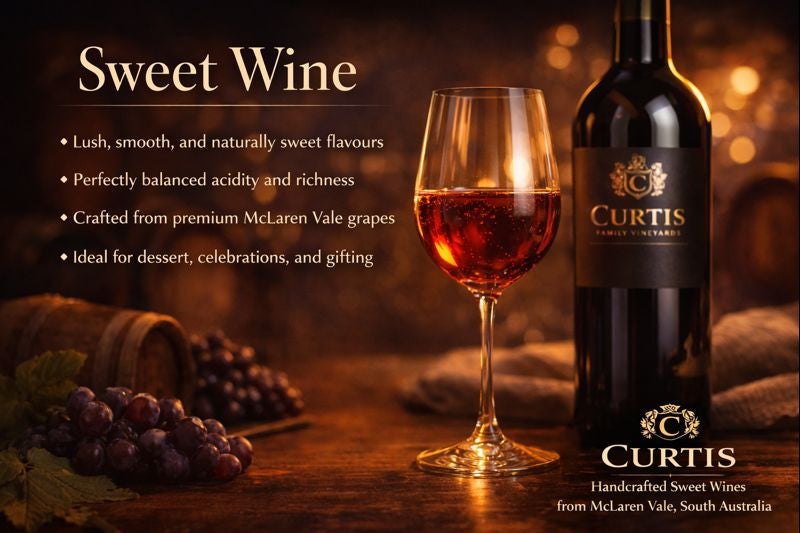
Sweet wines have always held a special place in the world of viticulture, offering a delightful balance of luscious flavours and aromatic complexity. At Curtis Family Vineyards, we believe in mastering the techniques that produce the finest sweet wines. Here's a glimpse into some of the methods we employ and tips for those interested in crafting or simply enjoying sweet wines.
Sweet Wine Explained: More Than Just Sugar in a Glass

Sweet wine is often misunderstood. Many people imagine something heavy and syrupy, but a naturally sweet wine is far more refined than that. Its sweetness comes from ripe, carefully grown grapes—not from added sugar—and the best examples are all about balance, freshness, and control.
So what makes a quality sweet wine stand out? It’s the way sweetness is matched with acidity and texture. Winemakers may allow grapes to ripen longer on the vine or gently stop fermentation to retain natural grape sugars. According to Australian wine studies, wines with balanced residual sugar and natural acidity are perceived as fresher, lighter, and more enjoyable—proving that sweetness doesn’t mean overpowering.
What defines a well-made sweet wine:
- Sweetness comes naturally from ripe grapes
- Acidity keeps the wine fresh and lively
- Flavours remain clean, fruit-driven, and smooth
- The finish is balanced, not cloying
Sweet Wine vs Overly Sugary Wine
| Quality Sweet Wine | Overly Sugary Wine |
|---|---|
| Naturally sweet | Sugar-added taste |
| Balanced with acidity | Flat and heavy |
| Fruit-forward flavours | One-dimensional sweetness |
| Clean, refreshing finish | Sticky aftertaste |
In regions like McLaren Vale, warm days and cooling sea breezes allow grapes to develop richness without losing freshness. The result is sweet wine with depth, elegance, and purpose—proof that sweetness, when done right, is a true craft
The Science Behind Sweetness: How Sweet Wines Are Crafted

Acidity in sweet wine is the quiet hero behind every great bottle. Without it, sweetness feels heavy. With it, sweet wines feel bright, fresh, and beautifully balanced. That balance is no accident—it’s the result of careful timing, precision, and winemaking know-how.
Across different types of sweet wine, sweetness is achieved in a few key ways. One of the most respected methods is late harvesting, where grapes are left on the vine longer to build natural sugar while retaining enough acidity. Another technique is controlled fermentation, where winemakers gently slow or stop fermentation so some grape sugar remains in the wine.
Australian wine research consistently shows that sweetness paired with natural acidity improves drinkability and length on the palate—especially in warm regions like McLaren Vale, where fruit ripeness is generous.
Key techniques used in crafting sweet wine:
- Late-harvest grapes for natural sugar concentration
- Fermentation control to preserve sweetness without additives
- Residual sugar management for flavour and mouthfeel
- Natural acidity to keep the wine fresh and lively
How Balance Shapes Sweet Wine
| Balanced Sweet Wine | Unbalanced Sweet Wine |
|---|---|
| Sweetness + acidity in harmony | Sweetness dominates |
| Fresh, clean finish | Heavy, tiring palate |
| Flavours stay vibrant | Flavours feel flat |
| Encourages another sip | One-glass wine |
In McLaren Vale, warm days and cooling sea breezes help grapes ripen slowly and evenly—ideal conditions for crafting sweet wines with clarity, control, and finesse. It’s where science meets intuition, and sweetness becomes an art
The Art of Selection
Producing a memorable sweet wine starts in the vineyard. Selecting the right grape varietals is crucial, as they need to naturally have a higher sugar content. While we at Curtis Family Vineyards are renowned for our robust reds like the Cavaliere Shiraz and Heritage Grenache, the same care and precision in selecting the right grapes apply to sweet winemaking.
Harvest Timing
The timing of the grape harvest can dramatically affect the sweetness profile of a wine. Late harvest grapes, for example, are left on the vine longer, allowing them to develop more complex sugars. This natural increase in sugar can lead to a more intensely sweet and flavourful wine. It's a delicate balance of watching the weather and monitoring the grapes' ripeness.
The Fermentation Process
One of the secrets to a perfect sweet wine is controlling the fermentation process. Stopping fermentation early while there's still residual sugar in the juice is one technique winemakers employ. This requires a keen understanding of yeast behaviour and temperature control to halt fermentation at just the right moment.
Acidity, Texture & Freshness in Sweet Wine

Muscat sweet wine is a perfect example of what a balanced sweet wine should be. It shows that sweetness alone doesn’t make a great wine—harmony does. The real magic happens when natural sugar is lifted by bright acidity and supported by the right texture.
In well-crafted sweet wines, acidity acts like a fresh squeeze of citrus. It sharpens flavours, keeps the palate alive, and stops the wine from feeling heavy. Australian wine studies have shown that wines with higher natural acidity are perceived as more refreshing, even when sweetness levels are high. This is why the best sweet wines never taste cloying.
Texture also plays a key role. Gentle winemaking techniques help preserve a smooth, rounded mouthfeel while keeping the wine light on its feet. In styles like Muscat, floral aromas, juicy fruit, and natural freshness work together to create a wine that feels vibrant from first sip to finish.
What creates harmony in sweet wine:
- Natural acidity for freshness and lift
- Controlled sweetness that enhances flavour
- Smooth texture without heaviness
- Clean, lingering finish
Balanced vs Unbalanced Sweet Wine

| Balanced Sweet Wine | Unbalanced Sweet Wine |
|---|---|
| Sweetness + acidity in sync | Sugar dominates |
| Fresh, lively palate | Flat and tiring |
| Elegant texture | Thick or sticky |
| Encourages another sip | Overwhelms quickly |
In McLaren Vale, warm sunshine builds flavour while cooling coastal breezes protect acidity—ideal conditions for crafting sweet wines that feel fresh, refined, and beautifully balanced
Botrytis - The Noble Rot
A time-honoured method for producing sweet wines is encouraging the growth of botrytis cinerea, or noble rot, on the grapes. This beneficial fungus causes grapes to dehydrate slightly, concentrating their sweetness. It's a challenging process that depends heavily on the right conditions but can achieve exceptional results.
Enjoying Sweet Wine
Knowing how to enjoy sweet wines is part of the art. Serve them chilled, ideally between 8°C and 10°C, to fully appreciate their nuanced flavours. Sweet wines like Pinot Noir Rose pair beautifully with a variety of foods, from creamy blue cheeses to fruity desserts. For those who enjoy a sweeter wine profile yet want a hint of varietal complexity, our Queen of Hearts Rosè offers a delightful tasting experience.
Conclusion
Sweet wines are not just about sweetness; they're about balance, complexity, and the vineyard's expression. Whether you're a winemaker or a wine enthusiast, appreciating the methods and nuances of sweet wine production can deepen your enjoyment. At Curtis Family Vineyards, we're dedicated to exploring and perfecting these techniques to bring you exceptional wines. For more information about our products, visit Curtis Family Vineyards.
Cheers to discovering the sweeter side of wine!
