

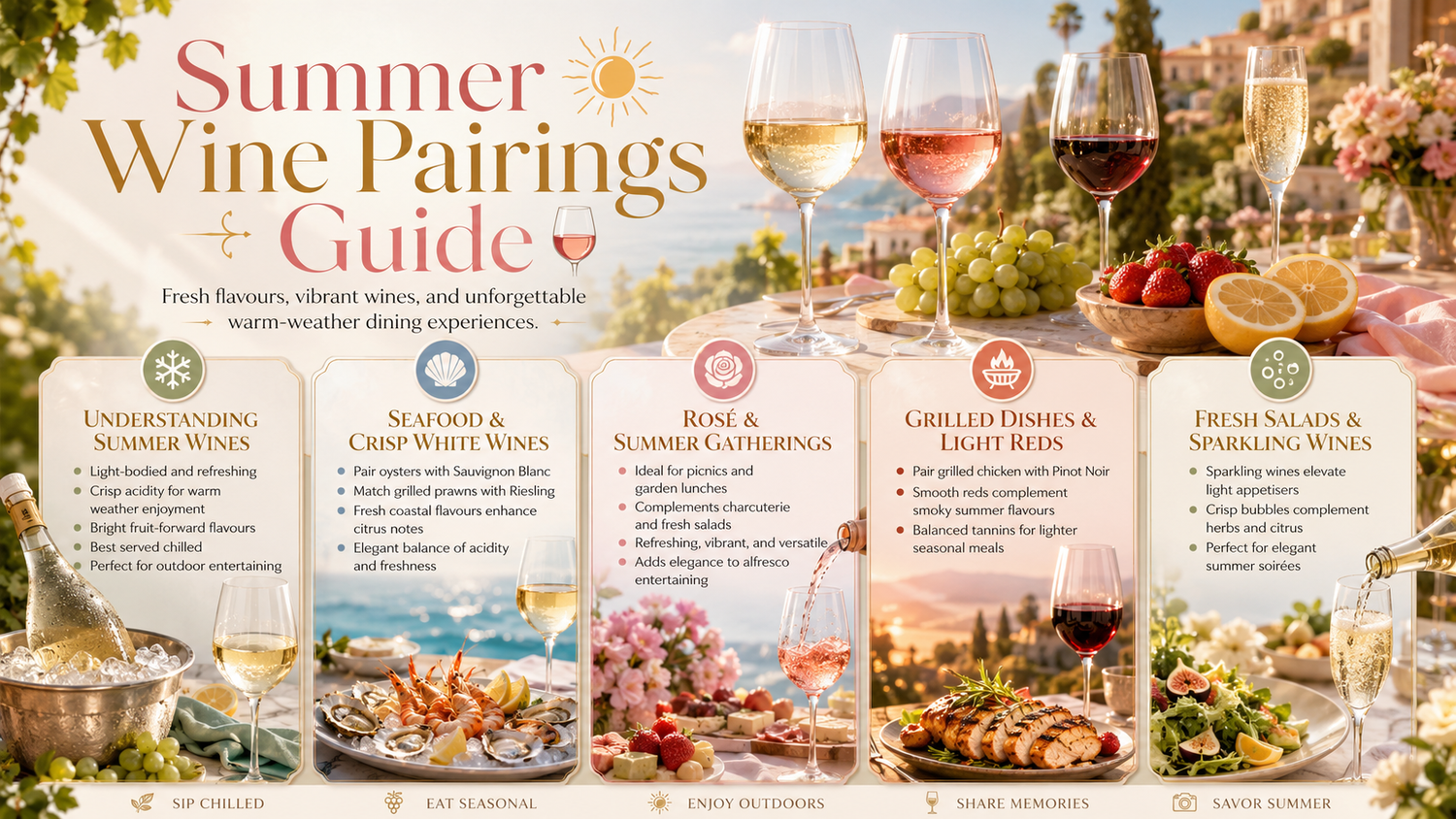
Nothing captures the essence of warm-weather dining quite like Summer Wine Pairings. From crisp whites enjoyed by the coast to vibrant rosés shared at backyard gatherings, the right wine can elevate every seasonal dish. Thoughtfully chosen summer wine pairings bring out fresh flavours in seafood, salads, grilled meats, and light appetisers, creating a refreshing and memorable experience. Whether you're planning a casual picnic, alfresco lunch, or elegant dinner party, exploring the best summer wine pairings helps you discover how seasonal ingredients and beautifully balanced wines work together in perfect harmony.
Summer is the season of possibility when it comes to outdoor dining and entertaining. Whether you're planning an intimate dinner on the patio, hosting a casual lunch gathering, or preparing light appetizers for an evening soirée, the right wine can elevate your meal from pleasant to memorable. The key to successful summer wine pairing lies in understanding the characteristics of lighter wines and how they interact with the fresh, bright flavors that define warm-weather cuisine.
Understanding Summer Wine Characteristics

Before diving into specific pairings, it's essential to understand what makes a wine suitable for summer entertaining. Summer wines typically share several characteristics that make them ideal for warm weather consumption and lighter fare.
Acidity and Freshness
The most important characteristic of a summer wine is its acidity. Wines with higher acidity levels feel crisp and refreshing on the palate, making them perfect for warm days when you want something that quenches your thirst rather than weighs you down. This acidity also helps cleanse the palate between bites, making it easier to enjoy multiple courses without feeling overwhelmed.
Acidity in wine comes from naturally occurring acids like tartaric acid and malic acid. Wines from cooler climates tend to have higher acidity levels, which is why many of the best summer wines come from regions known for their cool-climate viticulture. The brightness that acidity provides is particularly appealing when paired with fresh vegetables, light proteins, and citrus-forward dishes.
Lower Alcohol Content
Summer wines typically have lower alcohol content than their winter counterparts. Wines with alcohol levels between 11 and 13 percent are ideal for daytime entertaining and warm weather consumption. Lower alcohol wines feel lighter on the palate and won't leave you feeling overly full or sluggish, which is especially important when you're enjoying wine in the heat.
The lower alcohol content also means these wines are less likely to cause dehydration, a concern when drinking wine outdoors in warm weather. This makes them perfect for leisurely afternoon gatherings where you might be enjoying wine over several hours.
Aromatic Qualities
Summer wines are often chosen for their aromatic qualities. Wines with pronounced floral, fruity, or herbaceous aromas add an extra dimension to the drinking experience. These aromatic compounds are often more pronounced in wines served chilled, making them particularly appealing for summer service.
The aromatics in summer wines often include notes of citrus, stone fruits, tropical fruits, and fresh herbs. These characteristics make the wines feel more vibrant and alive, complementing the fresh ingredients that define summer cuisine.
White Wines for Summer Entertaining

White wines are the foundation of summer wine pairing, and for good reason. Their lighter body, higher acidity, and refreshing characteristics make them ideal for warm weather and lighter meals.
Sauvignon Blanc
Sauvignon Blanc is perhaps the quintessential summer white wine. Known for its crisp acidity and vibrant aromatics, Sauvignon Blanc offers excellent versatility for pairing with summer dishes. The wine's characteristic herbaceous and citrus notes make it particularly suitable for dishes featuring fresh vegetables, herbs, and light proteins.
Sauvignon Blancs from different regions offer distinct flavor profiles. New Zealand Sauvignon Blancs tend to be more herbaceous and tropical, with notes of passion fruit and green bell pepper. Loire Valley Sauvignon Blancs are typically more mineral and citrus-forward, with a steely quality that makes them exceptionally food-friendly. California Sauvignon Blancs often fall somewhere in between, offering a balance of fruit and herbaceous characteristics.
Sauvignon Blanc pairs beautifully with grilled fish, particularly lighter varieties like flounder or sole. It's also excellent with goat cheese, fresh salads with vinaigrette dressing, and dishes featuring fresh herbs like basil or cilantro. The wine's acidity cuts through the richness of creamy dressings while its herbaceous notes complement fresh vegetables.
Pinot Grigio
Pinot Grigio is another excellent choice for summer entertaining. This Italian white wine is known for its light body, crisp acidity, and delicate fruit flavors. While Pinot Grigio has sometimes been dismissed as a simple, uncomplicated wine, quality examples from reputable producers offer surprising depth and complexity.
The best Pinot Grigios come from northeastern Italy, particularly the Friuli-Venezia Giulia region. These wines often display notes of green apple, citrus, and white peach, with a mineral quality that adds sophistication. Pinot Grigio's light body and subtle flavors make it an excellent aperitif wine, perfect for sipping before dinner while enjoying appetizers.
For food pairing, Pinot Grigio works well with light pasta dishes, particularly those featuring fresh vegetables or light cream sauces. It's also excellent with seafood, especially shellfish like clams, mussels, and shrimp. The wine's delicate flavors won't overpower delicate fish, and its acidity complements the briny quality of oysters and other raw shellfish.
Albariño
Albariño is a Spanish white wine that deserves more attention from summer entertaining enthusiasts. This wine comes from the Rías Baixas region in Galicia, where it's traditionally paired with seafood. Albariño offers excellent acidity, mineral characteristics, and citrus flavors that make it perfect for warm weather.
The wine's salinity and mineral quality make it particularly suitable for seafood dishes. Albariño pairs beautifully with grilled fish, particularly oily varieties like mackerel or sardines. It's also excellent with seafood pasta dishes, ceviche, and other light seafood preparations. The wine's acidity and mineral quality complement the briny flavors of the sea without overwhelming delicate fish.
Vermentino
Vermentino is an Italian white wine from Sardinia and Tuscany that offers excellent summer appeal. This wine is known for its crisp acidity, citrus flavors, and subtle herbaceous notes. Vermentino has a slightly higher alcohol content than some other summer whites, typically around 13 percent, but it still maintains the freshness and lightness that makes it suitable for warm weather.
Vermentino pairs well with Mediterranean-style dishes featuring fresh vegetables, olive oil, and herbs. It's excellent with grilled vegetables, light pasta dishes, and seafood preparations. The wine's herbaceous notes complement dishes featuring basil, oregano, and other Mediterranean herbs.
Grüner Veltliner
Austrian Grüner Veltliner is an underrated summer wine that offers excellent food-pairing potential. This wine is known for its crisp acidity, citrus flavors, and subtle herbaceous notes. Grüner Veltliner often displays notes of green apple, lemon, and white pepper, with a mineral quality that adds complexity.
The wine's versatility makes it suitable for a wide range of summer dishes. Grüner Veltliner pairs well with Asian-inspired dishes featuring fresh herbs and light sauces. It's also excellent with vegetable-forward dishes, light poultry preparations, and fresh salads. The wine's acidity and herbaceous notes make it particularly suitable for dishes featuring cilantro, mint, or other fresh herbs.
Rosé Wines for Summer Entertaining

Rosé wines have experienced a remarkable renaissance in recent years, and for good reason. These wines offer the freshness and acidity of white wines with the fruit-forward characteristics of red wines, making them exceptionally versatile for summer entertaining.
Understanding Rosé Quality
Quality rosé wines are made by allowing grape skins to contact the juice for a brief period, typically between a few hours and a few days. This contact gives the wine its characteristic pink color and contributes subtle tannins and fruit flavors. The best rosé wines are dry, with good acidity and delicate fruit flavors.
It's important to distinguish between quality dry rosé wines and sweeter, more commercial versions. While some people enjoy sweeter rosés, the best food-pairing potential comes from dry rosé wines with good acidity and subtle fruit flavors. These wines offer the versatility to pair with a wide range of summer dishes.
Provence Rosé
Provence rosé is considered the gold standard for quality rosé wines. These wines come from the Provence region in southern France and are known for their pale color, crisp acidity, and delicate fruit flavors. Provence rosés typically display notes of strawberry, citrus, and herbs, with a mineral quality that adds sophistication.
The pale color of Provence rosé is not an accident but rather a result of careful winemaking. Producers in Provence typically use a technique called saignée, where juice is bled off from the fermenting grapes after just a few hours of skin contact. This results in wines with subtle color and delicate flavors.
Provence rosé pairs beautifully with a wide range of summer dishes. The wine's acidity and delicate flavors make it suitable for light seafood preparations, fresh salads, grilled vegetables, and light poultry dishes. The wine's versatility makes it an excellent choice for entertaining when you're serving multiple dishes or a variety of appetizers.
Spanish Rosado
Spanish rosado wines offer a slightly different style from Provence rosés. These wines typically have more color and slightly more pronounced fruit flavors than their French counterparts. Spanish rosados come from various regions, including Navarra, Rioja, and Penedès, each offering distinct characteristics.
Spanish rosados often display notes of strawberry, raspberry, and citrus, with a slightly fuller body than Provence rosés. These wines still maintain the freshness and acidity that makes them suitable for summer entertaining, but they offer slightly more flavor intensity. Spanish rosados pair well with grilled meats, particularly chicken and pork, as well as with seafood and vegetable dishes.
Italian Rosato
Italian rosato wines offer yet another style of rosé. These wines come from various regions throughout Italy and often display characteristics somewhere between Provence rosés and Spanish rosados. Italian rosatos typically have good acidity and delicate fruit flavors, with subtle herbaceous notes.
Italian rosatos pair well with Mediterranean-style dishes featuring fresh vegetables, herbs, and olive oil. The wines are particularly suitable for light pasta dishes, grilled vegetables, and seafood preparations. The subtle herbaceous notes in many Italian rosatos complement dishes featuring basil, oregano, and other Mediterranean herbs.
Light Red Wines for Summer

While white wines and rosés dominate summer wine pairing, certain light red wines can also be excellent choices for warm weather entertaining, particularly when served slightly chilled.
Pinot Noir
Sparkling Pinot Noir Wine is a light-bodied red wine with good acidity and delicate fruit flavors. When served slightly chilled, Pinot Noir can be an excellent choice for summer entertaining. The wine's light body and subtle tannins make it less heavy than fuller-bodied red wines, while its fruit-forward characteristics add complexity to the drinking experience.
Pinot Noir pairs well with light poultry dishes, particularly chicken and turkey. The wine is also excellent with salmon and other oily fish, where its acidity and fruit flavors complement the richness of the fish. Pinot Noir from cooler regions, such as Oregon or the Central Coast of California, tends to be particularly suitable for summer entertaining due to their higher acidity and lighter body.
Beaujolais
Beaujolais is a light red wine from France that is often served chilled, making it an excellent choice for summer entertaining. Beaujolais is made from Gamay grapes and is known for its bright fruit flavors, good acidity, and light body. The wine's fruity characteristics and low tannin levels make it refreshing and easy to drink.
Beaujolais pairs well with a wide range of summer dishes. The wine's acidity makes it suitable for dishes with vinaigrette dressings, while its fruit flavors complement grilled meats and light poultry preparations. Beaujolais is also excellent with charcuterie and cheese boards, making it a versatile choice for casual summer entertaining.
Lambrusco
Lambrusco is an Italian red wine that is often slightly sparkling and slightly sweet, though quality dry versions are also available. When served chilled, Lambrusco offers excellent summer appeal. The wine's slight carbonation, good acidity, and light body make it refreshing and food-friendly.
Quality dry Lambruscos pair well with grilled meats, particularly pork and chicken. The wine's slight sweetness and acidity make it particularly suitable for dishes with slightly sweet elements, such as grilled vegetables with balsamic glaze or dishes featuring fruit-based sauces.
Sparkling Wines for Summer Entertaining

Sparkling wines are perhaps the most celebratory choice for summer entertaining. These wines offer excellent versatility for pairing with summer dishes while also serving as excellent aperitifs.
Champagne and Sparkling Wine Basics
Sparkling wines are made through various methods, with the traditional Champagne method being the most prestigious. In this method, a secondary fermentation occurs in the bottle, creating the characteristic bubbles. The extended aging on the yeast sediment, called the lees, adds complexity and depth to the wine.
Champagne and other quality sparkling wines offer excellent acidity, which makes them suitable for a wide range of summer dishes. The bubbles add a refreshing quality that makes these wines particularly appealing in warm weather. The complexity that comes from the traditional method of production makes these wines suitable for sipping on their own or pairing with food.
Champagne
Champagne is the gold standard for sparkling wine, produced in the Champagne region of France using the traditional method. Champagne offers excellent complexity, with flavors ranging from citrus and green apple to brioche and nuts, depending on the producer and the blend.
Champagne pairs beautifully with a wide range of summer dishes. The wine's acidity makes it suitable for seafood preparations, particularly oysters and other shellfish. Champagne is also excellent with light appetizers, fresh salads, and light poultry dishes. The wine's complexity and elegance make it suitable for special occasions and formal entertaining.
Prosecco
Prosecco is an Italian sparkling wine made using the Charmat method, where the secondary fermentation occurs in large tanks rather than individual bottles. This method results in wines with lighter, fruitier characteristics than Champagne. Prosecco typically displays notes of green apple, pear, and citrus, with a lighter body and lower acidity than Champagne.
Prosecco is an excellent choice for casual summer entertaining and aperitifs. The wine's fruity characteristics and lighter body make it refreshing and easy to drink. Prosecco pairs well with light appetizers, fresh fruits, and light seafood preparations. The wine's affordability makes it an excellent choice for larger gatherings where you want to serve sparkling wine without breaking the budget.
Cava
Cava is a Spanish sparkling wine made using the traditional method. Cava offers excellent value and quality, with characteristics similar to Champagne but at a more affordable price point. Cava typically displays notes of citrus, green apple, and brioche, with good acidity and complexity.
Cava pairs well with a wide range of summer dishes. The wine's acidity makes it suitable for seafood preparations and light appetizers. Cava is also excellent as an aperitif, where its complexity and elegance make it suitable for special occasions while its affordability makes it practical for larger gatherings.
Specific Summer Meal Pairings

Now that we've explored the various types of wines suitable for summer entertaining, let's look at specific meal pairings that showcase how these wines enhance summer cuisine.
Grilled Fish and Seafood
Grilled fish is a summer staple, and the right wine pairing can elevate this simple preparation to something truly special. For delicate white fish like flounder, sole, or halibut, Sauvignon Blanc or Pinot Grigio are excellent choices. These wines' acidity and delicate flavors won't overpower the subtle taste of the fish, while their freshness complements the char and smoke from the grill.
For oilier fish like salmon or mackerel, consider Albariño or a slightly fuller-bodied white wine. The wine's acidity cuts through the richness of the fish, while its mineral qualities complement the fish's natural flavors. A chilled Pinot Noir can also work beautifully with salmon, particularly if the fish is prepared with herbs or a light sauce.
For seafood preparations like grilled shrimp or scallops, Sauvignon Blanc, Vermentino, or Champagne are all excellent choices. The wines' acidity and delicate flavors complement the sweet, briny flavors of shellfish without overwhelming them. Rosé wines are also excellent with grilled seafood, offering a versatile option that works with a variety of preparations.
