

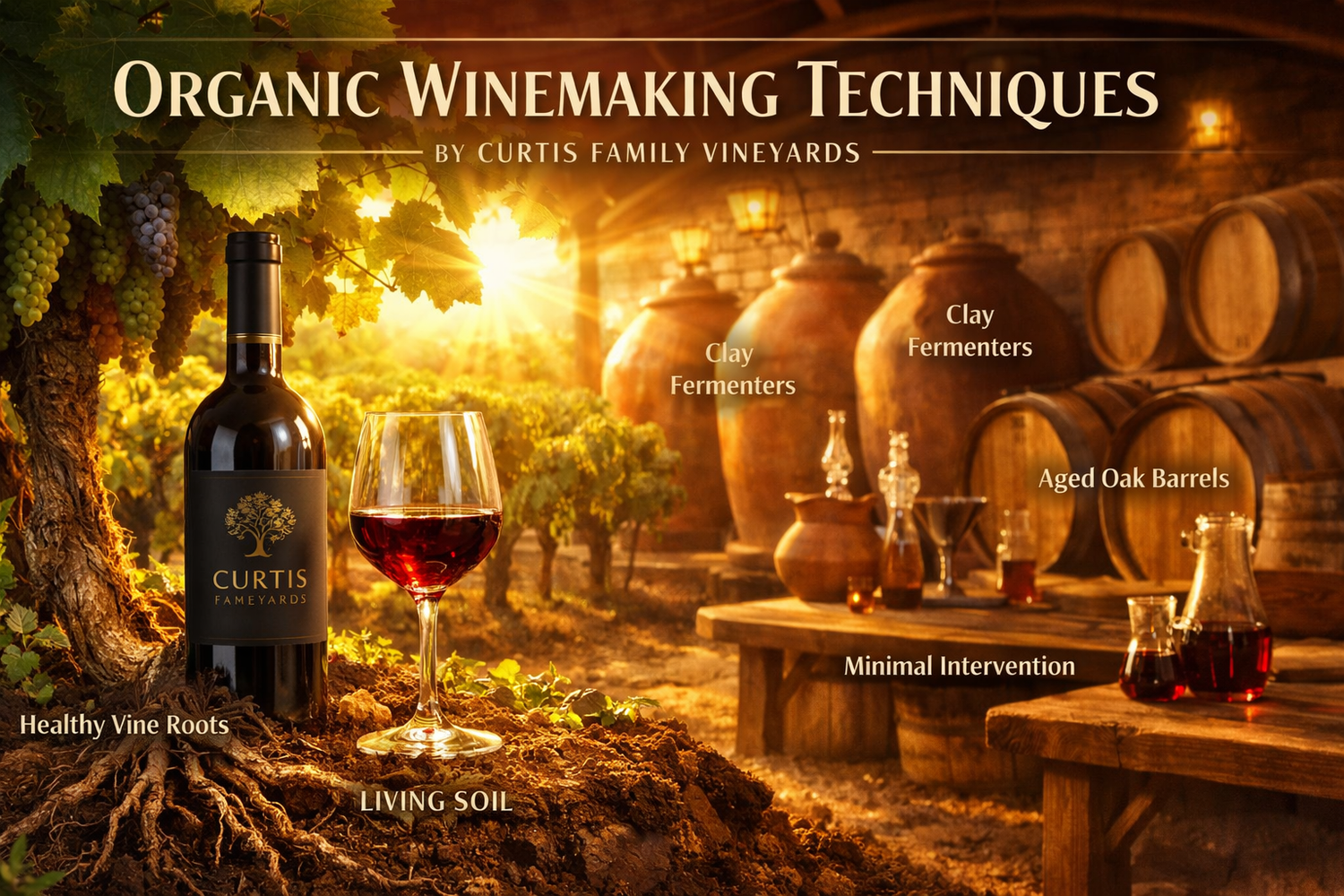
As the interest in sustainable practices continues to rise, organic winemaking Technique is becoming increasingly popular among both winemakers and wine enthusiasts. At Curtis Family Vineyards, we pride ourselves on producing wine that not only tastes exceptional but also respects and nurtures the environment. Let's explore some key considerations for implementing organic winemaking techniques.
Understanding Organic Winemaking
Organic winemaking is more than just a trend; it's a commitment to sustainable agriculture and environmentally-friendly practices. This method of winemaking eliminates the use of synthetic chemicals, focusing instead on natural alternatives for pest control and soil fertility.
One of the primary considerations in organic winemaking is soil health. Building and maintaining a rich, biodiverse soil ecosystem ensures healthy vines, which in turn leads to higher quality grapes. At Curtis Family Vineyards, we employ organic composting and cover cropping methods to boost the health of our soils.
Vineyard Management Practices
Organic vineyard management requires a hands-on approach to deal with potential challenges such as pests, diseases, and weeds. Biological pest management strategies, like introducing beneficial insects, can help control pests naturally.
Furthermore, selecting the right grape varietals plays an important role. For example, our Limited Series Shiraz is crafted from grapes that thrive in our specific terroir, naturally mitigating the need for synthetic interventions.
Fermentation and Ageing
The fermentation process in organic winemaking is often guided by native yeast strains, which are naturally present in the vineyard environment. This approach not only complements the organic philosophy but also imparts unique flavours that cannot be replicated with commercial yeasts.
Ageing is another crucial phase where organic winemaking can shine. For our Cavaliere Shiraz, we focus on minimal intervention during the ageing process to preserve the wine's natural characteristics.
Certification and Labelling

Certification is a significant step for organic winemakers aiming to assure consumers of the organic integrity of their products. While certification processes can be rigorous and expensive, they are crucial in differentiating true organic wines from those that are merely marketed as such.
The Curtis Family Commitment
At Curtis Family Vineyards, our commitment to sustainable and organic winemaking is reflected in each of our offerings. We invite you to experience the purity and depth of flavour that our organic techniques bring to the table.
To explore more about our wines and organic practices, visit us at Curtis Family Vineyards.
