

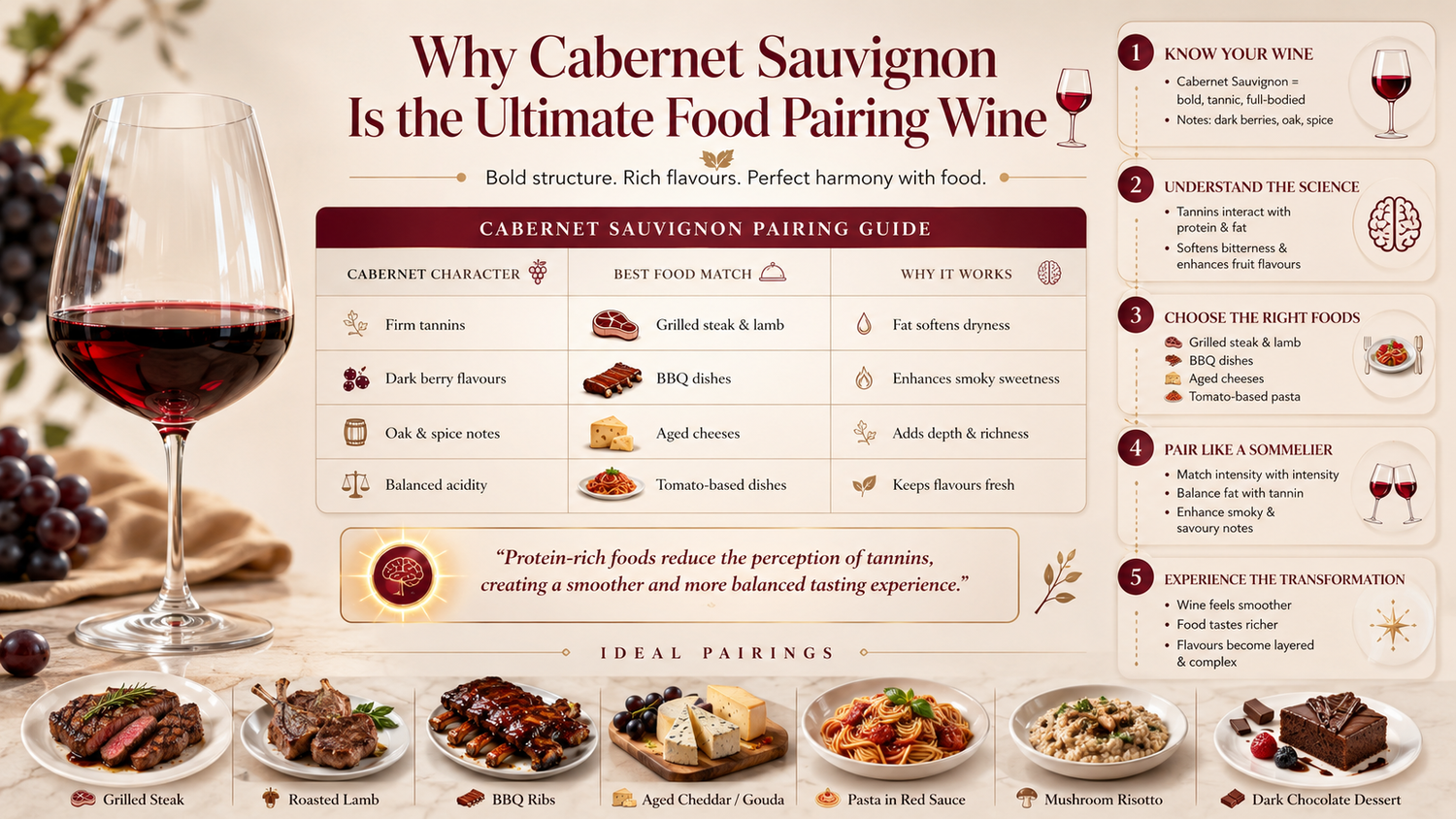
Why Cabernet Sauvignon Is the Ultimate Food Pairing Wine
Cabernet Sauvignon Food pairing is one of the most unique topic because wine lovers want one thing — a red wine that consistently works with rich, flavour-packed meals. Cabernet Sauvignon has earned that reputation for a reason. Its bold structure, dark fruit flavours, balanced acidity, and firm tannins make it one of the most versatile red wines on the table.
What makes this wine so fascinating is the way it transforms food. A sip on its own can feel powerful and intense, but paired with the right dish, the wine suddenly becomes smoother, richer, and more layered. That contrast is exactly why sommeliers often call Cabernet Sauvignon a “food-first red wine.”
Why Rich Foods Work So Well with Cabernet Sauvignon
Foods that pair with Cabernet Sauvignon usually contain protein, fat, smoke, or deep savoury flavours. These elements soften the wine’s tannins and unlock more fruit character in every sip.
Here’s why the pairing works so beautifully:
| Cabernet Sauvignon Character | Best Food Match | Why It Works |
|---|---|---|
| Firm tannins | Grilled steak & lamb | Fat balances dryness |
| Dark berry flavours | BBQ dishes | Enhances smoky sweetness |
| Oak & spice notes | Aged cheeses | Adds depth and richness |
| Balanced acidity | Tomato-based dishes | Keeps flavours fresh |
This is not just opinion — wine research from sensory studies has shown that protein-rich foods can reduce the perception of bitterness and astringency in tannic red wines, creating a smoother mouthfeel and more balanced tasting experience.
Expert Tips for Better Cabernet Sauvignon Pairings

Small pairing choices can completely change the wine experience. Here are a few expert-approved tips that instantly elevate Cabernet Sauvignon at the dinner table:
- Match bold wine with bold flavours
- Avoid overly spicy dishes that overpower the wine
- Chargrilled and smoky foods usually work beautifully
- Serve Cabernet Sauvignon slightly below room temperature
- Let the wine breathe before serving for softer tannins
The secret behind great Cabernet Sauvignon food pairings is balance. When the wine and food complement each other equally, every flavour becomes more expressive, richer, and far more memorable.
Understanding Cabernet Sauvignon's Flavour Profile

Before diving into specific food pairings, it's essential to understand what makes Cabernet Sauvignon such a distinctive wine. This noble grape variety produces wines with a complex array of flavors and characteristics that influence how they interact with food.
The Core Flavour Notes
Cabernet Sauvignon typically exhibits flavours ranging from dark fruits like blackberry, plum, and black cherry to more savory notes including tobacco, leather, and graphite. Depending on the region where the grapes are grown and the winemaking techniques employed, you might also detect hints of eucalyptus, mint, or even bell pepper. These diverse flavor profiles mean that Cabernet Sauvignon can pair successfully with a wide variety of foods, from simple preparations to elaborate dishes.
The wine's structure is equally important to its flavor profile. Cabernet Sauvignon is known for its firm tannins—the compounds that create a drying sensation in your mouth. These tannins are what make the wine age-worthy and also what make it such an excellent partner for rich, fatty foods. The tannins bind with proteins and fats in food, creating a harmonious balance that enhances both the wine and the dish.
Regional Variations
The expression of Cabernet Sauvignon varies significantly depending on where it's produced. California Cabernets, particularly those from Napa Valley, tend to be fruit-forward with ripe, jammy characteristics and higher alcohol content. Bordeaux wines from France, where Cabernet Sauvignon is often blended with other varieties, typically display more restraint, with pronounced earthy and herbal notes. Australian Cabernets often showcase bold, concentrated fruit flavors with hints of mint and eucalyptus. Understanding these regional differences can help you make more informed pairing decisions.
Grilled Ribeye Steak & Cabernet Sauvignon — The Classic Match That Never Fails

Steak and Cabernet Sauvignon pairing remains one of the most recommended food and wine combinations in fine dining — and once you experience it properly, the reason becomes obvious. The rich marbling of a grilled ribeye softens Cabernet Sauvignon’s firm tannins, while the wine’s bold dark fruit flavours cut beautifully through the meat’s richness.
This pairing creates what sommeliers often call a “flavour reset” — every bite makes the next sip taste smoother, fuller, and more expressive.
Why Ribeye Works Better Than Leaner Cuts
Not all steaks deliver the same wine experience. Ribeye stands out because of its higher fat content and juicy texture.
| Steak Cut | Pairing Result with Cabernet Sauvignon |
|---|---|
| Ribeye | Rich, smooth, balanced |
| Sirloin | Leaner and slightly firmer |
| Eye Fillet | Elegant but less flavour contrast |
| Wagyu | Luxurious and intensely silky |
The fat in ribeye helps soften the wine’s tannins naturally, allowing more blackcurrant, plum, and subtle oak notes to shine through. This is one reason why premium steakhouses around the world frequently recommend Cabernet Sauvignon alongside chargrilled ribeye.
The Secret Is in the Chargrill
Best foods with Cabernet Sauvignon often include smoky or flame-grilled flavours. The caramelised crust created during grilling mirrors the wine’s subtle spice and oak character, creating incredible depth on the palate.
For the ultimate pairing experience:
- Cook ribeye medium-rare to medium
- Use charcoal or open-flame grilling if possible
- Season simply with salt, pepper, and herbs
- Let the steak rest before serving
- Decant Cabernet Sauvignon for 20–30 minutes
A Restaurant-Quality Experience at Home
One of the reasons this pairing never goes out of style is its ability to feel both comforting and luxurious at the same time. A bold Cabernet Sauvignon alongside a perfectly grilled ribeye instantly creates a premium dining experience without needing complicated ingredients.
In regions like McLaren Vale, where bold red wines are deeply connected to local food culture, this pairing has become part of the classic Australian wine lifestyle — rich flavours, great company, and memorable moments around the table.
Classic Meat Pairings With Cabernet Sauvignon Wine
The most traditional and reliable pairings for Cabernet Sauvignon involve beef and other red meats. The wine's structure and tannin content make it particularly well-suited to these proteins.
Beef: The Perfect Match
Beef is arguably the most iconic pairing with Cabernet Sauvignon, and for good reason. The fat content in beef, particularly in cuts like ribeye, New York strip, and prime rib, interacts beautifully with the wine's tannins. When you consume tannins alongside fatty foods, the tannins bind with the fat molecules, softening their astringent quality and making the wine taste smoother and more integrated.
A perfectly cooked steak, seasoned simply with salt and pepper, allows the wine's complex flavors to shine. The umami-rich qualities of beef complement the wine's darker fruit notes and savory undertones. For special occasions, consider pairing an aged Cabernet Sauvignon with a dry-aged ribeye or a luxurious filet mignon topped with a red wine reduction. The wine's aging potential means that older vintages, which have developed more nuanced and integrated flavors, pair exceptionally well with premium beef preparations.
Pork Preparations
While pork is generally considered a lighter meat, certain preparations pair excellently with Cabernet Sauvignon. Pork shoulder, when slow-roasted until tender and served with a rich sauce, can be a wonderful pairing. The key is ensuring that the pork dish has sufficient richness and depth of flavor to match the wine's intensity. Pork ribs, particularly when prepared with a savory rub and slow-smoked, also work well with Cabernet Sauvignon, especially wines from warmer climates that have more fruit-forward characteristics.
Slow-Cooked Lamb Shanks with Cabernet Sauvignon for Rich Winter Dining
Cabernet Sauvignon with lamb is one of those timeless pairings that instantly feels warming, comforting, and deeply satisfying. Slow-cooked lamb shanks bring rich texture and savoury depth, while Cabernet Sauvignon adds layers of dark berry fruit, spice, and elegant structure. Together, they create the kind of winter dining experience people remember long after the meal ends.
What makes this pairing so irresistible is the way the wine evolves with every bite. The tender lamb softens the wine’s tannins, allowing flavours of blackcurrant, plum, cedar, and subtle oak to become smoother and more expressive.
Game meats such as venison, duck, and wild boar also pair wonderfully with Cabernet Sauvignon. These meats have more pronounced flavors than domesticated poultry or pork, and they stand up well to the wine's bold character. A venison steak with a cherry gastrique or a duck breast with a red wine sauce would be ideal accompaniments to a quality Cabernet Sauvignon.
Why Lamb and Cabernet Sauvignon Work So Well
The natural richness of lamb perfectly balances the bold structure of Cabernet Sauvignon. Slow cooking also creates deeper umami flavours, which enhance the wine’s complexity.
| Lamb Element | Cabernet Sauvignon Response |
|---|---|
| Rich, slow-cooked texture | Softer tannins |
| Savoury meat flavours | More dark fruit intensity |
| Herb seasoning | Enhances spice and oak notes |
| Red wine sauce | Creates depth and balance |
Wine pairing specialists often recommend lamb for fuller-bodied reds because the protein and collagen naturally soften tannic wines, making them taste rounder and more luxurious.
Herbs and Flavours That Elevate the Pairing
Foods that pair with Cabernet Sauvignon often share earthy and aromatic characteristics. With lamb shanks, the right herbs and sauces can dramatically elevate the entire dining experience.
Best flavour combinations include:
- Rosemary and garlic
- Thyme and black pepper
- Red wine reduction sauces
- Roasted root vegetables
- Creamy mashed potatoes or polenta
These comforting flavours mirror the warmth and richness found in premium McLaren Vale Cabernet Sauvignon styles.
For the best experience:
- Serve Cabernet Sauvignon slightly below room temperature
- Decant the wine before serving
- Allow the lamb to cook low and slow for maximum tenderness
- Pair with rustic sides for a complete winery-style meal
This pairing delivers more than flavour alone — it creates warmth, conversation, and the unmistakable feeling of premium South Australian hospitality.
Smoky BBQ Ribs & Cabernet Sauvignon — Bold Flavours Done Right
BBQ and Cabernet Sauvignon is a pairing that instantly captures the spirit of Australian outdoor dining — smoky, bold, slightly messy, and absolutely unforgettable. When done right, smoky BBQ ribs don’t just match Cabernet Sauvignon; they elevate it, unlocking deeper layers of fruit, spice, and structure in the wine.
The real magic happens in contrast: sticky, caramelised BBQ glaze meets structured tannins and dark fruit intensity.
The Science Behind Smoke, Sweetness & Tannins
From a sensory perspective, smoky flavours act as a bridge between food and wine. Research in flavour perception shows that smoke and caramel notes enhance the perception of sweetness in wine, while protein and fat soften tannins.
Here’s how the balance works:
| BBQ Element | Cabernet Sauvignon Response |
|---|---|
| Smoky ribs (charcoal grill) | Enhances oak & spice notes |
| Sweet BBQ glaze | Brings out ripe dark fruit flavours |
| Fatty meat texture | Softens tannin structure |
| Spicy rubs | Adds complexity when balanced correctly |
This is why Cabernet Sauvignon feels smoother and more expressive when paired with slow-cooked, smoky meats.
BBQ Sauces That Work Best with Cabernet Sauvignon
Not all sauces behave the same with bold red wine. The goal is balance — not overpowering heat or excessive sweetness.
Best pairings include:
- Smoky bourbon BBQ sauce
- Tomato-based glaze with mild spice
- Molasses-rich slow-cooked BBQ sauce
- Hickory or mesquite smoked marinades
- Light pepper rubs with caramelisation
Avoid extremely hot chilli sauces, as they can overpower the wine’s structure and create bitterness.
Expert Tips for Perfect Balance
To get the most out of Cabernet Sauvignon food pairings, small adjustments make a big difference:
- Choose ribs with a good fat-to-meat ratio
- Use a light char instead of heavy burning
- Pair with medium-bodied Cabernet for balance
- Let the wine breathe before serving
- Add fresh acidity (like slaw or pickles) to reset the palate
When smoky BBQ ribs meet a well-structured Cabernet Sauvignon, the result is pure harmony — bold, juicy, and deeply satisfying with every bite and sip.
Why Aged Cheddar Works So Well with Cabernet Sauvignon
Aged cheddar and other hard cheeses are high in fat and protein, which naturally soften the tannic edge of Cabernet Sauvignon. At the same time, the cheese amplifies the wine’s deeper notes of blackcurrant, plum, and subtle oak spice.
From a sensory point of view, this is what happens:
| Cheese Element | Cabernet Sauvignon Response |
|---|---|
| Aged, sharp flavour | Enhances fruit intensity |
| High fat content | Softens tannins |
| Crumbly texture | Creates balanced mouthfeel |
| Saltiness | Brings out wine sweetness |
Wine tasting studies in structured sensory panels consistently show that aged cheeses reduce the perception of bitterness in tannic red wines, making each sip feel rounder and more approachable.
Building a Gourmet Cheese Board That Works with Cabernet Sauvignon
Best cheeses for Cabernet Sauvignon are bold, aged, and full of character. But the magic really happens when the entire board is thoughtfully built.
Include:
- Aged cheddar (sharp and crumbly)
- Mature gouda (nutty and caramel-like)
- Parmigiano-Reggiano (salty and crystalline texture)
- Blue cheese (for adventurous pairing contrast)
- Hard goat cheese (earthy and structured)
To elevate the experience:
- Add roasted almonds or walnuts for texture
- Include sourdough crackers or seeded crispbreads
- Balance richness with fresh grapes or figs
- Add cured meats like salami or prosciutto
The Hidden Layer: Texture, Contrast & Balance
The reason this pairing feels so luxurious is not just flavour — it’s contrast layering. Cabernet Sauvignon brings structure, while cheese brings fat, salt, and depth.
A simple guide to balance:
| Board Element | Effect on Wine Experience |
|---|---|
| Hard cheese | Smooths tannins |
| Nuts | Adds crunch + warmth |
| Fruit | Refreshes palate |
| Charcuterie | Deepens savoury notes |
This combination creates a slow, evolving tasting journey rather than a single flavour moment.
Cheese and Charcuterie
Aged cheeses, particularly hard varieties like Parmesan, Gruyère, and aged cheddar, pair beautifully with Cabernet Sauvignon. The saltiness and umami qualities of these cheeses complement the wine's savory notes, while their firm texture provides a pleasant contrast to the wine's full body.
Cured meats and charcuterie also make excellent pairings. Prosciutto, salami, and other cured meats have concentrated flavors and fat content that work well with Cabernet Sauvignon. A charcuterie board featuring aged cheeses, cured meats, nuts, and dried fruits can be an excellent accompaniment to a glass of Cabernet Sauvignon, whether you're enjoying it casually or as part of a more formal tasting.
Mushroom Risotto & Cabernet Sauvignon for Elegant Vegetarian Pairings
Vegetarian Cabernet Sauvignon pairings are often underestimated, yet mushroom risotto proves that plant-based dishes can deliver just as much depth and satisfaction as meat-based meals. When paired correctly, Cabernet Sauvignon reveals earthy, savoury layers that feel elegant, comforting, and surprisingly complex.
Mushrooms are naturally rich in umami — the same savoury taste found in aged meats and cheeses. This is why they interact so beautifully with Cabernet Sauvignon. The wine’s dark fruit, oak spice, and tannic structure find balance in the earthy, almost meaty character of mushrooms.
From a flavour science perspective, umami-rich foods enhance perception of wine smoothness while reducing bitterness, making each sip feel rounder and more refined.
| Mushroom Risotto Element | Cabernet Sauvignon Response |
|---|---|
| Earthy mushrooms | Enhances savoury depth |
| Creamy risotto base | Softens tannins |
| Parmesan finish | Boosts fruit intensity |
| Herb seasoning | Highlights spice notes |
Creamy Texture vs Wine Structure — The Perfect Contrast
The beauty of foods that pair with Cabernet Sauvignon lies in contrast. Mushroom risotto is creamy, soft, and comforting, while Cabernet Sauvignon is structured, bold, and layered.
When combined:
- Creaminess reduces tannic sharpness
- Wine acidity cuts through richness
- Earthy flavours align naturally with oak notes
- The finish becomes long, smooth, and balanced
This contrast is what transforms a simple vegetarian dish into a restaurant-quality experience.
Gourmet Vegetarian Inspiration for Wine Lovers
Vegetarian Cabernet Sauvignon pairings like mushroom risotto are becoming a highlight in modern fine dining, especially as more wine lovers look for plant-forward gourmet experiences.
To elevate the dish:
- Use a mix of wild mushrooms (porcini, shiitake, oyster)
- Finish with aged parmesan or pecorino
- Add slow-simmered vegetable stock for depth
- Stir in butter or olive oil for silky texture
- Serve slightly al dente for structure contrast
Truffle, Herbs & Luxury Flavour Layers
To create a truly memorable pairing, layering is key. Cabernet Sauvignon responds beautifully to aromatic ingredients that mirror its complexity.
Best additions include:
- Truffle oil or shaved truffle for earthy luxury
- Fresh thyme and rosemary for aromatic lift
- Garlic and shallots for savoury depth
- Black pepper for subtle spice alignment
These ingredients enhance the wine’s natural blackcurrant and cedar notes, creating a refined, multi-layered tasting experience.
In wine regions like McLaren Vale, this style of pairing reflects a modern shift in dining — where vegetarian dishes are no longer “alternatives,” but centrepiece experiences built for bold, expressive wines like Cabernet Sauvignon.
Tomato-Based Sauces
Tomato-based sauces, particularly those with depth and complexity, can pair nicely with Cabernet Sauvignon. The acidity in tomatoes complements the wine's acidity, while the umami flavors in concentrated tomato sauces echo the wine's savory notes. A rich Bolognese sauce served over pasta, a hearty tomato-based soup, or a classic Italian ragu all work well with Cabernet Sauvignon.
However, it's important to note that very acidic or fresh tomato preparations might not be ideal pairings. The wine's tannins can interact poorly with high acidity, potentially creating a harsh or metallic taste. Cooked tomato sauces, where the acidity has mellowed and the flavors have concentrated, are generally better choices than fresh tomato preparations.
Gourmet Beef Burgers with Cabernet Sauvignon for Casual Luxury Dining
Best foods with Cabernet Sauvignon often surprise wine lovers, and gourmet beef burgers are one of the most underrated yet powerful pairings. What looks like casual comfort food actually becomes a premium tasting experience when matched with a structured, full-bodied Cabernet Sauvignon.
A great beef burger delivers everything Cabernet Sauvignon loves — fat, umami, smoke, and richness. These elements soften the wine’s tannins and unlock deeper layers of dark fruit and spice.
From a flavour balance perspective, this pairing works because it creates harmony between intensity and texture rather than competition.
| Burger Element | Cabernet Sauvignon Response |
|---|---|
| Juicy beef patty | Softens tannins |
| Melted cheese | Enhances fruit depth |
| Smoky grill flavour | Highlights oak & spice |
| Soft brioche bun | Balances structure |
Research in sensory food pairing shows that fatty and salty foods reduce astringency in tannic red wines, making Cabernet Sauvignon taste smoother and more rounded.
Cheese, Caramelised Onion & Smoky Toppings — The Game Changers
The magic of a burger pairing lies in its layers. Each topping interacts differently with the wine, creating a multi-dimensional tasting experience.
Best combinations include:
- Aged cheddar or gouda for richness
- Caramelised onions for sweetness and depth
- Smoky bacon for intensity and contrast
- Roasted mushrooms for earthy balance
- Black pepper aioli for subtle spice lift
These toppings amplify the natural dark berry and oak characteristics found in Cabernet Sauvignon, making every sip feel more expressive.
Casual Food, Premium Wine Experience
What makes this pairing special is its contrast — relaxed food meets premium wine craftsmanship. It breaks the idea that fine wine must always be paired with formal dining.
Here’s why it works so well:
- Simple ingredients elevate premium wine expression
- Comfort food enhances emotional enjoyment
- Bold flavours match Cabernet Sauvignon intensity
- Ideal for relaxed gatherings and weekend entertaining
This is where wine becomes lifestyle — not just tasting.
Easy Entertaining Ideas for Wine Lovers
In regions like McLaren Vale, wine culture is deeply connected to sharing food in a relaxed, welcoming way. Burgers paired with Cabernet Sauvignon fit perfectly into this lifestyle — casual, bold, and full of character.
To recreate a winery-style experience at home:
- Grill burgers over charcoal for smoky depth
- Serve Cabernet Sauvignon slightly below room temperature
- Offer a DIY burger bar for guests
- Pair with rustic sides like fries or slaw
- Let the wine breathe before serving
This pairing proves that elegance doesn’t need complexity — just balance, bold flavours, and a great bottle of Cabernet Sauvignon.
Dark Chocolate Desserts & Cabernet Sauvignon — A Bold Sweet Pairing
Cabernet Sauvignon and chocolate pairing is one of the most indulgent combinations in the world of wine, where bold tannins meet rich cocoa intensity. When done right, this pairing creates a luxurious after-dinner experience that feels almost cinematic — smooth, deep, and unforgettable.
Matching Dark Cocoa Richness with Cabernet Sauvignon
Dark chocolate and Cabernet Sauvignon share a natural affinity because both are rich, structured, and layered with bitterness and fruit depth. The wine’s blackcurrant and plum notes soften the intensity of cocoa, while the chocolate brings out hidden vanilla and spice tones in the wine.
From a sensory perspective, this pairing works because it aligns intensity rather than contrast — creating harmony instead of competition.
| Chocolate Type | Cabernet Sauvignon Response |
|---|---|
| 70–85% dark chocolate | Enhances fruit depth |
| Cocoa nibs or truffles | Highlights oak & spice |
| Chocolate with sea salt | Balances tannin structure |
| Chocolate + berries | Amplifies dark fruit notes |
Best Chocolate Percentages for Perfect Pairing
Not all chocolate works equally well with Cabernet Sauvignon. The key is finding the right cocoa intensity.
-
70%–85% dark chocolate → Ideal balance of bitterness and richness
-
90%+ chocolate → Can overpower the wine unless paired with aged Cabernet
-
Milk chocolate → Too sweet; masks wine structure
-
Chocolate with inclusions (nuts/berries) → Adds complexity and texture
Wine tasting studies show that higher cocoa percentages enhance perceived fruit intensity in structured red wines, especially those with firm tannins like Cabernet Sauvignon.
Dessert Boards & After-Dinner Wine Moments
A thoughtfully designed dessert board can turn foods that pair with Cabernet Sauvignon into a full sensory experience. Instead of a single dessert, layering textures and flavours creates depth and discovery in every bite.
A premium pairing board may include:
- Dark chocolate shards and truffles
- Fresh raspberries or strawberries
- Roasted almonds or hazelnuts
- Sea salt caramels for contrast
- Espresso-based desserts for bitterness harmony
This combination creates a slow, evolving tasting journey — perfect for after-dinner conversations and relaxed luxury.
Luxury Entertaining & Indulgent Wine Moments
In wine regions like McLaren Vale, Cabernet Sauvignon is often enjoyed as part of slow, indulgent evenings where food and wine are shared experiences. Pairing it with chocolate elevates the moment from casual enjoyment to something truly memorable.
To create a winery-style experience at home:
- Serve Cabernet Sauvignon slightly below room temperature
- Let the wine breathe before dessert pairing
- Choose high-quality, minimal-ingredient chocolate
- Pair with soft lighting and relaxed atmosphere
- Encourage slow tasting rather than rushed consumption
This pairing is not just about flavour — it’s about indulgence, emotion, and the final luxurious chapter of a perfect Cabernet Sauvignon experience.
Vegetable Pairings
While Cabernet Sauvignon is primarily known for pairing with meat and rich dishes, certain vegetables can create interesting and satisfying combinations.
Root Vegetables
Root vegetables like beets, carrots, and parsnips, particularly when roasted until caramelized, develop sweet and earthy flavors that complement Cabernet Sauvignon. The natural sugars in these vegetables, when concentrated through roasting, create a pleasant sweetness that balances the wine's tannins. A vegetable gratin featuring root vegetables and a creamy sauce can be a satisfying pairing, especially with wines that have fruit-forward characteristics.
Cruciferous Vegetables
Broccoli, cauliflower, and Brussels sprouts, when prepared with richness—such as roasted with olive oil and garlic, or prepared in a creamy sauce—can pair with Cabernet Sauvignon. The key is ensuring that these vegetables have enough flavor intensity and richness to stand up to the wine's bold character. Charred Brussels sprouts with bacon or a cauliflower steak with a savory sauce would be more suitable pairings than simple steamed vegetables.
Grilled Vegetables
Grilled vegetables, particularly those with a charred exterior, develop complex flavors that can pair well with Cabernet Sauvignon. Grilled eggplant, zucchini, and bell peppers, especially when served with a rich sauce or alongside other substantial dishes, create interesting flavor combinations. The char on the vegetables adds a smoky quality that echoes certain Cabernet Sauvignons, particularly those from cooler climates or older vintages.
Spiced and Seasoned Dishes
The way food is seasoned significantly impacts how well it pairs with Cabernet Sauvignon. Certain spices and seasonings create particularly harmonious combinations.
Herbs and Aromatics
Dishes featuring herbs like rosemary, thyme, oregano, and sage pair beautifully with Cabernet Sauvignon. These herbs often appear in the wine's flavor profile, creating a natural affinity. A herb-crusted lamb chop, a rosemary-infused beef stew, or a thyme-roasted chicken breast all create excellent pairings. The herbal notes in the wine and the food create a cohesive flavor experience.
Garlic and onions, when caramelized or deeply cooked, develop sweet and savory qualities that complement the wine. A French onion soup, with its deep, caramelized onions and rich beef broth, pairs wonderfully with Cabernet Sauvignon.
Peppery and Spicy Preparations
Black pepper, when used generously in a dish's preparation, can create an interesting pairing with Cabernet Sauvignon. The peppery spice echoes certain characteristics in the wine, particularly in Cabernets from cooler regions. A peppercorn-crusted steak or a dish with a black pepper sauce would be excellent choices.
However, very spicy dishes with hot chili peppers are generally not ideal pairings with Cabernet Sauvignon. The heat from chili peppers can amplify the wine's tannins, creating a harsh, drying sensation in the mouth. If you're pairing wine with spicy food, lighter red wines or white wines might be better choices.
Umami-Rich Preparations
Dishes with pronounced umami flavors—such as those featuring soy sauce, miso, Worcestershire sauce, or aged cheeses—can create compelling pairings with Cabernet Sauvignon. The umami compounds in these ingredients resonate with the wine's savory notes. A beef dish with a soy-based sauce, a miso-marinated fish, or a Worcestershire-seasoned burger all create interesting flavor combinations with Cabernet Sauvignon.
Sauce and Preparation Considerations
The sauce or preparation method used for a dish can significantly impact how well it pairs with Cabernet Sauvignon.
Red Wine Reductions
Sauces made with red wine reductions are perhaps the most natural pairing with Cabernet Sauvignon. When a dish is prepared with a red wine sauce, the wine in the sauce and the wine in your glass share similar flavor compounds, creating a harmonious pairing. A beef tenderloin with a red wine reduction, a duck breast with a cherry-red wine sauce, or a lamb chop with a red wine and herb sauce all exemplify this principle.
Cream-Based Sauces
Rich, cream-based sauces pair well with Cabernet Sauvignon, particularly wines with good acidity that can cut through the richness. A beef stroganoff with a sour cream sauce, a creamy mushroom sauce over steak, or a Béarnaise sauce accompanying a grilled steak all create luxurious pairings. The fat in cream sauces interacts beautifully with the wine's tannins, softening them and creating a smooth, integrated mouthfeel.
Oil-Based and Herb Sauces
Lighter preparations with oil-based or herb sauces can also pair well with Cabernet Sauvignon, particularly if the dish has sufficient richness or umami. A steak with a chimichurri sauce, a lamb chop with an herb oil, or a grilled fish with a basil and garlic oil can all work, though these pairings are generally more successful with lighter-bodied Cabernets or younger wines.
Cuisine-Specific Pairings
Different culinary traditions offer unique opportunities for pairing with Cabernet Sauvignon.
French Cuisine
French cuisine and Cabernet Sauvignon are natural partners, given that Cabernet Sauvignon is a cornerstone of French winemaking. Classic French dishes like beef Bourguignon, coq au vin, and cassoulet all pair beautifully with Cabernet Sauvignon. These dishes often feature the wine itself in their preparation, creating a seamless pairing. French bistro fare, such as steak frites with béarnaise sauce or a classic French onion soup, also pairs excellently with Cabernet Sauvignon.
Italian Cuisine
While Italian cuisine is often paired with Italian wines, Cabernet Sauvignon can work well with many Italian dishes. Hearty pasta dishes with meat sauces, risotto with mushrooms or beef, and Italian meat preparations all pair nicely. The key is choosing dishes with sufficient richness and depth of flavor. A simple pasta with tomato sauce might not be ideal, but a rich Bolognese or a creamy carbonara would work well.
Spanish Cuisine
Spanish cuisine offers excellent pairing opportunities with Cabernet Sauvignon. Dishes featuring beef, lamb, or game meats, particularly those prepared with Spanish spices and aromatics, pair well with the wine. A Spanish beef stew, a lamb dish with paprika and garlic, or a grilled steak with Spanish herbs all create harmonious pairings.
American Cuisine
American cuisine, particularly steakhouse fare, is perhaps the most obvious pairing for Cabernet Sauvignon. A classic American steak dinner—featuring a perfectly cooked steak, baked potato, and grilled vegetables—is an iconic pairing. American barbecue, particularly beef brisket or ribs, can also pair well with Cabernet Sauvignon, especially wines with fruit-forward characteristics that can balance the smoky, savory flavors of barbecued meat.
Regional Pairing Considerations With Cabernet Sauvignon Wine
Different Cabernet Sauvignon-producing regions create wines with distinct characteristics that influence pairing possibilities.
Napa Valley Cabernets
Napa Valley Cabernet Sauvignons are typically fruit-forward, with ripe berry flavors, higher alcohol content, and softer tannins than their Bordeaux counterparts. These wines pair beautifully with rich, flavorful dishes that can stand up to their boldness. A perfectly cooked ribeye, a luxurious beef Wellington, or a rich beef stew all showcase Napa Cabernets wonderfully. The wines' fruit-forward nature also makes them slightly more versatile than some other Cabernets, allowing them to pair with a broader range of dishes.
Bordeaux Wines
Bordeaux Cabernet Sauvignons, often blended with Merlot and other varieties, tend to be more restrained and elegant than their New World counterparts. These wines often feature more pronounced earthy and herbal notes, along with firmer tannins. They pair beautifully with classic French preparations and with dishes that emphasize quality ingredients and refined preparation. A perfectly aged Bordeaux pairs wonderfully with a simple grilled steak or a classic French beef preparation.
Australian Cabernets
Australian Cabernet Sauvignons are known for their bold, concentrated fruit flavors and often feature distinctive mint and eucalyptus notes. These wines pair well with robust, flavorful dishes that can match their intensity. Grilled meats with bold seasonings, barbecued dishes, and hearty stews all work well with Australian Cabernets. The wines' fruit-forward nature makes them slightly more approachable with a wider range of foods than some other regional styles.
Washington State Cabernets
Washington State produces excellent Cabernet Sauvignons that often fall somewhere between the fruit-forward
