

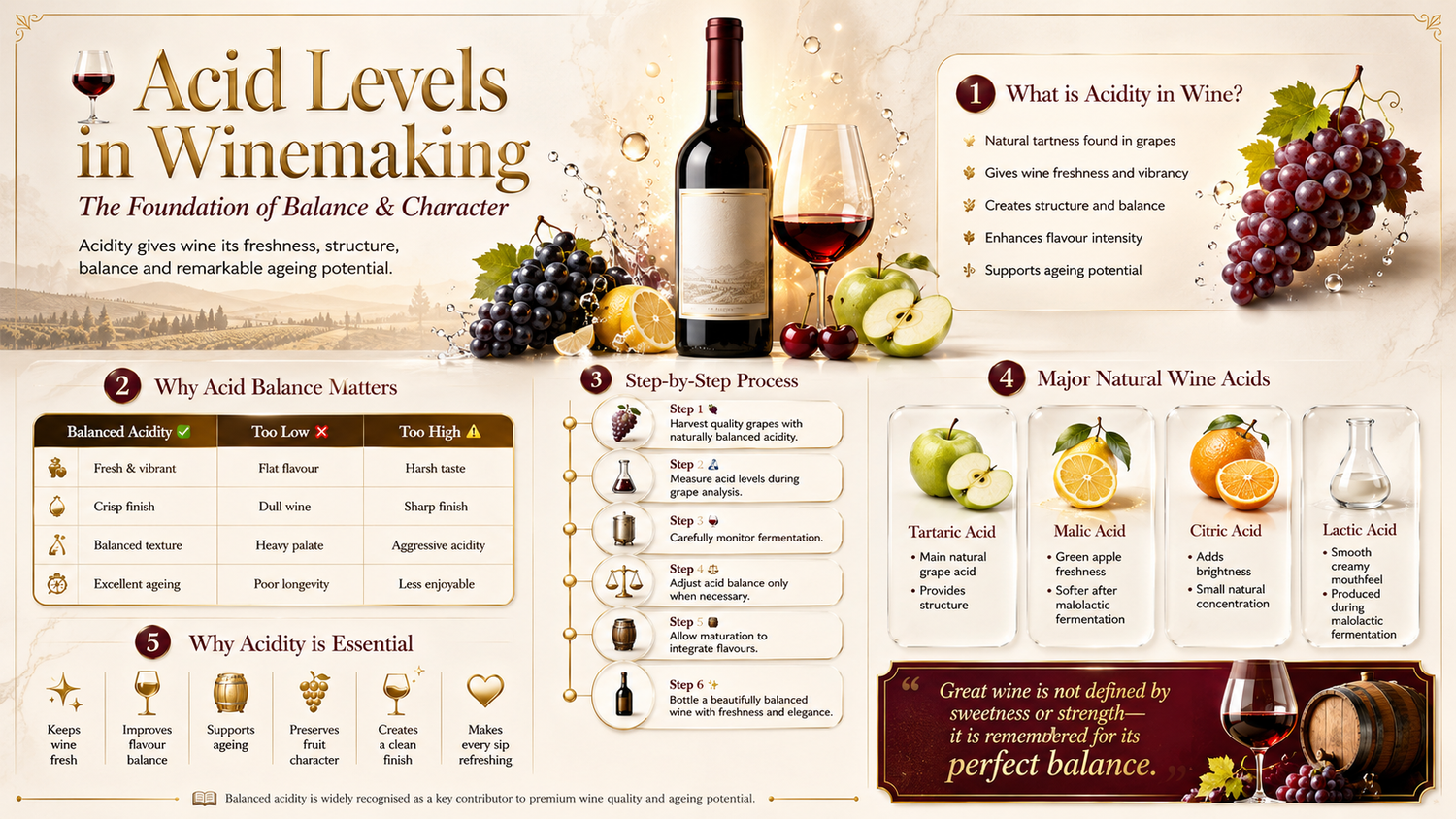
Acid Levels in Winemaking the foundation of balance and character
Acid Levels in Winemaking are often the quiet hero behind every great bottle. You may not see them, but you absolutely taste them. Acidity is what gives a wine its life—its brightness, its energy, and that refreshing finish that keeps you coming back for another sip. Without the right acid balance, even the most expensive wine can feel flat or overly sharp.

What exactly is acidity in wine
In simple terms, acidity is the natural tartness found in grapes. But in winemaking, it’s much more than that—it’s the structural backbone that holds everything together. According to research from the Australian Wine Research Institute, balanced acidity is one of the key indicators of premium wine quality and ageing potential.
The three key acids every winemaker works with
Each acid plays a unique role in shaping the wine’s personality:
-
Tartaric acid
The most important and stable acid in wine
Adds crispness and keeps the wine fresh over time -
Malic acid
Naturally found in grapes, gives a green apple-like sharpness
Often softened during fermentation for smoother wines -
Lactic acid
Created during malolactic fermentation
Brings a creamy, round texture especially in wines like Chardonnay
Why acidity is more than just chemistry
This is where it gets interesting. Acidity is not just a technical measurement—it’s what your palate feels instantly.
- It creates that mouth-watering freshness in white wines
- It balances sweetness in sparkling and dessert wines
- It lifts heavy reds, making them feel more elegant
- It enhances aromas, making fruit flavours pop
Think of acidity as the invisible tension in wine—it keeps everything alive and in harmony.
Real world insight from premium winemaking
In regions like McLaren Vale, where warm days can push sugar levels higher, managing acidity becomes a defining skill. Many boutique producers like Curtis Family Vineyards focus on early morning harvesting to retain natural acid levels, ensuring wines like Octavian Shiraz, Ancestor Shiraz and Terra Rossa Shiraz stay vibrant rather than heavy. This approach is widely recognised in Australian winemaking as a marker of craftsmanship over mass production.
Understanding pH titratable acidity and precision

Acid Levels in Winemaking are not judged by taste alone—behind every balanced wine is a layer of precise science. This is where pH and titratable acidity come in. These two measurements might sound technical, but they are what separate consistent, premium wines from unpredictable batches.
pH vs titratable acidity made simple
Let’s break it down in an easy way:
| Measure | What it tells you | Why it matters |
|---|---|---|
| pH | Strength of acidity | Impacts colour stability and microbial safety |
| Titratable Acidity | Total amount of acid | Influences taste crispness and balance |
Think of it like this—pH is about how strong the acid feels, while titratable acidity is about how much acid is present.
Why professional winemakers rely on both
Titratable acidity in wine explained simply shows that relying on just one measure is risky. Skilled winemakers always use both together because:
- A wine can taste balanced but still be microbiologically unstable
- A stable wine might still lack freshness if acidity is too low
- Precision ensures consistency across every vintage
This dual approach is a hallmark of boutique wineries focused on quality, not volume.
The surprising impact of small changes
Here’s where it gets fascinating—tiny shifts can make a big difference:
- A slight rise in pH can make wine more vulnerable to spoilage
- Lower acidity can flatten flavours and reduce ageing potential
- Even a small imbalance can affect colour, especially in red wines
Research and technical guidance from the Australian Wine Research Institute consistently highlight that controlling pH and acidity is critical for both flavour integrity and wine safety.
Precision as the backbone of premium wine
In high-quality winemaking, nothing is left to chance. Monitoring pH and titratable acidity allows winemakers to:
- Protect the wine during fermentation and storage
- Maintain vibrant colour and aroma
- Deliver a consistent taste experience year after year
Acid Levels during fermentation and winemaking control

Acid Levels in Winemaking do not stay constant—they evolve throughout fermentation, and this is where real craftsmanship begins. What seems like a natural process is actually a carefully guided transformation, where winemakers make critical decisions that shape the final wine’s balance, texture, and identity.
What really happens to acids during fermentation
As fermentation begins, acids start to shift in subtle but powerful ways:
- Sugars convert into alcohol, slightly reducing perceived acidity
- Temperature and yeast activity influence acid retention
- Some acids break down, while others become more noticeable
This stage is crucial—small changes here can define whether a wine feels vibrant or flat.
The softening magic of malolactic fermentation
Acid management during fermentation often includes malolactic fermentation, a process that transforms sharper malic acid into softer lactic acid.
- Turns crisp, green apple notes into smoother, creamy textures
- Common in red wines and some fuller-bodied whites
- Reduces harshness and improves mouthfeel
This is why some wines feel round and silky, while others stay fresh and zesty—it’s a deliberate stylistic choice.
How winemakers fine tune acidity
Precision matters, especially in boutique wineries aiming for premium quality. Common techniques include:
- Acid addition to boost freshness in warmer climates
- Deacidification to soften overly sharp wines
- Blending different batches to achieve balance
- Harvest timing to control natural acid levels from the start
Each decision is guided by both science and tasting experience.
The balance between control and terroir
Here’s the real challenge—how much should a winemaker intervene?
- Too much control can strip away the vineyard’s natural character
- Too little can lead to inconsistency and imbalance
Great winemakers aim for a middle ground, where terroir is respected but quality is never compromised. In regions like McLaren Vale, this balance is especially important due to warm conditions that naturally lower acidity.
The Importance of Acidity in Wine

In winemaking, acidity is one of the key components that interact to create a wine's flavour profile. Acid levels influence not only the taste but also the preservation and aging potential of the wine. A wine that lacks sufficient acidity may taste flat, while one with too much can be overly tart. Striking the perfect balance is essential for producing wines that are enjoyable and expressive.
Types of Acids in Wine
- Tartaric Acid: This is the most prevalent acid found in grapes and largely defines a wine's pH, which affects taste and stability.
- Malic Acid: Known for its green apple-like sharpness, it can be softened through malolactic fermentation, a process popular in creating wines with a smoother palate.
- Citric Acid: Less common in significant quantities, but sometimes added to adjust the acidity balance.
How they shape Acid Levels taste structure and longevity

Acid Levels in Winemaking are what give a wine its spark. That first crisp sip, the clean finish, the way flavours feel alive on your palate—this is acidity doing its work behind the scenes. It’s not just about sharpness; it’s about precision, balance, and energy in every glass.
How acidity transforms the way wine feels and tastes
Acidity directly shapes how a wine is experienced from the first sip to the last:
-
Crispness and brightness
Adds freshness, especially in white and sparkling wines -
Mouthfeel
Higher acidity makes wine feel lighter and more refreshing -
Flavour lift
Enhances fruit notes, making them more vibrant and defined
Wines with well-managed acidity feel alive, while low-acid wines can taste dull or heavy.
The delicate relationship between acid sugar and tannins

This is where winemaking becomes an art. Balance is everything.
| Element | Role in Wine | What Happens if Unbalanced |
|---|---|---|
| Acid | Freshness and structure | Too high feels sharp too low feels flat |
| Sugar | Softness and richness | Too much feels cloying |
| Tannins | Grip and depth | Too strong feels harsh |
The magic happens when all three work in harmony. Premium wines are never about one element standing out—they are about everything working together seamlessly.
Why great wines never let acidity dominate
How acid affects wine taste and structure is a key factor that separates everyday wines from premium ones. In high-quality wines, acidity is present but never overpowering. It quietly supports:
- Smooth integration of flavours
- A clean, refreshing finish
- A sense of elegance rather than intensity
This balance is often what critics and winemakers look for when judging wine quality.
The hidden role of acidity in ageing and wine evolution
Here’s something many wine lovers don’t realise—acidity is essential for ageing.
- Acts as a natural preservative
- Helps wines develop complexity over time
- Keeps older wines tasting fresh rather than tired
Studies and insights from the Australian Wine Research Institute highlight that wines with balanced acidity consistently show better ageing potential and stability. Visit Curtis Family Vineyards to explore More premium McLaren Vale Wines like Small Batch Riesling , Limited Series Shiraz or Gladiator Shiraz today.
